Tamara A. Shiganova – författare
Visar alla böcker från författaren Tamara A. Shiganova. Handla med fri frakt och snabb leverans.
5 produkter
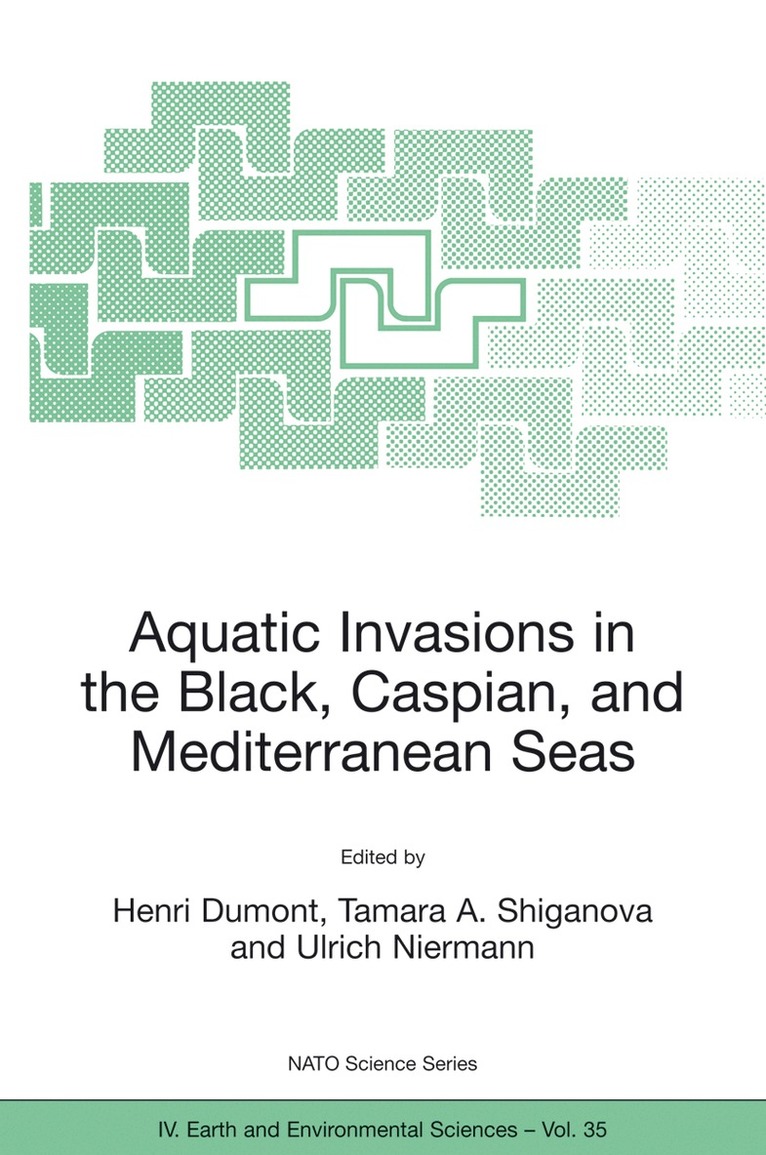
Aquatic Invasions in the Black, Caspian, and Mediterranean Seas
Av Henri J. Dumont, Tamara A. Shiganova m. fl.
Inbunden, 2004
1639 kr
Lägg i varukorg
The present volume contains the presentations of a NATO advanced Research Workshop (ARW) entitled “The invasion of the Black, Mediterranean and Caspian Seas by the American Ctenophore, Mnemiopsis leidyi Agassiz: a multidisciplinary perspective and a comparison with other aquatic invasions”, held on …
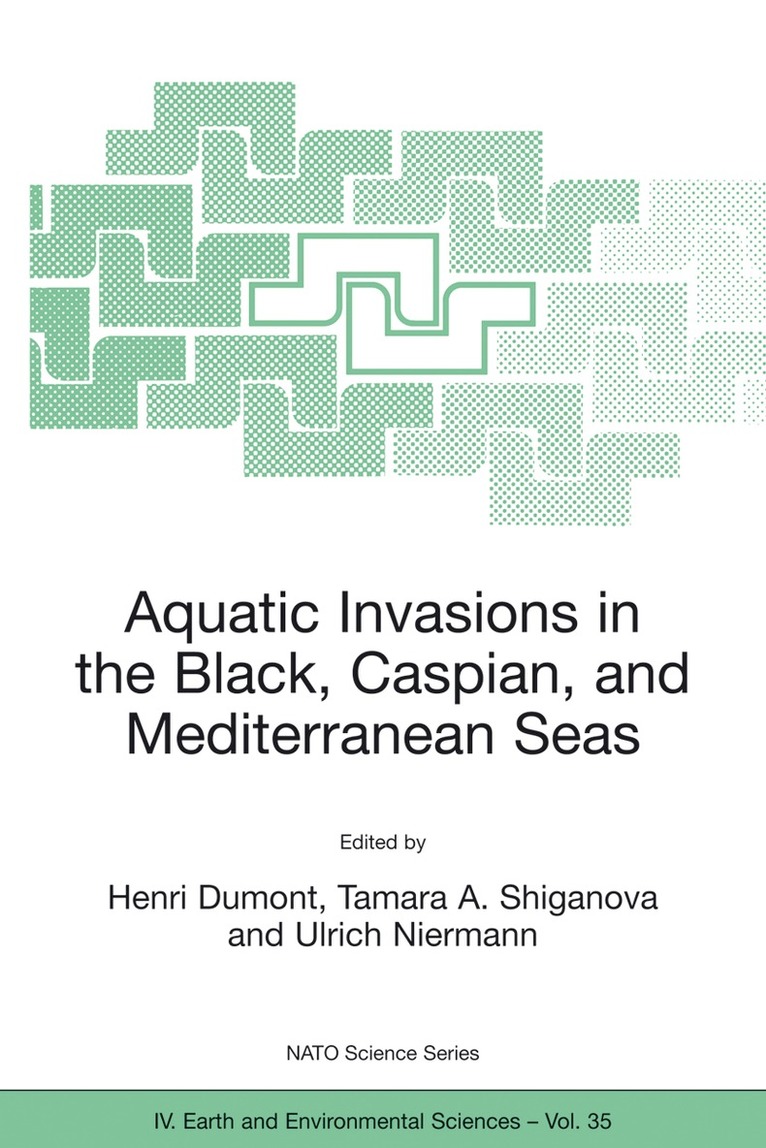
Aquatic Invasions in the Black, Caspian, and Mediterranean Seas
Av Henri J. Dumont, Tamara A. Shiganova m. fl.
Häftad, 2004
1639 kr
Lägg i varukorg
The present volume contains the presentations of a NATO advanced Research Workshop (ARW) entitled “The invasion of the Black, Mediterranean and Caspian Seas by the American Ctenophore, Mnemiopsis leidyi Agassiz: a multidisciplinary perspective and a comparison with other aquatic invasions”, held on …
Aquatic Invasions in the Black, Caspian and Mediterranean Seas
Av Henri J. Dumont, Tamara A. Shiganova m. fl.
2004
2489 kr
Lägg i varukorg
The Mediterranean, Black, and Caspian Seas represent three fragments of the former Tethys Sea, and are thus of great interest to understanding the evolution of the entire region where Eurasia, Africa and the Arabian Peninsula meet. Fishing activity and maritime traffic through the Dardanelles and …
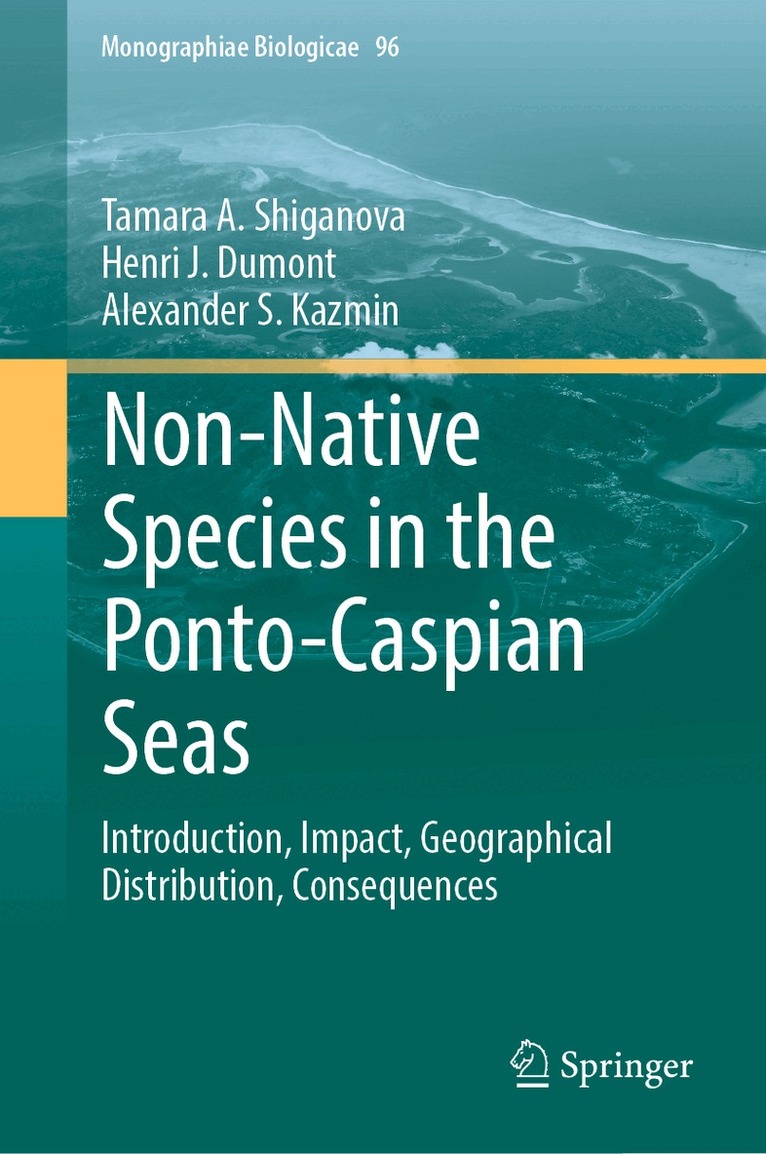
Non-Native Species in the Ponto-Caspian Seas
Introduction, Impact, Geographical Distribution, Consequences
Av Tamara A. Shiganova, Henri J. Dumont m. fl.
Inbunden, 2026
2183 kr
Lägg i varukorg
Gaining some momentum in the early 18th century, accelerating in the 19th century, and culminating in the second half of the 20th century, a sharp increase in the number of non-native animal and plant species introduced to foreign ecosystems, terrestrial and aquatic alike, occurred. In marine …
Non-Native Species in the Ponto-Caspian Seas
Introduction, Impact, Geographical Distribution, Consequences
Av Alexander S. Kazmin, Henri J. Dumont m. fl.
E-bok, 2026
2925 kr
Lägg i varukorg
Gaining some momentum in the early 18th century, accelerating in the 19th century, and culminating in the second half of the 20th century, a sharp increase in the number of non-native animal and plant species introduced to foreign ecosystems, terrestrial and aquatic alike, occurred. In marine …