Teofilo F. Ruiz - Böcker
Visar alla böcker från författaren Teofilo F. Ruiz. Handla med fri frakt och snabb leverans.
15 produkter
15 produkter
719 kr
Skickas inom 7-10 vardagar
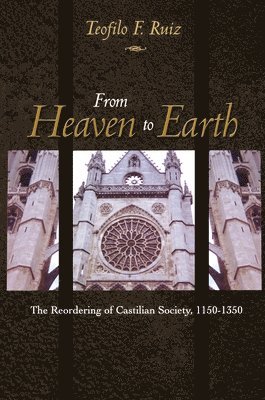
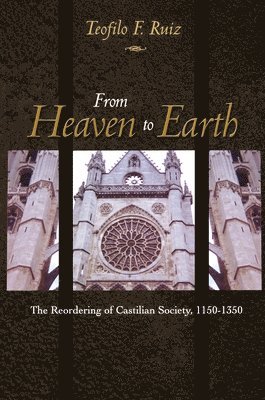
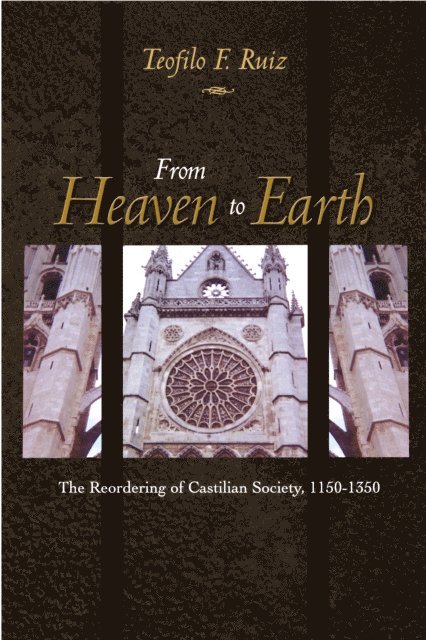
Between the late twelfth century and the mid fourteenth, Castile saw a reordering of mental, spiritual, and physical space. Fresh ideas about sin and intercession coincided with new ways of representing the self and emerging perceptions of property as tangible. This radical shift in values or mentalites was most evident among certain social groups, including mercantile elites, affluent farmers, lower nobility, clerics, and literary figures--"middling sorts" whose outlooks and values were fast becoming normative. Drawing on such primary documents as wills, legal codes, land transactions, litigation records, chronicles, and literary works, Teofilo Ruiz documents the transformation in how medieval Castilians thought about property and family at a time when economic innovations and an emerging mercantile sensibility were eroding the traditional relation between the two. He also identifies changes in how Castilians conceived of and acted on salvation and in the ways they related to their local communities and an emerging nation-state.Ruiz interprets this reordering of mental and physical landscapes as part of what Le Goff has described as a transition "from heaven to earth," from spiritual and religious beliefs to the quasi-secular pursuits of merchants and scholars. Examining how specific groups of Castilians began to itemize the physical world, Ruiz sketches their new ideas about salvation, property, and themselves--and places this transformation within the broader history of cultural and social change in the West.
204 kr
Skickas inom 7-10 vardagar
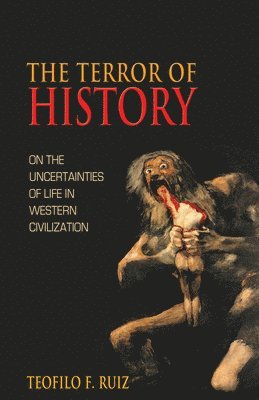
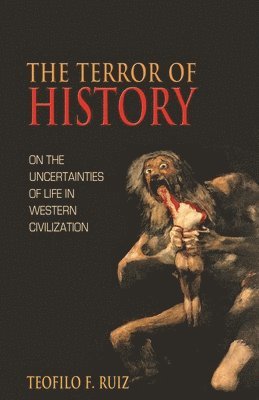
This book reflects on Western humanity's efforts to escape from history and its terrors--from the existential condition and natural disasters to the endless succession of wars and other man-made catastrophes. Drawing on historical episodes ranging from antiquity to the recent past, and combining them with literary examples and personal reflections, Teofilo Ruiz explores the embrace of religious experiences, the pursuit of worldly success and pleasures, and the quest for beauty and knowledge as three primary responses to the individual and collective nightmares of history. The result is a profound meditation on how men and women in Western society sought (and still seek) to make meaning of the world and its disturbing history. In chapters that range widely across Western history and culture, The Terror of History takes up religion, the material world, and the world of art and knowledge. "Religion and the World to Come" examines orthodox and heterodox forms of spirituality, apocalyptic movements, mysticism, supernatural beliefs, and many forms of esotericism, including magic, alchemy, astrology, and witchcraft."The World of Matter and the Senses" considers material riches, festivals and carnivals, sports, sex, and utopian communities. Finally, "The Lure of Beauty and Knowledge" looks at cultural productions of all sorts, from art to scholarship. Combining astonishing historical breadth with a personal and accessible narrative style, The Terror of History is a moving testimony to the incredibly diverse ways humans have sought to cope with their frightening history.
903 kr
Skickas inom 7-10 vardagar
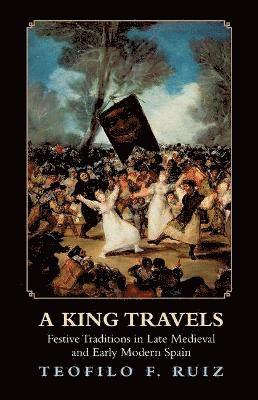
A King Travels examines the scripting and performance of festivals in Spain between 1327 and 1620, offering an unprecedented look at the different types of festivals that were held in Iberia during this crucial period of European history. Bridging the gap between the medieval and early modern eras, Teofilo Ruiz focuses on the travels and festivities of Philip II, exploring the complex relationship between power and ceremony, and offering a vibrant portrait of Spain's cultural and political life. Ruiz covers a range of festival categories: carnival, royal entries, tournaments, calendrical and noncalendrical celebrations, autos de fe, and Corpus Christi processions. He probes the ritual meanings of these events, paying special attention to the use of colors and symbols, and to the power relations articulated through these festive displays. Ruiz argues that the fluid and at times subversive character of medieval festivals gave way to highly formalized and hierarchical events reflecting a broader shift in how power was articulated in late medieval and early modern Spain.Yet Ruiz contends that these festivals, while they sought to buttress authority and instruct different social orders about hierarchies of power, also served as sites of contestation, dialogue, and resistance. A King Travels sheds new light on Iberian festive traditions and their unique role in the centralizing state in early modern Castile.
414 kr
Skickas inom 7-10 vardagar
A King Travels examines the scripting and performance of festivals in Spain between 1327 and 1620, offering an unprecedented look at the different types of festivals that were held in Iberia during this crucial period of European history. Bridging the gap between the medieval and early modern eras, Teofilo Ruiz focuses on the travels and festivities of Philip II, exploring the complex relationship between power and ceremony, and offering a vibrant portrait of Spain's cultural and political life. Ruiz covers a range of festival categories: carnival, royal entries, tournaments, calendrical and noncalendrical celebrations, autos de fe, and Corpus Christi processions. He probes the ritual meanings of these events, paying special attention to the use of colors and symbols, and to the power relations articulated through these festive displays. Ruiz argues that the fluid and at times subversive character of medieval festivals gave way to highly formalized and hierarchical events reflecting a broader shift in how power was articulated in late medieval and early modern Spain.Yet Ruiz contends that these festivals, while they sought to buttress authority and instruct different social orders about hierarchies of power, also served as sites of contestation, dialogue, and resistance. A King Travels sheds new light on Iberian festive traditions and their unique role in the centralizing state in early modern Castile.
149 kr
Skickas inom 7-10 vardagar
This book reflects on Western humanity's efforts to escape from history and its terrors--from the existential condition and natural disasters to the endless succession of wars and other man-made catastrophes. Drawing on historical episodes ranging from antiquity to the recent past, and combining them with literary examples and personal reflections, Teofilo Ruiz explores the embrace of religious experiences, the pursuit of worldly success and pleasures, and the quest for beauty and knowledge as three primary responses to the individual and collective nightmares of history. The result is a profound meditation on how men and women in Western society sought (and still seek) to make meaning of the world and its disturbing history. In chapters that range widely across Western history and culture, The Terror of History takes up religion, the material world, and the world of art and knowledge. "Religion and the World to Come" examines orthodox and heterodox forms of spirituality, apocalyptic movements, mysticism, supernatural beliefs, and many forms of esotericism, including magic, alchemy, astrology, and witchcraft."The World of Matter and the Senses" considers material riches, festivals and carnivals, sports, sex, and utopian communities. Finally, "The Lure of Beauty and Knowledge" looks at cultural productions of all sorts, from art to scholarship. Combining astonishing historical breadth with a personal and accessible narrative style, The Terror of History is a moving testimony to the incredibly diverse ways humans have sought to cope with their frightening history.
252 kr
Skickas inom 7-10 vardagar
Between the late twelfth century and the mid fourteenth, Castile saw a reordering of mental, spiritual, and physical space. Fresh ideas about sin and intercession coincided with new ways of representing the self and emerging perceptions of property as tangible. This radical shift in values or mentalites was most evident among certain social groups, including mercantile elites, affluent farmers, lower nobility, clerics, and literary figures--"middling sorts" whose outlooks and values were fast becoming normative. Drawing on such primary documents as wills, legal codes, land transactions, litigation records, chronicles, and literary works, Teofilo Ruiz documents the transformation in how medieval Castilians thought about property and family at a time when economic innovations and an emerging mercantile sensibility were eroding the traditional relation between the two. He also identifies changes in how Castilians conceived of and acted on salvation and in the ways they related to their local communities and an emerging nation-state.Ruiz interprets this reordering of mental and physical landscapes as part of what Le Goff has described as a transition "from heaven to earth," from spiritual and religious beliefs to the quasi-secular pursuits of merchants and scholars. Examining how specific groups of Castilians began to itemize the physical world, Ruiz sketches their new ideas about salvation, property, and themselves--and places this transformation within the broader history of cultural and social change in the West.
1 850 kr
Skickas inom 3-6 vardagar
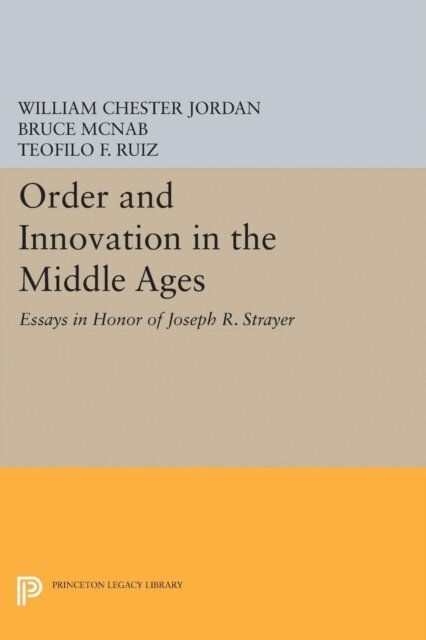
The Middle Ages were for many years generally viewed as a period when faith and order supported a rigid society. By painstaking archival research, historians such as Joseph R. Strayer and the contributors to this volume have gradually replaced this view with a regard for the period as a time of great intellectual diversity. These essays, divided into five groups, probe the themes of order and innovation as they appear in medieval government; finance; trade and urban life; social arrangements; and aspects of the personality and goals of the individual. The contributors focus on England, France, and the Mediterranean from about the eleventh to about the sixteenth century. Contributors: Frederic Kreisler, Charles Radding, Giles Constable, William Bowsky, John Freed, Phillippe Wolff, Thomas Bisson, Richard Kaeuper, John Benton, Archibald Lewis, William Jordan, Rhiman Rotz, Robert Baker, Robert Lopez, Teofilo Ruiz, Raphael DeSoignie, Bennett Hill, Frederic Cheyette, Jan Rogozinski, Bruce McNab, Lester Little, Robert Lerner, Elizabeth Brown, Charles Wood, and Gaines Post. Originally published in 1976.The Princeton Legacy Library uses the latest print-on-demand technology to again make available previously out-of-print books from the distinguished backlist of Princeton University Press. These editions preserve the original texts of these important books while presenting them in durable paperback and hardcover editions. The goal of the Princeton Legacy Library is to vastly increase access to the rich scholarly heritage found in the thousands of books published by Princeton University Press since its founding in 1905.
4 453 kr
Skickas inom 3-6 vardagar
The Middle Ages were for many years generally viewed as a period when faith and order supported a rigid society. By painstaking archival research, historians such as Joseph R. Strayer and the contributors to this volume have gradually replaced this view with a regard for the period as a time of great intellectual diversity. These essays, divided into five groups, probe the themes of order and innovation as they appear in medieval government; finance; trade and urban life; social arrangements; and aspects of the personality and goals of the individual. The contributors focus on England, France, and the Mediterranean from about the eleventh to about the sixteenth century. Contributors: Frederic Kreisler, Charles Radding, Giles Constable, William Bowsky, John Freed, Phillippe Wolff, Thomas Bisson, Richard Kaeuper, John Benton, Archibald Lewis, William Jordan, Rhiman Rotz, Robert Baker, Robert Lopez, Teofilo Ruiz, Raphael DeSoignie, Bennett Hill, Frederic Cheyette, Jan Rogozinski, Bruce McNab, Lester Little, Robert Lerner, Elizabeth Brown, Charles Wood, and Gaines Post. Originally published in 1976.The Princeton Legacy Library uses the latest print-on-demand technology to again make available previously out-of-print books from the distinguished backlist of Princeton University Press. These editions preserve the original texts of these important books while presenting them in durable paperback and hardcover editions. The goal of the Princeton Legacy Library is to vastly increase access to the rich scholarly heritage found in the thousands of books published by Princeton University Press since its founding in 1905.
944 kr
Skickas inom 10-15 vardagar
Offers a critical reassessment of the Reconquest of Castile from the Moors in the fifteenth century. Explores the land and climate of northern Castile, the urban and rural society, and the demography and fiscal oppression of the Reconquest.
525 kr
Skickas inom 10-15 vardagar
The articles in the first part of this volume, two being a revised English version of an article originally in Spanish, examine the place of the city in the historical development of Castile. The focus is the social and economic history of Burgos, and the work is founded on detailed research in the archives of the area. Professor Ruiz also calls into question the long held belief in the democratic character of medieval Castilian municipal life. In the second section he opens the field of enquiry to deal with the controversial question of what impact the conquest of Seville and the subsequent settlement of al-Andalus had on the realm of Castile, looking in particular at demographic factors and the emergence of the latifundia. The following articles analyse the symbolism and ceremonial of royal power, arguing that the claims for a sacred monarchy so usual in the medieval West were absent during this period of Spanish history, and that the kings used popular secular ceremonies, not anointments or coronations, to legitimise their rule. The book then closes with a study of the origins of the Spanish Inquisition. Les travaux contenus dans la première partie de cet ouvrage examinent la place de la Cité dans le développement historique de la Castille. L’intérêt central porte sur l’histoire sociale et économique de Burgos et l’analyse est fondée sur une recherche détaillée dans les archives de cette région. Le professeur Ruiz remet aussi en question la croyance que l’on avait depuis longtemps quant au caractère démocratique de la vie municipale dans la Castille médiévale. Dans la seconde partie, l’auteur élargit le champs de l’enquête afin de traiter de la question controversée au sujet de l’impact de la conquête de Séville et l’occupation consécutive d’al-Andalus sur le royaume de Castille, s’intéressant en particulier aux facteurs démographiques et à l’émergence de latifundia. Les études suivantes analysent le symbol
707 kr
Skickas inom 10-15 vardagar
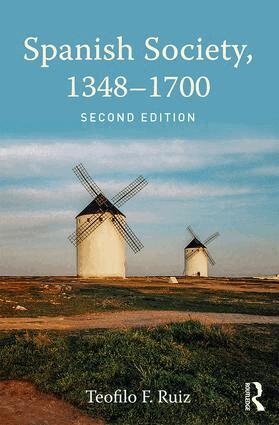
Beginning with the Black Death in 1348 and extending through to the demise of Habsburg rule in 1700, this second edition of Spanish Society, 1348–1700 has been expanded to provide a wide and compelling exploration of Spain’s transition from the Middle Ages to modernity. Each chapter builds on the first edition by offering new evidence of the changes in Spain’s social structure between the fourteenth and seventeenth century. Every part of society is examined, culminating in a final section that is entirely new to the second edition and presents the changing social practices of the period, particularly in response to the growing crises facing Spain as it moved into the seventeenth century. Also new to this edition is a consideration of the social meaning of culture, specifically the presence of Hermetic themes and of magical elements in Golden Age literature and Cervantes’ Don Quijote.Through the extensive use of case studies, historical examples and literary extracts, Spanish Society is an ideal way for students to gain direct access to this captivating period.
2 176 kr
Skickas inom 10-15 vardagar
Beginning with the Black Death in 1348 and extending through to the demise of Habsburg rule in 1700, this second edition of Spanish Society, 1348–1700 has been expanded to provide a wide and compelling exploration of Spain’s transition from the Middle Ages to modernity. Each chapter builds on the first edition by offering new evidence of the changes in Spain’s social structure between the fourteenth and seventeenth century. Every part of society is examined, culminating in a final section that is entirely new to the second edition and presents the changing social practices of the period, particularly in response to the growing crises facing Spain as it moved into the seventeenth century. Also new to this edition is a consideration of the social meaning of culture, specifically the presence of Hermetic themes and of magical elements in Golden Age literature and Cervantes’ Don Quijote.Through the extensive use of case studies, historical examples and literary extracts, Spanish Society is an ideal way for students to gain direct access to this captivating period.
425 kr
Skickas inom 11-20 vardagar
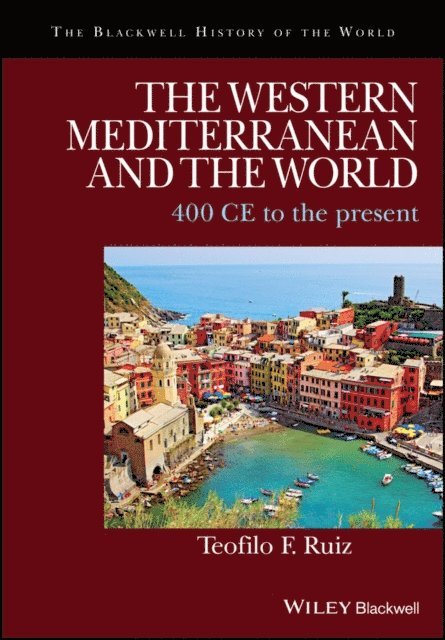
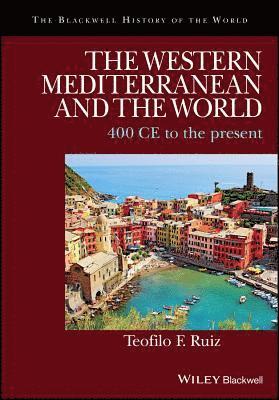
From the Straits of Gibraltar to Sicily, the European northern Mediterranean nations to the shores of North Africa, the western Mediterranean is a unique cultural and sociopolitical entity which has had a singular role in shaping today’s global society. The Western Mediterranean and the World is the fascinating story of the rise of that peculiar world and of its evolution from the end of the Western Roman Empire to the present. Uniquely, rather than present the history of the region as a strict chronological progression, the author takes a thematic approach, telling his story through a series of vignettes, case studies, and original accounts so as to provide a more immediate sense of what life in and around the Mediterranean was like from the end of the Roman Empire in the West to the present immigration crisis now unfolding in Mediterranean waters. Emphasizing the development of religion and language and the enduring synergies and struggles between Christian, Jews, and Muslims on both shores of the western sea, Dr. Ruiz connects the region to the larger world and locates the development of Mediterranean societies within a global context. Describes the move from religious and linguistic unity under Roman rule to the fragmented cultural landscape of todayExplores the relationship of language, culture, and geography, focusing on the role of language formation and linguistic identity in the emergence of national communitiesTraces the movements of peoples across regions and their encounters with new geographical, cultural, and political realitiesAddresses the emergence of various political identities and how they developed into set patterns of political organizationEmphasizes the theme of encounters as seen from Christian, Muslim, and Jewish perspectivesWhile it is sure to become a definitive text for university courses on Mediterranean history, The Western Mediterranean and the World will also have great appeal among scholars of the Mediterranean as well as general readers of history.Part of The Blackwell History of the World SeriesThe goal of this ambitious series is to provide an accessible source of knowledge about the entire human past, for every curious person in every part of the world. It will comprise some two dozen volumes, of which some provide synoptic views of the history of particular regions while others consider the world as a whole during a particular period of time. The volumes are narrative in form, giving balanced attention to social and cultural history (in the broadest sense) as well as to institutional development and political change. Each provides a systematic account of a very large subject, but they are also both imaginative and interpretative. The Series is intended to be accessible to the widest possible readership, and the accessibility of its volumes is matched by the style of presentation and production.
998 kr
Skickas inom 11-20 vardagar
From the Straits of Gibraltar to Sicily, the European northern Mediterranean nations to the shores of North Africa, the western Mediterranean is a unique cultural and sociopolitical entity which has had a singular role in shaping today’s global society. The Western Mediterranean and the World is the fascinating story of the rise of that peculiar world and of its evolution from the end of the Western Roman Empire to the present. Uniquely, rather than present the history of the region as a strict chronological progression, the author takes a thematic approach, telling his story through a series of vignettes, case studies, and original accounts so as to provide a more immediate sense of what life in and around the Mediterranean was like from the end of the Roman Empire in the West to the present immigration crisis now unfolding in Mediterranean waters. Emphasizing the development of religion and language and the enduring synergies and struggles between Christian, Jews, and Muslims on both shores of the western sea, Dr. Ruiz connects the region to the larger world and locates the development of Mediterranean societies within a global context. Describes the move from religious and linguistic unity under Roman rule to the fragmented cultural landscape of todayExplores the relationship of language, culture, and geography, focusing on the role of language formation and linguistic identity in the emergence of national communitiesTraces the movements of peoples across regions and their encounters with new geographical, cultural, and political realitiesAddresses the emergence of various political identities and how they developed into set patterns of political organizationEmphasizes the theme of encounters as seen from Christian, Muslim, and Jewish perspectivesWhile it is sure to become a definitive text for university courses on Mediterranean history, The Western Mediterranean and the World will also have great appeal among scholars of the Mediterranean as well as general readers of history.Part of The Blackwell History of the World SeriesThe goal of this ambitious series is to provide an accessible source of knowledge about the entire human past, for every curious person in every part of the world. It will comprise some two dozen volumes, of which some provide synoptic views of the history of particular regions while others consider the world as a whole during a particular period of time. The volumes are narrative in form, giving balanced attention to social and cultural history (in the broadest sense) as well as to institutional development and political change. Each provides a systematic account of a very large subject, but they are also both imaginative and interpretative. The Series is intended to be accessible to the widest possible readership, and the accessibility of its volumes is matched by the style of presentation and production.
441 kr
Skickas inom 7-10 vardagar
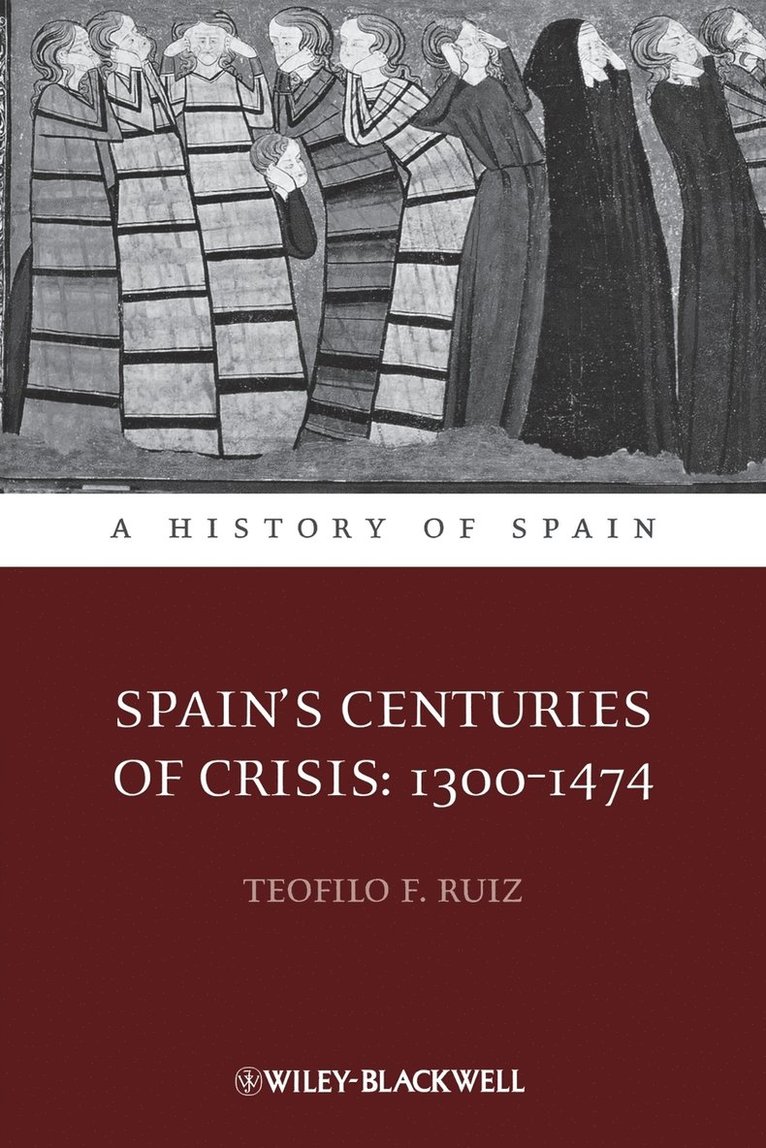
A comprehensive history that focuses on the crises of Spain in the late middle ages and the early transformations that underpinned the later successes of the Catholic Monarchs. Illuminates Spain's history from the early fourteenth century to the union of the Crowns of Castile and Aragon in 1474 Examines the challenges and reforms of the social, economic, political, and cultural structures of the country Looks at the early transformations that readied Spain for the future opportunities and challenges of the early modern Age of Discovery Includes a helpful bibliography to direct the reader toward further study