Teresa Rojano - Böcker
Visar alla böcker från författaren Teresa Rojano. Handla med fri frakt och snabb leverans.
6 produkter
6 produkter
2 311 kr
Skickas inom 10-15 vardagar
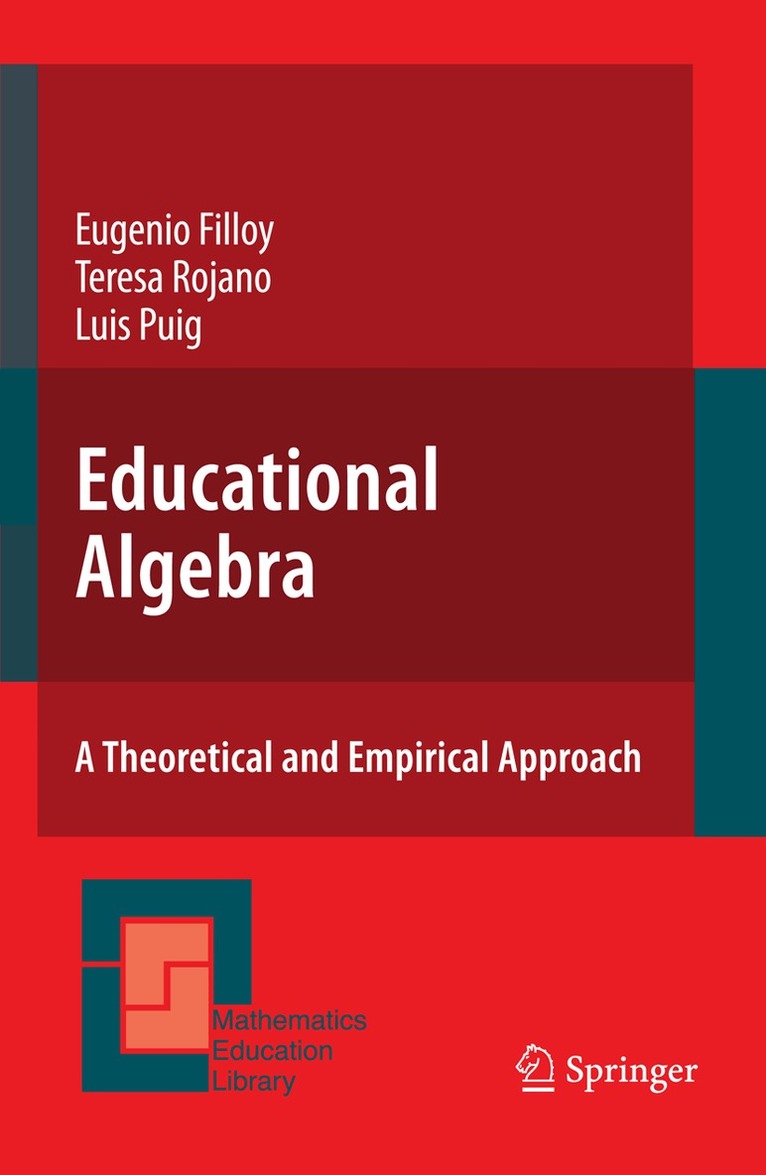
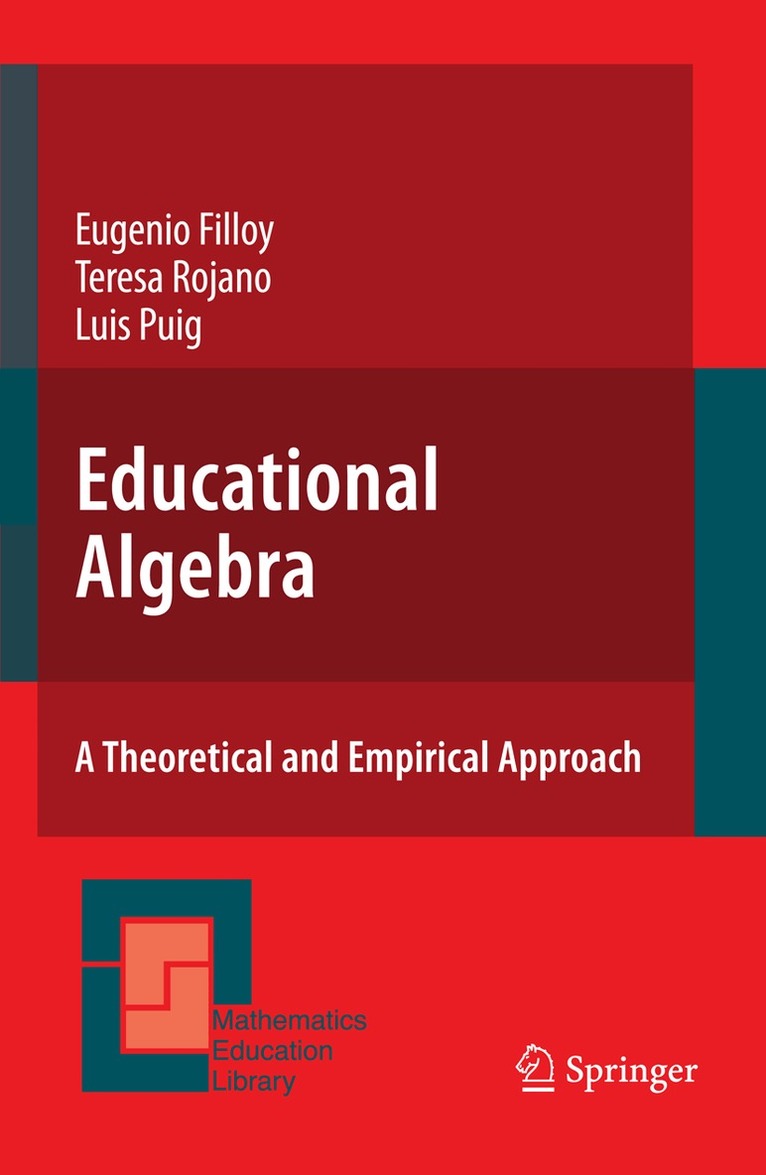
Given its abstract nature and the highly syntactical competence required by the use of symbolic algebra, research on its teaching and learning must rely on approaches that include semiotic concepts and analyses that recall the history of algebraic ideas, among others. Educational Algebra: A Theoretical and Empirical Approach deals with a theoretical perspective on the study of school algebra, in which both components (semiotics and history) occur. This perspective runs opposite to general theoretical models, since it submits components for the design of local frameworks for theoretical analysis. The Methodological design allows for the interpretation of specific phenomena and the inclusion, within such interpretative frameworks, of evidence not included in more general treatments. Such is the case of phenomena observed in subjects who are initiating the study of symbolic algebra, involving the production of personal sign systems at the intermediate level or the level previous to the mathematical sign system which is to be learned.Disciplines such as Linguistics, Logic, Psycholinguistics, Semiotics, general Cognitive Psychology, Mathematics Psychology, Mathematics Epistemology, History of Mathematics, and others have carried out research on the same topics approached by Mathematics Education and have redefined their results within the framework of their respective fields. Specifically, theorists in Linguistics, Information Processing and Didactics of Mathematics have done important work on the notion of code. Today, this notion is a key element to interpreting the idea of representation in the new explanatory models of cognitive problems placed by alternative teaching approaches, including those involving a technological environment. Additionally, Psycholinguistics and Artificial Intelligence in procedural models of human abilities have intended to explain how and why users of mathematical language naturally and commonly make mistakes in syntactical procedures.Educational Algebra: A Theoretical and Empirical Approach adds to previous developments with priority given to a pragmatic perspective on "meaning in use" over "formal meaning". The bulk of these approaches and others of similar nature have lead to a focus on competence rather than on a user’s activity with mathematical language.Such a shift in perspective has fundamental implications on the way mathematical language is studied. Essentially, Grammar—the abstract formal system—and Pragmatics—the principles of the use of language—are complementary domains in this volume. Both are related to different teaching models, whether new or traditional, used in helping students to become competent users of Algebra. Because of this, Educational Algebra: A Theoretical and Empirical Approach will be of interest to researchers and practitioners within the mathematics education field.
1 578 kr
Skickas inom 10-15 vardagar
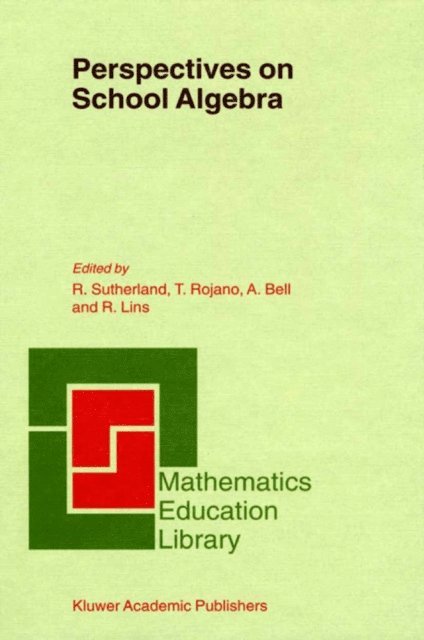
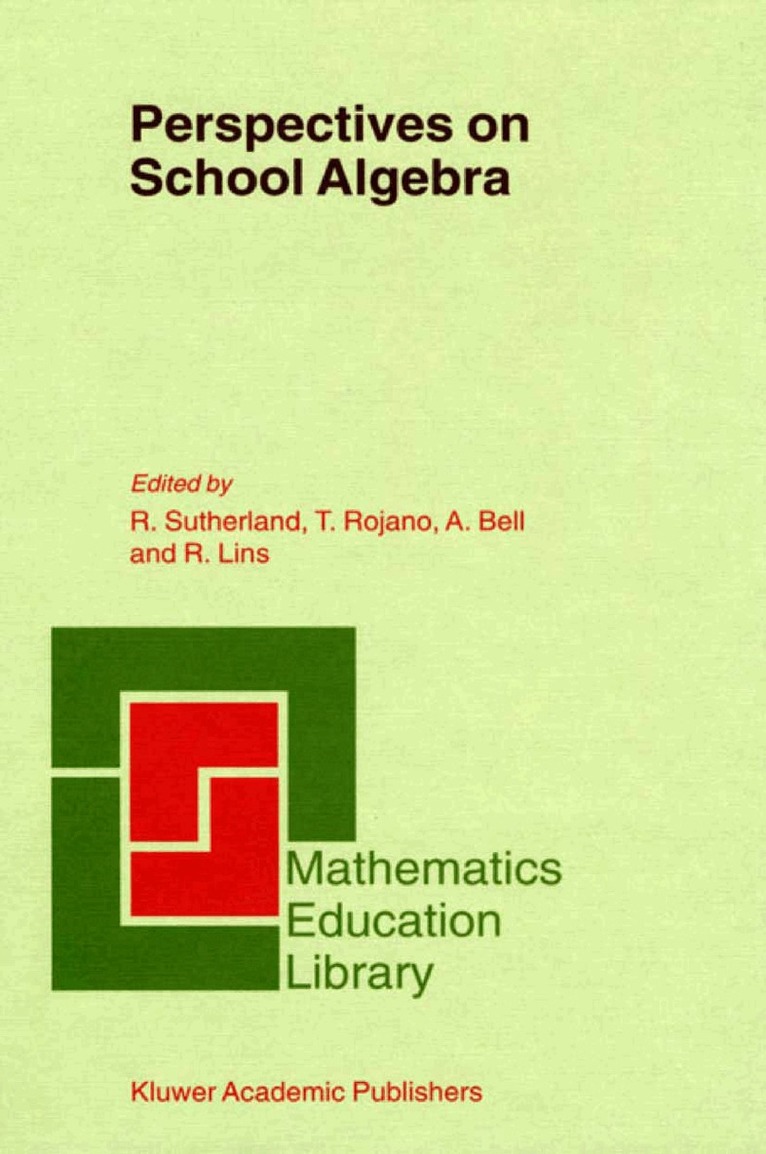
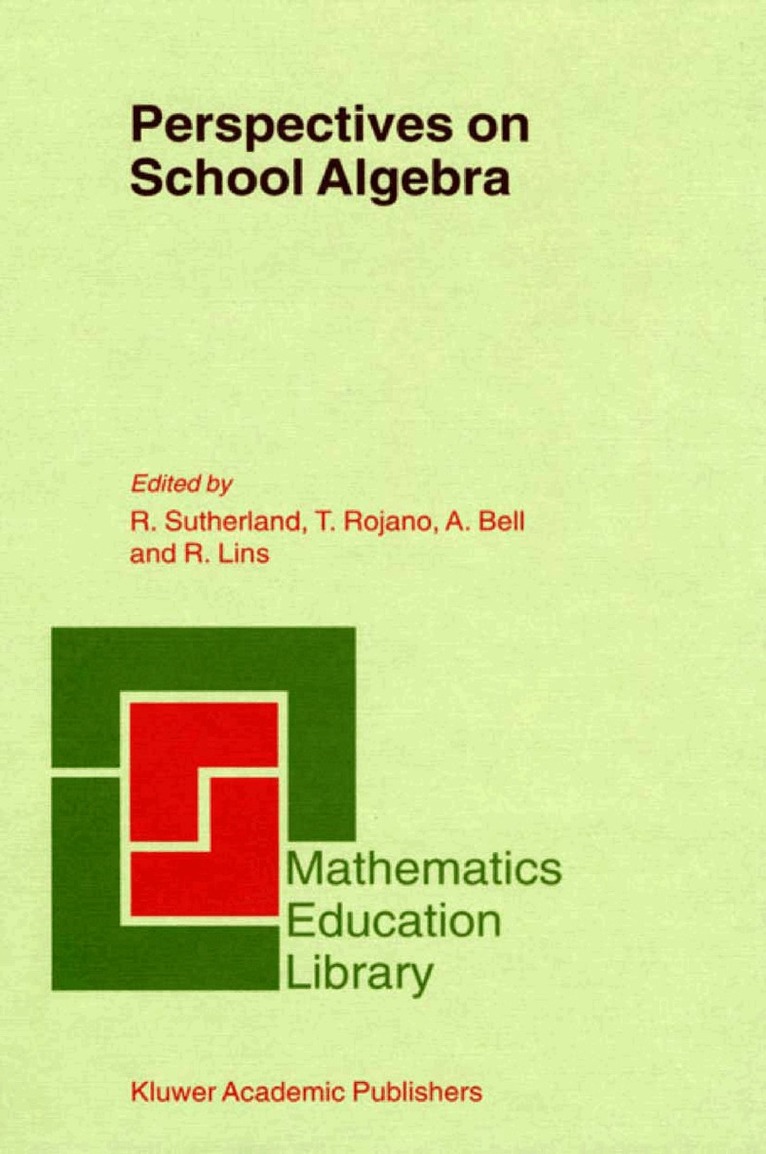
This text confronts the issue of how young people can find a way into the world of algebra. The contributions represent multiple perspectives which include an analysis of situations in which algebra is an efficient problem-solving tool, the use of computer-based technologies, and a consideration of the historical evolution of algebra. The book emphasizes the situated nature of algebraic activity as opposed to being concerned with identifying students' conceptions in isolation from problem-solving activity. The chapters emerged from a working group of the International Group for the Psychology of Mathematics Education. The authors are drawn from an international community and the work highlights the differences in school algebra around the world. The group invited Nicolas Balacheff to write a provocative postscript and he suggests that "there is no possible entrance to the world of algebra without a strong push or guidance from the teacher, because there is no natural passage from the problematique accessible from the child's world to the mathematical problematique".
Algebra Structure Sense Development amongst Diverse Learners
Theoretical and Empirical Insights to Support In-Person and Remote Learning
Inbunden, Engelska, 2022
2 029 kr
Skickas inom 10-15 vardagar
This volume emphasizes the role of effective curriculum design, teaching materials, and pedagogy to foster algebra structure sense at different educational levels.Positing algebra structure sense as fundamental to developing students’ broader mathematical maturity and advanced thinking, this text reviews conceptual, historical, cognitive, and semiotic factors, which influence the acquisition of algebra structure sense. It provides empirical evidence to demonstrate the feasibility of linking algebra structure sense to technological tools and promoting it amongst diverse learners. Didactic approaches include the use of adaptive digital environments, gamification, diagnostic and monitoring tools, as well as exercises and algebraic sequences of varied complexity.Advocating for a focus on both intuitive and formal knowledge, this volume will be of interest to students, scholars, and researchers with an interest in educational research, as well as mathematics education and numeracy.
Algebra Structure Sense Development amongst Diverse Learners
Theoretical and Empirical Insights to Support In-Person and Remote Learning
Häftad, Engelska, 2024
576 kr
Skickas inom 10-15 vardagar
This volume emphasizes the role of effective curriculum design, teaching materials, and pedagogy to foster algebra structure sense at different educational levels.Positing algebra structure sense as fundamental to developing students’ broader mathematical maturity and advanced thinking, this text reviews conceptual, historical, cognitive, and semiotic factors, which influence the acquisition of algebra structure sense. It provides empirical evidence to demonstrate the feasibility of linking algebra structure sense to technological tools and promoting it amongst diverse learners. Didactic approaches include the use of adaptive digital environments, gamification, diagnostic and monitoring tools, as well as exercises and algebraic sequences of varied complexity.Advocating for a focus on both intuitive and formal knowledge, this volume will be of interest to students, scholars, and researchers with an interest in educational research, as well as mathematics education and numeracy.
1 630 kr
Skickas inom 10-15 vardagar
Given its abstract nature and the highly syntactical competence required by the use of symbolic algebra, research on its teaching and learning must rely on approaches that include semiotic concepts and analyses that recall the history of algebraic ideas, among others. Educational Algebra: A Theoretical and Empirical Approach deals with a theoretical perspective on the study of school algebra, in which both components (semiotics and history) occur. This perspective runs opposite to general theoretical models, since it submits components for the design of local frameworks for theoretical analysis. The Methodological design allows for the interpretation of specific phenomena and the inclusion, within such interpretative frameworks, of evidence not included in more general treatments. Such is the case of phenomena observed in subjects who are initiating the study of symbolic algebra, involving the production of personal sign systems at the intermediate level or the level previous to the mathematical sign system which is to be learned.Disciplines such as Linguistics, Logic, Psycholinguistics, Semiotics, general Cognitive Psychology, Mathematics Psychology, Mathematics Epistemology, History of Mathematics, and others have carried out research on the same topics approached by Mathematics Education and have redefined their results within the framework of their respective fields. Specifically, theorists in Linguistics, Information Processing and Didactics of Mathematics have done important work on the notion of code. Today, this notion is a key element to interpreting the idea of representation in the new explanatory models of cognitive problems placed by alternative teaching approaches, including those involving a technological environment. Additionally, Psycholinguistics and Artificial Intelligence in procedural models of human abilities have intended to explain how and why users of mathematical language naturally and commonly make mistakes in syntactical procedures.Educational Algebra: A Theoretical and Empirical Approach adds to previous developments with priority given to a pragmatic perspective on "meaning in use" over "formal meaning". The bulk of these approaches and others of similar nature have lead to a focus on competence rather than on a user’s activity with mathematical language.Such a shift in perspective has fundamental implications on the way mathematical language is studied. Essentially, Grammar—the abstract formal system—and Pragmatics—the principles of the use of language—are complementary domains in this volume. Both are related to different teaching models, whether new or traditional, used in helping students to become competent users of Algebra. Because of this, Educational Algebra: A Theoretical and Empirical Approach will be of interest to researchers and practitioners within the mathematics education field.
1 578 kr
Skickas inom 10-15 vardagar
This book confronts the issue of how young people can find a way into the world of algebra. The contributions represent multiple perspectives which include an analysis of situations in which algebra is an efficient problem-solving tool, the use of computer-based technologies, and a consideration of the historical evolution of algebra. The book emphasises the situated nature of algebraic activity as opposed to being concerned with identifying students' conceptions in isolation from problem-solving activity. The chapters emerged from a working group of the International Group for the Psychology of Mathematics Education. The authors are drawn from an international community and the work highlights the differences in school algebra around the world. The group invited Nicolas Balacheff to write a provocative postscript and he suggests that `there is no possible entrance to the world of algebra without a strong push or guidance from the teacher, because there is no natural passage from the problématique accessible from the child's world to the mathematical problématique'.