Terry O'Neil – författare
Visar alla böcker från författaren Terry O'Neil. Handla med fri frakt och snabb leverans.
12 produkter
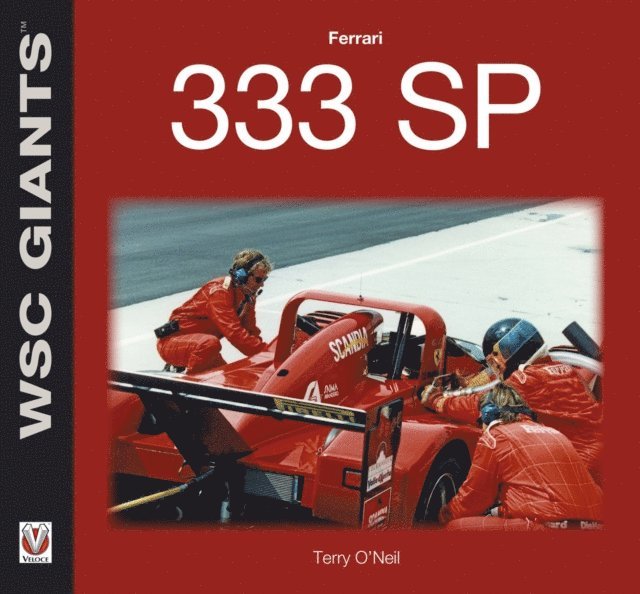
Ferrari 333 SP
Av Terry O'Neil
E-bok, 2019
152 kr
Lägg i varukorg
This book details the origin and racing history of the Ferrari 333 SP. Uniquely, none of the 333 SP models were entered into races by Ferrari itself. The cars were built specifically for customer use; a purchase price of $900,000 included two spare engines and race technical support supplied by …
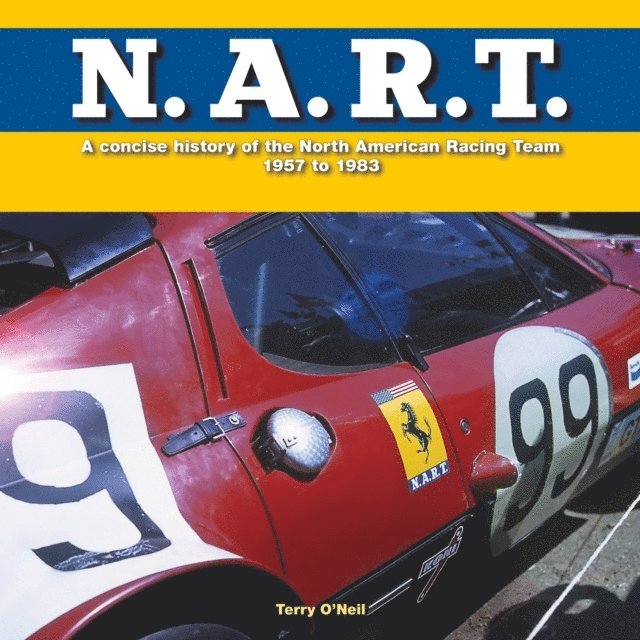
N.A.R.T.
A concise history of the North American Racing Team 1957 to 1983
Av Terry O'Neil
E-bok, 2020
154 kr
Lägg i varukorg
Most people with an interest in motor sport will be familiar with the acronym N.A.R.T., yet few people profess to know too much about the North American Racing Team. Starting in the the second half of the 1950s, NART existed for three decades, during which it experienced successes on the tracks of …
Northeast American Sports Car Races
1950-1959
Av Terry O'Neil
E-bok, 2022
155 kr
Lägg i varukorg
The growth of sports car racing in Northeast America was not painless. Tragedy, mystery, subterfuge, intrigue, and an adherence to a particular club philosophy all featured in its story during the 1950s, when professionalism in the sport was always bubbling under the surface. The northeast area of …
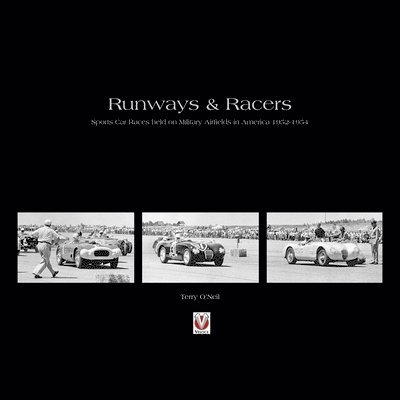
Runways & Racers
Sports Car Races held on Military Airfields in America 1952-1954
Av Terry O'Neil
E-bok, 2022
158 kr
Lägg i varukorg
Runways and Racers concentrates on the short transitional period, 1952-1954, for sports car racing in America following the ban on public road racing in many of the States. The ban left the rapidly expanding Sports Car Club of America with a problem: where to hold races. At precisely the same time, …
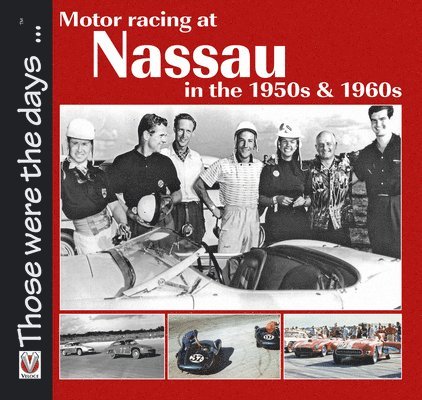
Motor Racing at Nassau in the 1950s & 1960s
Av Terry O'Neil
Häftad, 2008
159 kr
Lägg i varukorg
Motor Racing at Nassau focuses on the vision of one man, Captain Sherman ‘Red' Crise, and his quest to bring motor racing to the Bahamas. From its stuttering start in 1954, his event rapidly developed in stature to become the most important and prestigious sports car event on the race calendar …
Runways & Racers
Sports Car Races Held on Military Airfields in America 1952-1954
Av Terry O'Neil
Inbunden, 2011
338 kr
Lägg i varukorg
Runways and Racers concentrates on the short transitional period, 1952-1954, for sports car racing in America following the ban on public road racing in many of the States. The ban left the rapidly expanding Sports Car Club of America with a problem: where to hold races. At precisely the same time, …
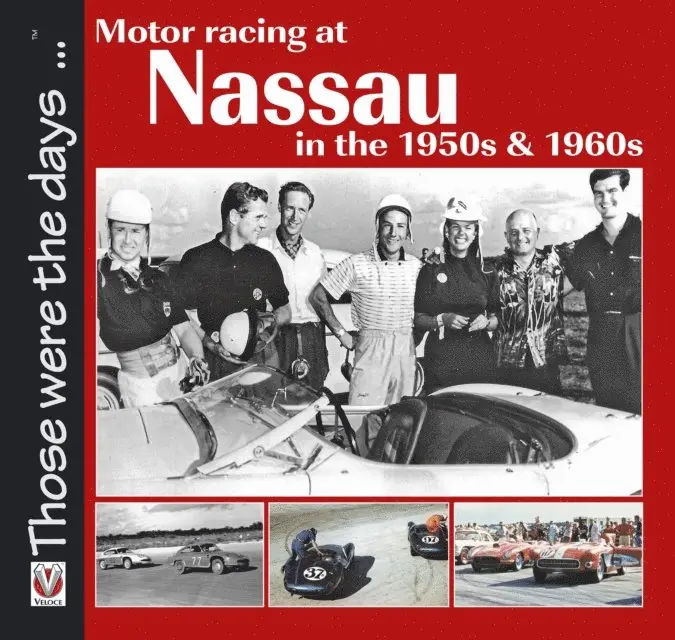
Motor racing at Nassau in the 1950s & 1960s
Av Terry O'Neil
E-bok, 2015
227 kr
Lägg i varukorg
Motor Racing at Nassau focuses on the vision of one man, Captain Sherman ''Red'' Crise, and his quest to bring motor racing to the Bahamas. From its stuttering start in 1954, his event rapidly developed in stature to become the most important and prestigious sports car event on the race calendar …
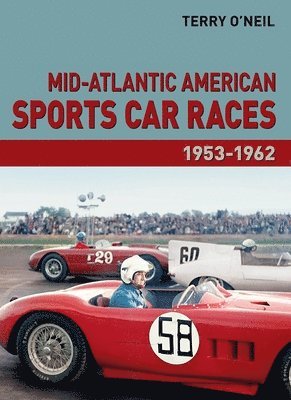
Mid-Atlantic American Sports Car Races 1953-1962
Av Terry O'Neil
Inbunden, 2015
1147 kr
Lägg i varukorg
The history of sports car racing in the states of Delaware, Maryland, West Virginia and Washington DC in the 1950s and 1960s has long been talked of but never thoroughly documented until now. This is a story of a period when sports car drivers such as Jim Kimberly, Charlie Hayes, and Dick Thompson …
Bahamas Speed Weeks
Including the Revival Meetings
Av Terry O'Neil
Inbunden, 2025
1147 kr
Kommande
The vision of one man, Captain Sherman 'Red' Crise, resulted in the Bahamas Speed Weeks, a series of motor races held on the island of New Providence in the Bahamas. They started in the mid-1950s and continued for thirteen years, before ending due to a mix of political decisions, ill fortune and a …
Ferrari 333 Sp
A Pictorial History, 1993-2003
Av Terry O'Neil
Inbunden, 2020
1997 kr
Lägg i varukorg
In this richly illustrated book, Terry O'Neil details the origins of a remarkable racecar, the Ferrari 333 SP. This vehicle heralded the famed automaker's return to professional sports car competitions after an absence of more than twenty years. Introduced on the American racing circuit in 1994, it …
Lime Rock Park
The Early Years
Av Terry O'Neil
Inbunden, 2022
2037 kr
Lägg i varukorg
Lime Rock Park, the oldest continuously operated road course in America came about more by accident than design. Construction of the course began in 1955 at a time when open road racing had been banned in many states, and the use of military and civil airport runways for racing was losing favor …
The Rise and Fall of "The Bridge": Bridgehampton Race Circuit 1955-1997
Av Terry O'Neil
Inbunden, 2027
3330 kr
Kommande