Tets Kimura - Böcker
Visar alla böcker från författaren Tets Kimura. Handla med fri frakt och snabb leverans.
3 produkter
3 produkter
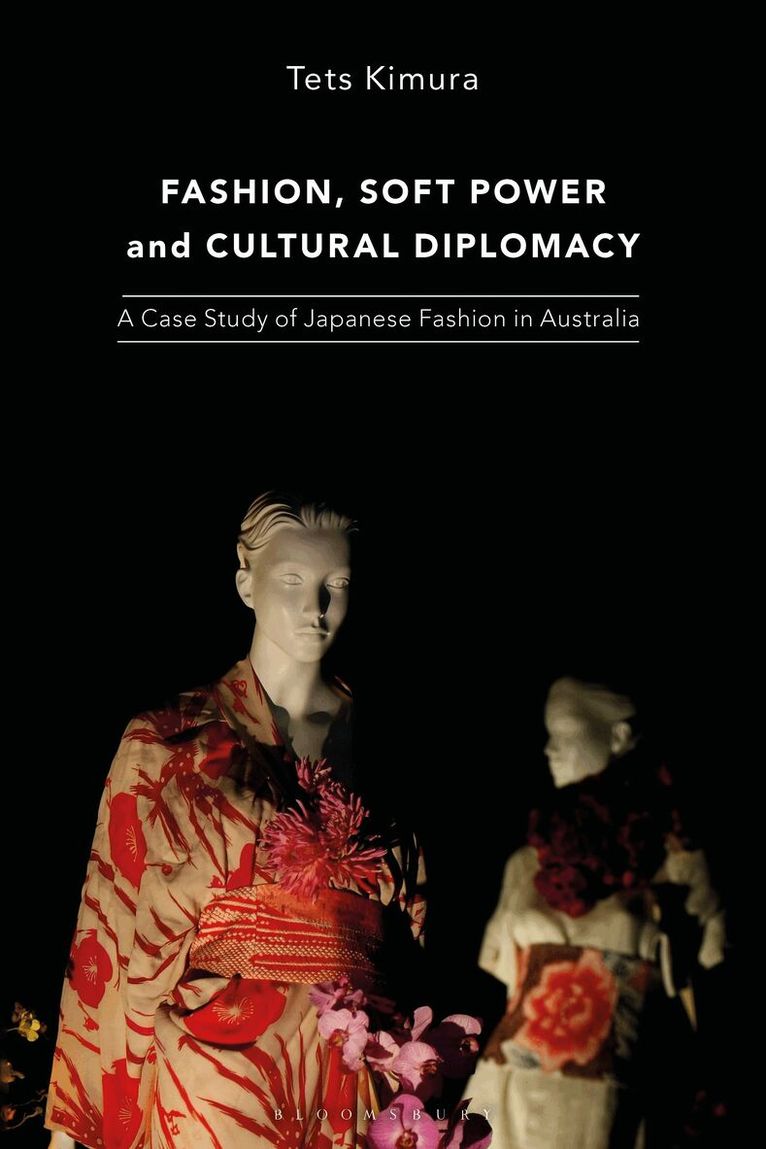
Fashion, Soft Power and Cultural Diplomacy
A Case Study of Japanese Fashion in Australia
Inbunden, Engelska, 2027
1 398 kr
Kommande
In 2010, the Japanese government established ‘The Office of Cool Japan’ to aim to boost its cultural and economic power by promoting Japanese culture in other countries. But can fashion culture in one country really influence public opinion in another? How far can cultural commodities act as vehicles of soft power, and to what extent does that soft power influence international policy?In this title, Dr Tets Kimura places fashion on the same playing field as manga, anime, videogames, pop music, and film. Through interviews from the Japanese Prime Minister’s adviser, diplomats, and public servants to key industry stakeholders including a designer, a model, and a retailer, he investigates how Japanese fashion can advance Japan’s national interests within a key strategic partner, Australia.Taking this Asia-Pacific relationship as a detailed case study, Kimura combines methods from the humanities with theories from social and political sciences to propose a compelling new model for measuring the impact and efficacy of soft power. Across case studies from Rei Kawakubo’s Comme des Garcons and Uniqlo to crucial policy issues from whaling in the Southern Ocean and disagreements on the Hague Convention on International Child Abduction, this innovative study investigates the possibilities and limitations of fashion as a soft power tool and illuminates exciting new directions for policymakers and researchers.
1 740 kr
Skickas inom 7-10 vardagar
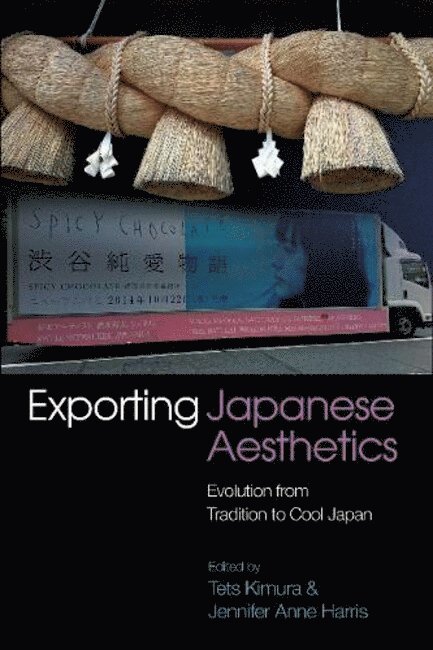
Exporting Japanese Aesthetics brings together historical and contemporary case studies addressing the evolution of international impacts and influences of Japanese culture and aesthetics. The volume draws on a wide range of examples from a multidisciplinary team of scholars exploring transnational, regional and global contexts. Studies include the impact of traditional Japanese theatre and art through to the global popularity of contemporary anime and manga. Under the banner of soft power or Cool Japan, cultural commodities that originate in Japan have manifested new meanings outside Japan. By (re)mapping meanings of selected Japanese cultural forms, this volume offers an in-depth examination of how various aspects of Japanese aesthetics have evolved as exportable commodities, the motivations behind this diffusion, and the extent to which the process of diffusion has been the result of strategic planning. Each chapter presents a case study that explores perspectives that situate Japanese aesthetics within a wide-ranging field of inquiry including performance, tourism, and visual arts, as well as providing historical contexts. The importance of interrogating the export of Japanese aesthetics is validated at the highest levels of government, which formed the Office of Cool Japan in 2010, and which perhaps originated in the 19th Century at governmentally endorsed cultural courts at worlds fairs. Increased international consumption of contemporary Japanese culture provides a much needed boost to Japans weakening economy. The case studies are timely and topical. As host of the 2020 Tokyo Olympic Games and the 2025 Osaka Expo, Cool Japan will be under special scrutiny.
663 kr
Skickas inom 7-10 vardagar
Exporting Japanese Aesthetics brings together historical and contemporary case studies addressing the evolution of international impacts and influences of Japanese culture and aesthetics. The volume draws on a wide range of examples from a multidisciplinary team of scholars exploring transnational, regional and global contexts. Studies include the impact of traditional Japanese theatre and art through to the global popularity of contemporary anime and manga. Under the banner of soft power or Cool Japan, cultural commodities that originate in Japan have manifested new meanings outside Japan. By (re)mapping meanings of selected Japanese cultural forms, this volume offers an in-depth examination of how various aspects of Japanese aesthetics have evolved as exportable commodities, the motivations behind this diffusion, and the extent to which the process of diffusion has been the result of strategic planning. Each chapter presents a case study that explores perspectives that situate Japanese aesthetics within a wide-ranging field of inquiry including performance, tourism, and visual arts, as well as providing historical contexts. The importance of interrogating the export of Japanese aesthetics is validated at the highest levels of government, which formed the Office of Cool Japan in 2010, and which perhaps originated in the 19th Century at governmentally endorsed cultural courts at worlds fairs. Increased international consumption of contemporary Japanese culture provides a much needed boost to Japans weakening economy. The case studies are timely and topical. As host of the 2020 Tokyo Olympic Games and the 2025 Osaka Expo, Cool Japan will be under special scrutiny.