Thomas A. Baylis - Böcker
Visar alla böcker från författaren Thomas A. Baylis. Handla med fri frakt och snabb leverans.
5 produkter
5 produkter
1 009 kr
Skickas inom 10-15 vardagar
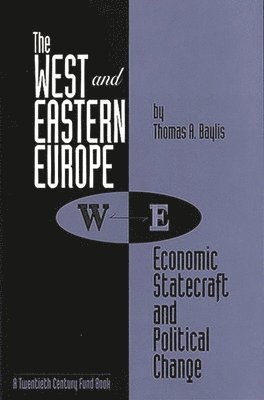
An expert on East European politics and economics analyzes and evaluates Western policies toward the new East European democracies as they struggle to build stable political orders and functioning market economies. He argues that the West must give higher priority to assisting the region and reorient its strategies so as to emphasize the political and administrative dimensions of economic reconstruction. He reviews the economic legacy of past Western policies and of Eastern Europe's previous dependency on the Soviet Union, and then examines in detail the changing East-West trade patterns, the prospect for Western investment and technology transfer, the questions of finance, debt, and foreign aid, and the dilemmas of market reform. Students, scholars, policy analysts, historians, and business people will find this fascinating reading. It is an excellent text for courses in U.S. foreign policy, comparative politics, international political economy, East European and Slavic studies, comparative economics, and international trade and finance.
474 kr
Skickas inom 10-15 vardagar
An expert on East European politics and economics analyzes and evaluates Western policies toward the new East European democracies as they struggle to build stable political orders and functioning market economies. He argues that the West must give higher priority to assisting the region and reorient its strategies so as to emphasize the political and administrative dimensions of economic reconstruction. He reviews the economic legacy of past Western policies and of Eastern Europe's previous dependency on the Soviet Union, and then examines in detail the changing East-West trade patterns, the prospect for Western investment and technology transfer, the questions of finance, debt, and foreign aid, and the dilemmas of market reform. Students, scholars, policy analysts, historians, and business people will find this fascinating reading. It is an excellent text for courses in U.S. foreign policy, comparative politics, international political economy, East European and Slavic studies, comparative economics, and international trade and finance.
2 151 kr
Skickas inom 10-15 vardagar
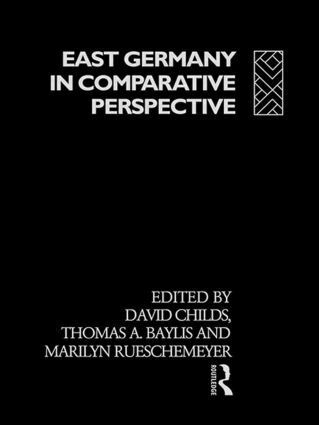
As a new decade begins the popular demand for change has meant that the social and political fabric of the the Eastern Bloc countries has been irrevocably altered. This book offers a comprehensive analysis of the key political, economic and social areas of East German society, such as the military and the church, areas which will intrinsically involved with the movement for change.
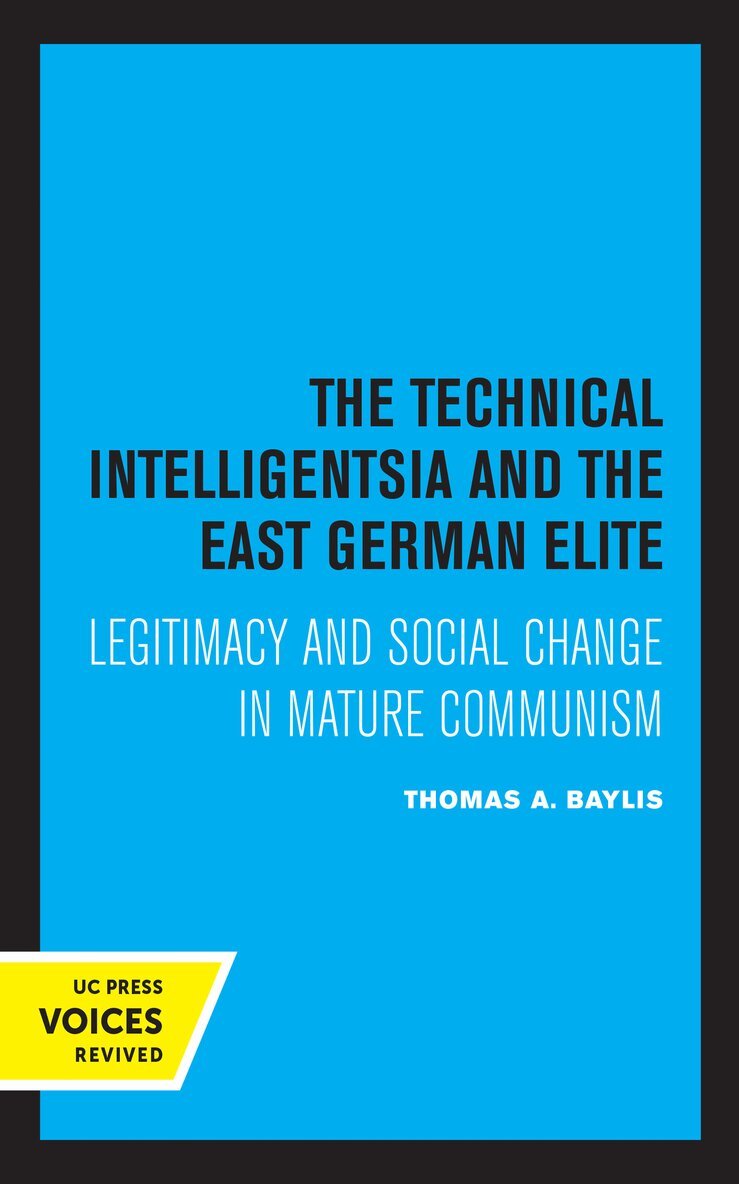
Technical Intelligentsia and the East German Elite
Legitimacy and Social Change in Mature Communism
Häftad, Engelska, 2021
399 kr
Skickas inom 7-10 vardagar
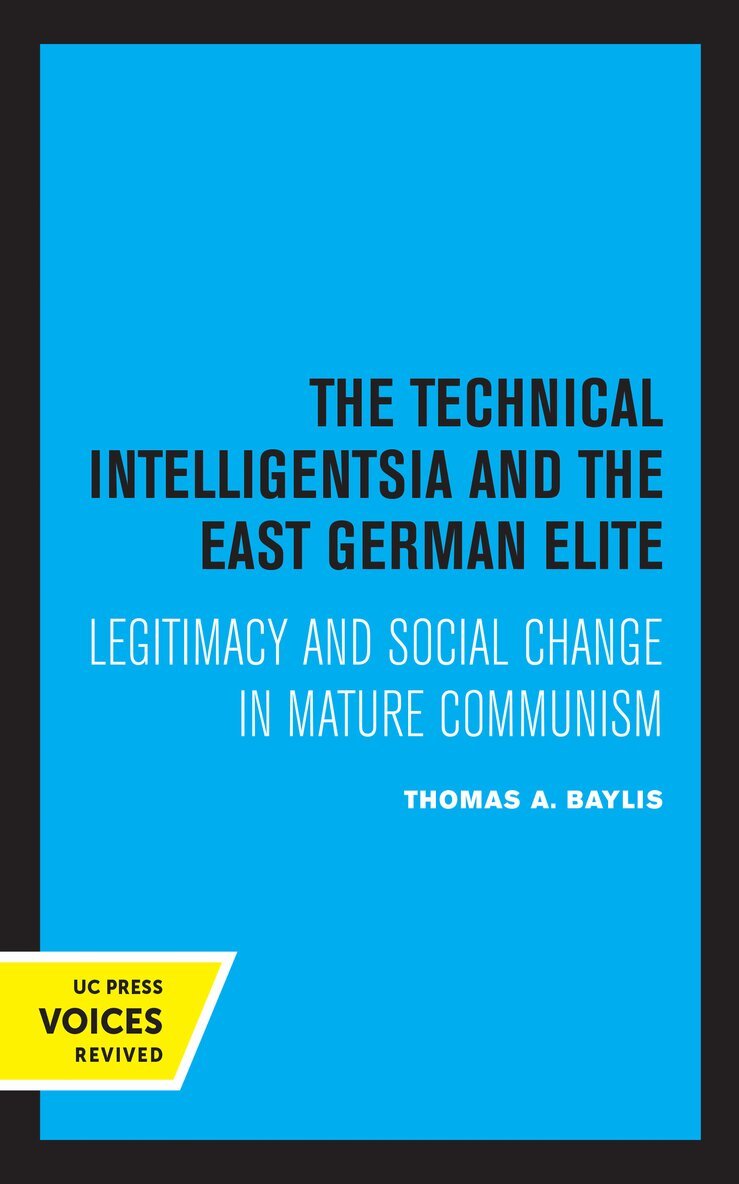
The Technical Intelligentsia and the East German Elite: Legitimacy and Social Change in Mature Communism by Thomas A. Baylis examines the deliberate cultivation of engineers, scientists, economists, and managers in the German Democratic Republic and their role in shaping both political authority and regime transformation. Part I reconstructs the postwar creation and socialization of this technical intelligentsia, analyzing how workplaces were politicized and how professional values translated into political attitudes. Part II turns to elite recruitment: who advanced from this stratum, the criteria and career patterns involved, and how technocrats influenced policy once in power. Framed against enduring debates about “technocracy,” Baylis contends that simplistic visions of managerial rule are untenable, but technocratic influence—bound to questions of legitimacy and authority—is real, if elusive, in communist systems.In a broader comparative perspective, the book contrasts “bureaucratic communism” with more “pluralistic” experiments, arguing that both remain fluid, unstable departures from Stalinism. Baylis highlights participation, expertise, and organizational demands as potential catalysts for political change, while explicitly rejecting technological determinism. Methodologically, he synthesizes East German party-state documents, West German scholarship, refugee surveys such as the 1958 Infratest study, and informal interviews, while carefully noting limitations of access and interpretation. The result is a nuanced political analysis of how conscious social engineering encounters resistant social realities, and how that dynamic reshapes authority, policy, and legitimacy in East Germany’s mature communist order.This title is part of UC Press's Voices Revived program, which commemorates University of California Press’s mission to seek out and cultivate the brightest minds and give them voice, reach, and impact. Drawing on a backlist dating to 1893, Voices Revived makes high-quality, peer-reviewed scholarship accessible once again using print-on-demand technology. This title was originally published in 1974.
Technical Intelligentsia and the East German Elite
Legitimacy and Social Change in Mature Communism
Inbunden, Engelska, 2021
753 kr
Skickas inom 7-10 vardagar
The Technical Intelligentsia and the East German Elite: Legitimacy and Social Change in Mature Communism by Thomas A. Baylis examines the deliberate cultivation of engineers, scientists, economists, and managers in the German Democratic Republic and their role in shaping both political authority and regime transformation. Part I reconstructs the postwar creation and socialization of this technical intelligentsia, analyzing how workplaces were politicized and how professional values translated into political attitudes. Part II turns to elite recruitment: who advanced from this stratum, the criteria and career patterns involved, and how technocrats influenced policy once in power. Framed against enduring debates about “technocracy,” Baylis contends that simplistic visions of managerial rule are untenable, but technocratic influence—bound to questions of legitimacy and authority—is real, if elusive, in communist systems.In a broader comparative perspective, the book contrasts “bureaucratic communism” with more “pluralistic” experiments, arguing that both remain fluid, unstable departures from Stalinism. Baylis highlights participation, expertise, and organizational demands as potential catalysts for political change, while explicitly rejecting technological determinism. Methodologically, he synthesizes East German party-state documents, West German scholarship, refugee surveys such as the 1958 Infratest study, and informal interviews, while carefully noting limitations of access and interpretation. The result is a nuanced political analysis of how conscious social engineering encounters resistant social realities, and how that dynamic reshapes authority, policy, and legitimacy in East Germany’s mature communist order.This title is part of UC Press's Voices Revived program, which commemorates University of California Press’s mission to seek out and cultivate the brightest minds and give them voice, reach, and impact. Drawing on a backlist dating to 1893, Voices Revived makes high-quality, peer-reviewed scholarship accessible once again using print-on-demand technology. This title was originally published in 1974.