Thomas Ahnert – författare
Visar alla böcker från författaren Thomas Ahnert. Handla med fri frakt och snabb leverans.
7 produkter
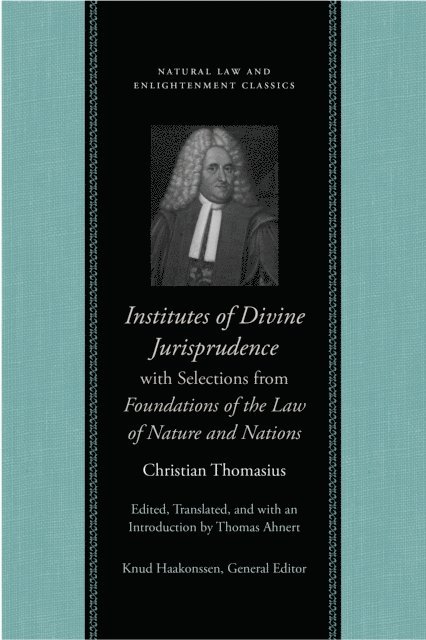
Institutes of Divine Jurisprudence, with Selections from Foundations of the Law of Nature & Nations
Av Christian Thomasius, Thomas Ahnert
Häftad, 2011
152 kr
Lägg i varukorg
Christian Thomasius's natural jurisprudence is essential to understanding the origins of the Enlightenment in Germany, where his importance was comparable to that of John Locke's in England. First published in 1688, Thomasius's Institutionum jurisprudentiae divinae (Institutes of Divine …
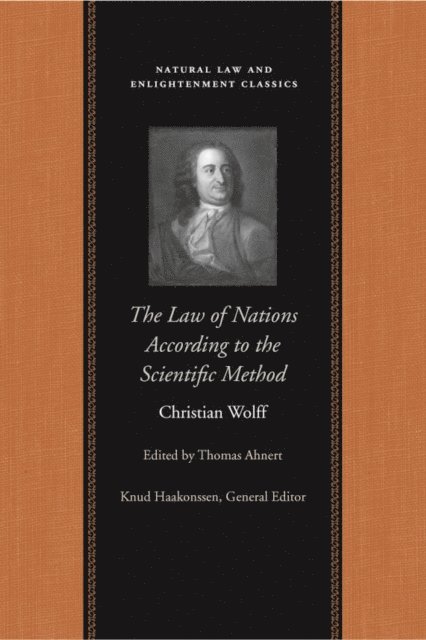
Law of Nations Treated According to the Scientific Method
Av Christian Wolff, Thomas Ahnert
Inbunden, 2017
250 kr
Lägg i varukorg
Christian Wolff's natural law theory was founded on his rationalist philosophy and metaphysics, which were strongly influenced by the philosophy of Gottfried Wilhelm Leibniz. Like Leibniz, Wolff was convinced that justice and morality were based on universally valid principles of reason and that …
Methodical System of Universal Law
Or, the Laws of Nature and Nations; With Supplements and a Discourse by George Turnbull
Av Johann Gottlieb Heineccius, Thomas Ahnert m. fl.
E-bok, 2008
82 kr
Lägg i varukorg
George Turnbull’s eighteenth-century translation of A Methodical System of Universal Law was his major effort to convey continental natural law to Britain, thus making Heineccius’s natural jurisprudence more accessible to English-speaking audiences. Turnbull includes extensive comments on …
Essays on Church, State, and Politics
Av Christian Thomasius, Thomas Ahnert m. fl.
E-bok, 2007
80 kr
Lägg i varukorg
The works found in Essays on Church, State, and Politics , which originated as disputations, theses, and pamphlets, were direct interventions in the unresolved issue of the political role of religion in Brandenburg-Prussia, a state in which a Calvinist dynasty ruled over a largely Lutheran …
Institutes of Divine Jurisprudence, with Selections from Foundations of the Law of Nature and Nations
Av Christian Thomasius, Thomas Ahnert
E-bok, 2011
82 kr
Lägg i varukorg
Christian Thomasius’s natural jurisprudence is essential to understanding the origins of the Enlightenment in Germany, where his importance was comparable to that of John Locke’s in England. First published in 1688, Thomasius’s Institutiones jurisprudentiae divinae ( Institutes of Divine …
Law of Nations Treated According to the Scientific Method
Av Christian Wolff, Thomas Ahnert
E-bok, 2017
80 kr
Lägg i varukorg
Christian Wolff’s The Law of Nations is a cornerstone of eighteenth-century thought. A treatise on the philosophy of human action, on the foundations of political communities, and on international law, it influenced philosophers throughout the eighteenth-century Enlightenment world. According to …
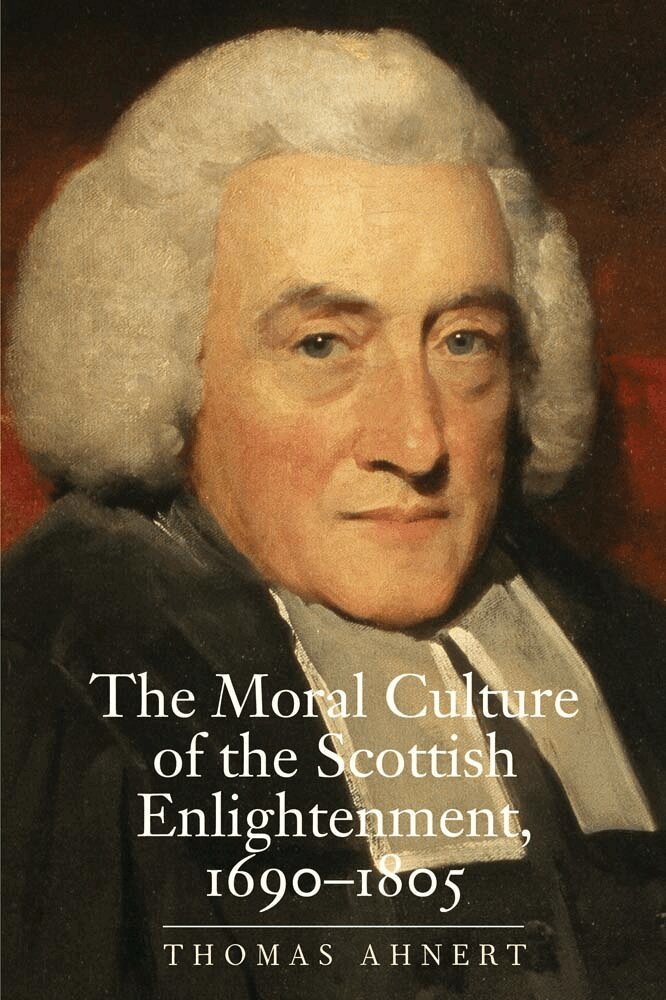
Moral Culture of the Scottish Enlightenment
1690–1805
Inbunden, 2015
659 kr
Tillfälligt slut
In the European Enlightenments it was often argued that moral conduct rather than adherence to certain theological doctrines was the true measure of religious belief. Thomas Ahnert argues that this characteristically “enlightened” emphasis on conduct in religion was less reliant on arguments from …