Thomas DeLio – författare
Visar alla böcker från författaren Thomas DeLio. Handla med fri frakt och snabb leverans.
5 produkter
5 produkter
831 kr
Skickas inom 7-10 vardagar
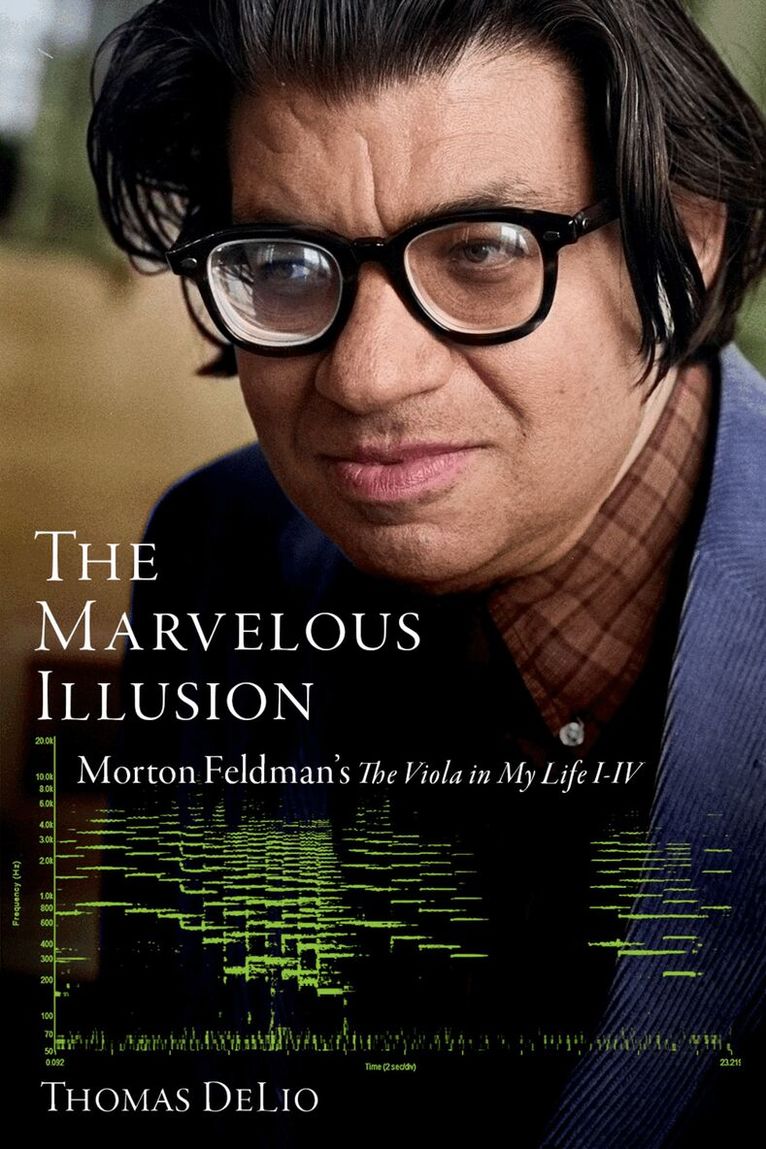
The Marvelous Illusion: The Viola in My Life I-IV is a detailed analytical study of four of Morton Feldman's most important works. Morton Feldman was one of the most original composers of the 20th century, and throughout his career he attempted to locate sound at the moment the listener becomes conscious of its presence. Focusing on the listener's attention on the sounds themselves, Feldman created the "marvelous illusion" of sounds shaping into coherent music through the act of perceiving them, rather than through the act of composing. Each work appears to assemble itself for the listener as they experience it.Author Thomas DeLio examines each work from the perspective of pitch/interval content, temporal evolution, register and timbre. Spectrographs are used to visualize what a listener actually hears, not just what is notated on a printed page, offering a window into dimensions of sound that clearly, deeply affect our experience of a musical work but which are typically not considered when analyzing music through traditional means. This perspective prioritizes timbre as central to the creative impulses of Feldman's work. This book frames these analyses with a discussion of Feldman's relationships to important contemporaries in other arts. Feldman was one member of the so-called New York School of composers which also included John Cage, Christian Wolff, and Earle Brown. He was also connected to painters, writers, and poets of the New York School as well, including Mark Rothko, Philip Guston and Franz Kline, Jasper Johns, Robert Rauschenberg, and notably Frank O'Hara. DeLio takes the specific analytical details of Feldman's compositions and fashions a tapestry of interconnections and context to reveal that above all Morton Feldman's music is about sound and spontaneity, connections arising for the listener as the composition is heard.
286 kr
Skickas inom 5-8 vardagar
The Marvelous Illusion: The Viola in My Life I-IV is a detailed analytical study of four of Morton Feldman's most important works. Morton Feldman was one of the most original composers of the 20th century, and throughout his career he attempted to locate sound at the moment the listener becomes conscious of its presence. Focusing on the listener's attention on the sounds themselves, Feldman created the "marvelous illusion" of sounds shaping into coherent music through the act of perceiving them, rather than through the act of composing. Each work appears to assemble itself for the listener as they experience it.Author Thomas DeLio examines each work from the perspective of pitch/interval content, temporal evolution, register and timbre. Spectrographs are used to visualize what a listener actually hears, not just what is notated on a printed page, offering a window into dimensions of sound that clearly, deeply affect our experience of a musical work but which are typically not considered when analyzing music through traditional means. This perspective prioritizes timbre as central to the creative impulses of Feldman's work. This book frames these analyses with a discussion of Feldman's relationships to important contemporaries in other arts. Feldman was one member of the so-called New York School of composers which also included John Cage, Christian Wolff, and Earle Brown. He was also connected to painters, writers, and poets of the New York School as well, including Mark Rothko, Philip Guston and Franz Kline, Jasper Johns, Robert Rauschenberg, and notably Frank O'Hara. DeLio takes the specific analytical details of Feldman's compositions and fashions a tapestry of interconnections and context to reveal that above all Morton Feldman's music is about sound and spontaneity, connections arising for the listener as the composition is heard.
1 039 kr
Skickas inom 10-15 vardagar
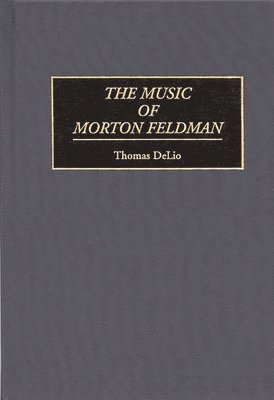
Morton Feldman (1926-1987) is today widely regarded as one of America's foremost experimental composers. His unique body of compositions, as well as his numerous writings and interviews, provide a vast amount of source material for scholarly research. Yet, few have seriously examined his work. This collection of essays will help rectify this situation.This book begins with a brief work by John Cage written in honor of Morton Feldman. It is followed by a series of essays that challenge some views of Feldman's music and clarify many others. The collection concludes with a selection of essays written by the composer himself; these essays reveal as much about Feldman's own work and attitudes as they do about the work and thought of the many composers and artists about whom he wrote. The volume concludes with a list of Feldman's compositions, a bibliography, and a discography. This study, the first of a series of Profiles of American Composers, will be invaluable to musicologists and all involved with the music of the 20th century.
695 kr
Skickas inom 10-15 vardagar
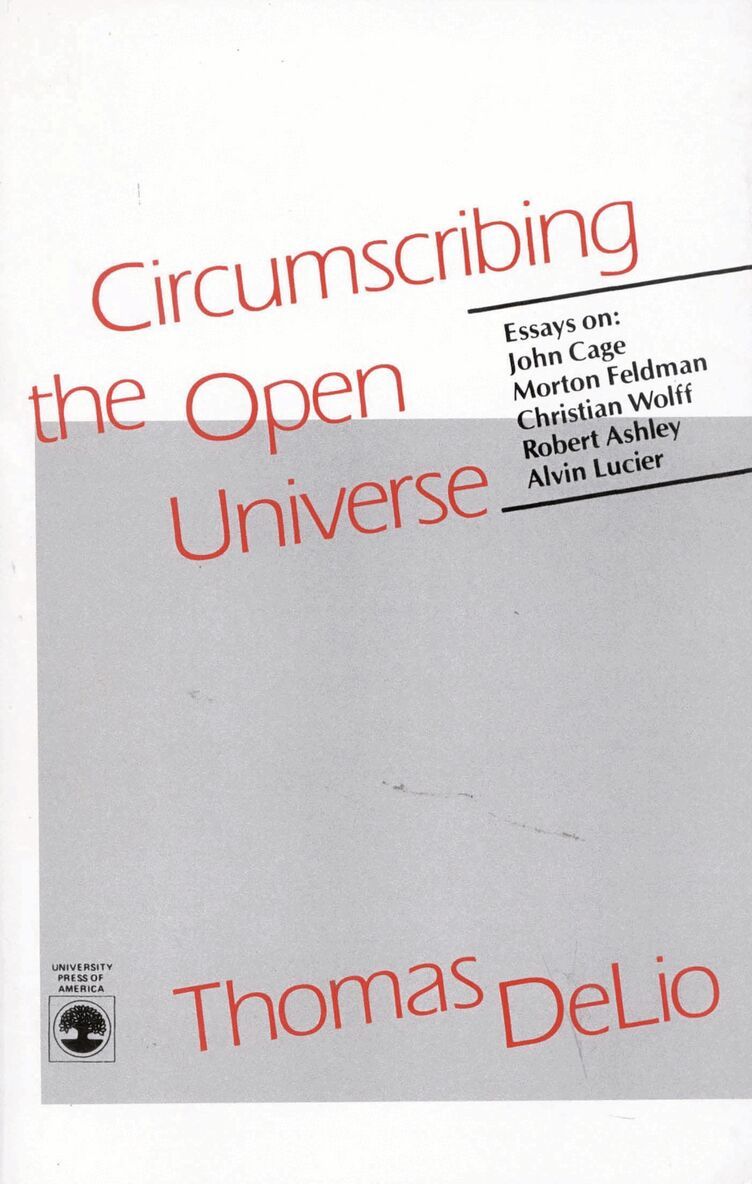
Explores the concept of open structure as it has evolved in the music of the American avant-garde throughout the 1960s and 1970s. The works of five composers are examined in detail: John Cage, Morton Feldman, Christian Wolff, Robert Ashley and Alvin Lucier.
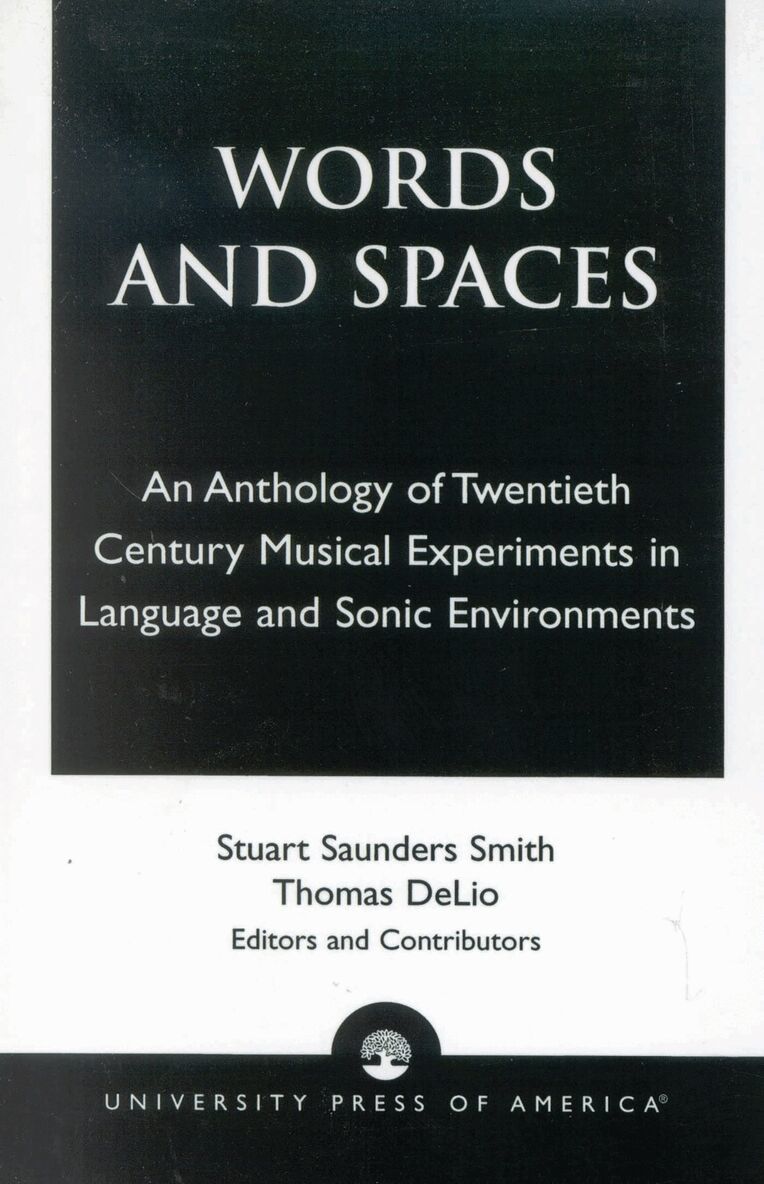
Words and Spaces
An Anthology of Twentieth Century Musical Experiments in Language Sonic Environments
Häftad, Engelska, 1989
901 kr
Skickas inom 10-15 vardagar
This volume is presented as a collection of primary research materials for scholars and artists. Each composer presents either a score or some form of documentation of one of his works and, in an accompanying essay, discusses his music in detail, exploring both its aesthetic and structural premises. The purpose of this book is not to present analyses or critical evaluations of this original and diverse body of works but rather, for the first time, to document the major activities of recent composers working in the important hybrid media of sound-text and sound-installation. It is hoped that this book will mark the beginning of a general recognition of the importance of such inter-media works as well as encourage future exploration of the aesthetic and structural innovations continued therein. Composers discussed include John Cage, Robert Ashley, Max Neuhaus, Alvin Lucier and Kenneth Gaburo.