Thomas E. Sheridan – författare
Visar alla böcker från författaren Thomas E. Sheridan. Handla med fri frakt och snabb leverans.
9 produkter
9 produkter
1 000 kr
Skickas inom 5-8 vardagar
News headlines would often have us believe that conservationists are inevitably locked in conflict with the people who live and work on the lands they seek to protect. Not so, across the western expanses of the United States, conservationists, ranchers, and forest workers are bucking preconceptions to establish common ground and join together to protect wide open spaces, diverse habitats, and working landscapes. Featuring contributions from an impressive array of scientists, conservationists, scholars, ranchers, and foresters, Stitching the West Back Together explores that expanded, inclusive vision of environmentalism as it delves into the history and evolution of western land use policy and of the working landscapes themselves. Chapters include detailed case studies of efforts to promote both environmental and economic sustainability, with lessons learned; descriptions of emerging institutional frameworks for conserving Western working landscapes; and implications for best practices and policies crucial to the future of the West's working forests and rangelands.As economic and demographic forces threaten these lands with fragmentation and destruction, this book encourages a hopeful balance between production and conservation on the large, interconnected landscapes required for maintaining cultural and biological diversity over the long term.
309 kr
Skickas inom 5-8 vardagar
News headlines would often have us believe that conservationists are inevitably locked in conflict with the people who live and work on the lands they seek to protect. Not so. Across the western expanses of the United States, conservationists, ranchers, and forest workers are bucking preconceptions to establish common ground and join together to protect wide open spaces, diverse habitats, and working landscapes. Featuring contributions from an impressive array of scientists, conservationists, scholars, ranchers, and foresters, Stitching the West Back Together explores that expanded, inclusive vision of environmentalism as it delves into the history and evolution of western land use policy and of the working landscapes themselves. Chapters include detailed case studies of efforts to promote both environmental and economic sustainability, with lessons learned; descriptions of emerging institutional frameworks for conserving Western working landscapes; and implications for best practices and policies crucial to the future of the West's working forests and rangelands.As economic and demographic forces threaten these lands with fragmentation and destruction, this book encourages a hopeful balance between production and conservation on the large, interconnected landscapes required for maintaining cultural and biological diversity over the long term.
334 kr
Skickas inom 5-8 vardagar
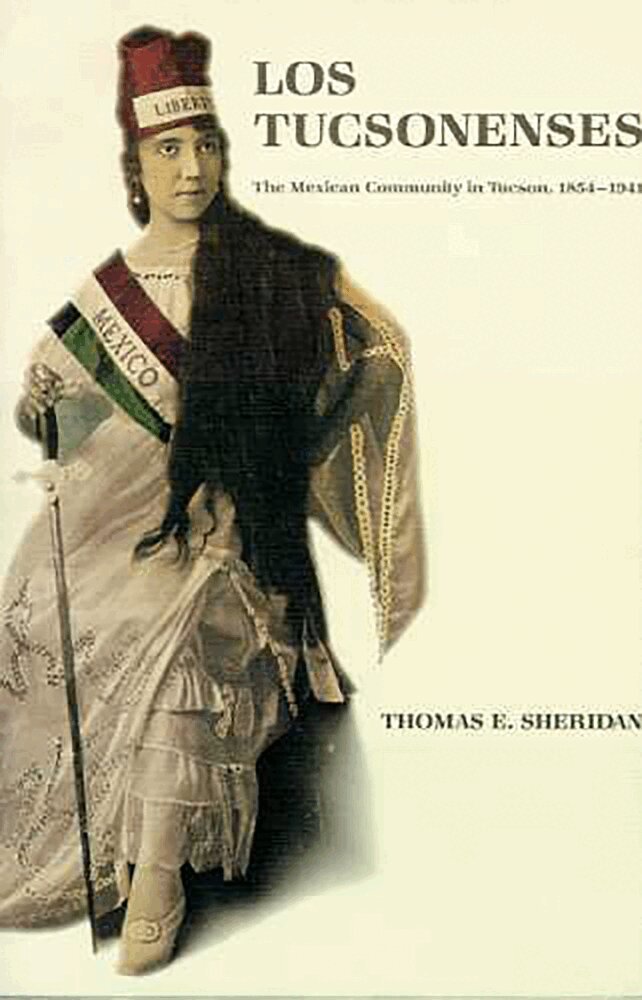
Originally a presidio on the frontier of New Spain, Tucson was a Mexican community before the arrival of Anglo settlers. Unlike most cities in California and Texas, Tucson was not initially overwhelmed by Anglo immigrants, so that even until the early 1900s Mexicans made up a majority of the town's population. Indeed, it was through the efforts of Mexican businessmen and politicians that Tucson became a commercial center of the Southwest. Los Tucsonenses celebrates the efforts of these early entrepreneurs as it traces the Mexican community's gradual loss of economic and political power. Drawing on both statistical archives and pioneer reminiscences, Thomas Sheridan has written a history of Tucson's Mexican community that is both rigorous in its factual analysis and passionate in its portrayal of historic personages.
429 kr
Skickas inom 5-8 vardagar
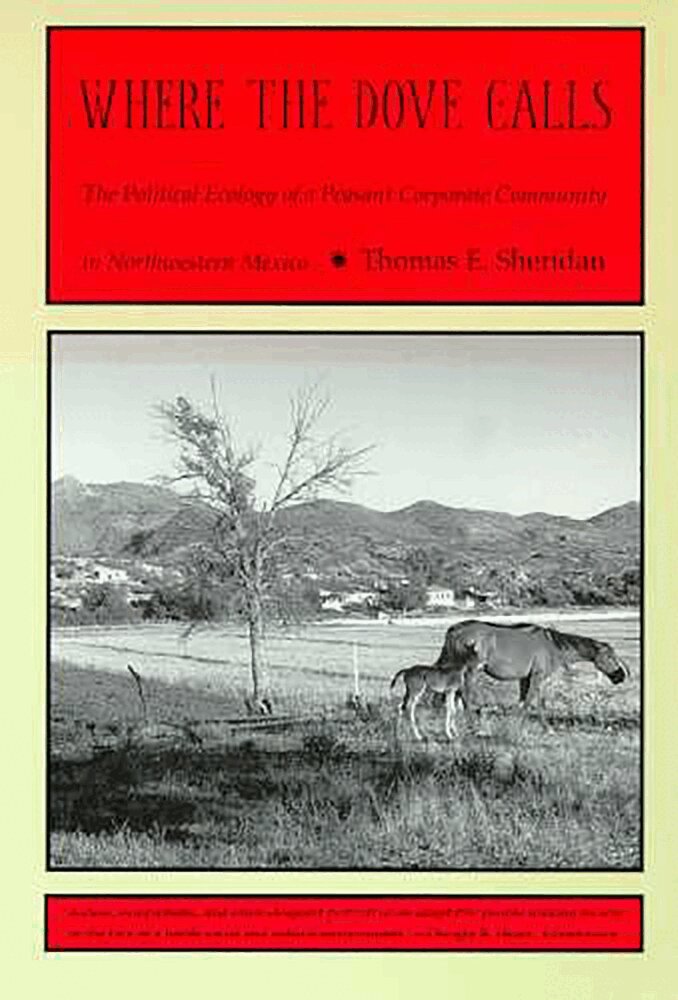
Where the Dove Calls
The Political Ecology of a Peasant Corporate Community in Northwestern Mexico
Häftad, Engelska, 1996
271 kr
Skickas inom 5-8 vardagar
Thomas Sheridan's study of the municipio of Cucurpe, Sonora, offers new insight into the ability of peasants to respond to ecological and political change. In order to survive as small rancher-farmers, the Cucurpenos battle aridity and one another in a society characterized by sharp economic inequality and long-standing conflict over the distribution of land and water. Sheridan has written an ethnography of resource control, one that weds the approaches of political economy and cultural ecology in order to focus upon both the external linkages and internal adaptations that shape three peasant corporate communities. He examines the ecological and economic constraints which scarce and necessary resources place upon households in Cucurpe, and then investigates why many such households have formed corporate communities to insure their access to resources beyond their control. Finally, he identifies the class differences that exist within the corporate communities as well as between members of those organizations and the private ranchers who surround them.Where the Dove Calls (the meaning of "Cucurpe" in the language of the Opata Indians), an important contribution to peasant studies, reveals the household as the basic unit of Cucurpe society. By viewing Cucurpe's corporate communities as organizations of fiercely independent domestic units rather than as expressions of communal solidarity, Sheridan shows that peasants are among the exploiters as well as the exploited. Cucurpei??os struggle to maintain the autonomy of their households even as they join together to protect corporate grazing lands and irrigation water. Any attempt to weaken or destroy that independence is met with opposition that ranges from passive resistance to violence.
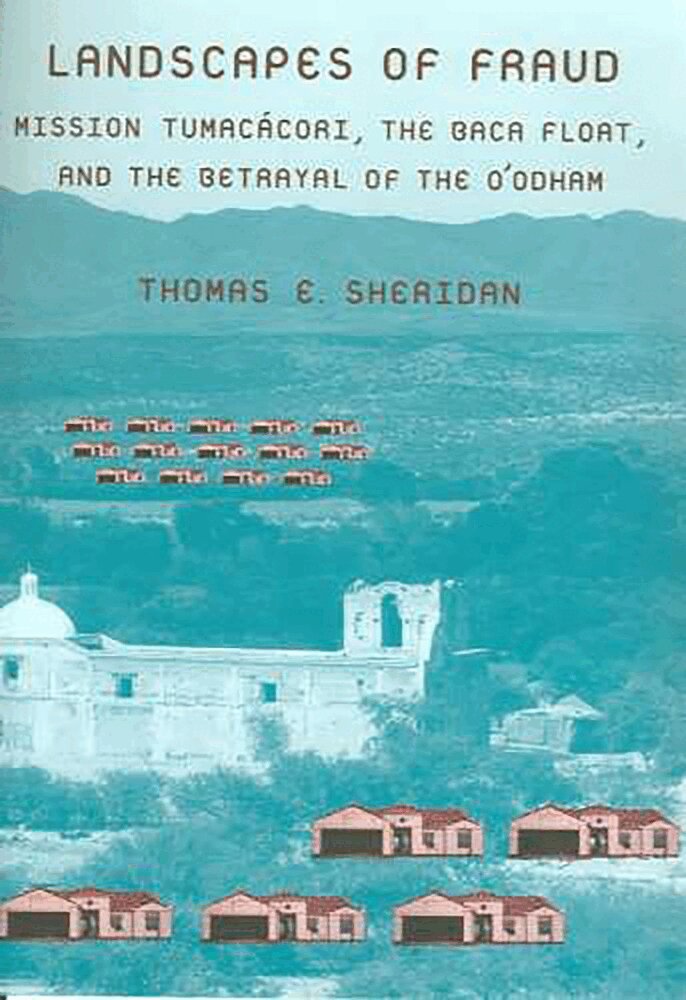
Landscapes of Fraud
Mission Tumacacori, the Baca Float, and the Betrayal of the O?Odham
Häftad, Engelska, 2008
388 kr
Skickas inom 5-8 vardagar
From the actions of Europeans in the seventeenth century to the real estate deals of the modern era, people making a living off the land in southern Arizona have been repeatedly robbed of their way of life. History has recorded more than three centuries of speculative failures that never amounted to much but left dispossessed people in their wake. This book seeks to excavate those failures, to examine the new social spaces the schemers struggled to create and the existing social spaces they destroyed. Landscapes of Fraud explores how the penetration of the evolving capitalist world-system created and destroyed communities in the Upper Santa Cruz Valley of Arizona from the late 1600s to the 1970s. Thomas Sheridan has melded history, anthropology, and critical geography to create a penetrating view of greed and power and their lasting effect on those left powerless. Sheridan first examines how Oodham culture was fragmented by the arrival of the Spanish, telling how autonomous communities moving across landscapes in seasonal rounds were reduced to a mission world of subordination. Sheridan then considers the fate of the Tumacacori grant and Baca Float No. 3, another land grant.He tells the unbroken story of land fraud from Manuel Maria Gandara's purchase of the , bandoned? Tumacacori grant at public auction in 1844 through the bankruptcy of the shady real estate developers who had fraudulently promoted housing projects at Rio Rico during the 1960s and ?70s. As the Upper Santa Cruz Valley underwent a wrenching transition from a landscape of community to a landscape of fraud, the betrayal of the Oodham became complete when land, that most elemental form of human space, was transformed from a communal resource into a commodity bought and sold for its future value. Today, Mission Tumacacori stands as a romantic icon of the past while the landscapes that supported it lay buried under speculative schemes that continue to haunt our history.
850 kr
Skickas inom 5-8 vardagar
Moquis and Kastiilam tells the story of the encounter between the Hopis, who the Spaniards called Moquis, and the Spaniards, who the Hopis called Kastiilam, from the first encounter in 1540 until the eve of the Pueblo Revolt of 1680. By comparing and contrasting Spanish documents with Hopi oral traditions, the editors portray a balanced presentation of their shared past. Translations of sixteenth-, seventeenth-, and eighteenth-century documents written by Spanish explorers, colonial officials, and Franciscan missionaries tell the perspectives of the European visitors, and oral traditions recounted by Hopi elders reveal the Indigenous experience..The editors argue that the Spanish record is incomplete, and only the Hopi perspective can balance the story. The Spanish documentary record (and by extension the documentary record of any European or Euro-American colonial power) is biased and distorted, according to the editors, who assert there are enormous silences about Hopi responses to Spanish missionization and colonization. The only hope of correcting those weaknesses is to record and analyze Hopi oral traditions, which have been passed down from generation to generation, and give voice to Hopi values and Hopi social memories of what was a traumatic period in their past..Spanish abuses during missionization—which the editors address specifically and directly as the sexual exploitation of Hopi women, suppression of Hopi ceremonies, and forced labor of Hopis—drove Hopis to the breaking point, inspiring a Hopi revitalization that led them to participate in the Pueblo Revolt. Those abuses, the revolt, and the resistance that followed remain as open wounds in Hopi society today.
Zion's Last Frontier
LDS Ranchers, Federal Regulators, and the Clash of the New West in Capitol Reef Country, Utah
Häftad, Engelska, 2026
501 kr
Kommande
Zion's Last Frontier is a historical ethnography that documents the uniquely Latter-Day Saints (Mormon) ranching community around Capitol Reef National Park in south-central Utah over the last 150 years.From the arrival of the first LDS pioneers in the 1870s to fifth- and sixth-generation descendants of those pioneers today, anthropologist Thomas E. Sheridan documents their ongoing struggles with the federal and state agencies that control 96 percent of the land they ranch. Changing policies and management philosophies profoundly impact the ranchers' livelihoods and ways of life. Sheridan explains how the ranchers qualify as "Traditionally Associated People," allowing them access to park lands where some ranchers still drive their cattle on horseback along the few canyons that cut through the Waterpocket Fold as they move their herds from their traditional summer grazing lands to their winter grazing lands.Pushing beyond binary arguments, Sheridan offers an empathetic look at the lived experiences of rural communities often mischaracterized in debates over public lands and environmentalism. Tensions have been aggravated by a massive increase in the number of tourists that swarm the area in the warmer months and a steady increase in the number of seasonal residents who build second homes there.Zion's Last Frontier provides an in-depth look at the clash of cultures between the agrarian Old West and the New West of tourism and second-homers that is playing itself out across so many parts of the rural West today.
Zion's Last Frontier
LDS Ranchers, Federal Regulators, and the Clash of the New West in Capitol Reef Country, Utah
Inbunden, Engelska, 2026
1 473 kr
Kommande
Zion's Last Frontier is a historical ethnography that documents the uniquely Latter-Day Saints (Mormon) ranching community around Capitol Reef National Park in south-central Utah over the last 150 years.From the arrival of the first LDS pioneers in the 1870s to fifth- and sixth-generation descendants of those pioneers today, anthropologist Thomas E. Sheridan documents their ongoing struggles with the federal and state agencies that control 96 percent of the land they ranch. Changing policies and management philosophies profoundly impact the ranchers' livelihoods and ways of life. Sheridan explains how the ranchers qualify as "Traditionally Associated People," allowing them access to park lands where some ranchers still drive their cattle on horseback along the few canyons that cut through the Waterpocket Fold as they move their herds from their traditional summer grazing lands to their winter grazing lands.Pushing beyond binary arguments, Sheridan offers an empathetic look at the lived experiences of rural communities often mischaracterized in debates over public lands and environmentalism. Tensions have been aggravated by a massive increase in the number of tourists that swarm the area in the warmer months and a steady increase in the number of seasonal residents who build second homes there.Zion's Last Frontier provides an in-depth look at the clash of cultures between the agrarian Old West and the New West of tourism and second-homers that is playing itself out across so many parts of the rural West today.