Thomas Flanagan – författare
Visar alla böcker från författaren . Handla med fri frakt och snabb leverans.
11 produkter
11 produkter
Häftad, Engelska, 1996
350 kr
Skickas inom 5-8 vardagar
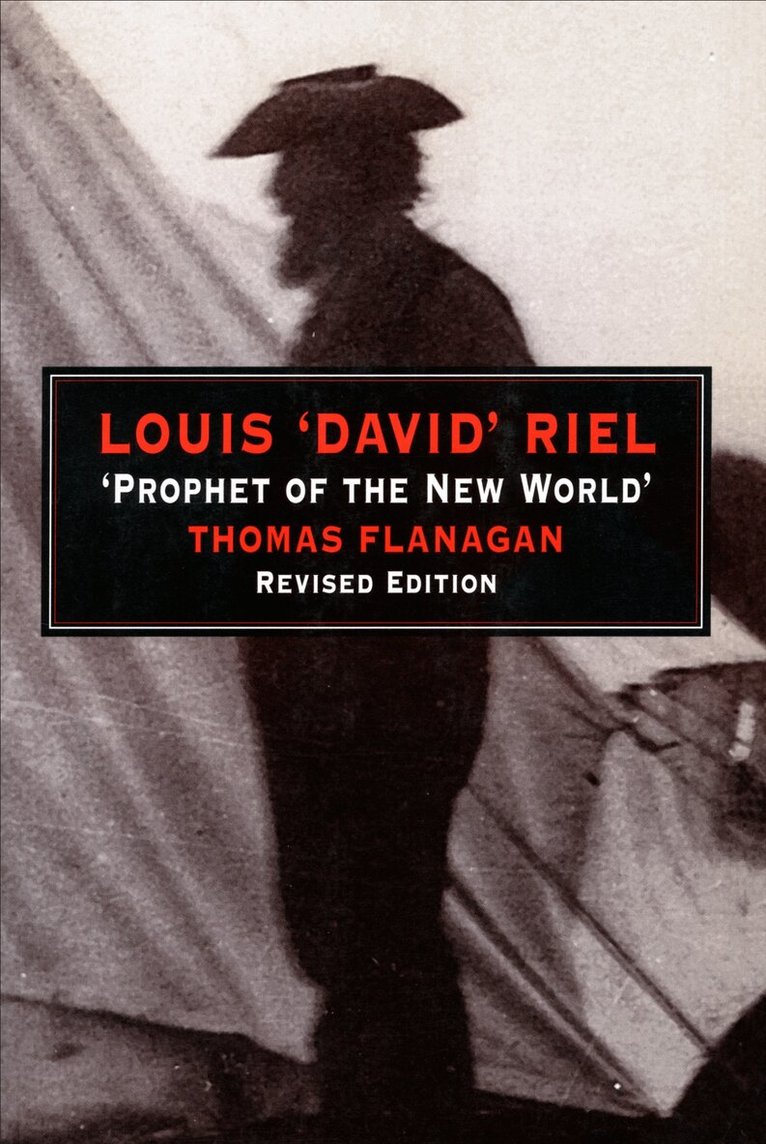
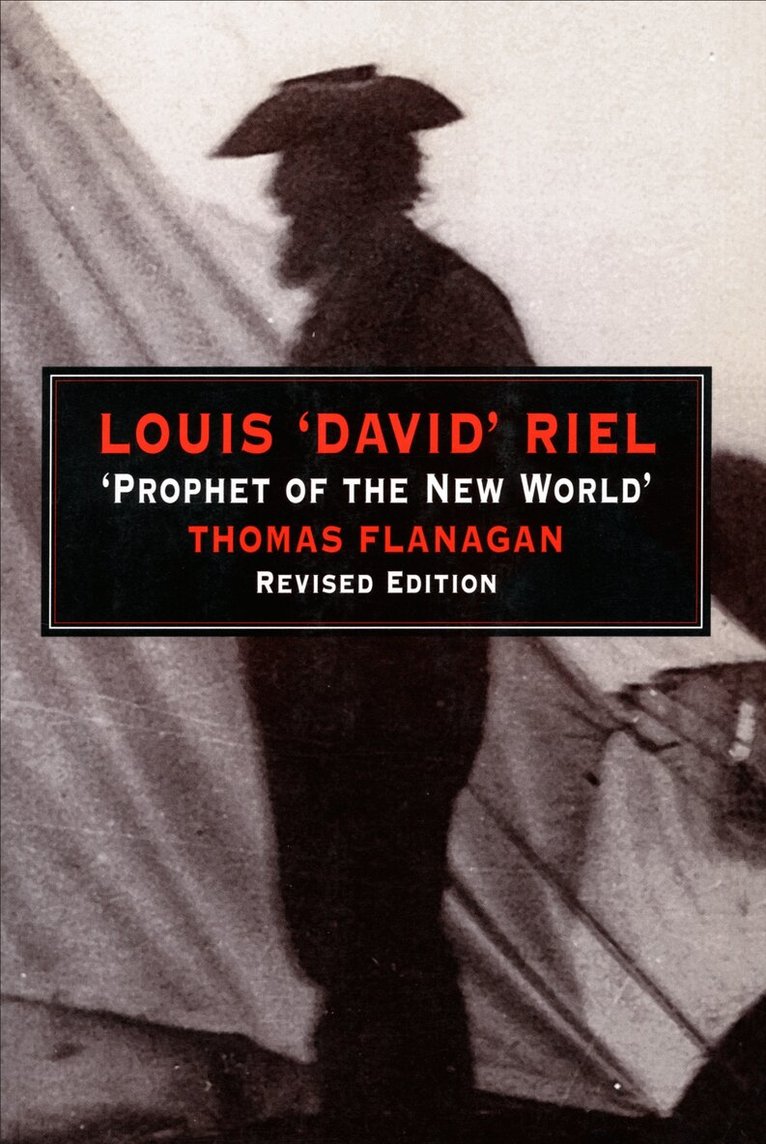
Louis Riel believed that on 8 December 1875 he received a divine commission authorizing him to save the Métis and reform the Catholic Church. He was a prophet, inspired by the Holy Spirit, and the Métis were the new chosen people. A new branch of the Catholic Church would be founded in North America, with its first Holy See in Montreal, and its second in Riel's birthplace of St. Vital.When Riel expressed these views in 1876, he was committed to a lunatic asylum. After his release, he suppressed his ideas for several years, only to reveal them again to his Métis followers during the North-West Rebellion. The Rebellion thus became as much a religious as a political movement; Riel believed himself a prophet to the end of his life, and he went to his death thinking that he, like Christ, would be resurrected on the third day.Earlier writers about Louis Riel have noted his religious beliefs but have not taken them seriously. They have usually dismissed Riel's attempt to found a new religion as the symptom of a deranged mind. Thomas Flanagan takes Riel's religion seriously and analyses it using categories developed in the literature about millenarian movements. He shows that Riel's religion, far from being simply individual madness, is typical of the nativistic and millenarian movements described by one author as the 'religions of the oppressed.'This is also a biography, tracing Riel's thinking on religious subjects from his childhood to the end of his life and paying particular attention to events in his life that influenced his thinking. This developmental approach is necessary because Riel's ideas changed frequently; he never arrived at a fixed 'system.'The research is based on primary sources throughout. Much new documentation has become available over the past thirty years and in the sixteen years since this volume was initially published. In particular, new information is presented about Riel's youth in Montreal, his time in insane asylums, his years in Montana, and the North-West Rebellion. Flanagan also re-interprets well-known documents. While this revised edition does not alter the fundamentals of his interpretation, it improves the historical backdrop against which it is presented through use of a wealth of new primary sources. Flanagan has updated his citings of Riel's manuscripts to current sources.
Häftad, Engelska, 1998
354 kr
Skickas inom 10-15 vardagar
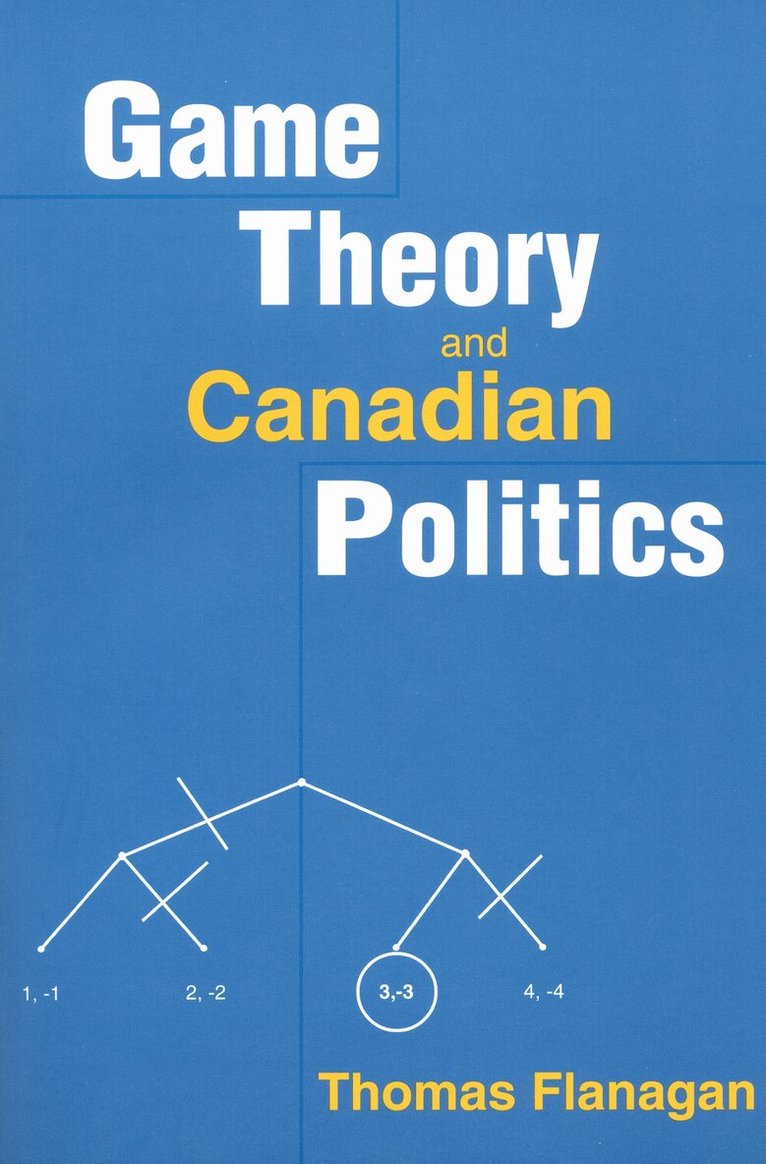
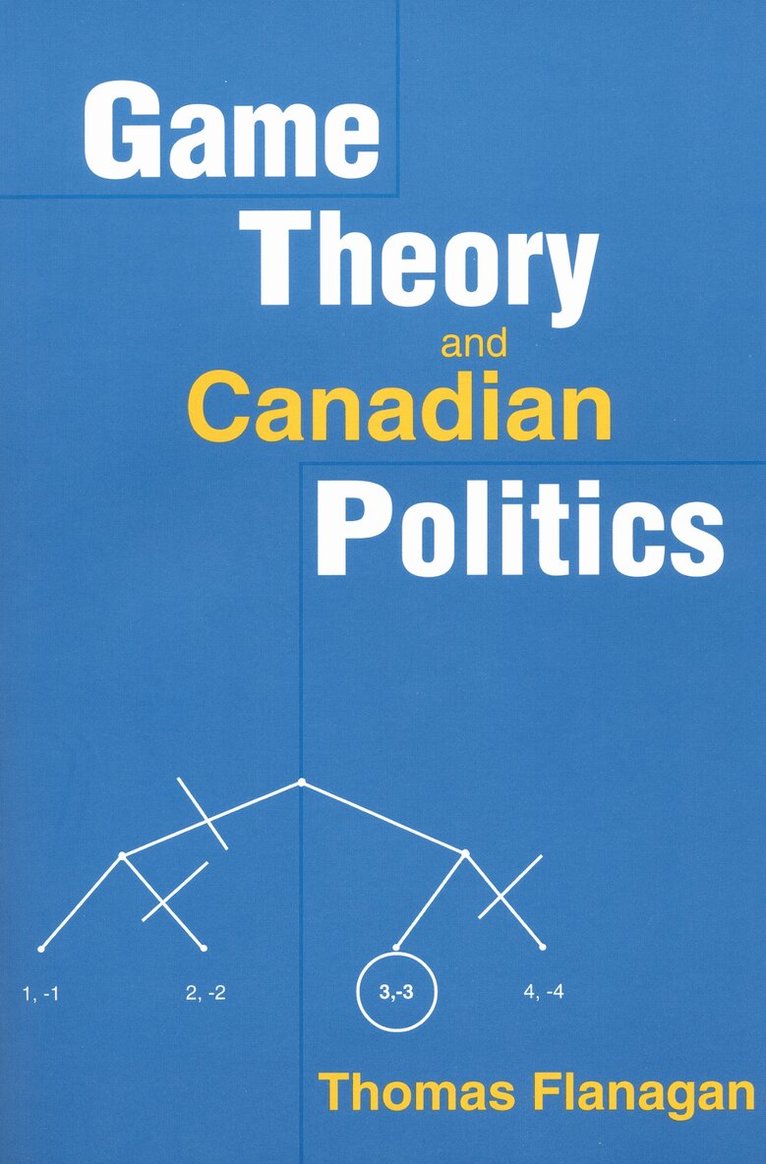
This is the first book-length application of game theory to Canadian politics. It uses a series of case studies to illustrate fundamental concepts of game theory such as two-person and n-person games; solution in mixed strategies; ordinal games; Nash equilibrium; coordination, Assurance, Chicken and Prisoner's Dilemma models; Schelling curves; coalition theory and Riker's size principle; voting rules, cycles, and the Condorcet winner; the Banzhaf power index; structure-induced equilibrium; and spatial models of political conflict. No mathematics more complex than simple algebra is required to follow the exposition.The case studies are not just contrived illustrations of abstract models but intensively researched studies of important episodes in Canadian politics. Topics include the Lubicon Lake stalemate, metrification and vaccination; the size of winning coalitions; formulas for amending the Canadian constitution; the mechanics of choosing party leaders; Parliament's failure to legislate on abortion after the Morgentaler decision; and the entry of the Reform Party into the political system. In each case, utilization of game-theory models produces new and sometimes surprising conclusions.Game theory, and the rational-choice paradigm of which it is a part, are an increasingly important addition to the conventional modes of political analysis. This book is intended to show what game theory can add to the philosophical, institutional, and behavioural approaches that have dominated previous works on Canadian politics.
Inbunden, Engelska, 2023
457 kr
Skickas inom 5-8 vardagar
Häftad, Engelska, 2023
346 kr
Skickas inom 5-8 vardagar
Häftad, Engelska, 2011
485 kr
Skickas inom 5-8 vardagar
E-bok
PDF, Engelska, 1998427 kr
Läs direkt efter köp
This is the first book-length application of game theory to Canadian politics. It uses a series of case studies to illustrate fundamental concepts of game theory such as two-person and n-person games; solution in mixed strategies; ordinal games; Nash equilibrium; coordination, Assurance, Chicken and Prisoner's Dilemma models; Schelling curves; coalition theory and Riker's size principle; voting rules, cycles, and the Condorcet winner; the Banzhaf power index; structure-induced equilibrium; and spatial models of political conflict. No mathematics more complex than simple algebra is required to follow the exposition.The case studies are not just contrived illustrations of abstract models but intensively researched studies of important episodes in Canadian politics. Topics include the Lubicon Lake stalemate, metrification and vaccination; the size of winning coalitions; formulas for amending the Canadian constitution; the mechanics of choosing party leaders; Parliament's failure to legislate on abortion after the Morgentaler decision; and the entry of the Reform Party into the political system. In each case, utilization of game-theory models produces new and sometimes surprising conclusions.Game theory, and the rational-choice paradigm of which it is a part, are an increasingly important addition to the conventional modes of political analysis. This book is intended to show what game theory can add to the philosophical, institutional, and behavioural approaches that have dominated previous works on Canadian politics.
E-bok
PDF, Engelska, 1996427 kr
Läs direkt efter köp
Louis Riel believed that on 8 December 1875 he received a divine commission authorizing him to save the Métis and reform the Catholic Church. He was a prophet, inspired by the Holy Spirit, and the Métis were the new chosen people. A new branch of the Catholic Church would be founded in North America, with its first Holy See in Montreal, and its second in Riel's birthplace of St. Vital.When Riel expressed these views in 1876, he was committed to a lunatic asylum. After his release, he suppressed his ideas for several years, only to reveal them again to his Métis followers during the North-West Rebellion. The Rebellion thus became as much a religious as a political movement; Riel believed himself a prophet to the end of his life, and he went to his death thinking that he, like Christ, would be resurrected on the third day.Earlier writers about Louis Riel have noted his religious beliefs but have not taken them seriously. They have usually dismissed Riel's attempt to found a new religion as the symptom of a deranged mind. Thomas Flanagan takes Riel's religion seriously and analyses it using categories developed in the literature about millenarian movements. He shows that Riel's religion, far from being simply individual madness, is typical of the nativistic and millenarian movements described by one author as the 'religions of the oppressed.'This is also a biography, tracing Riel's thinking on religious subjects from his childhood to the end of his life and paying particular attention to events in his life that influenced his thinking. This developmental approach is necessary because Riel's ideas changed frequently; he never arrived at a fixed 'system.'The research is based on primary sources throughout. Much new documentation has become available over the past thirty years and in the sixteen years since this volume was initially published. In particular, new information is presented about Riel's youth in Montreal, his time in insane asylums, his years in Montana, and the North-West Rebellion. Flanagan also re-interprets well-known documents. While this revised edition does not alter the fundamentals of his interpretation, it improves the historical backdrop against which it is presented through use of a wealth of new primary sources. Flanagan has updated his citings of Riel's manuscripts to current sources.
E-bok
PDF, Engelska, 20001 092 kr
Läs direkt efter köp
When, in 1983, the first edition of Riel and the Rebellion was published, the scholarly controversy concerning Thomas Flanagan's interpretation of the Rebellion of 1885 escalated to one of national significance. One of the few books that presents a countervailing view to the traditional interpretation of the events of 1885, Riel and the Rebellion contends that the Metis were, to some extent, responsible for the alienation of their lands, and that Riel himself was a more destructive than constructive force in the history of western Canada.After over fifteen years, issues such as land claims and native rights have in fact moved beyond the level of academic debate; Flanagan's work remains timely and the additions to the book in this new edition reflect the continued currency of its content. In the second edition, the author addresses a number of issues, including the cultural mythology surrounding Riel, the recent campaign to pardon Riel (with some discussion of a theory that contends that Riel's trial was unfair), the Manitoba lands question, and new primary research conducted by Flanagan concerning Metis land claims at Laurent.Undoubtedly, this unique work will continue to spark controversy and garner attention because of its relevance to many larger contemporary political debates concerning native rights and land claims.
Häftad, Engelska, 2004
256 kr
Skickas
E-bok
Tyska, 2016222 kr
Läs direkt efter köp
Sommer 1798, Schauplatz Irland, ein Aufstand: Der historische Roman "Ein Traum von Freiheit" berichtet in detaillierter und facettenreicher Art über die Rebellion in Irland. Während die Bauern in bedrückender Armut leben, geniessen die Grundherren das Leben des Luxus. Doch auch die Grundherren müssen Abgaben leisten nämlich an die englische Krone. In Frankreich hat sich gerade erst die französische Revolution abgespielt, deren ideologisches Gedankengut sich nun auch über Irland ausstreckt. - Mithilfe von verschiedenen Perspektiven beleuchtet der Autor die damaligen Lebensumstände, Phantasien und Wünsche Angehöriger verschiedener Schichten und Religionen und bringt dem Leser auf spielerische Weise die Komplexität der irischen Geschichte näher. -
E-bok
Tyska, 2018222 kr
Läs direkt efter köp
In dem historischen Roman "Der Pächter der Zeit" berichtet Thomas Flanagan über den lange aufgestauten Freiheitsdrang der Iren, der sich 1867 mit dem schicksalhaften Fenier-Aufstand entlädt. Die vier Freunde MacMahon, Tully, Delaney und Nolan, getrieben von unterschiedlichen Motiven und Sehnsüchten, schließen sich der Revolte an. Gekämpft wird gegen das britische Empire, dem Irland unterstellt ist. Doch schon bald lassen Treulosigkeit und fehlende Koordination den Aufstand zusammenbrechen. Das Leben der vier Freunde nimmt eine schicksalhafte Wendung. – Mithilfe von verschiedenen Perspektiven beleuchtet der Autor die damaligen Lebensumstände und bringt dem Leser auf spielerische Weise die Komplexität der irischen Geschichte näher. Ein fundierter und spannender Roman über ein dramatisches Kapitel der irischen Geschichte, sowie über eine tragische Liebe und die Enthüllung eins bedächtig gehüteten Geheimnisses.Thomas Flanagan studierte an der University of Notre Dame sowie an der Duke University, wo er schliesslich sein Master und später PhD Studium abschloss. Unterdessen lehrt er als Professor an verschiedenen amerikanischen Universitäten, hauptsächlich Literatur und Geschichte Irlands und lebt in Long Island, New York. Sein erster Roman "Ein Traum von Freiheit" erschien in hohen Auflagen und begeisterte Publikum und Kritiker in gleicher Weise. -