Thomas Owens – författare
Visar alla böcker från författaren Thomas Owens. Handla med fri frakt och snabb leverans.
8 produkter
8 produkter
E-bok
PDF, Engelska, 20191 284 kr
Läs direkt efter köp
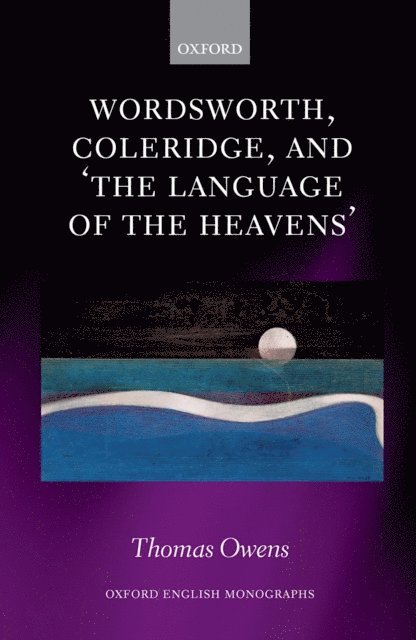
Thomas Owens explores some of the exultant visions inspired by Wordsworth''s and Coleridge''s close scrutiny of the night sky, the natural world, and the domains of science. He examines a set of scientific patterns drawn from natural, geometric, celestial, and astronomical sources which Wordsworth and Coleridge used to express their ideas about poetry, religion, literary criticism, and philosophy, and establishes the central importance of analogy in their creativethinking. Analogies prompted the poets'' imaginings in geometry and cartography, in nature (representations of the moon) and natural history (studies of spider-webs, streams, and dew), in calculus and conical refraction, and in the discovery of infra-red and ultraviolet light. Although this is primarily astudy of the patterns which inspired their writing, the findings overturn the prevalent critical consensus that Wordsworth and Coleridge did not have the access, interest, or capacity to understand the latest developments in nineteenth-century astronomy and mathematics, which they did in fact possess. Wordsworth, Coleridge, and ''the language of the heavens'' reinstates many relationships which the poets had with scientists and their sources. Most significantly, the book illustrates thatthese sources are not simply another context or historical lens through which to engage with Wordsworth''s and Coleridge''s work but are instead a controlling device of the symbolic imagination. Exploring the structures behind Wordsworth''s and Coleridge''s poems and metaphysics stakes out a return to theevidence of the Romantic imagination, not for its own sake, but in order to reveal that their analogical configuration of the world provided them with a scaffold for thinking, an intellectual orrery which ordered artistic consciousness and which they never abandoned.
E-bok
Engelska, 20191 295 kr
Läs direkt efter köp
Thomas Owens explores some of the exultant visions inspired by Wordsworth''s and Coleridge''s close scrutiny of the night sky, the natural world, and the domains of science. He examines a set of scientific patterns drawn from natural, geometric, celestial, and astronomical sources which Wordsworth and Coleridge used to express their ideas about poetry, religion, literary criticism, and philosophy, and establishes the central importance of analogy in their creativethinking. Analogies prompted the poets'' imaginings in geometry and cartography, in nature (representations of the moon) and natural history (studies of spider-webs, streams, and dew), in calculus and conical refraction, and in the discovery of infra-red and ultraviolet light. Although this is primarily astudy of the patterns which inspired their writing, the findings overturn the prevalent critical consensus that Wordsworth and Coleridge did not have the access, interest, or capacity to understand the latest developments in nineteenth-century astronomy and mathematics, which they did in fact possess. Wordsworth, Coleridge, and ''the language of the heavens'' reinstates many relationships which the poets had with scientists and their sources. Most significantly, the book illustrates thatthese sources are not simply another context or historical lens through which to engage with Wordsworth''s and Coleridge''s work but are instead a controlling device of the symbolic imagination. Exploring the structures behind Wordsworth''s and Coleridge''s poems and metaphysics stakes out a return to theevidence of the Romantic imagination, not for its own sake, but in order to reveal that their analogical configuration of the world provided them with a scaffold for thinking, an intellectual orrery which ordered artistic consciousness and which they never abandoned.
Häftad, Engelska, 1996
220 kr
Skickas inom 5-8 vardagar
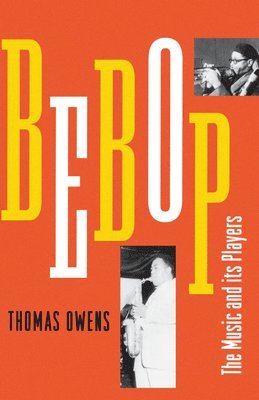
Created in the jazz clubs of New York City, and initially treated by most musicians and audiences as radical, chaotic, and bewildering: bebop has become, Thomas Owen writes, `the lingua franca of jazz, serving as the principal musical language of thousands of jazz musicians.' In Bebop, Owens conducts us on an insightful, loving tour through the music, players, and recordings that changed American culture. Combining vivid portraits of bebop's gigantic personalities - among them Charlie Parker, Dizzy Gillespie, and Miles Davis - with deft musical analysis, he offers an instrument-by-instrument look at the key players and their innovations.
E-bok
PDF, Engelska, 1996177 kr
Läs direkt efter köp
"When bebop was new," writes Thomas Owens, "many jazz musicians and most of the jazz audience heard it as radical, chaotic, bewildering music." For a nation swinging to the smoothly orchestrated sounds of the big bands, this revolutionary movement of the 1940s must have seemed destined for a short life on the musical fringe. But today, Owens writes, bebop is nothing less than "the lingua franca of jazz, serving as the principal musical language of thousands of jazz musicians." In Bebop, Owens conducts us on an insightful, loving tour through the music, players, and recordings that changed American culture. Combining vivid portraits of bebop''s gigantic personalities with deft musical analysis, he ranges from the early classics of modern jazz (starting with the 1943 Onyx Club performances of Dizzy Gillespie, Max Roach, Oscar Pettiford, Don Byas, and George Wallington) through the central role of Charlie Parker, to an instrument-by-instrument look at the key players and their innovations. Illustrating his discussion with numerous musical excerpts, Owens skillfully demonstrates why bebop was so revolutionary, with fascinating glimpses of the tempestuous jazz world: Thelonious Monk, for example, did "everything ''wrong'' in the sense of traditional piano technique....Because his right elbow fanned outward away from his body, he often hit the keys at an angle rather than in parallel. Sometimes he hit a single key with more than one finger, and divided single-line melodies between two hands." In addition to his discussions of individual instruments and players, Owens examines ensembles, with their sometimes volatile collaborations: in the Jazz Messengers, Benny Golson told of how his own mellow saxophone playing would get lost under Art Blakey''s furious drumming: "He would do one of those famous four-bar drum rolls going into the next chorus, and I would completely disappear. He would holler over at me, ''Get up out of that hole!''" In this marvelous account, Owens comes right to the present day, with accounts of new musicians ranging from the Marsalis brothers to lesser-known masters like pianist Michel Petrucciani. Bebop is a jazz-lover''s dream--a serious yet highly personal look at America''s most distinctive music.
Inbunden, Engelska, 2019
1 261 kr
Skickas inom 5-8 vardagar
Thomas Owens explores some of the exultant visions inspired by Wordsworth's and Coleridge's close scrutiny of the night sky, the natural world, and the domains of science. He examines a set of scientific patterns drawn from natural, geometric, celestial, and astronomical sources which Wordsworth and Coleridge used to express their ideas about poetry, religion, literary criticism, and philosophy, and establishes the central importance of analogy in their creative thinking. Analogies prompted the poets' imaginings in geometry and cartography, in nature (representations of the moon) and natural history (studies of spider-webs, streams, and dew), in calculus and conical refraction, and in the discovery of infra-red and ultraviolet light. Although this is primarily a study of the patterns which inspired their writing, the findings overturn the prevalent critical consensus that Wordsworth and Coleridge did not have the access, interest, or capacity to understand the latest developments in nineteenth-century astronomy and mathematics, which they did in fact possess. Wordsworth, Coleridge, and 'the language of the heavens' reinstates many relationships which the poets had with scientists and their sources. Most significantly, the book illustrates that these sources are not simply another context or historical lens through which to engage with Wordsworth's and Coleridge's work but are instead a controlling device of the symbolic imagination. Exploring the structures behind Wordsworth's and Coleridge's poems and metaphysics stakes out a return to the evidence of the Romantic imagination, not for its own sake, but in order to reveal that their analogical configuration of the world provided them with a scaffold for thinking, an intellectual orrery which ordered artistic consciousness and which they never abandoned.
Häftad, Engelska, 2025
1 024 kr
Skickas inom 5-8 vardagar
The Origins of Life: From Abiotic Chemistry to the First Cells is an essential textbook that tackles one of the greatest mysteries in science, how inanimate matter evolved into the first living things. The book takes an interdisciplinary approach, delving into the basic principles of the earth’s chemistry, the formation of pre-cellular entities, and the acquisition of chemical complexity. It explains the creation of chromosomes, metabolic pathways, and the features of the earliest prokaryotes. Users will find a detailed exposition of the World RNA Hypothesis in an accessible and easy-to-read style which is comprehensible for both science and non-science majors.This textbook is a critical resource for upper-level undergraduate students in Cellular Biology, specifically those studying or researching evolution, cellular chemistry, and pre-biotic chemistry, as well as non-science majors in courses on the philosophy of science or related topics. It is also useful for professionals in biochemistry, evolutionary biology, and astrobiology who wish to understand the origins of life and first cells. Science communicators could use this interdisciplinary textbook for teaching and dissemination to broader audiences as well.Functions as a readable and instructive book on the evolution of lifeOffers a deep dive into the first principles of the physical sciencesExplores, in detail, the emergence of life from inanimate matterPresents the RNA World Hypothesis in considerable depth
E-bok
Engelska, 20251 134 kr
Läs direkt efter köp
The Origins of Life: From Abiotic Chemistry to the First Cells is an essential textbook that tackles one of the greatest mysteries in science, how inanimate matter evolved into the first living things. The book takes an interdisciplinary approach, delving into the basic principles of the earth''s chemistry, the formation of pre-cellular entities, and the acquisition of chemical complexity. It explains the creation of chromosomes, metabolic pathways, and the features of the earliest prokaryotes. Users will find a detailed exposition of the World RNA Hypothesis in an accessible and easy-to-read style which is comprehensible for both science and non-science majors.This textbook is a critical resource for upper-level undergraduate students in Cellular Biology, specifically those studying or researching evolution, cellular chemistry, and pre-biotic chemistry, as well as non-science majors in courses on the philosophy of science or related topics. It is also useful for professionals in biochemistry, evolutionary biology, and astrobiology who wish to understand the origins of life and first cells. Science communicators could use this interdisciplinary textbook for teaching and dissemination to broader audiences as well.- Functions as a readable and instructive book on the evolution of life- Offers a deep dive into the first principles of the physical sciences- Explores, in detail, the emergence of life from inanimate matter- Presents the RNA World Hypothesis in considerable depth
Inbunden, Engelska, 2012
2 468 kr
Skickas inom 5-8 vardagar