Thomas Pfau - Böcker
Visar alla böcker från författaren Thomas Pfau. Handla med fri frakt och snabb leverans.
11 produkter
11 produkter
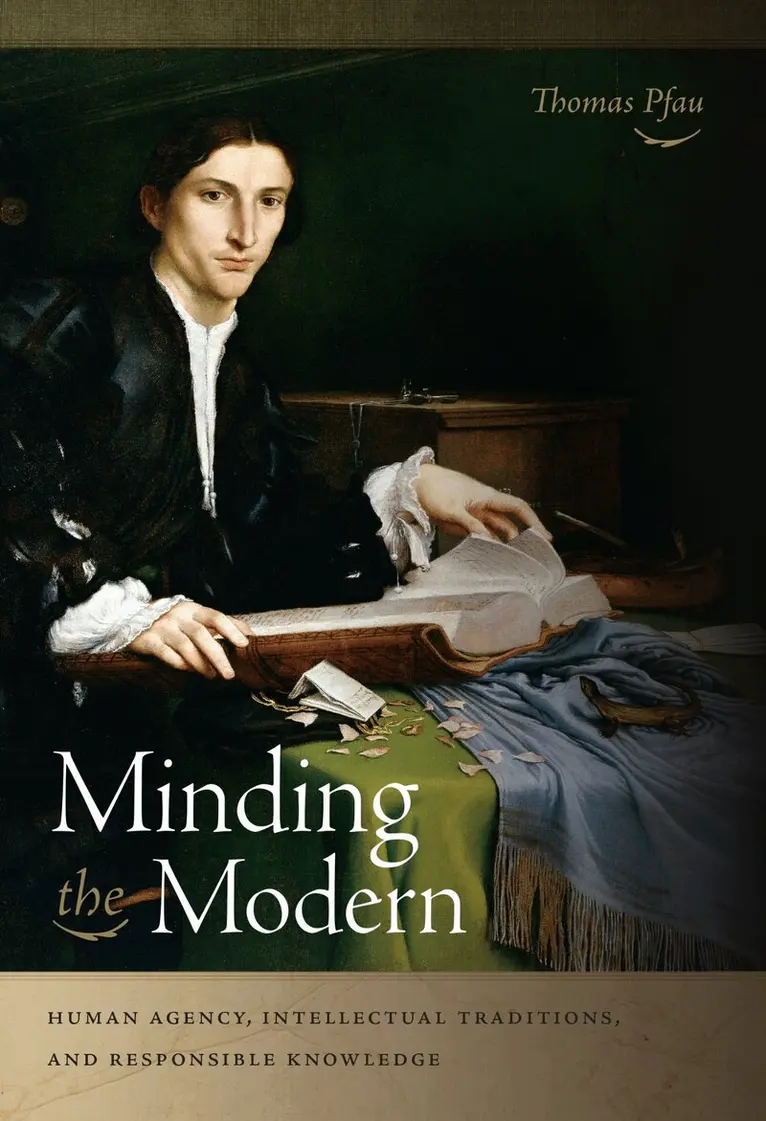
Minding the Modern
Human Agency, Intellectual Traditions, and Responsible Knowledge
Inbunden, Engelska, 2013
1 818 kr
Skickas inom 10-15 vardagar
In this brilliant study, Thomas Pfau argues that the loss of foundational concepts in classical and medieval Aristotelian philosophy caused a fateful separation between reason and will in European thought. Pfau traces the evolution and eventual deterioration of key concepts of human agency—will, person, judgment, action—from antiquity through Scholasticism and on to eighteenth-century moral theory and its critical revision in the works of Samuel Taylor Coleridge. Featuring extended critical discussions of Aristotle, Gnosticism, Augustine, Aquinas, Ockham, Hobbes, Shaftesbury, Mandeville, Hutcheson, Hume, Adam Smith, and Coleridge, this study contends that the humanistic concepts these writers seek to elucidate acquire meaning and significance only inasmuch as we are prepared positively to engage (rather than historicize) their previous usages. Beginning with the rise of theological (and, eventually, secular) voluntarism, modern thought appears increasingly reluctant and, in time, unable to engage the deep history of its own underlying conceptions, thus leaving our understanding of the nature and function of humanistic inquiry increasingly frayed and incoherent. One consequence of this shift is to leave the moral self-expression of intellectual elites and ordinary citizens alike stunted, which in turn has fueled the widespread notion that moral and ethical concerns are but a special branch of inquiry largely determined by opinion rather than dialogical reasoning, judgment, and practice.A clear sign of this regression is the present crisis in the study of the humanities, whose role is overwhelmingly conceived (and negatively appraised) in terms of scientific theories, methods, and objectives. The ultimate casualty of this reductionism has been the very idea of personhood and the disappearance of an adequate ethical language. Minding the Modern is not merely a chapter in the history of ideas; it is a thorough phenomenological and metaphysical study of the roots of today's predicaments.
Minding the Modern
Human Agency, Intellectual Traditions, and Responsible Knowledge
Häftad, Engelska, 2015
456 kr
Skickas inom 10-15 vardagar
In this brilliant study, Thomas Pfau argues that the loss of foundational concepts in classical and medieval Aristotelian philosophy caused a fateful separation between reason and will in European thought. Pfau traces the evolution and eventual deterioration of key concepts of human agency—will, person, judgment, action—from antiquity through Scholasticism and on to eighteenth-century moral theory and its critical revision in the works of Samuel Taylor Coleridge. Featuring extended critical discussions of Aristotle, Gnosticism, Augustine, Aquinas, Ockham, Hobbes, Shaftesbury, Mandeville, Hutcheson, Hume, Adam Smith, and Coleridge, this study contends that the humanistic concepts these writers seek to elucidate acquire meaning and significance only inasmuch as we are prepared positively to engage (rather than historicize) their previous usages. Beginning with the rise of theological (and, eventually, secular) voluntarism, modern thought appears increasingly reluctant and, in time, unable to engage the deep history of its own underlying conceptions, thus leaving our understanding of the nature and function of humanistic inquiry increasingly frayed and incoherent. One consequence of this shift is to leave the moral self-expression of intellectual elites and ordinary citizens alike stunted, which in turn has fueled the widespread notion that moral and ethical concerns are but a special branch of inquiry largely determined by opinion rather than dialogical reasoning, judgment, and practice.A clear sign of this regression is the present crisis in the study of the humanities, whose role is overwhelmingly conceived (and negatively appraised) in terms of scientific theories, methods, and objectives. The ultimate casualty of this reductionism has been the very idea of personhood and the disappearance of an adequate ethical language. Minding the Modern is not merely a chapter in the history of ideas; it is a thorough phenomenological and metaphysical study of the roots of today's predicaments.
997 kr
Skickas inom 10-15 vardagar
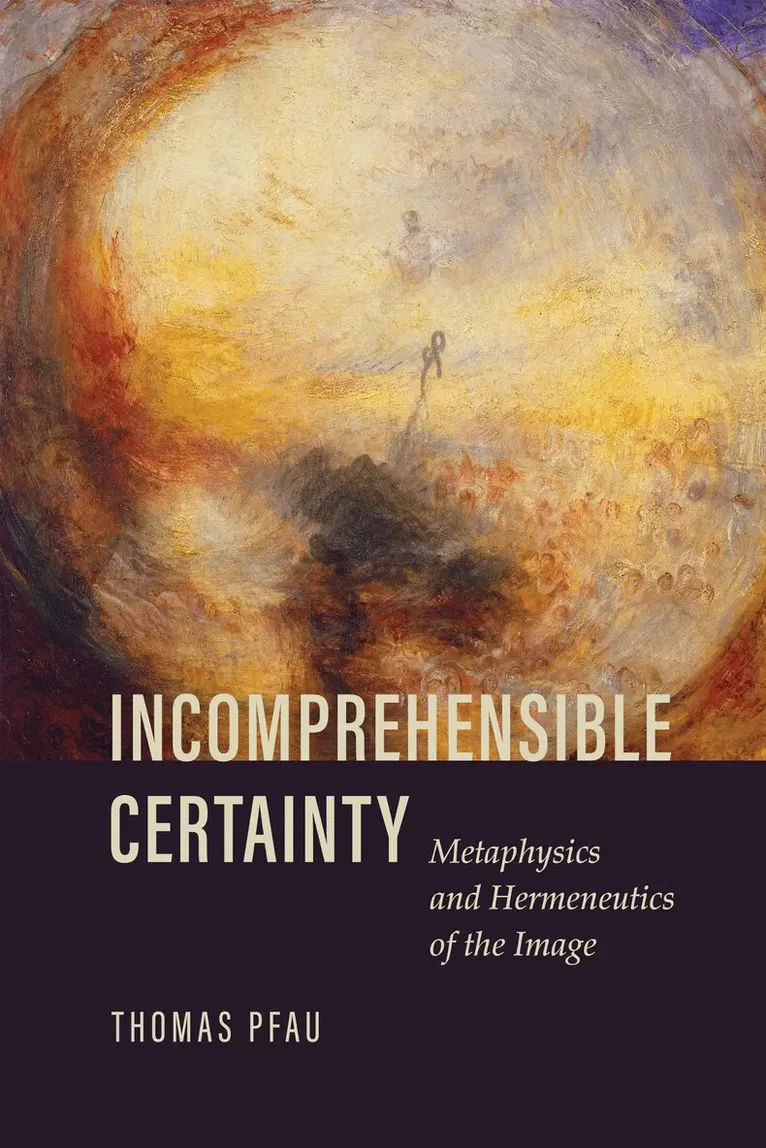
Thomas Pfau's study of images and visual experience is a tour de force linking Platonic metaphysics to modern phenomenology and probing literary, philosophical, and theological accounts of visual experience from Plato to Rilke.Incomprehensible Certainty presents a sustained reflection on the nature of images and the phenomenology of visual experience. Taking the "image" (eikōn) as the essential medium of art and literature and as foundational for the intuitive ways in which we make contact with our "lifeworld," Thomas Pfau draws in equal measure on Platonic metaphysics and modern phenomenology to advance a series of interlocking claims. First, Pfau shows that, beginning with Plato's later dialogues, being and appearance came to be understood as ontologically distinct from (but no longer opposed to) one another. Second, in contrast to the idol that is typically gazed at and visually consumed as an object of desire, this study positions the image as a medium whose intrinsic abundance and excess reveal to us its metaphysical function—namely, as the visible analogue of an invisible, numinous reality. Finally, the interpretations unfolded in this book (from Plato, Plotinus, Pseudo-Dionysius, John Damascene via Bernard of Clairvaux, Bonaventure, Julian of Norwich, and Nicholas of Cusa to modern writers and artists such as Goethe, Ruskin, Turner, Hopkins, Cézanne, and Rilke) affirm the essential complementarity of image and word, visual intuition and hermeneutic practice, in theology, philosophy, and literature. Like Pfau's previous book, Minding the Modern, Incomprehensible Certainty is a major work. With over fifty illustrations, the book will interest students and scholars of philosophy, theology, literature, and art history.
2 418 kr
Skickas inom 10-15 vardagar
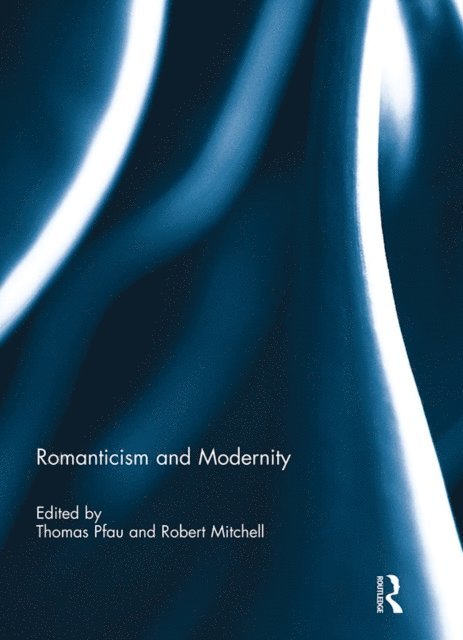
Though traditionally defined as a relatively brief time period - typically the half century of 1780-1830 - the "Romantic era" constitutes a crucial, indeed unique, transitional phase in what has come to be called "modernity," for it was during these fifty years that myriad disciplinary, aesthetic, economic, and political changes long in the making accelerated dramatically. Due in part to the increased velocity of change, though, most of modernity’s essential master-tropes - such as secularization, instrumental reason, individual rights, economic self-interest, emancipation, system, institution, nation, empire, utopia, and "life" - were also subjected to incisive critical and methodological reflection and revaluation. The chapters in this collection argue that Romanticism’s marked ambivalence and resistance to decisive conceptualization arises precisely from the fact that Romantic authors simultaneously extended the project of European modernity while offering Romantic concepts as means for a sustained critical reflection on that very process. Focusing especially on the topics of form (both literary and organic), secularization (and its political correlates, utopia and apocalypse), and the question of how one narrates the arrival of modernity, this collection collectively emphasizes the importance of understanding modernity through the lens of Romanticism, rather than simply understanding Romanticism as part of modernity.This book was previously published as a special issue of European Romantic Review.
1 057 kr
Tillfälligt slut
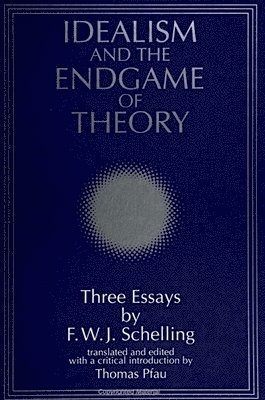
Three seminal philosophical texts by F. W. J. Schelling, arguably the most complex representations of German Idealism, are clearly presented here for the first time in English.Three seminal philosophical texts by F. W. J. Schelling, arguably the most complex representations of German Idealism, are clearly presented here for the first time in English. Included are Schelling's "Treatise Explicatory of the Idealism in the Science of Knowledge" (1797), "System of Philosophy in General" (1804), and "Stuttgart Seminars" (1810). Of these texts, the "Treatise" constitutes the most comprehensive critical reading of Kant and Fichte by a contemporary thinker and, as a result, proved seminal to Samuel Taylor Coleridge's efforts at interconnecting English Romanticism and German speculative thought. Extending his early critique of subjectivity, Schelling's "System of Philosophy in General" and his "Stuttgart Seminars" launch a far more radical inquiry into the notion of identity, a term which for Schelling, increasingly reveals the contingent nature and inescapable limitations of theoretical practice.An extensive critical introduction relates Schelling's work both to his philosophical contemporaries (Kant, Fichte, and Hegel) as well as to the contemporary debates about Theory in the humanities. The book includes extensive annotations of each translated text, an excursus on Schelling and Coleridge, a comprehensive multi-lingual bibliography, and a glossary.
1 014 kr
Skickas inom 5-8 vardagar
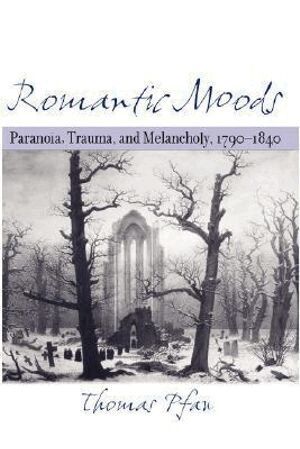
This large and ambitious study reinterprets the evolution of British and German Romanticism as a progress through three successive 'moods.' By this term Pfau here means emotion "read in its embodied manifestation as the 'voice' of a historical moment, rather than that of a given individual." In constructing this reading, he draws on a multifaceted philosophical tradition influenced most strongly by Heidegger and Kant, but also by such wide-ranging figures as Hegel, Marx, Nietzsche, Freud, and Adorno, among others. The result is a new understanding of the basis of the Romantic poet's voice (picking up on the German etymological link between Stimmung, 'mood,' and Stimme, 'voice') as a holistic cultural condition not localizable as either content or form, textual or psychic. This is a work for scholars and advanced students, one that is likely to stimulate considerable reaction and make a significant and enduring contribution to Romantic studies.
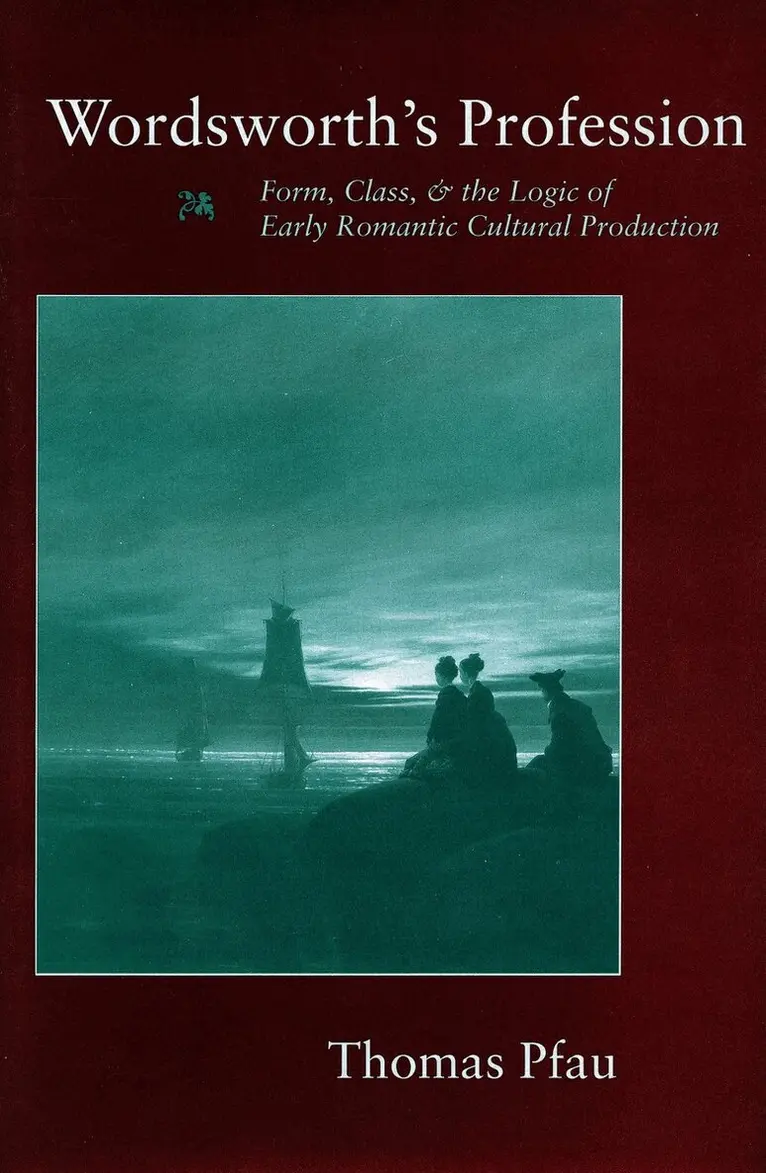
Wordsworth's Profession
Form, Class, and the Logic of Early Romantic Cultural Production
Inbunden, Engelska, 1997
983 kr
Skickas inom 7-10 vardagar
This book explores Wordsworth's professionalization as a writer in relation to the cultural and economic ascendancy of the English middle class between 1740 and 1820. Its wide-ranging interpretations are coordinated by a single, albeit highly ramified, critical hypothesis: that Romanticism's aesthetic forms simultaneously afforded the middle classes an imaginary furlough from the impinging consciousness of their tenuous socio-economic status.Wordsworth's Profession analyzes and correlates changing paradigms of authorship, poetic genre, and tone with the demographic and spiritual aspects of middle-class life during the late eighteenth and early nineteenth centuries. The first of three parts explores Wordsworth's early descriptive poetry (An Evening Walk, Descriptive Sketches, and "Tinturn Abbey") in relation to inherited and contiguous aesthetic forms and practices, such as the landscapes of Lorrain and Gainsborough, Kant's theory of aesthetic communities, and the institutions of domestic tourism and the Picturesque in late-eighteenth-century England.The second part addresses the construction of a distinctly middle-class paradigm of reading in Lyrical Ballads. It does so in relation to contemporary didactic fiction (Wollstonecraft), anti-didactic writing (Blake), speculative theories of education (Godwin, Coleridge, and Hegel), and the emergent so-called mutual tutor or "monitorial" systems of elementary schooling (Andrew Bell and Joseph Lancaster). The book's final part, on The Prelude, focuses on representations of middle-class moral and economic anxiety as mediated in the spirited debate about populousness and public morality. Seen in this context, Wordsworth's autobiography appears less a confession than an attempt to simulate poetic answers to questions lingering in the national unconscious, questions too vast and threatening to bear conscious asking.
1 491 kr
Skickas inom 10-15 vardagar
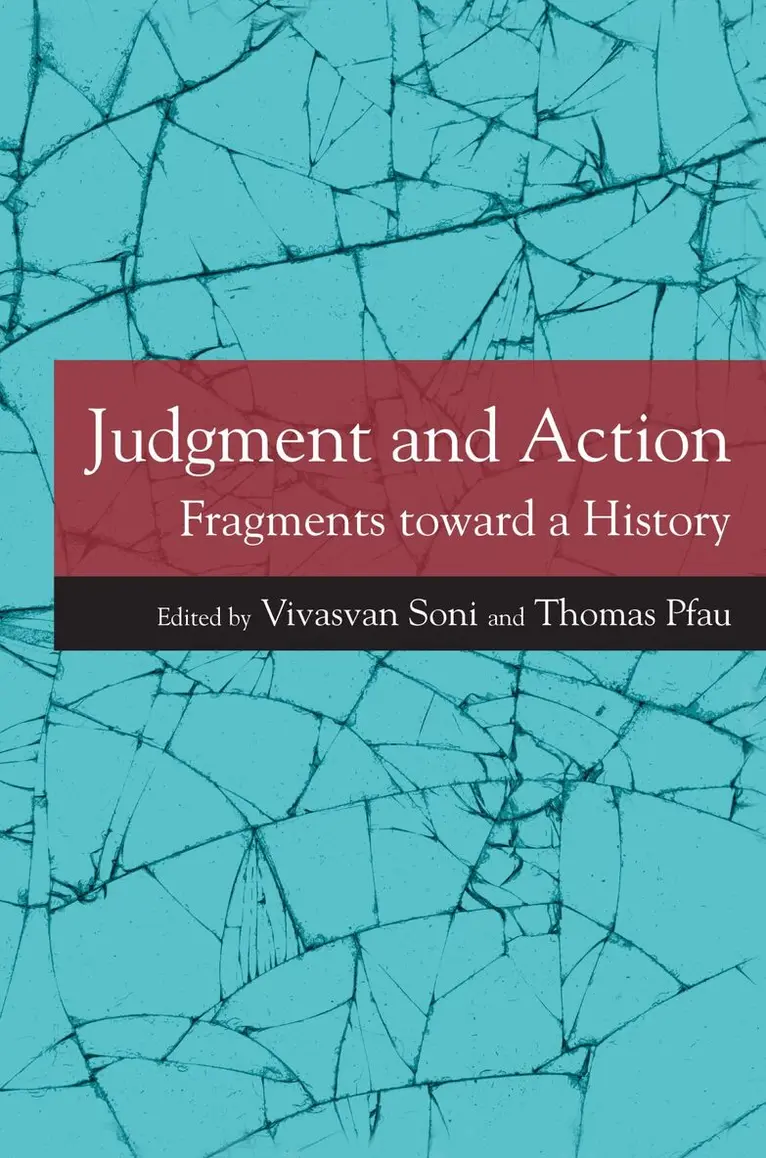
Written by theologians, literary scholars, political theorists, classicists, and philosophers, the essays in Judgment and Action address the growing sense that certain key concepts in humanistic scholarship have become suspect, if not downright unintelligible, amid the current plethora of critical methods. These essays aim to reassert the normative force of judgment and action, two concepts at the very core of literary analysis, systematic theology, philosophy, ethics, aesthetics, and other disciplines.Interpretation is essential to every humanistic discipline, and every interpretation is an act of judgment. Yet the work of interpretation and judgment has been called into question by contemporary methods in the humanities, which incline either toward contextual determination of meaning or toward the suspension of judgment altogether. Action is closely related to judgment and interpretation and like them, it has been rendered questionable. An action is not simply the performance of a deed but requires the deed’s intelligibility, which can be secured only through interpretation and judgment.Organized into four broad themes—interiority/contemplation, ethics, politics/community, and aesthetics/image—the aim of this broad-ranging and insightful collection is to illuminate the histories of judgment and action, identify critical sites from which rethinking them may begin, clarify how they came to be challenged, and relocate them within a broader intellectual-historical trajectory that renders them intelligible.
1 592 kr
Skickas inom 7-10 vardagar
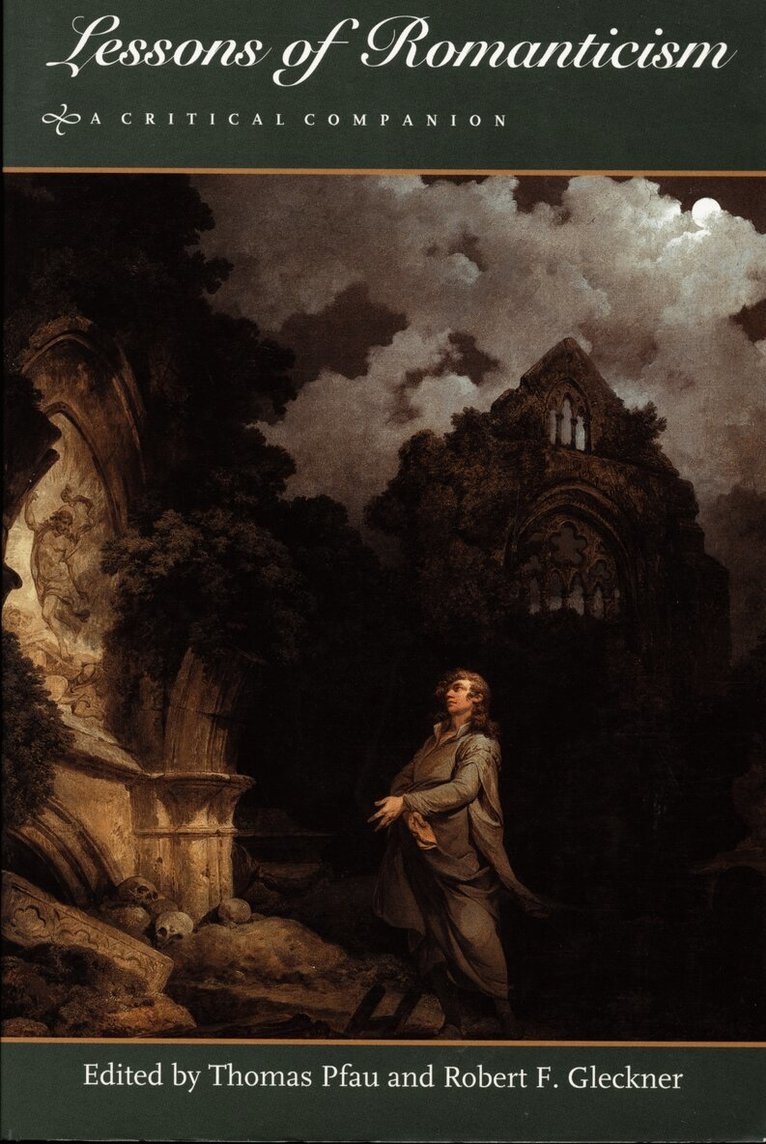
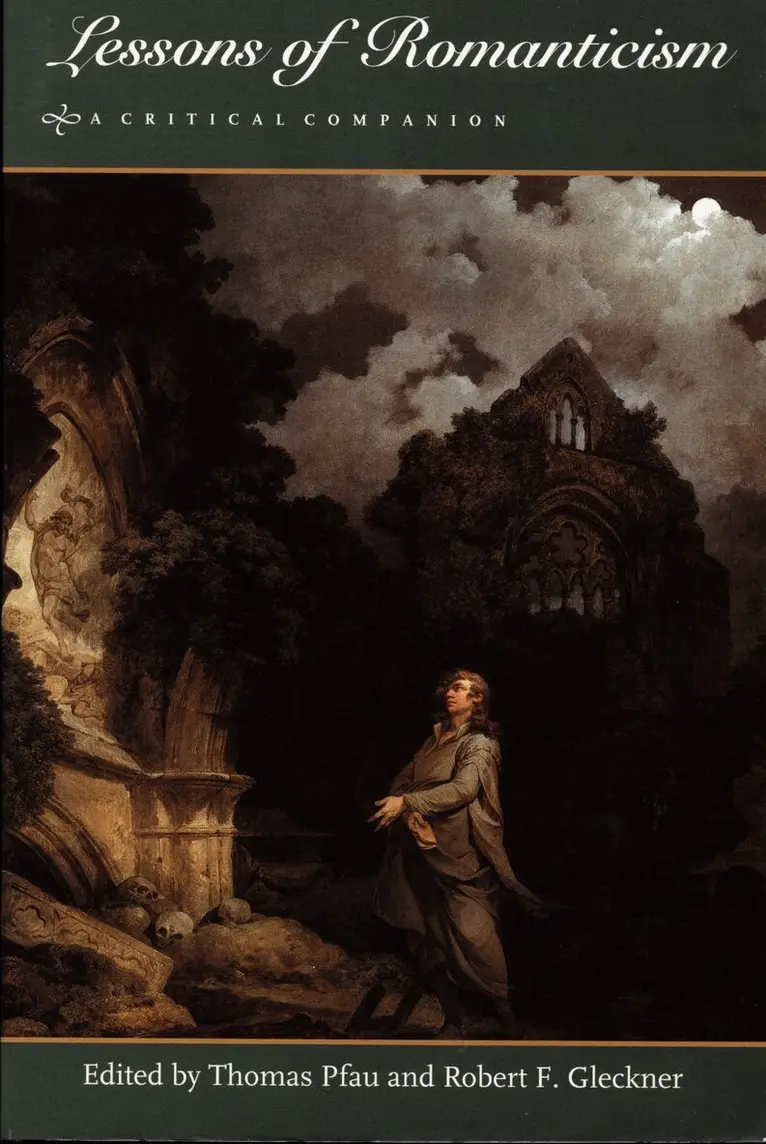
Moving beyond views of European Romanticism as an essentially poetic development, Lessons of Romanticism strives to strengthen a critical awareness of the genres, historical institutions, and material practices that comprised the culture of the period. This anthology-in recasting Romanticism in its broader cultural context-ranges across literary studies, art history, musicology, and political science and combines a variety of critical approaches, including gender studies, Lacanian analysis, and postcolonial studies.With over twenty essays on such diverse topics as the aesthetic and pedagogical purposes of art exhibits in London, the materiality of late Romantic salon culture, the extracanonical status of Jane Austen and Fanny Burney, and Romantic imagery in Beethoven’s music and letters, Lessons of Romanticism reveals the practices that were at the heart of European Romantic life. Focusing on the six decades from 1780 to 1832, this collection is arranged thematically around gender and genre, literacy, marginalization, canonmaking, and nationalist ideology. As Americanists join with specialists in German culture, as Austen is explored beside Beethoven, and as discussions on newly recovered women’s writings follow fresh discoveries in long-canonized texts, these interdisciplinary essays not only reflect the broad reach of contemporary scholarship but also point to the long-neglected intertextual and intercultural dynamics in the various and changing faces of Romanticism itself.Contributors. Steven Bruhm, Miranda J. Burgess, Joel Faflak, David S. Ferris, William Galperin, Regina Hewitt, Jill Heydt-Stevenson, H. J. Jackson, Theresa M. Kelley, Greg Kucich, C. S. Matheson, Adela Pinch, Marc Redfield, Nancy L. Rosenblum, Marlon B. Ross, Maynard Solomon, Richard G. Swartz, Nanora Sweet, Joseph Viscomi, Karen A. Weisman, Susan I. Wolfson
697 kr
Skickas inom 3-6 vardagar
Moving beyond views of European Romanticism as an essentially poetic development, Lessons of Romanticism strives to strengthen a critical awareness of the genres, historical institutions, and material practices that comprised the culture of the period. This anthology-in recasting Romanticism in its broader cultural context-ranges across literary studies, art history, musicology, and political science and combines a variety of critical approaches, including gender studies, Lacanian analysis, and postcolonial studies.With over twenty essays on such diverse topics as the aesthetic and pedagogical purposes of art exhibits in London, the materiality of late Romantic salon culture, the extracanonical status of Jane Austen and Fanny Burney, and Romantic imagery in Beethoven’s music and letters, Lessons of Romanticism reveals the practices that were at the heart of European Romantic life. Focusing on the six decades from 1780 to 1832, this collection is arranged thematically around gender and genre, literacy, marginalization, canonmaking, and nationalist ideology. As Americanists join with specialists in German culture, as Austen is explored beside Beethoven, and as discussions on newly recovered women’s writings follow fresh discoveries in long-canonized texts, these interdisciplinary essays not only reflect the broad reach of contemporary scholarship but also point to the long-neglected intertextual and intercultural dynamics in the various and changing faces of Romanticism itself.Contributors. Steven Bruhm, Miranda J. Burgess, Joel Faflak, David S. Ferris, William Galperin, Regina Hewitt, Jill Heydt-Stevenson, H. J. Jackson, Theresa M. Kelley, Greg Kucich, C. S. Matheson, Adela Pinch, Marc Redfield, Nancy L. Rosenblum, Marlon B. Ross, Maynard Solomon, Richard G. Swartz, Nanora Sweet, Joseph Viscomi, Karen A. Weisman, Susan I. Wolfson
934 kr
Skickas inom 10-15 vardagar
Though traditionally defined as a relatively brief time period - typically the half century of 1780-1830 - the "Romantic era" constitutes a crucial, indeed unique, transitional phase in what has come to be called "modernity," for it was during these fifty years that myriad disciplinary, aesthetic, economic, and political changes long in the making accelerated dramatically. Due in part to the increased velocity of change, though, most of modernity’s essential master-tropes - such as secularization, instrumental reason, individual rights, economic self-interest, emancipation, system, institution, nation, empire, utopia, and "life" - were also subjected to incisive critical and methodological reflection and revaluation. The chapters in this collection argue that Romanticism’s marked ambivalence and resistance to decisive conceptualization arises precisely from the fact that Romantic authors simultaneously extended the project of European modernity while offering Romantic concepts as means for a sustained critical reflection on that very process. Focusing especially on the topics of form (both literary and organic), secularization (and its political correlates, utopia and apocalypse), and the question of how one narrates the arrival of modernity, this collection collectively emphasizes the importance of understanding modernity through the lens of Romanticism, rather than simply understanding Romanticism as part of modernity.This book was previously published as a special issue of European Romantic Review.