Thomas S. Szasz – författare
Visar alla böcker från författaren Thomas S. Szasz. Handla med fri frakt och snabb leverans.
3 produkter
3 produkter
171 kr
Skickas
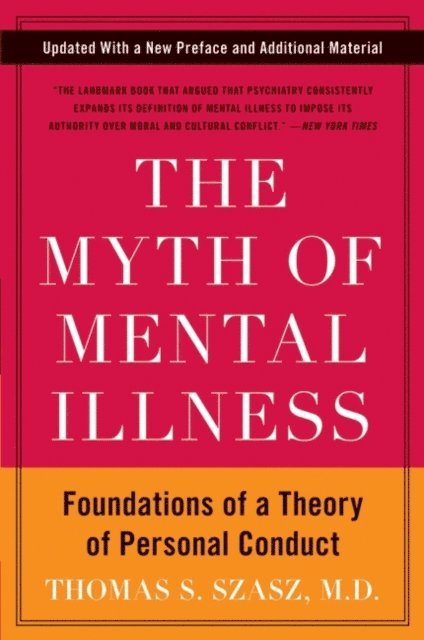
Thomas Szasz's classic book revolutionised thinking throughout the world about the nature of the psychiatric profession and the moral implications of its practices. By diagnosing behaviour problems as 'mental illness', psychiatry, Szasz argues, absolves the individual of responsibility for his actions, placing blame instead on the illness. In "The Myth of Mental Illness", he attacks Freudian psychology as a dangerous pseudo-science and critiques the overreach of psychology into all aspects of modern life.
Age of Madness
The History of Involuntary Mental Hospitalization Presented in Selected Texts
Inbunden, Engelska, 2026
1 351 kr
Skickas inom 10-15 vardagar
For centuries forced confinement, cruel ‘cures’, political repression and ritualized personal degradation have all been rationalized and justified by appeals to the dogmas of psychiatry. Originally published in 1973 this book, written by one of the twentieth century’s most respected yet controversial psychiatrists, presents a clear picture of the origin and development of modern attitudes toward involuntary psychiatric interventions. The materials Thomas S. Szasz has collected span three centuries and several continents and include works which had never before been translated into English. The result is a thought-provoking mixture of psychiatric history, medical politics, literature and social science. Among the views represented are those of Daniel Defoe, Anton Chekhov, Jack London, James Thurber, Sylvia Plath and Erving Goffman.
1 195 kr
Skickas inom 10-15 vardagar
Originally published in 1973, Thomas Szasz’s collection of aphorisms, definitions and maxims strikes at the heart of confusion, mystification and humbug, in the areas of human relations, language, thought and psychiatry. The book covers the remarkable range of one of America’s most original thinkers and controversial psychiatrists of the twentieth century. It represents an important step in the direction of clear thinking and clear speaking and a stimulating and entertaining insight into man’s inhumanity and intolerance.