Thomas Serres – författare
Visar alla böcker från författaren Thomas Serres. Handla med fri frakt och snabb leverans.
7 produkter
7 produkter
Inbunden, Engelska, 2023
1 173 kr
Skickas inom 5-8 vardagar
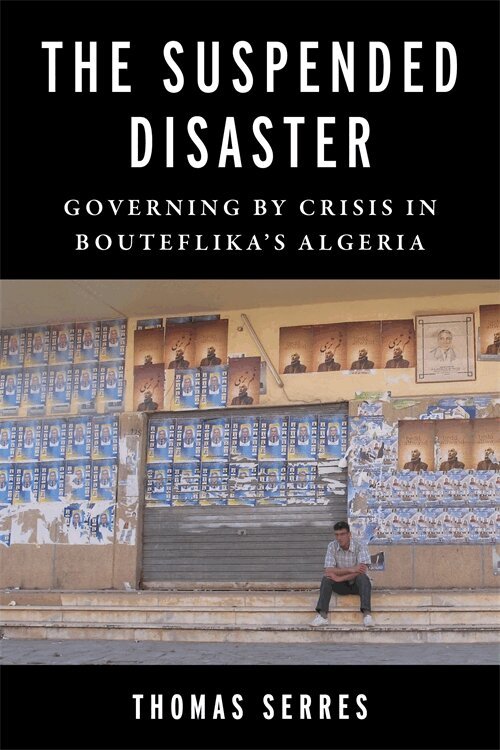
After Algeria’s president Abdelaziz Bouteflika announced his intention to run for a fifth term in early 2019, a popular peaceful uprising erupted calling for change. Bouteflika, who had been in office since 1999, was eventually forced to resign, but the Hirak (“movement”) continued to protest the country’s inequalities and entrenched ruling elite.The Suspended Disaster examines the dynamics of the Algerian political system, offering new insights into the last years of Bouteflika’s rule and the factors that shaped the emergence of an unexpected social movement. Thomas Serres argues that the Algerian ruling coalition developed a mode of government based on the management of a seemingly never-ending crisis, marked by an obsession with security and the ever-present possibility of unrest, violence, and economic collapse. Identifying this form of rule as “governance by catastrophization,” he shows how attempts to preserve the status quo through emergency policies and constant reforms can also lay the groundwork for a revolutionary situation. Serres contrasts the government’s portrayal of perpetually imminent disaster with the uncertainty, precarity, and indignity experienced by much of the population, which fueled the rejection of ruling elites, a profound mistrust toward institutions, and new spaces for grassroots opposition.Based on extensive fieldwork and theoretically novel, The Suspended Disaster sheds new light on the political, economic, and social processes underlying an uprising that changed the face of Algerian politics.
Häftad, Engelska, 2023
299 kr
Skickas inom 5-8 vardagar
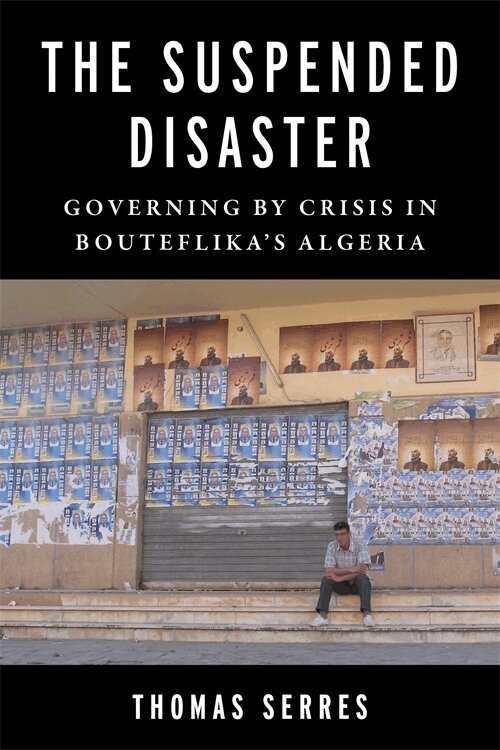
After Algeria’s president Abdelaziz Bouteflika announced his intention to run for a fifth term in early 2019, a popular peaceful uprising erupted calling for change. Bouteflika, who had been in office since 1999, was eventually forced to resign, but the Hirak (“movement”) continued to protest the country’s inequalities and entrenched ruling elite.The Suspended Disaster examines the dynamics of the Algerian political system, offering new insights into the last years of Bouteflika’s rule and the factors that shaped the emergence of an unexpected social movement. Thomas Serres argues that the Algerian ruling coalition developed a mode of government based on the management of a seemingly never-ending crisis, marked by an obsession with security and the ever-present possibility of unrest, violence, and economic collapse. Identifying this form of rule as “governance by catastrophization,” he shows how attempts to preserve the status quo through emergency policies and constant reforms can also lay the groundwork for a revolutionary situation. Serres contrasts the government’s portrayal of perpetually imminent disaster with the uncertainty, precarity, and indignity experienced by much of the population, which fueled the rejection of ruling elites, a profound mistrust toward institutions, and new spaces for grassroots opposition.Based on extensive fieldwork and theoretically novel, The Suspended Disaster sheds new light on the political, economic, and social processes underlying an uprising that changed the face of Algerian politics.
Inbunden, Engelska, 2018
1 865 kr
Skickas inom 10-15 vardagar
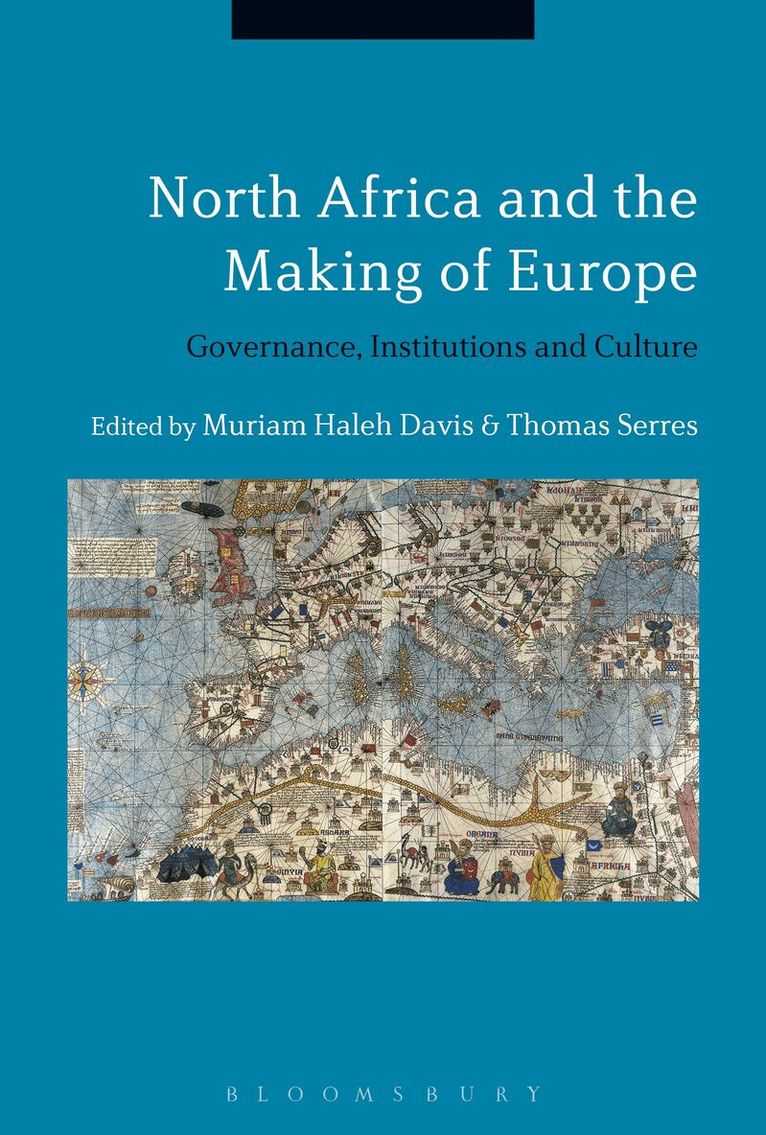
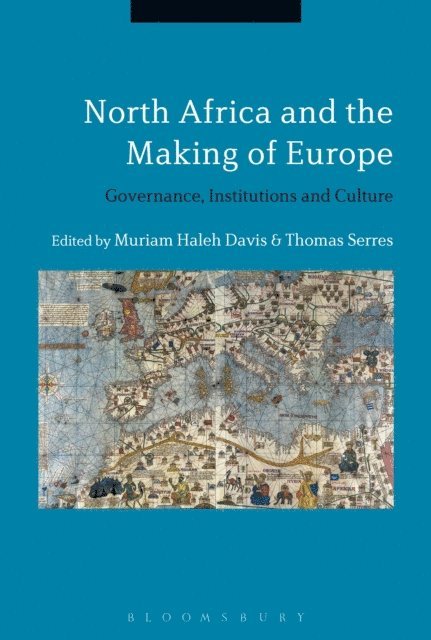
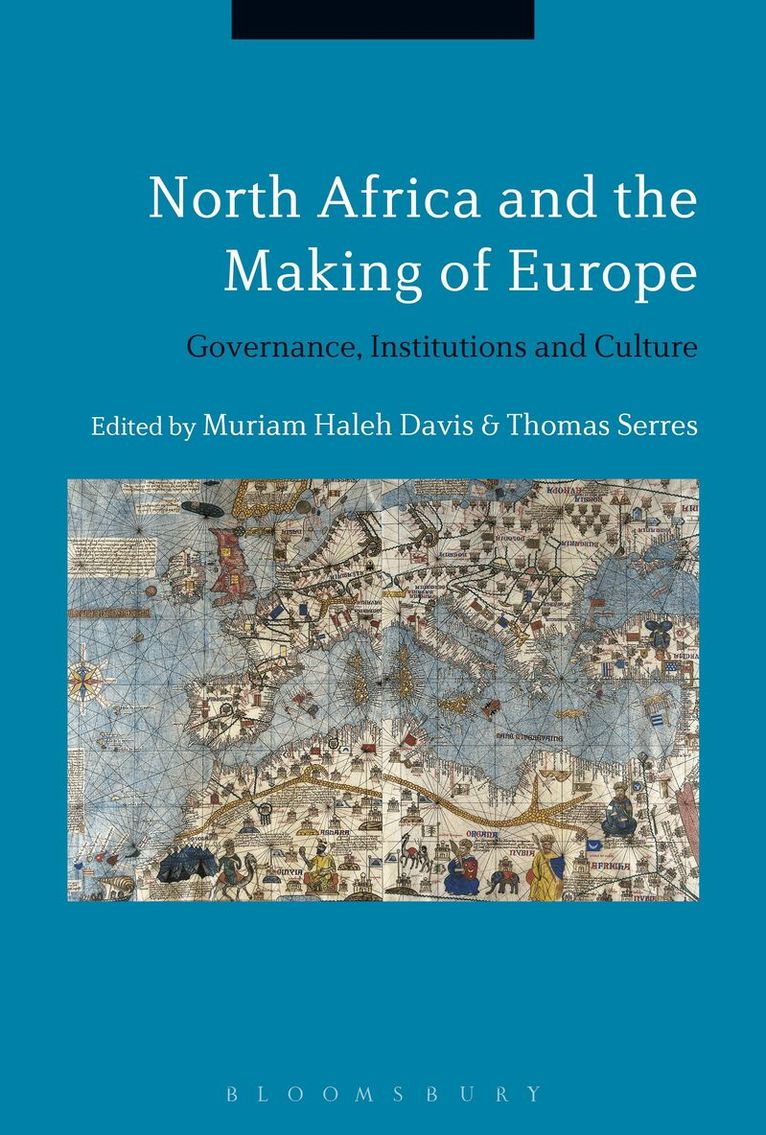
This innovative edited collection brings together leading scholars from the USA, the UK and mainland Europe to examine how European identity and institutions have been fashioned though interactions with the southern periphery since 1945. It highlights the role played by North African actors in shaping European conceptions of governance, culture and development, considering the construction of Europe as an ideological and politico-economic entity in the process.Split up into three sections that investigate the influence of colonialism on the shaping of post-WWII Europe, the nature of co-operation, dependence and interdependence in the region, and the impact of the Arab Spring, North Africa and the Making of Europe investigates the Mediterranean space using a transnational, interdisciplinary approach. This, in turn, allows for historical analysis to be fruitfully put into conversation with contemporary politics. The book also discusses such timely issues such as the development of European institutions, the evolution of legal frameworks in the name of antiterrorism, the rise of Islamophobia, immigration, and political co-operation. Students and scholars focusing on the development of postwar Europe or the EU’s current relationship with North Africa will benefit immensely from this invaluable new study.
E-bok
PDF, Engelska, 2018526 kr
Läs direkt efter köp
This innovative edited collection brings together leading scholars from the USA, the UK and mainland Europe to examine how European identity and institutions have been fashioned though interactions with the southern periphery since 1945. It highlights the role played by North African actors in shaping European conceptions of governance, culture and development, considering the construction of Europe as an ideological and politico-economic entity in the process. Split up into three sections that investigate the influence of colonialism on the shaping of post-WWII Europe, the nature of co-operation, dependence and interdependence in the region, and the impact of the Arab Spring, North Africa and the Making of Europe investigates the Mediterranean space using a transnational, interdisciplinary approach. This, in turn, allows for historical analysis to be fruitfully put into conversation with contemporary politics. The book also discusses such timely issues such as the development of European institutions, the evolution of legal frameworks in the name of antiterrorism, the rise of Islamophobia, immigration, and political co-operation. Students and scholars focusing on the development of postwar Europe or the EU''s current relationship with North Africa will benefit immensely from this invaluable new study.
E-bok
Engelska, 2018526 kr
Läs direkt efter köp
This innovative edited collection brings together leading scholars from the USA, the UK and mainland Europe to examine how European identity and institutions have been fashioned though interactions with the southern periphery since 1945. It highlights the role played by North African actors in shaping European conceptions of governance, culture and development, considering the construction of Europe as an ideological and politico-economic entity in the process. Split up into three sections that investigate the influence of colonialism on the shaping of post-WWII Europe, the nature of co-operation, dependence and interdependence in the region, and the impact of the Arab Spring, North Africa and the Making of Europe investigates the Mediterranean space using a transnational, interdisciplinary approach. This, in turn, allows for historical analysis to be fruitfully put into conversation with contemporary politics. The book also discusses such timely issues such as the development of European institutions, the evolution of legal frameworks in the name of antiterrorism, the rise of Islamophobia, immigration, and political co-operation. Students and scholars focusing on the development of postwar Europe or the EU''s current relationship with North Africa will benefit immensely from this invaluable new study.
Häftad, Engelska, 2019
507 kr
Skickas inom 10-15 vardagar
This innovative edited collection brings together leading scholars from the USA, the UK and mainland Europe to examine how European identity and institutions have been fashioned though interactions with the southern periphery since 1945. It highlights the role played by North African actors in shaping European conceptions of governance, culture and development, considering the construction of Europe as an ideological and politico-economic entity in the process.Split up into three sections that investigate the influence of colonialism on the shaping of post-WWII Europe, the nature of co-operation, dependence and interdependence in the region, and the impact of the Arab Spring, North Africa and the Making of Europe investigates the Mediterranean space using a transnational, interdisciplinary approach. This, in turn, allows for historical analysis to be fruitfully put into conversation with contemporary politics. The book also discusses such timely issues such as the development of European institutions, the evolution of legal frameworks in the name of antiterrorism, the rise of Islamophobia, immigration, and political co-operation. Students and scholars focusing on the development of postwar Europe or the EU’s current relationship with North Africa will benefit immensely from this invaluable new study.
E-bok
PDF, Franska, 2019418 kr
Läs direkt efter köp
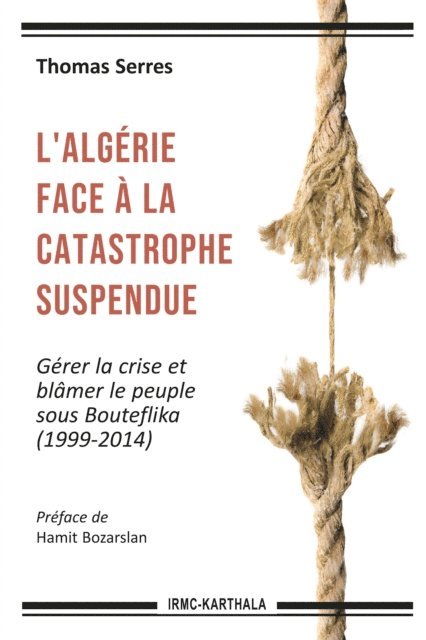
Coédition Karthala - IRMC Tunis.L’Algérie n’est pas l’exception autoritaire illisible que l’on présente parfois. En combinant les apports de l’observation sociologique et de la théorie critique, ce livre s’efforce de dépasser les fictions qui suggèrent l’existence d’un « Système » omnipotent, impersonnel et corrupteur, en décortiquant les transformations de l’ordre politique algérien au cours des trois premiers mandats d’Abdelaziz Bouteflika. Rendue à la fois possible et nécessaire par la crise qui a touché le pays à partir de la fin des années 1980, cette mise à jour s’est faite en accord avec des tendances globalisées qu’elle imite ou précède, avec en arrière-fond le spectre d’une catastrophe qui menacerait de replonger le pays dans la guerre civile.Cet ouvrage part du postulat que l’Algérie est confrontée à une crise toujours latente. Le souvenir de la décennie noire (1992-1999) nourrit ainsi l’idée d’une menace existentielle pesant sur le pays, orientant les politiques gouvernementales et les stratégies des acteurs. Cette situation a une dimension objective, puisqu’elle fait écho à une contestation fragmentée mais néanmoins permanente ainsi qu’aux contradictions internes du cartel qui tient l’État algérien. Elle a aussi une dimension subjective dans la mesure où les discours catastrophistes irriguent l’espace public, annonçant un bouleversement sans cesse repoussé. La crise latente est donc devenue une ressource qui justifie les dispositifs sécuritaires, mais aussi les réformes politiques et économiques.Par ailleurs, ce livre étudie aussi la violence symbolique qui accompagne la suspension de la catastrophe. L’incertitude brouille les cartes, questionne le passé et hypothèque l’avenir ; elle touche de plein fouet l’image de la communauté imaginaire, sans invalider totalement l’idéal de sainteté politique sur lequel l’ordre politique algérien a été bâti après 1962. La recherche de sens conduit néanmoins à des discours imputant la responsabilité des problèmes du pays à la population. Les déséquilibres structurels et les choix politiques s’effacent devant l’image d’une société prétendument malade et/ou pré-moderne. Dès lors, le « Système », aussi corrompu et violent qu’il puisse paraître, est naturalisé. Les dirigeants, mais aussi certains de leurs opposants les plus critiques, endossent alors un rôle disciplinaire pour contrôler une masse anarchique et manipulable.