Thomas Trappe – författare
Visar alla böcker från författaren Thomas Trappe. Handla med fri frakt och snabb leverans.
12 produkter
A Short History of Humanity: A New History of Old Europe
Av Johannes Krause, Thomas Trappe
Häftad, 2022
5,0 utav 5 stjärnor. Totalt antal röster: (1)
257 kr
Lägg i varukorg
Johannes Krause is the director of the Max Planck Institute for Evolutionary Anthropology and a brilliant pioneer in the field of archaeogenetics—archaeology augmented by DNA sequencing technology—which has allowed scientists to reconstruct human history reaching back hundreds of thousands of years …
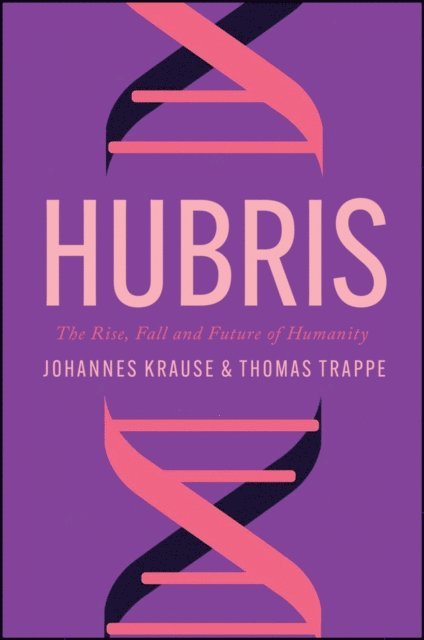
Hubris
The Rise, Fall, and Future of Humanity
Av Johannes Krause, Thomas Trappe
Inbunden, 2024
228 kr
Lägg i varukorg
Humans are the most intelligent beings this planet has ever produced. But how is it that we can travel into space, cure diseases and decode the fundamentals of life, and at the same time find ourselves faced with an existential crisis that threatens to overwhelm us? What lies behind this …
Short History of Humanity
How Migration Made Us Who We Are
Av Johannes Krause, Thomas Trappe
Häftad, 2021
225 kr
Lägg i varukorg
Humanity has often found itself on the precipice. We've survived and thrived because we've never stopped moving...In this eye-opening book, Johannes Krause, Chair of the Max Planck Institute for the History of Humanity, offers a new way of understanding our past, present and future.Marshalling …
Short History of Humanity
How Migration Made Us Who We Are
Av Johannes Krause, Thomas Trappe
E-bok, 2021
170 kr
Lägg i varukorg
Humanity has often found itself on the precipice. We've survived and thrived because we've never stopped moving...'Stops you dead in your tracks ... An absolute revelation' Sue Black, bestselling author of All That RemainsIn this eye-opening book, Johannes Krause, Chair of the Max Planck Institute …
Short History of Humanity
How Migration Made Us Who We Are
Av Thomas Trappe, Johannes Krause
Ljudbok, 2021
165 kr
Lägg i varukorg
Brought to you by Penguin. Humanity has often found itself on the precipice. We''ve survived and thrived because we''ve never stopped moving... In this eye-opening book, Johannes Krause, Chair of the Max Planck Institute for the History of Humanity, offers a new way of understanding our past, …
Hubris
The Rise, Fall, and Future of Humanity
Av Thomas Trappe, Johannes Krause
E-bok, 2024
396 kr
Lägg i varukorg
Humans are the most intelligent beings this planet has ever produced. But how is it that we can travel into space, cure diseases and decode the fundamentals of life, and at the same time find ourselves faced with an existential crisis that threatens to overwhelm us? What lies behind this …
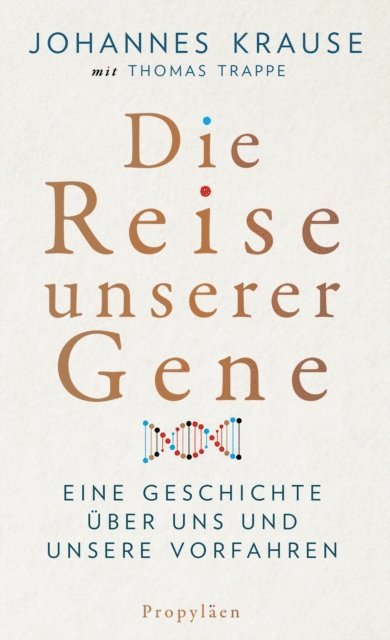
Die Reise unserer Gene
Eine Geschichte über uns und unsere Vorfahren
Av Thomas Trappe, Johannes Krause
E-bok, 2019
125 kr
Lägg i varukorg
Migration und Wanderungsbewegungen sind keine Phänomene der Neuzeit: Seit der Mensch den aufrechten Gang beherrschte, trieb es ihn aus seiner Heimat Afrika in die ganze Welt, auch nach Europa. Bis vor Kurzem lag diese Urgeschichte noch im Dunkeln, doch mit den neuen Methoden der Genetik hat sich …
Hybris
Die Reise der Menschheit zwischen Aufbruch und Scheitern | Das packende Sachbuch über Gene, Klimawandel und die Zukunft der Menschheit
Av Thomas Trappe, Johannes Krause
E-bok, 2022
147 kr
Lägg i varukorg
Wie weit darf der Mensch gehen?Klimawandel, Pandemien, erschöpfte Ressourcen. Die Menschheit kennt diese Bedrohungen schon lange, und die Geschichte zeigt, was auf dem Spiel steht.Die Geschichte des Menschen ist eine Geschichte der Hybris. Immer wieder hat unsere Spezies die Welt nach ihren …