Thomas W. Barton – författare
Visar alla böcker från författaren Thomas W. Barton. Handla med fri frakt och snabb leverans.
5 produkter
5 produkter
Del 1 - Iberian Encounter and Exchange, 475–1755
Contested Treasure
Jews and Authority in the Crown of Aragon
Häftad, Engelska, 2015
434 kr
Skickas
In Contested Treasure, Thomas Barton examines how the Jews in the Crown of Aragon in the twelfth through fourteenth centuries negotiated the overlapping jurisdictions and power relations of local lords and the crown. The thirteenth century was a formative period for the growth of royal bureaucracy and the development of the crown’s legal claims regarding the Jews. While many Jews were under direct royal authority, significant numbers of Jews also lived under nonroyal and seigniorial jurisdiction. Barton argues that royal authority over the Jews (as well as Muslims) was far more modest and contingent on local factors than is usually recognized. Diverse case studies reveal that the monarchy’s Jewish policy emerged slowly, faced considerable resistance, and witnessed limited application within numerous localities under nonroyal control, thus allowing for more highly differentiated local modes of Jewish administration and coexistence. Contested Treasure refines and complicates our portrait of interfaith relations and the limits of royal authority in medieval Spain, and it presents a new approach to the study of ethnoreligious relations and administrative history in medieval European society.
Del 14 - Iberian Encounter and Exchange, 475–1755
Diocesan Dominion
The Quest for Episcopal Authority in Medieval Iberia
Inbunden, Engelska, 2026
1 550 kr
Kommande
As Western Christendom expanded dramatically along its frontiers in the eleventh and twelfth centuries, Church leaders debated how to organize and administer newly captured diocesan lands. These questions were especially pressing in the Iberian Peninsula, where conquests ushered in piecemeal, multidimensional processes of consolidation and integration in which lay and religious authorities sought to establish ecclesiastical institutions to govern territories containing Christian and non-Christian populations.In Diocesan Dominion, Thomas Barton examines these dynamics through the comparative lens of two neighboring dioceses, Lleida and Tortosa, each formed from conquered Muslim territory in the mid-twelfth century. Using rich archival records, Barton reconstructs how bishops and their clergy strategized to enhance their authority over diocesan lands by engaging with landlords, military orders, and monasteries. He observes that, while these litigants sometimes invoked authorities such as the papacy or lay rulers and appealed to rigid privileges or legal guidelines to help resolve conflicts, they usually formulated compromises, sharing jurisdiction and resources. Observing commonalities and contrasts among these cases, Barton demonstrates the locally contingent nature of episcopal authority and shows how Western Christendom developed variegated and flexible ecclesiastical administrative frameworks long before its early-modern globalization.The first book in any language to reconstruct the postconquest history of the dioceses of Lleida and Tortosa, Diocesan Dominion challenges default assumptions about episcopal practices during the high and later medieval periods and will be essential reading for all scholars in the field.
Inbunden, Engelska, 2019
689 kr
Skickas inom 10-15 vardagar
At the beginning of the eleventh century, Catalonia was a patchwork of counties, viscounties, and lordships that bordered Islamic al-Andalus to the south. Over the next two centuries, the region underwent a dramatic transformation. The counts of Barcelona secured title to the neighboring kingdom of Aragon through marriage and this newly constituted Crown of Aragon, after numerous failed attempts, finally conquered the Islamic states positioned along its southern frontier in the mid-twelfth century. Successful conquest, however, necessitated considerable organizational challenges that threatened to destabilize, politically and economically, this triumphant regime. The Aragonese monarchy's efforts to overcome these adversities, consolidate its authority, and capitalize on its military victories would impose lasting changes on its governmental framework and exert considerable influence over future expansionist projects.In Victory's Shadow, Thomas W. Barton offers a sweeping new account of the capture and long-term integration of Muslim-ruled territories by an ascendant Christian regime and a detailed analysis of the influence of this process on the governmental, economic, and broader societal development of both Catalonia and the greater Crown of Aragon. Based on over a decade of extensive archival research, Victory's Shadow deftly reconstructs and evaluates the decisions, outcomes, and costs involved in this experience of territorial integration and considers its implications for ongoing debates regarding the dynamics of expansionism across the diverse boundary zones of medieval Europe.
Inbunden, Engelska, 2026
809 kr
Kommande
E-bok
Engelska, 2026695 kr
Läs direkt efter köp
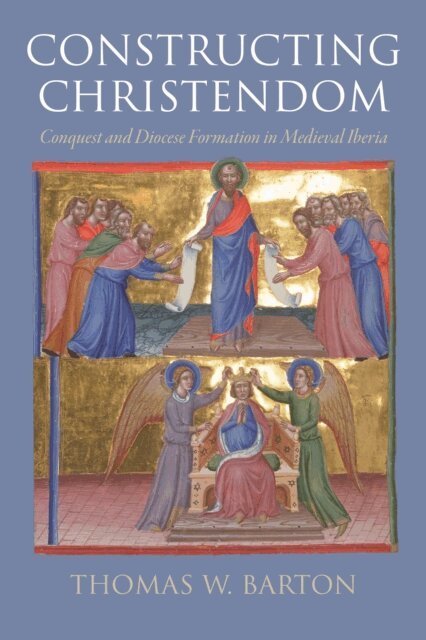
An examination of how church leaders partnered with lay rulers to integrate lands conquered from the Muslims in the Iberian Peninsula from the ninth through the fourteenth centuriesIn Constructing Christendom, Thomas W. Barton examines how church leaders partnered with lay rulers to integrate lands conquered from the Muslims in the Iberian Peninsula from the ninth through the fourteenth centuries. In tracing the intricate developmental histories of a cluster of competitive neighboring bishoprics, Barton reveals how rival factions fought over new territory by asserting that it belonged to their foundations according to ancient precedent. Wielding self-interested, manipulated recollections of the organization of the Visigothic church that had predated the eighth-century Muslim conquest did more than further these local territorial battles; it helped promote a shared revisionist Christian historical vision that delegitimized non-Christian rule and emphasized the elemental, divinely ordained centrality of papal authority.Based on over a decade of research and drawing on documentation from numerous underutilized local archives, Constructing Christendom presents the unwritten histories of these foundations to demonstrate how such local efforts to expand Latin Christendom's frontiers and establish or enlarge dioceses came to be associated with the reordering of the ecclesiastical hierarchy and the solidification of a cohesive European Christian identity. Despite the persistence of some unique features deriving from the formational histories of these frontier bishoprics, the overarching trend, Barton finds, was toward gradual homogenization, as dioceses on Christendom's periphery and established ones situated closer to its core increasingly came to resemble one another in terms of their administrative and cultural attributes and relationships to papacy-centric governance.