Thomas Weatherall – författare
Visar alla böcker från författaren Thomas Weatherall. Handla med fri frakt och snabb leverans.
7 produkter
7 produkter
Inbunden, Engelska, 2026
1 088 kr
Skickas inom 7-10 vardagar
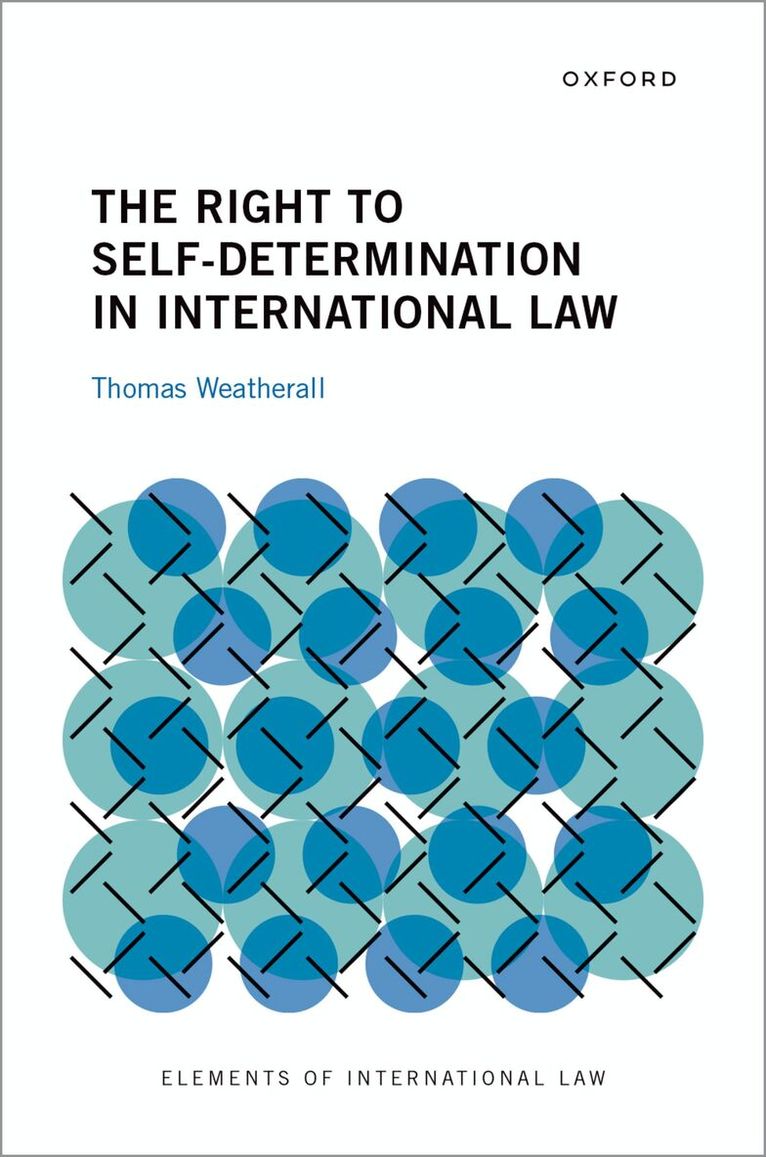
Self-determination is a cornerstone of modern international law-an inalienable right that empowers peoples to freely determine their political status and pursue their economic, social, and cultural development. Enshrined in Article 1 of the United Nations Charter and Article 1 common to both the International Covenant on Civil and Political Rights and the International Covenant on Economic, Social and Cultural Rights, self-determination stands internationally as a right to independence and domestically as a foundation for representative government.This book offers a clear, objective, and comprehensive account of the right to self-determination in international law. Designed for both scholars and practitioners, it navigates the complex legal landscape with precision, drawing on treaties, state practice, UN resolutions, and landmark judgments of the International Court of Justice. It explores the historical roots, normative status, and dual dimensions-international and domestic-of the right, while also addressing the obligations of states and mechanisms for enforcement.By illuminating the legal content, tensions, and practical applications of self-determination, this volume provides readers with the tools to understand and apply one of the most fundamental principles shaping our world today. It is as an essential resource for those engaged in international law, human rights, and global governance.
Häftad, Engelska, 2026
252 kr
Skickas inom 5-8 vardagar
Self-determination is a cornerstone of modern international law-an inalienable right that empowers peoples to freely determine their political status and pursue their economic, social, and cultural development. Enshrined in Article 1 of the United Nations Charter and Article 1 common to both the International Covenant on Civil and Political Rights and the International Covenant on Economic, Social and Cultural Rights, self-determination stands internationally as a right to independence and domestically as a foundation for representative government.This book offers a clear, objective, and comprehensive account of the right to self-determination in international law. Designed for both scholars and practitioners, it navigates the complex legal landscape with precision, drawing on treaties, state practice, UN resolutions, and landmark judgments of the International Court of Justice. It explores the historical roots, normative status, and dual dimensions-international and domestic-of the right, while also addressing the obligations of states and mechanisms for enforcement.By illuminating the legal content, tensions, and practical applications of self-determination, this volume provides readers with the tools to understand and apply one of the most fundamental principles shaping our world today. It is as an essential resource for those engaged in international law, human rights, and global governance.
E-bok
Engelska, 2025264 kr
Läs direkt efter köp
Self-determination is a cornerstone of modern international law-an inalienable right that empowers peoples to freely determine their political status and pursue their economic, social, and cultural development. Enshrined in Article 1 of the United Nations Charter and Article 1 common to both the International Covenant on Civil and Political Rights and the International Covenant on Economic, Social and Cultural Rights, self-determination stands internationally as a right to independence and domestically as a foundation for representative government.This book offers a clear, objective, and comprehensive account of the right to self-determination in international law. Designed for both scholars and practitioners, it navigates the complex legal landscape with precision, drawing on treaties, state practice, UN resolutions, and landmark judgments of the International Court of Justice. It explores the historical roots, normative status, and dual dimensions-international and domestic-of the right, while also addressing the obligations of states and mechanisms for enforcement.By illuminating the legal content, tensions, and practical applications of self-determination, this volume provides readers with the tools to understand and apply one of the most fundamental principles shaping our world today. It is as an essential resource for those engaged in international law, human rights, and global governance.
E-bok
PDF, Engelska, 2025264 kr
Läs direkt efter köp
Self-determination is a cornerstone of modern international law-an inalienable right that empowers peoples to freely determine their political status and pursue their economic, social, and cultural development. Enshrined in Article 1 of the United Nations Charter and Article 1 common to both the International Covenant on Civil and Political Rights and the International Covenant on Economic, Social and Cultural Rights, self-determination stands internationally as a right to independence and domestically as a foundation for representative government.This book offers a clear, objective, and comprehensive account of the right to self-determination in international law. Designed for both scholars and practitioners, it navigates the complex legal landscape with precision, drawing on treaties, state practice, UN resolutions, and landmark judgments of the International Court of Justice. It explores the historical roots, normative status, and dual dimensions-international and domestic-of the right, while also addressing the obligations of states and mechanisms for enforcement.By illuminating the legal content, tensions, and practical applications of self-determination, this volume provides readers with the tools to understand and apply one of the most fundamental principles shaping our world today. It is as an essential resource for those engaged in international law, human rights, and global governance.
Inbunden, Engelska, 2015
1 332 kr
Skickas inom 7-10 vardagar
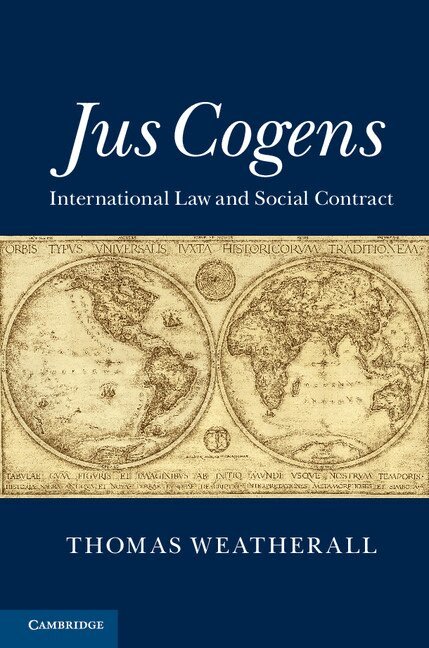
One of the most complex doctrines in contemporary international law, jus cogens is the immediate product of the socialization of the international community following the Second World War. However, the doctrine resonates in a centuries-old legal tradition which constrains the dynamics of voluntarism that characterize conventional international law. To reconcile this modern iteration of individual-oriented public order norms with the traditionally state-based form of international law, Thomas Weatherall applies the idea of a social contract to structure the analysis of jus cogens into four areas: authority, sources, content and enforcement. The legal and political implications of this analysis give form to jus cogens as the product of interrelation across an individual-oriented normative framework, a state-based legal order, and values common to the international community as a whole.
Häftad, Engelska, 2017
460 kr
Skickas inom 7-10 vardagar
One of the most complex doctrines in contemporary international law, jus cogens is the immediate product of the socialization of the international community following the Second World War. However, the doctrine resonates in a centuries-old legal tradition which constrains the dynamics of voluntarism that characterize conventional international law. To reconcile this modern iteration of individual-oriented public order norms with the traditionally state-based form of international law, Thomas Weatherall applies the idea of a social contract to structure the analysis of jus cogens into four areas: authority, sources, content and enforcement. The legal and political implications of this analysis give form to jus cogens as the product of interrelation across an individual-oriented normative framework, a state-based legal order, and values common to the international community as a whole.
E-bok
PDF, Engelska, 20222 249 kr
Läs direkt efter köp
The responsibility of individuals and that of States under international law are generally regarded as independent systems. Each is a distinct form of responsibility governed by a different set of rules. The separability of these two forms of responsibility does not, however, dictate that they necessarily operate in isolation from one another. To the contrary, linkages between the fields of individual and State responsibility define the parameters of the principle of duality of responsibility in international law. Duality of Responsibility in International Law offers a roadmap to help navigate this complex legal space.