Tianxi Cai – författare
2 890 kr
Skickas inom 10-15 vardagar
3 341 kr
Läs direkt efter köp
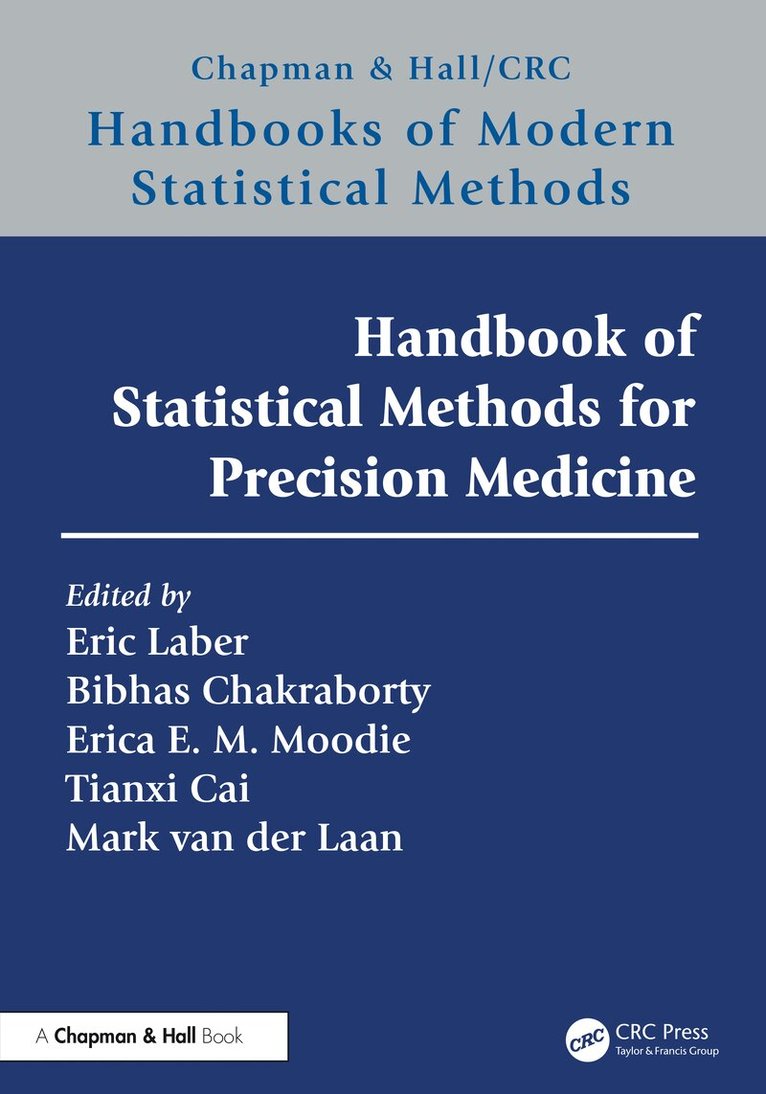
The statistical study and development of analytic methodology for individualization of treatments is no longer in its infancy. Many methods of study design, estimation, and inference exist, and the tools available to the analyst are ever growing. This handbook introduces the foundations of modern statistical approaches to precision medicine, bridging key ideas to active lines of current research in precision medicine.
The contributions in this handbook vary in their level of assumed statistical knowledge; all contributions are accessible to a wide readership of statisticians and computer scientists including graduate students and new researchers in the area. Many contributions, particularly those that are more comprehensive reviews, are suitable for epidemiologists and clinical researchers with some statistical training. The handbook is split into three sections: Study Design for Precision Medicine, Estimation of Optimal Treatment Strategies, and Precision Medicine in High Dimensions.
The first focuses on designed experiments, in many instances, building and extending on the notion of sequential multiple assignment randomized trials. Dose finding and simulation-based designs using agent-based modelling are also featured. The second section contains both introductory contributions and more advanced methods, suitable for estimating optimal adaptive treatment strategies from a variety of data sources including non-experimental (observational) studies. The final section turns to estimation in the many-covariate setting, providing approaches suitable to the challenges posed by electronic health records, wearable devices, or any other settings where the number of possible variables (whether confounders, tailoring variables, or other) is high. Together, these three sections bring together some of the foremost leaders in the field of precision medicine, offering new insights and ideas as this field moves towards its third decade.
3 341 kr
Läs direkt efter köp
The statistical study and development of analytic methodology for individualization of treatments is no longer in its infancy. Many methods of study design, estimation, and inference exist, and the tools available to the analyst are ever growing. This handbook introduces the foundations of modern statistical approaches to precision medicine, bridging key ideas to active lines of current research in precision medicine.
The contributions in this handbook vary in their level of assumed statistical knowledge; all contributions are accessible to a wide readership of statisticians and computer scientists including graduate students and new researchers in the area. Many contributions, particularly those that are more comprehensive reviews, are suitable for epidemiologists and clinical researchers with some statistical training. The handbook is split into three sections: Study Design for Precision Medicine, Estimation of Optimal Treatment Strategies, and Precision Medicine in High Dimensions.
The first focuses on designed experiments, in many instances, building and extending on the notion of sequential multiple assignment randomized trials. Dose finding and simulation-based designs using agent-based modelling are also featured. The second section contains both introductory contributions and more advanced methods, suitable for estimating optimal adaptive treatment strategies from a variety of data sources including non-experimental (observational) studies. The final section turns to estimation in the many-covariate setting, providing approaches suitable to the challenges posed by electronic health records, wearable devices, or any other settings where the number of possible variables (whether confounders, tailoring variables, or other) is high. Together, these three sections bring together some of the foremost leaders in the field of precision medicine, offering new insights and ideas as this field moves towards its third decade.
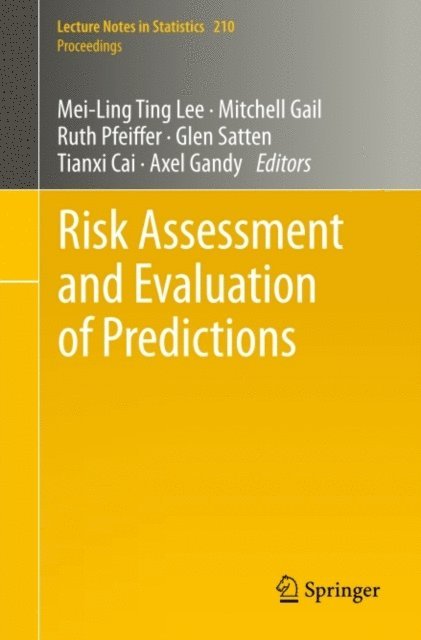
Risk Assessment and Evaluation of Predictions
1 738 kr
Skickas inom 10-15 vardagar
2 130 kr
Läs direkt efter köp
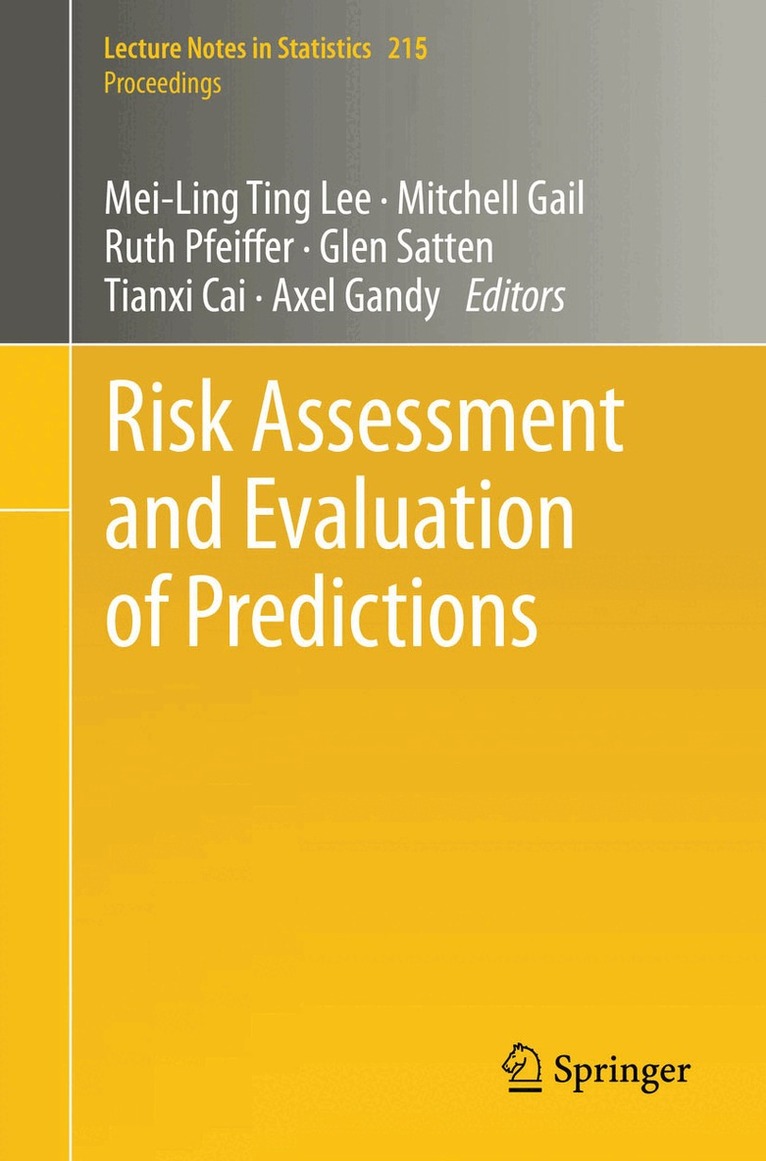
Methods of risk analysis and the outcome of particular evaluations and predictions are covered in detail in this proceedings volume, whose contributions are based on invited presentations from Professor Mei-Ling Ting Lee''s 2011 symposium on Risk Analysis and the Evaluation of Predictions. This symposium was held at the University of Maryland in October of 2011. Risk analysis is the science of evaluating health, environmental, and engineering risks resulting from past, current, or anticipated, future activities. The use of these evaluations include to provide information for determining regulatory actions to limit risk, present scientific evidence in legal settings, evaluate products and potential liabilities within private organizations, resolve World Trade disputes amongst nations, and educate the public concerning particular risk issues. Risk analysis is an interdisciplinary science that relies on epidemiology and laboratory studies, collection of exposure and other field data, computer modeling, and related social, economic and communication considerations. In addition, social dimensions of risk are addressed by social scientists.