Tim Denvir – författare
Visar alla böcker från författaren Tim Denvir. Handla med fri frakt och snabb leverans.
5 produkter
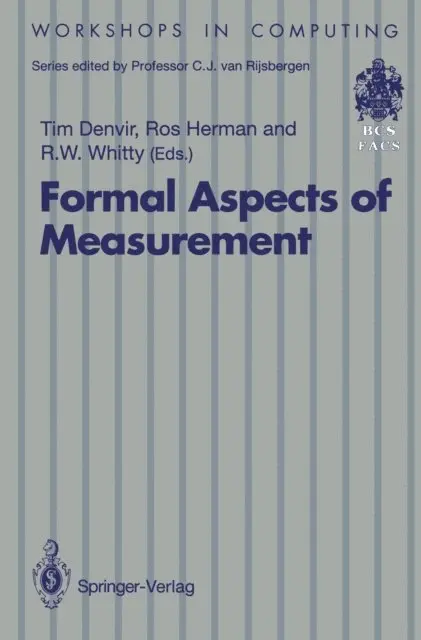
Formal Aspects of Measurement
Proceedings of the BCS-FACS Workshop on Formal Aspects of Measurement, South Bank University, London, 5 May 1991
Av Robin Whitty, Rosalind Herman m. fl.
E-bok, 2012
755 kr
Lägg i varukorg
This book contains the eight invited papers presented at the workshop on Formal Aspects of Measurement held at South Bank University on 5th May 1991, organised by the British Computer Society''s Special Interest Group on Formal Aspects of Computer Science (FACS). In addition, there are five papers …
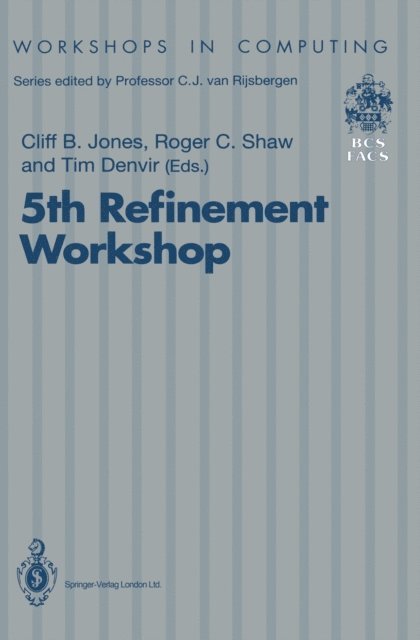
5th Refinement Workshop
Proceedings of the 5th Refinement Workshop, organised by BCS-FACS, London, 8–10 January 1992
Av Tim Denvir, Roger C. Shaw m. fl.
E-bok, 2013
755 kr
Lägg i varukorg
Refinement is the term used to describe systematic and formal methods of specifying hard- and software and transforming the specifications into designs and implementations. The value of formal methods in producing reliable hard- and software is widely appreciated by academics and workers in …
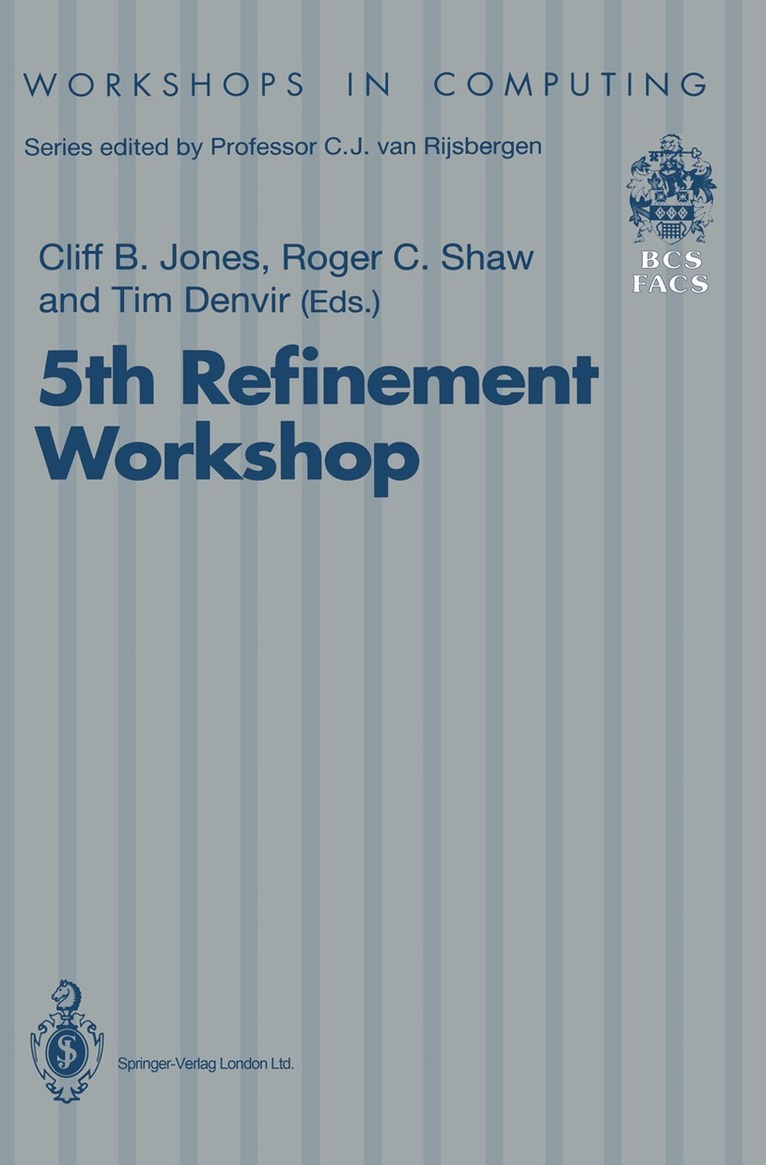
5th Refinement Workshop
Proceedings of the 5th Refinement Workshop, organised by BCS-FACS, London, 8–10 January 1992
Av Cliff B. Jones, Roger C. Shaw m. fl.
Häftad, 1992
568 kr
Lägg i varukorg
Refinement is the term used to describe systematic and formal methods of specifying hardware and software and transforming the specifications into designs and implementations. The value of formal methods in producing reliable hard-and software is widely appreciated by academics and workers in …
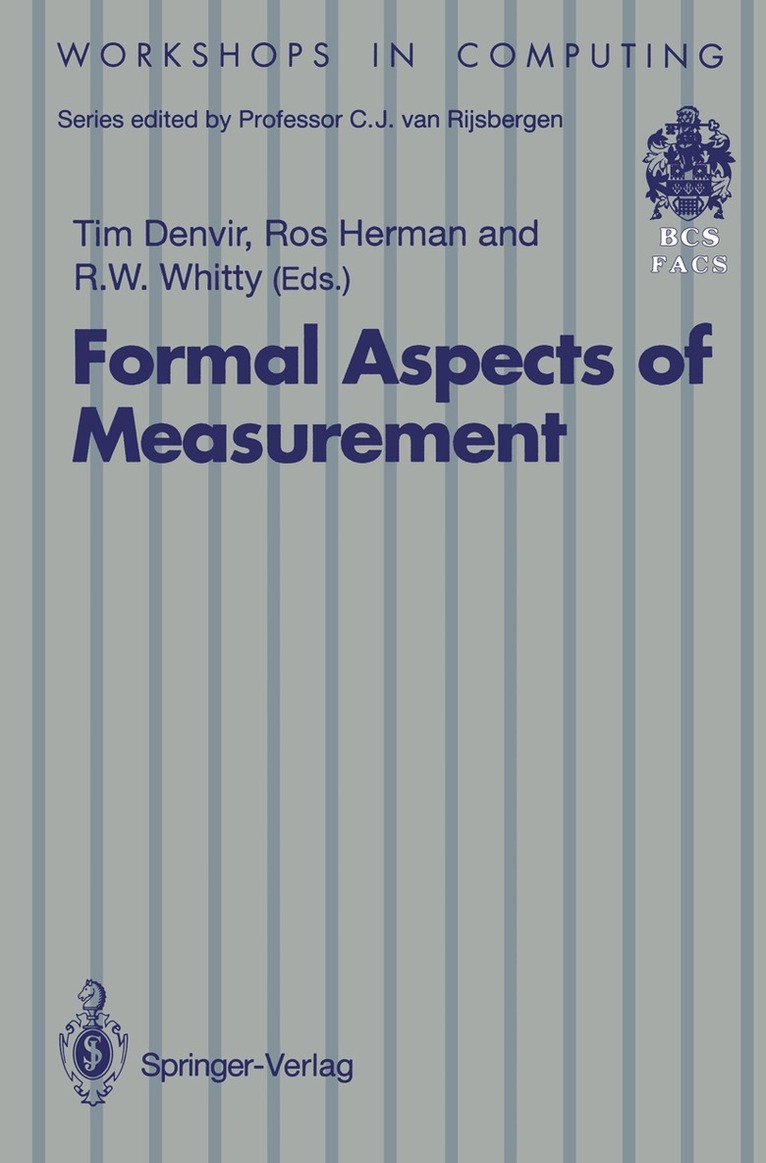
Formal Aspects of Measurement
Proceedings of the BCS-FACS Workshop on Formal Aspects of Measurement, South Bank University, London, 5 May 1991
Av Tim Denvir, Rosalind Herman m. fl.
Häftad, 1992
568 kr
Lägg i varukorg
This book contains the eight invited papers presented at the workshop on Formal Aspects of Measurement held at South Bank University on 5th May 1991, organised by the British Computer Society's Special Interest Group on Formal Aspects of Computer Science (FACS). In addition, there are five papers …
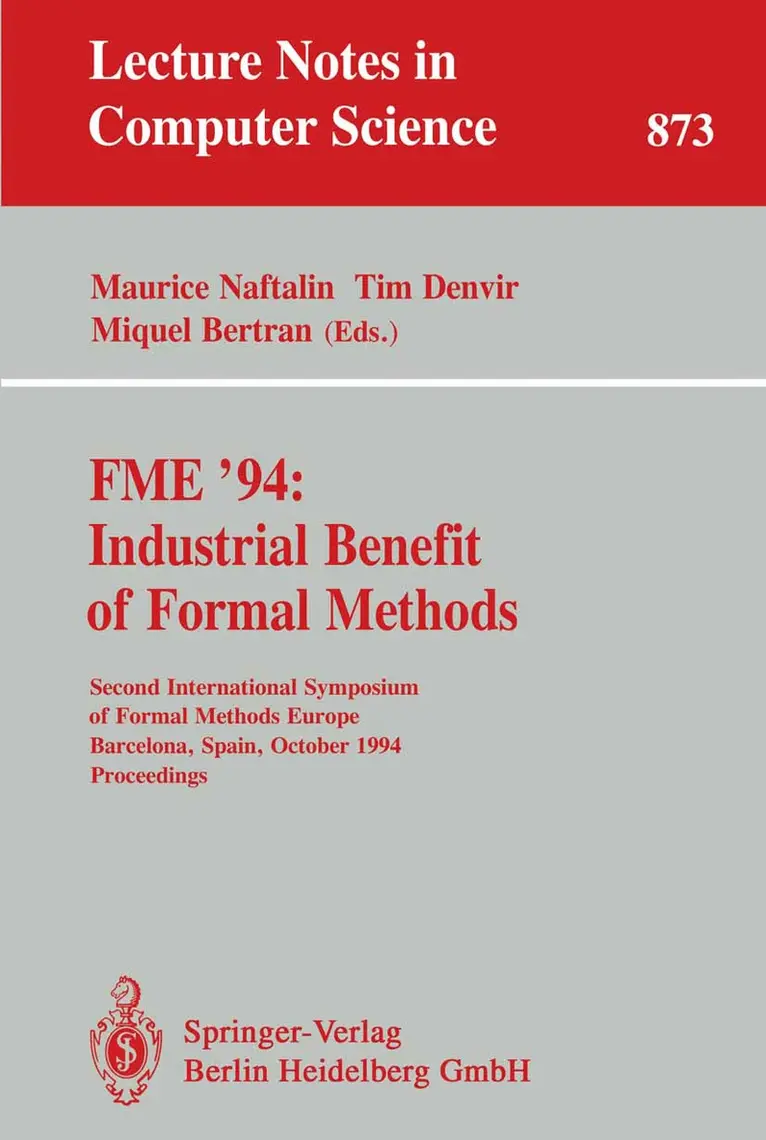
FME '94: Industrial Benefit of Formal Methods
Second International Symposium of Formal Methods Europe, Barcelona, Spain, October 24 - 28, 1994. Proceedings
Av Maurice Naftalin, Tim Denvir m. fl.
Häftad, 1994
1129 kr
Lägg i varukorg
This volume presents the proceedings of the Second International Symposium of Formal Methods Europe, held in Barcelona, Spain in October 1994.Besides two invited papers and seven industrial usage reports, there are 32 full papers selected from some 150 submissions. The industrial usage reports …