
Todd R. Schachtman – författare
Visar alla böcker från författaren Todd R. Schachtman. Handla med fri frakt och snabb leverans.
3 produkter
3 produkter
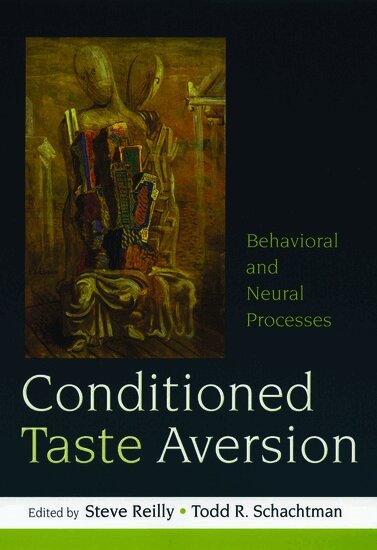
Inbunden, Engelska, 2008
1 175 kr
Skickas
Conditioned taste aversion is arguably the most important learning process that humans and animals possess because it prevents the repeated self-administration of toxic food. It has not only profoundly influenced the content and direction of learning theory, but also has important human nutritional and clinical significance. In addition to its direct relevance to food selection, dietary habits, and eating disorders, it is significant for certain clinical populations that develop it as a consequence of their treatment. The study of conditioned taste aversions has invigorated new theory and research on drug conditioning and addictions, as well as on conditioned immunity. There has also been a substantial amount of recent research exploring the neural substrates of conditioned taste aversion--its neuroanatomy, pharmacology, and role in the molecular and cellular basis of plasticity. This book provides a definitive perspective on the current state of research, theory, and clinical applications for conditioned taste aversion effects and methodology. In each chapter, a leading scholar in the field presents a broad range of studies, along with current findings on the topic, highlighting both the major theoretical landmarks and the significant new perspectives. It will be an important resource for both professional and student researchers, who study conditioning, learning, plasticity, eating disorders, and dietary and ingestive behaviors in neuroscience, cognitive neuroscience, cognitive psychology, developmental psychology, clinical psychology, psychopharmacology, and medicine.
E-bok
PDF, Engelska, 2008636 kr
Läs direkt efter köp
Conditioned taste aversion is arguably the most important learning process that humans and animals possess because it prevents the repeated self-administration of toxic food. It has not only profoundly influenced the content and direction of learning theory, but also has important human nutritional and clinical significance. In addition to its direct relevance to food selection, dietary habits, and eating disorders, it is significant for certain clinical populations that develop it as a consequence of their treatment. The study of conditioned taste aversions has invigorated new theory and research on drug conditioning and addictions, as well as on conditioned immunity. There has also been a substantial amount of recent research exploring the neural substrates of conditioned taste aversion--its neuroanatomy, pharmacology, and role in the molecular and cellular basis of plasticity. This book provides a definitive perspective on the current state of research, theory, and clinical applications for conditioned taste aversion effects and methodology. In each chapter, a leading scholar in the field presents a broad range of studies, along with current findings on the topic, highlighting both the major theoretical landmarks and the significant new perspectives. It will be an important resource for both professional and student researchers, who study conditioning, learning, plasticity, eating disorders, and dietary and ingestive behaviors in neuroscience, cognitive neuroscience, cognitive psychology, developmental psychology, clinical psychology, psychopharmacology, and medicine.
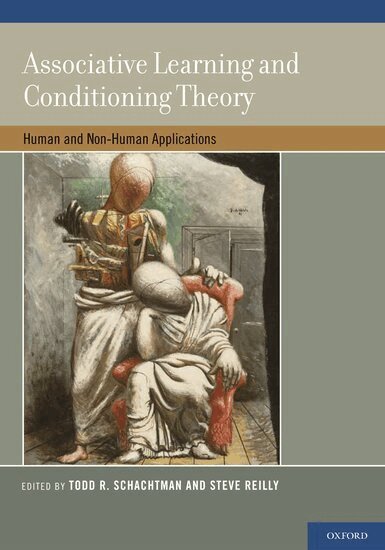
Inbunden, Engelska, 2011
2 077 kr
Skickas inom 5-8 vardagar
Although many professionals in psychology (including the sub-disciplines of human learning and memory, clinical practice related to psychopathology, neuroscience, educational psychology and many other areas) no longer receive training in learning and conditioning, the influence of this field remains strong. Therefore, many researchers and clinicians have little knowledge about basic learning theory and its current applications beyond their own specific research topic. The primary purpose of the present volume is to highlight ways in which basic learning principles, methodology, and phenomena underpin, and indeed guide, contemporary translational research. With contributions from a distinguished collection of internationally renowned scholars, this 23-chapter volume contains specific research issues but is also broad in scope, covering a variety of topics in which associative learning and conditioning theory apply, such as drug abuse and addiction, anxiety, fear and pain research, advertising, attribution processes, acquisition of likes and dislikes, social learning, psychoneuroimmunology, and psychopathology (e.g., autism, depression, helplessness and schizophrenia). This breadth is captured in the titles of the three major sections of the book: Applications to Clinical Pathology; Applications to Health and Addiction; Applications to Cognition, Social Interaction and Motivation. The critically important phenomena and methodology of learning and conditioning continue to have a profound influence on theory and clinical concerns related to the mechanisms of memory, cognition, education, and pathology of emotional and consummatory disorders. This volume is expected to have the unique quality of serving the interests of many researchers, educators and clinicians including, for example, neuroscientists, learning and conditioning researchers, psychopharmacologists, clinical psychopathologists, and practitioners in the medical field.