Toine Spapens – författare
Visar alla böcker från författaren Toine Spapens. Handla med fri frakt och snabb leverans.
13 produkter
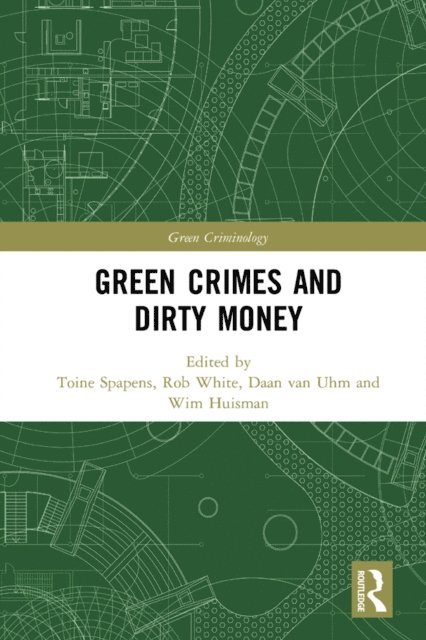
Green Crimes and Dirty Money
Av Toine Spapens, Rob White m. fl.
Häftad, 2020
636 kr
Lägg i varukorg
Environmental crimes are primarily driven by financial motives. The combined financial value of illicit trade in protected wildlife, illegal logging and waste trafficking is estimated to come directly after counterfeiting, the narcotic drugs trade and illegal gambling. Logically, the proceeds of …
Green Crimes and Dirty Money
Av Toine Spapens, Rob White m. fl.
Inbunden, 2018
2309 kr
Lägg i varukorg
Environmental crimes are primarily driven by financial motives. The combined financial value of illicit trade in protected wildlife, illegal logging and waste trafficking is estimated to come directly after counterfeiting, the narcotic drugs trade and illegal gambling. Logically, the proceeds of …
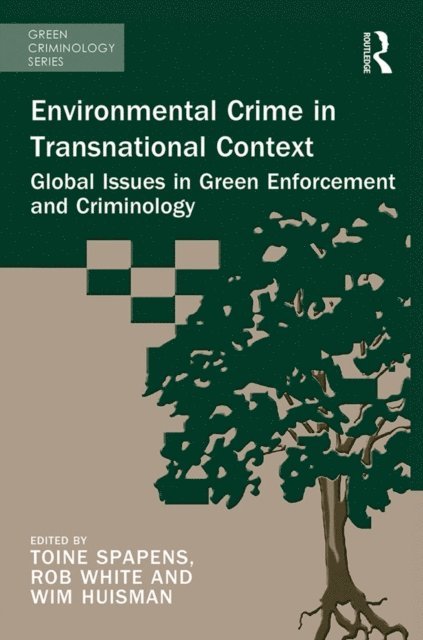
Environmental Crime in Transnational Context
Global Issues in Green Enforcement and Criminology
Av Toine Spapens, Rob White m. fl.
Häftad, 2018
689 kr
Lägg i varukorg
Environmental crime is one of the most profitable and fastest growing areas of international criminal activity. The increasing cross-border scope of environmental crimes and harms is one of the reasons why governments and the enforcement community have trouble in finding the proper responses. Law …
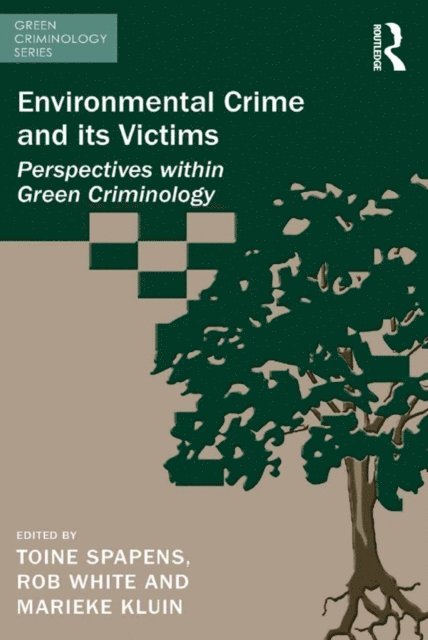
Environmental Crime and its Victims
Perspectives within Green Criminology
Av Toine Spapens, Rob White m. fl.
Häftad, 2017
837 kr
Lägg i varukorg
Environmental crime is one of the most profitable and fastest growing areas of international criminal activity. These types of crime, however, do not always produce an immediate consequence, and the harm may be diffused. As such, the complexity of victimization - in terms of time, space, impact, …
Environmental Crime in Transnational Context
Global Issues in Green Enforcement and Criminology
Av Wim Huisman, Rob White m. fl.
E-bok, 2016
813 kr
Lägg i varukorg
Environmental crime is one of the most profitable and fastest growing areas of international criminal activity. The increasing cross-border scope of environmental crimes and harms is one of the reasons why governments and the enforcement community have trouble in finding the proper responses. Law …
Environmental Crime in Transnational Context
Global Issues in Green Enforcement and Criminology
Av Wim Huisman, Rob White m. fl.
E-bok, 2016
813 kr
Lägg i varukorg
Environmental crime is one of the most profitable and fastest growing areas of international criminal activity. The increasing cross-border scope of environmental crimes and harms is one of the reasons why governments and the enforcement community have trouble in finding the proper responses. Law …
Environmental Crime and its Victims
Perspectives within Green Criminology
Av Marieke Kluin, Rob White m. fl.
E-bok, 2016
988 kr
Lägg i varukorg
Environmental crime is one of the most profitable and fastest growing areas of international criminal activity. These types of crime, however, do not always produce an immediate consequence, and the harm may be diffused. As such, the complexity of victimization - in terms of time, space, impact, …
Environmental Crime and its Victims
Perspectives within Green Criminology
Av Marieke Kluin, Rob White m. fl.
E-bok, 2016
967 kr
Lägg i varukorg
Environmental crime is one of the most profitable and fastest growing areas of international criminal activity. These types of crime, however, do not always produce an immediate consequence, and the harm may be diffused. As such, the complexity of victimization - in terms of time, space, impact, …
Green Crimes and Dirty Money
Av Wim Huisman, Daan van Uhm m. fl.
E-bok, 2018
749 kr
Lägg i varukorg
Environmental crimes are primarily driven by financial motives. The combined financial value of illicit trade in protected wildlife, illegal logging and waste trafficking is estimated to come directly after counterfeiting, the narcotic drugs trade and illegal gambling. Logically, the proceeds of …
Green Crimes and Dirty Money
Av Wim Huisman, Daan van Uhm m. fl.
E-bok, 2018
749 kr
Lägg i varukorg
Environmental crimes are primarily driven by financial motives. The combined financial value of illicit trade in protected wildlife, illegal logging and waste trafficking is estimated to come directly after counterfeiting, the narcotic drugs trade and illegal gambling. Logically, the proceeds of …
Environmental Crime and its Victims
Perspectives within Green Criminology
Av Toine Spapens, Rob White m. fl.
Inbunden, 2014
2309 kr
Lägg i varukorg
Environmental crime is one of the most profitable and fastest growing areas of international criminal activity. These types of crime, however, do not always produce an immediate consequence, and the harm may be diffused. As such, the complexity of victimization - in terms of time, space, impact, …
Environmental Crime in Transnational Context
Global Issues in Green Enforcement and Criminology
Av Toine Spapens, Rob White m. fl.
Inbunden, 2016
2524 kr
Lägg i varukorg
Environmental crime is one of the most profitable and fastest growing areas of international criminal activity. The increasing cross-border scope of environmental crimes and harms is one of the reasons why governments and the enforcement community have trouble in finding the proper responses. Law …
Clan Crime and Criminal Families
The Intersection of Crime, Culture and Opportunities
Av Mahmoud Jaraba, Hans Moors m. fl.
Inbunden, 2027
1476 kr
Kommande
This book provides a comprehensive analysis of clan crime and criminal families, with a particular focus on Europe. It examines the phenomenon through anthropological, criminological, and socio-political perspectives, with particular attention to kinship, migration, media framing, gender, …