Tom Dunne - Böcker
Visar alla böcker från författaren Tom Dunne. Handla med fri frakt och snabb leverans.
4 produkter
4 produkter
1 638 kr
Tillfälligt slut
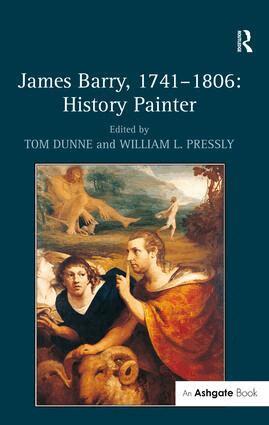
Bringing into relief the singularity of Barry's unswerving commitment to his vision for history painting despite adverse cultural, political and commercial currents, these essays on Barry and his contemporaries offer new perspectives on the painter's life and career. Contributors, including some of the best known experts in the field of British eighteenth-century studies, set Barry's works and writings into a rich political and social context, particularly in Britain. Among other notable achievements, the essays shed new light on the influence which Barry's radical ideology and his Catholicism had on his art; they explore his relationship with Reynolds and Blake, and discuss his aesthetics in the context of Burke and Wollstonecraft as well as Fuseli and Payne Knight. The volume is an indispensable resource for scholars of eighteenth-century British painting, patronage, aesthetics, and political history.
436 kr
Tillfälligt slut
This book is a selection of historian Oliver MacDonagh’s writings edited and introduced by his former student, Tom Dunne, who contibutes an account of MacDonagh’s career and a bibliography. It brings together a series of childhood memories of a bank manager’s son in 1930s Roscommon, with reflections on a lifetime spent writing several different kinds of history, in Ireland, England and Australia. Oliver MacDonagh was a significant writer as well as a distinguished historian, his work marked by a sophistication of style and intellect. As Roy Foster remarks in his preface, ‘Oliver MacDonagh was a great scholar, and a good deal more.’ He is best known in Ireland for States of Mind: A Study of Anglo-Irish Conflict, 1780-1980, which won the Ewart-Biggs Memorial Prize in 1985, and for his two volume biography of Daniel O’Connell. He earned a major international reputation for his studies of early-nineteenth century government, as well as for an important book on the novels of Jane Austen. Few historians have paid as much attention as MacDonagh to the importance of style, and this is reflected in all the elements of this book. It ends with his tribute to John Henry Newman’s Apologia pro Vita Sua, a book that had been with me as a schoolboy, that had helped to shape me then, and since’.
285 kr
Skickas inom 5-8 vardagar
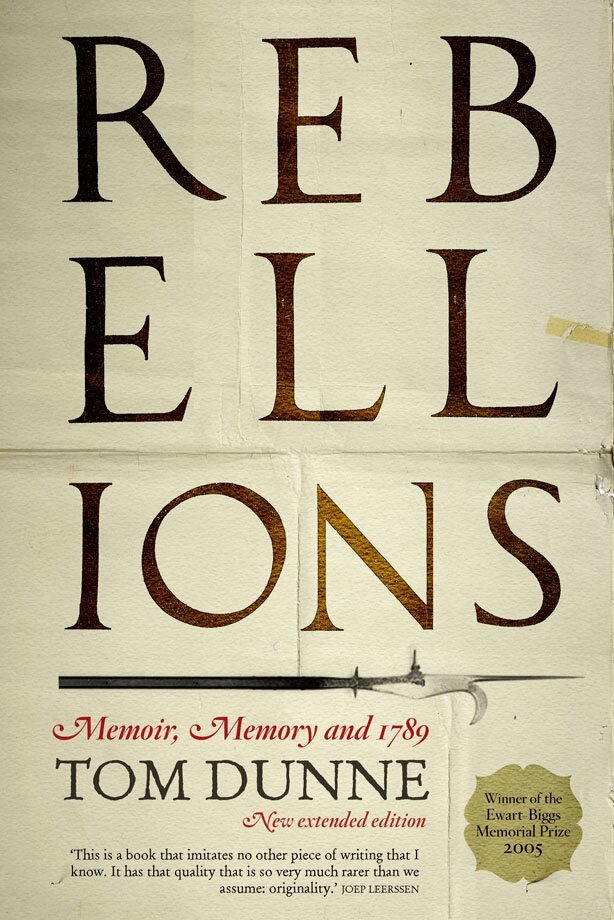
This is a new, extended edition of an unusual book, which generated considerable interest and controversy when it was first published in 2004, and won the Ewart Biggs Memorial Prize the following year. In its original form it had three elements, a memoir giving the author’s intellectual and political formation and his family connection to 1798 in Wexford, a critique of the bicentenary of the rebellion and of writing about it, and a detailed account of the pivotal battle of New Ross and the massacre nearby at Scullabogue. The new edition adds a fourth layer of exploration, analysing the reception of the book, by historians, by those involved in the bicentenary, and by the many individuals who wrote to the author. The most unusual response came from the Ryan Commission on child abuse, which explored with the author his experiences as a junior member of the Irish Christian Brothers, and quoted him extensively in its report. The new chapter focuses on the theme common to all of these responses, the conflict between emotional identification with a community’s history and the evidence for contrary realities.
666 kr
Tillfälligt slut
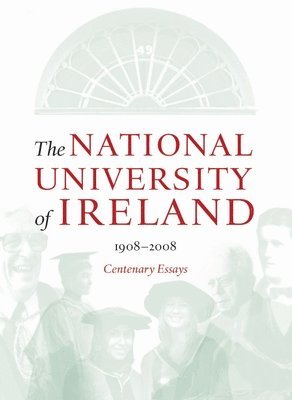
The National University of Ireland has played a key role in Irish life since its foundation in 1908. This beautifully illustrated book celebrates its centenary by looking at its origins in the Royal University, and further back in the Queen's Colleges, the Catholic University and St Patrick's College, Maynooth. A distinguished group of conributors examines formative influences, especially the role of the Irish language movement and the campaign to include women; the relationship between the NUI and its Constituent Colleges (more recently Constituent Universities); the contribution of the four Chancellors that have presided over its affairs, and the evolving roles of the Senate, the Registrar, the Recognised Colleges and the graduates body, or Convocation.The challenges posed by the transformation of Irish education since 1967, and particularly by the 1997 Universities Act are analysed. The valuable NUI Archive is listed and a series of Appendices provide details of office-holders, members of Senate, and of NUI Awards and Scholarships.