Torsten Bert Möller – författare
Visar alla böcker från författaren Torsten Bert Möller. Handla med fri frakt och snabb leverans.
23 produkter
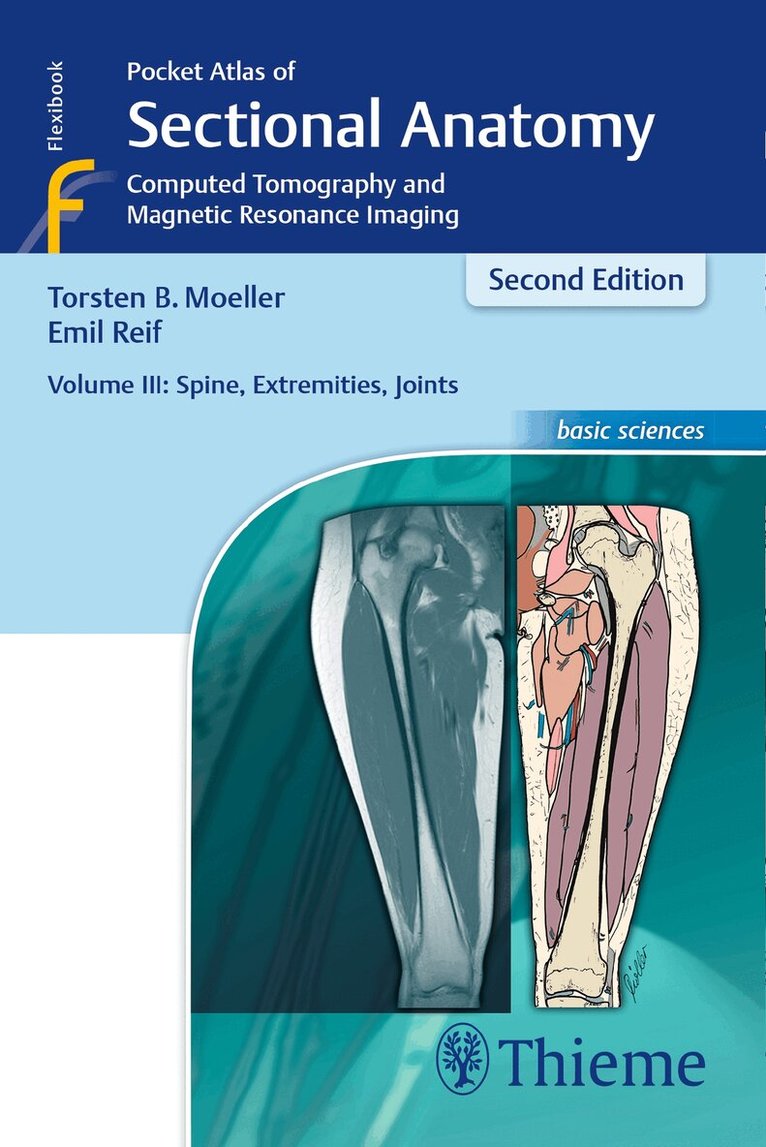
Pocket Atlas of Sectional Anatomy, Volume III: Spine, Extremities, Joints
Computed Tomography and Magnetic Resonance Imaging
Av Torsten Bert Möller, Emil Reif
Häftad, 2016
675 kr
Lägg i varukorg
Full multiplanar coverage of the spine, extremities, and joints!Renowned for its superb illustrations and highly practical information, the third volume of this classic reference reflects the very latest in state-of-the-art imaging technology. Together with Volumes 1 and 2, this compact and …
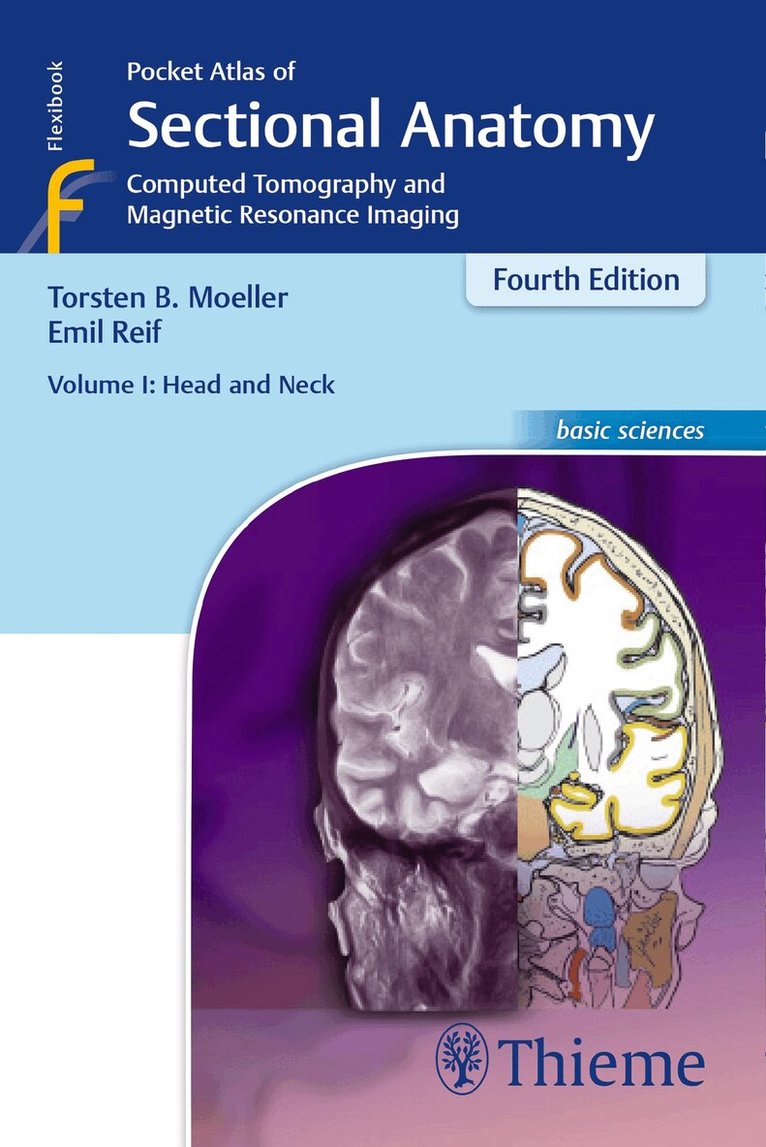
Pocket Atlas of Sectional Anatomy, Volume I: Head and Neck
Computed Tomography and Magnetic Resonance Imaging
Av Torsten Bert Möller, Emil Reif
Häftad, 2013
4,7 utav 5 stjärnor. Totalt antal röster: (3)
651 kr
Lägg i varukorg
This comprehensive, easy-to-consult pocket atlas is renowned for its superb illustrations and ability to depict sectional anatomy in every plane. Together with its two companion volumes, it provides a highly specialized navigational tool for all clinicians who need to master radiologic anatomy and …
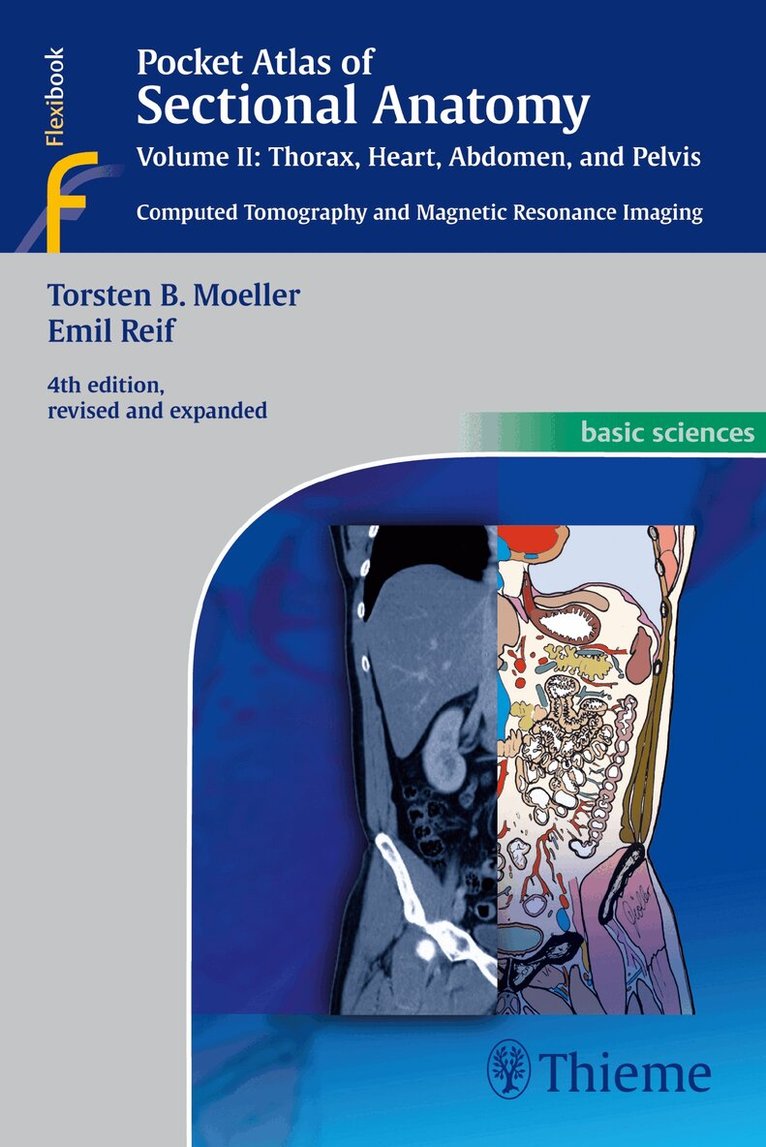
Pocket Atlas of Sectional Anatomy, Vol. II: Thorax, Heart, Abdomen and Pelvis
Computed Tomography and Magnetic Resonance Imaging
Av Torsten Bert Moeller, Emil Reif
Häftad, 2013
5,0 utav 5 stjärnor. Totalt antal röster: (1)
642 kr
Lägg i varukorg
This comprehensive, easy-to-consult pocket atlas is renowned for its superb illustrations and ability to depict sectional anatomy in every plane. Together with its two companion volumes, it provides a highly specialized navigational tool for all clinicians who need to master radiologic anatomy and …
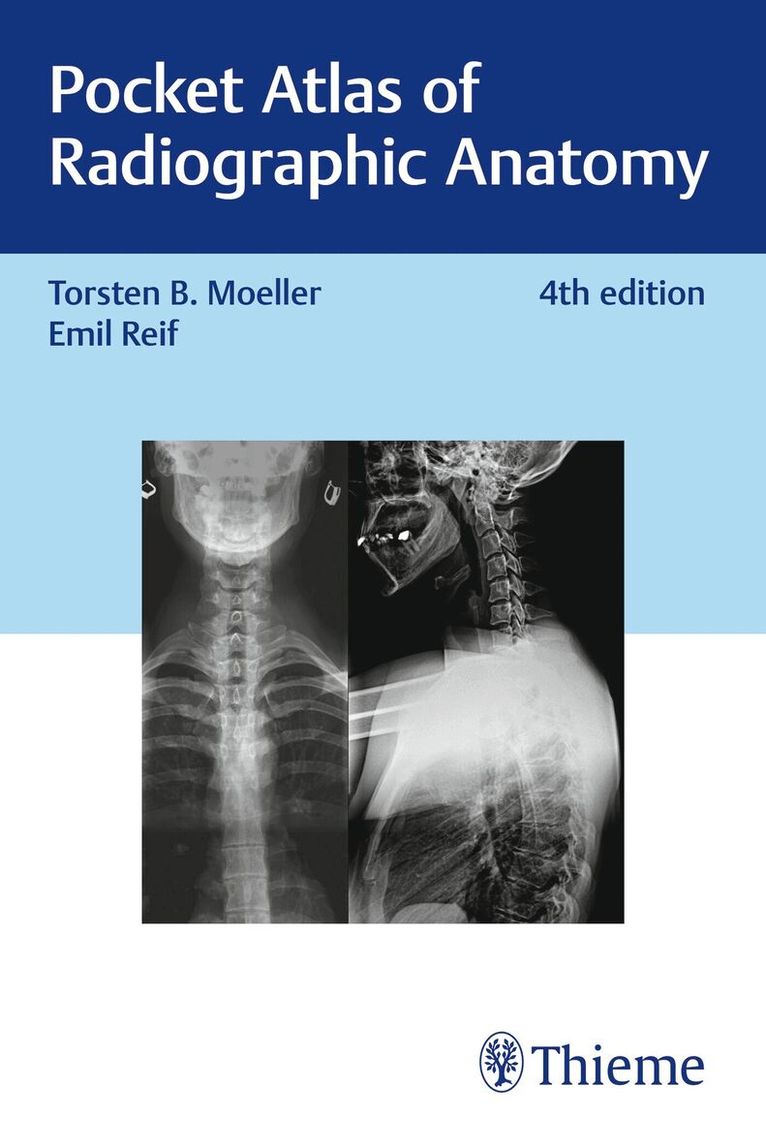
Pocket Atlas of Radiographic Anatomy
Av Torsten Bert Möller, Emil Reif
Häftad, 2025
832 kr
Lägg i varukorg
Radiographic anatomy at your fingertips.The Pocket Atlas of Radiographic Anatomy precisely describes the anatomical structures shown on conventional X-ray images and on the most important arthrographic and angiographic examinations.The double-page spread format makes the book extremely …
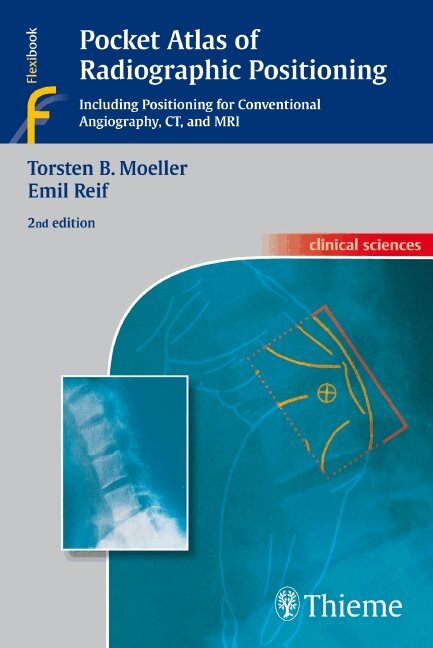
Pocket Atlas of Radiographic Positioning
Av Torsten Bert Moeller, Emil Reif
Häftad, 2008
672 kr
Lägg i varukorg
Radiographic positioning - comprehensive and conciseNow in its second edition, Pocket Atlas of Radiographic Positioning is a practical how-to guide that provides the detailed information you need to reproducibly obtain high-quality radiographic images for optimal evaluation and interpretation of …
Normal Findings in CT and MRI, A1, Print
Av Torsten Bert Moeller, Emil Reif m. fl.
Häftad, 1999
4,0 utav 5 stjärnor. Totalt antal röster: (1)
324 kr
Lägg i varukorg
The key for any beginning radiologist who wishes to recognize pathological findings is to first acquire an ability to distinguish them from normal ones. This outstanding guide gives beginning radiologists the tools they need to systematically approach and recognize normal MR and CT …
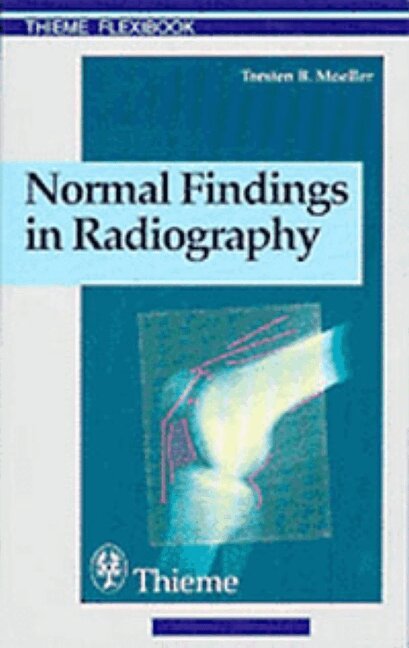
Normal Findings in Radiography
Häftad, 1999
317 kr
Lägg i varukorg
The method of making findings and the systematic method of interpreting images are still relevant today.This book deals with a subject that is seemingly trivial: normal findings in radiology. However, the normal is also the frequent, but not always the simple. Every radiologist has experienced …
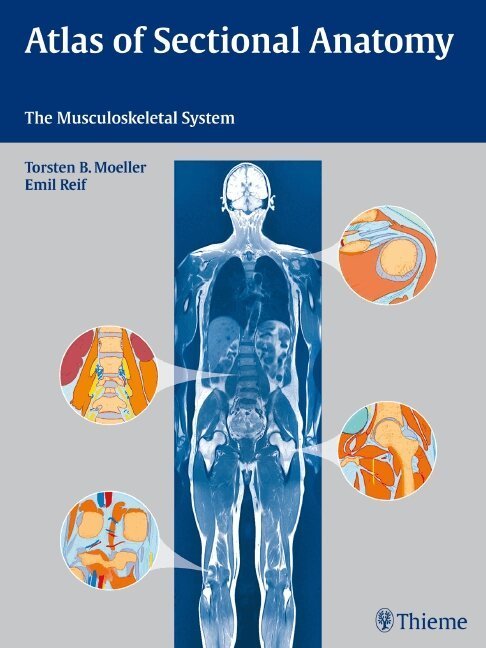
Atlas of Sectional Anatomy
The Musculoskeletal System
Av Torsten Bert Möller, Emil Reif
Inbunden, 2009
2313 kr
Lägg i varukorg
A handy, full-color resource for interpreting musculoskeletal MRI scans with confidenceThis superbly illustrated atlas provides a comprehensive presentation of the normal sectional anatomy of the musculoskeletal system to aid in the diagnosis of diseases affecting the joints, soft tissues, bones, …
Pocket Atlas of Radiographic Anatomy
Av Emil Reif, Torsten Bert Moeller
E-bok, 2011
892 kr
Lägg i varukorg
In this easily accessible pocket atlas, two expert radiologists present the normal radiographic anatomy readers need in order to interpret conventional diagnostic radiographs. Each practical, two-page unit displays a standard radiograph of a different projection on the left-hand side supplemented …
Pocket Atlas of Radiographic Positioning
Including Positioning for Conventional Angiography, CT, and MRI
Av Emil Reif, Torsten Bert Moeller
E-bok, 2008
571 kr
Lägg i varukorg
Radiographic positioning - comprehensive and concise Now in its second edition, Pocket Atlas of Radiographic Positioning is a practical how-to guide that provides the detailed information you need to reproducibly obtain high-quality radiographic images for optimal evaluation and interpretation of …
Pocket Atlas of Sectional Anatomy, Volume II: Thorax, Heart, Abdomen, and Pelvis
Computed Tomography and Magnetic Resonance Imaging
Av Emil Reif, Torsten Bert Moeller
E-bok, 2013
553 kr
Lägg i varukorg
This comprehensive, easy-to-consult pocket atlas is renowned for its superb illustrations and ability to depict sectional anatomy in every plane. Together with its two companion volumes, it provides a highly specialized navigational tool for all clinicians who need to master radiologic anatomy and …
Normal Findings in Radiography
E-bok, 1999
559 kr
Lägg i varukorg
The method of making findings and the systematic method of interpreting images are still relevant today. This book deals with a subject that is seemingly trivial: normal findings in radiology. However, the normal is also the frequent, but not always the simple. Every radiologist has experienced …
Normal Findings in CT and MRI
Av Emil Reif, Torsten Bert Moeller m. fl.
E-bok, 2011
571 kr
Lägg i varukorg
The key for any beginning radiologist who wishes to recognize pathological findings is to first acquire an ability to distinguish them from normal ones. This outstanding guide gives beginning radiologists the tools they need to systematically approach and recognize normal MR and CT images. …