Trish Gibbon – författare
Visar alla böcker från författaren Trish Gibbon. Handla med fri frakt och snabb leverans.
5 produkter
5 produkter
Inbunden, Engelska, 2005
1 060 kr
Skickas inom 10-15 vardagar
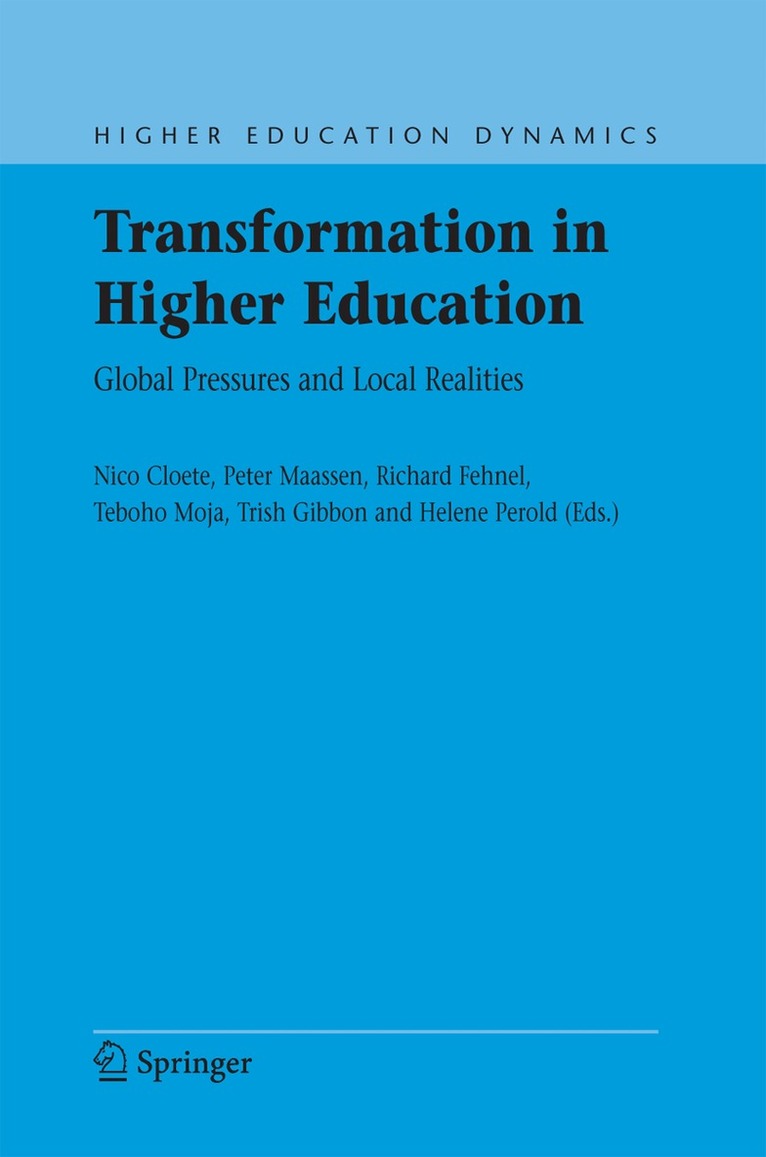
At the beginning of the 1990s the world was watching with anxiety at South Africa. Would the country be able to get rid of the despicable apartheid regime without bloodshed? Could a civil war be avoided? And would it be possible to develop a democratic society without having to build up a whole new set of social institutions? The latter concern certainly referred to the educational sector that was steered at each level by a number of separate Ministries of Education, i. e. one for each identified race group. Given the developments in other countries in the region as well as elsewhere in the world the prospects were not too hopeful. In addition, many especially white South Africans left the country the weeks before the first elections, and the stories of violence and contradictions between the various political groups in the country dominated for a while the international press’ coverage of the pre-94-election situation. However, ten years after the first democratic elections in 1994 it is fair to say that South Africa has gone through a far-reaching transformation that is characterised by a remarkably low level of political violence. The general impression of the transformation suggests that the country has managed to change rather smoothly most of its social institutions, without dramatically affecting the continuity in the operations and performance of these institutions. This also refers to higher education.
E-bok
PDF, Engelska, 20061 328 kr
Läs direkt efter köp
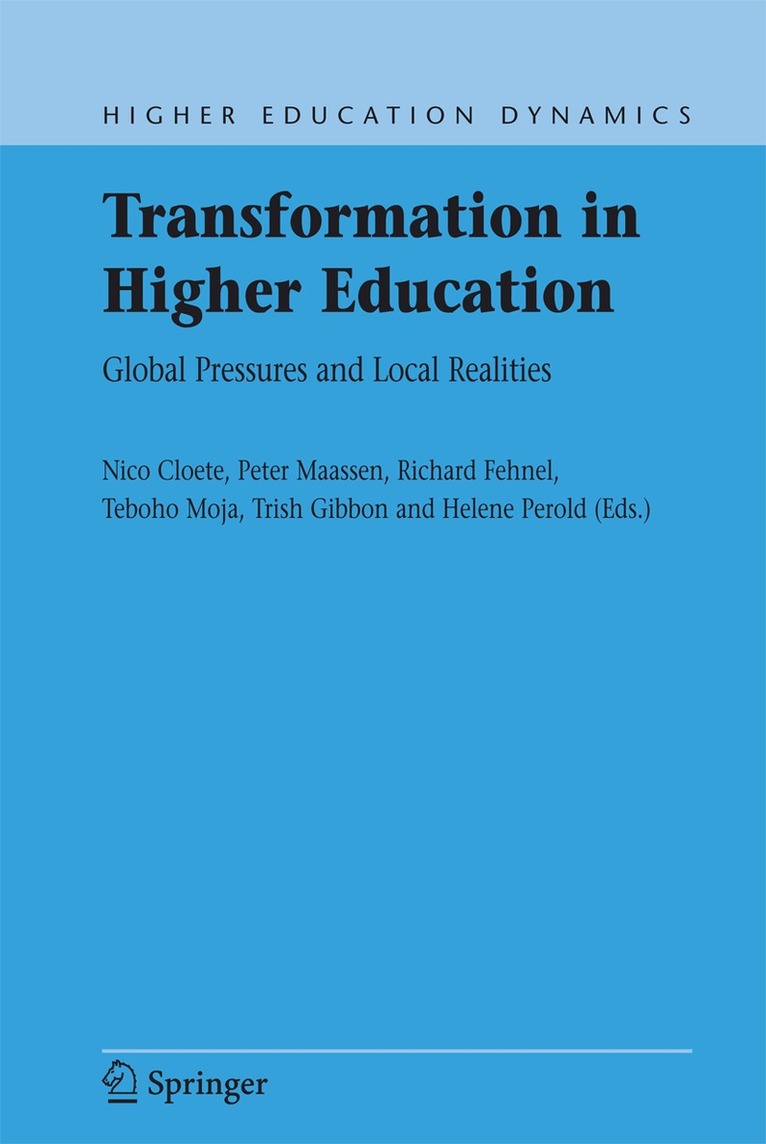
At the beginning of the 1990s the world was watching with anxiety at South Africa. Would the country be able to get rid of the despicable apartheid regime without bloodshed? Could a civil war be avoided? And would it be possible to develop a democratic society without having to build up a whole new set of social institutions? The latter concern certainly referred to the educational sector that was steered at each level by a number of separate Ministries of Education, i. e. one for each identified race group. Given the developments in other countries in the region as well as elsewhere in the world the prospects were not too hopeful. In addition, many especially white South Africans left the country the weeks before the first elections, and the stories of violence and contradictions between the various political groups in the country dominated for a while the international press’ coverage of the pre-94-election situation. However, ten years after the first democratic elections in 1994 it is fair to say that South Africa has gone through a far-reaching transformation that is characterised by a remarkably low level of political violence. The general impression of the transformation suggests that the country has managed to change rather smoothly most of its social institutions, without dramatically affecting the continuity in the operations and performance of these institutions. This also refers to higher education.
Häftad, Engelska, 2007
1 060 kr
Skickas inom 10-15 vardagar
At the beginning of the 1990s the world was watching with anxiety at South Africa. Would the country be able to get rid of the despicable apartheid regime without bloodshed? Could a civil war be avoided? And would it be possible to develop a democratic society without having to build up a whole new set of social institutions? The latter concern certainly referred to the educational sector that was steered at each level by a number of separate Ministries of Education, i. e. one for each identified race group. Given the developments in other countries in the region as well as elsewhere in the world the prospects were not too hopeful. In addition, many especially white South Africans left the country the weeks before the first elections, and the stories of violence and contradictions between the various political groups in the country dominated for a while the international press’ coverage of the pre-94-election situation. However, ten years after the first democratic elections in 1994 it is fair to say that South Africa has gone through a far-reaching transformation that is characterised by a remarkably low level of political violence. The general impression of the transformation suggests that the country has managed to change rather smoothly most of its social institutions, without dramatically affecting the continuity in the operations and performance of these institutions. This also refers to higher education.
E-bok
PDF, Engelska, 201452 kr
Läs direkt efter köp
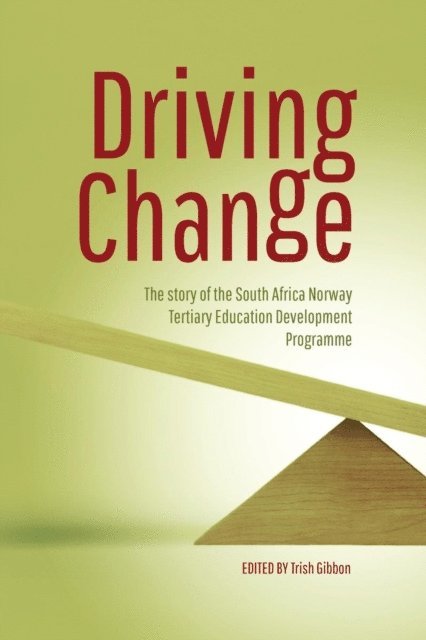
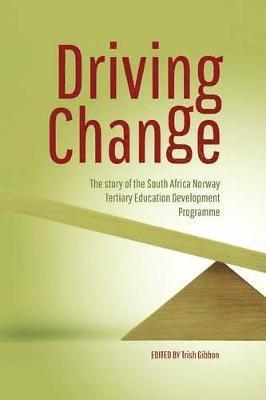
Driving Change tells a story that exemplifies a basic law of physics, known to all � the application of a relatively small lever can shift weight, create movement and initiate change far in excess of its own size. It tells a story about a particular instance of development cooperation, relatively modest in scope and aim that has nonetheless achieved remarkable things and has been held up as an exemplar of its kind. It does not tell a story of flawless execution and perfectly achieved outcomes: it is instead a narrative that gives some insight into the structural and organisational arrangements, the institutional and individual commitments, and above all, the work, intelligence and passion of its participants, which made the SANTED Programme a noteworthy success.
Häftad, Engelska, 2015
133 kr
Tillfälligt slut
Driving change tells a story that exemplifies a basic law of physics, known to all - the application of a relatively small lever can shift weight, create movement and initiate change far in excess of its own size. It tells a story about a particular instance of development co-operation, relatively modest in scope and aim that has nonetheless achieved remarkable things and has been held up as an exemplar of its kind. It does not tell a story of flawless execution and perfectly achieved outcomes: it is instead a narrative that gives some insight into the structural and organisational arrangements, the institutional and individual commitments, and above all, the work, intelligence and passion of its participants, which made the South Africa Norway Tertiary Education Development (SANTED) Programme a noteworthy success.