Udai Arvind – författare
6 154 kr
Läs direkt efter köp
1 796 kr
Läs direkt efter köp
Dr. Udai Arvind is Assistant Professor in the Department of Chemistry at Rajendra College, Chapra, a constituent unit of Jay Prakash University, Chapra.
1 733 kr
Läs direkt efter köp
The inorganic elements, other than carbon, especially the metals are also vital to the functioning of biological systems. The bioinorganic chemistry mostly deals with the role of metals and non metals in these systems. Many biological processes such as photosynthesis, respiration, metal ion transport, enzymatic actions etc., fall into the realm of bioinorganic chemistry. It is highly advanced interdisciplinary science. The organisms uptake elements in different forms from the earth crust and the surrounding atmosphere. However, it is evident from the following table that there is rather a weak correlation between the distribution of various elements in the earth crust to that in the biological systems. The present book has been planned in such a way to given an overall view of this subject. Contents: • Introduction • Biomolecules • Protein Interactions • Biomaterials • Polyhedral • Matrix Characterization • Cytochromes • Atom and Group Transfer Chemistry • Enzyme Systems
1 733 kr
Läs direkt efter köp
Quantum-chemical theories of atomic and molecular structure are now part of the upper secondary curriculum in many countries, despite the fact that many educators are against their use in basic chemistry courses. Quantum-chemical theories of atomic and molecular structure are taught in general chemistry or introductory inorganic chemistry courses in chemistry and other science departments. Besides, atomic and molecular orbitals are part of the upper secondary curriculum in many countries. The first step in solving a quantum chemical problem is usually solving the Schrödinger equation (or Dirac equation in relativistic quantum chemistry) with the electronic molecular Hamiltonian. This is called determining the electronic structure of the molecule. It can be said that the electronic structure of a molecule or crystal implies essentially its chemical properties. This book provides extensive account of recent developments in the field. Attempts have been made to design a textbook by incorporating important topics that are useful and effective for students.
1 718 kr
Läs direkt efter köp
Solid-state chemistry, also sometimes referred to as materials chemistry, is the study of the synthesis, structure, and properties of solid phase materials, particularly, but not necessarily exclusively of, non-molecular solids. It therefore has a strong overlap with solid-state physics, mineralogy, crystallography, ceramics, metallurgy, thermodynamics, materials science and electronics with a focus on the synthesis of novel materials and their characterization. Because of its direct relevance to products of commerce, solid state inorganic chemistry has been strongly driven by technology. Progress in the field has often been fuelled by the demands of industry, well ahead of purely academic curiosity. Applications discovered in the 20th century include zeolite and platinum-based catalysts for petroleum processing in the 1950s, high-purity silicon as a core component of microelectronic devices in the 1960s, and “high temperature” superconductivity in the 1980s. The invention of X-ray crystallography in the early 1900s by William Lawrence Bragg enabled further innovation. The present book deals with all the important dimensions of this subject. It is a valuable reference source for all those concerned with this subject.
1 796 kr
Läs direkt efter köp
Technological innovations have played a significant role in shaping and transforming the products, production practices and socio-economic structures of agri-food systems over the past century. From the adoption of mechanical harvesters to new hybrid seed varieties, technological innovations have been associated with profound social, economic and environmental change. Over the past two decades, technoscientific innovations have also been at the heart of many controversies, crises and political struggles across the food system – including struggles over genetically modified (GM) foods, genetic erosion and contamination, the factory farming and cloning of animals, chemical pollution, the public health impacts of processed foods, the ‘food miles’ associated with the long-distance transportation of fresh and packaged foods, the corporate control of farmers and markets, and food scares such as ‘mad cow’ disease. Nanotechnology represents the most recent and most powerful set of technologies being applied across the food system. This text is a one-stop resource for all researchers, teachers, and students involved in this crucial area of study.
4 207 kr
Läs direkt efter köp
Theoretical chemistry seeks to provide explanations to chemical and physical observations. Should the properties derived from the quantum theory give a good account of the above mentioned phenomena, we derive consequences using the same theory. Should the derived consequences fall too far from the experimental evidence, we go to a different theory. G. Lewis proposed that chemical properties originated from the electrons of the atom’s valence shell, ever since the theoretical chemistry has dealt with modelling of the outer electrons of interacting atoms or molecules in a reaction. Theoretical chemistry includes the fundamental laws of physics Coulomb’s law, Kinetic energy, Potential energy, the Virial Theorem, Planck’s Law, Pauli exclusion principle and many others to explain but also predict chemical observed phenomena. The term quantum chemistry which comes from Bohr’s quantized model of electron in the atom, applies to both the time independent Schrödinger and the time dependent Dirac formulations. This book is a valuable companion for instructors, course designers and students. It is suitable for direct applications in practical courses in theoretical chemistry and atomic physics as well as for teaching advanced features of EXCEL in IT courses.
3 578 kr
Läs direkt efter köp
3 578 kr
Läs direkt efter köp
2 104 kr
Läs direkt efter köp
3 578 kr
Läs direkt efter köp
4 294 kr
Läs direkt efter köp
6 154 kr
Läs direkt efter köp
4 558 kr
Läs direkt efter köp
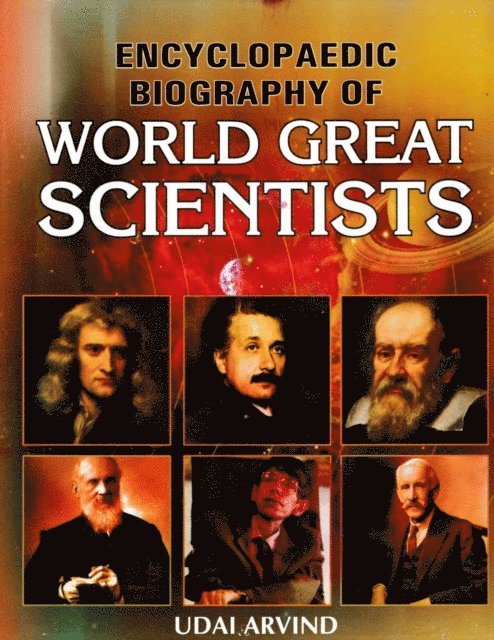
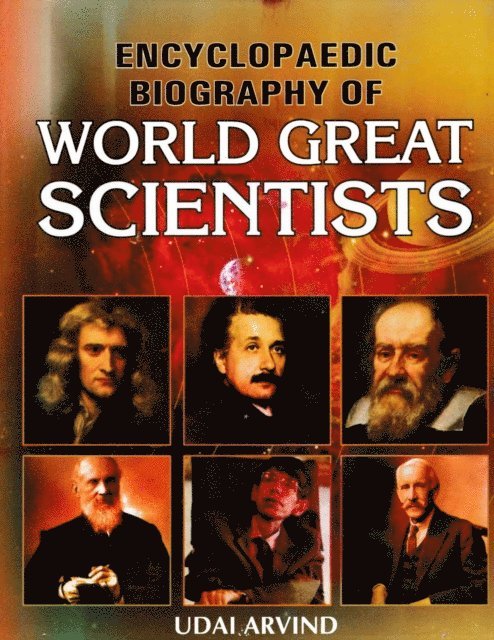
A scientist, in the broadest sense, refers to any person that engages in a systematic activity to acquire knowledge or an individual that engages in such practices and traditions that are linked to schools of thought or philosophy. In a more restricted sense, scientist refers to individuals who use the scientific method. The person may be an expert in one or more areas of science. There are notable examples of people who have moved back and forth among disciplines. Such polymaths were common during the Islamic Golden Age and European Renaissance. Those considering science as a career often look to the frontiers. These include cosmology and biology, especially molecular biology and the human genome project. Other areas of active research include the exploration of matter at the scale of elementary particles as described by high-energy physics, and nanotechnology, which hopes to develop electronics including microscopic computers, and perhaps artificial intelligence. The books (in five volumes) contain the life and work of World Great Scientists.
4 558 kr
Läs direkt efter köp
A scientist, in the broadest sense, refers to any person that engages in a systematic activity to acquire knowledge or an individual that engages in such practices and traditions that are linked to schools of thought or philosophy. In a more restricted sense, scientist refers to individuals who use the scientific method. The person may be an expert in one or more areas of science. There are notable examples of people who have moved back and forth among disciplines. Such polymaths were common during the Islamic Golden Age and European Renaissance. Those considering science as a career often look to the frontiers. These include cosmology and biology, especially molecular biology and the human genome project. Other areas of active research include the exploration of matter at the scale of elementary particles as described by high-energy physics, and nanotechnology, which hopes to develop electronics including microscopic computers, and perhaps artificial intelligence. The books (in five volumes) contain the life and work of World Great Scientists.
4 466 kr
Läs direkt efter köp
A scientist, in the broadest sense, refers to any person that engages in a systematic activity to acquire knowledge or an individual that engages in such practices and traditions that are linked to schools of thought or philosophy. In a more restricted sense, scientist refers to individuals who use the scientific method. The person may be an expert in one or more areas of science. There are notable examples of people who have moved back and forth among disciplines. Such polymaths were common during the Islamic Golden Age and European Renaissance. Those considering science as a career often look to the frontiers. These include cosmology and biology, especially molecular biology and the human genome project. Other areas of active research include the exploration of matter at the scale of elementary particles as described by high-energy physics, and nanotechnology, which hopes to develop electronics including microscopic computers, and perhaps artificial intelligence. The books (in five volumes) contain the life and work of World Great Scientists.
4 558 kr
Läs direkt efter köp
A scientist, in the broadest sense, refers to any person that engages in a systematic activity to acquire knowledge or an individual that engages in such practices and traditions that are linked to schools of thought or philosophy. In a more restricted sense, scientist refers to individuals who use the scientific method. The person may be an expert in one or more areas of science. There are notable examples of people who have moved back and forth among disciplines. Such polymaths were common during the Islamic Golden Age and European Renaissance. Those considering science as a career often look to the frontiers. These include cosmology and biology, especially molecular biology and the human genome project. Other areas of active research include the exploration of matter at the scale of elementary particles as described by high-energy physics, and nanotechnology, which hopes to develop electronics including microscopic computers, and perhaps artificial intelligence. The books (in five volumes) contain the life and work of World Great Scientists.
4 558 kr
Läs direkt efter köp
A scientist, in the broadest sense, refers to any person that engages in a systematic activity to acquire knowledge or an individual that engages in such practices and traditions that are linked to schools of thought or philosophy. In a more restricted sense, scientist refers to individuals who use the scientific method. The person may be an expert in one or more areas of science. There are notable examples of people who have moved back and forth among disciplines. Such polymaths were common during the Islamic Golden Age and European Renaissance. Those considering science as a career often look to the frontiers. These include cosmology and biology, especially molecular biology and the human genome project. Other areas of active research include the exploration of matter at the scale of elementary particles as described by high-energy physics, and nanotechnology, which hopes to develop electronics including microscopic computers, and perhaps artificial intelligence. The books (in five volumes) contain the life and work of World Great Scientists.