Ulrich Machold – författare
Visar alla böcker från författaren Ulrich Machold. Handla med fri frakt och snabb leverans.
8 produkter
8 produkter
Inbunden, Tyska, 2025
250 kr
Skickas inom 3-6 vardagar
E-bok
PDF, Tyska, 2025250 kr
Läs direkt efter köp
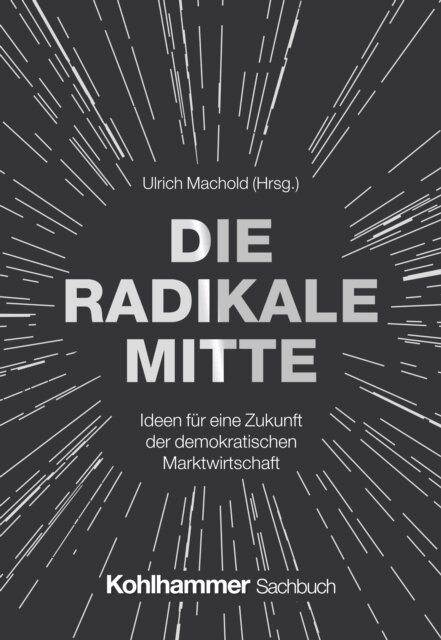
Das Land ist mude, und seine Mitte ist es auch: Die Institutionen des 20. Jahrhunderts sind mit den Herausforderungen des 21. uberfordert. Sie sind ausgelegt fur das Verhandeln von Verteilungsfragen und die Verlangsamung von Neuem. Heute aber durchlauft die Gesellschaft wieder eine Phase des radikalen Wandels. Von Infrastruktur uber Geopolitik, demokratische Teilhabe oder die Umwalzungen durch technologischen Fortschritt - uberall muss gebaut, verandert, neu gedacht werden. Stattdessen wird die Asymmetrie zwischen den Herausforderungen und den angebotenen Losungen immer groer. Die staatstragenden politischen Parteien des Zentrums stehen fur immer mehr Menschen vor allem fur Stillstand. Wenn die Mitte die Demokratie verteidigen will, muss sie den Burgern deshalb das Vertrauen in ihre Fahigkeit zur Problemlosung zuruckgeben. Sie muss radikal werden - oder zumindest radikal anders, gro er, denken, in Ergebnissen statt Stellschrauben. Dieser Debattenband sammelt Ideen, wie das gelingen kann. Die Beitrage fragen nach neuer staatlicher Handlungsfahigkeit, liberalem Fortschritt, gesellschaftlichem Zusammenhalt und entwickeln Ideen fur eine die Zeit nach der ZeitenwendeMit Beitragen von Ulrich Machold, Wolf Lotter, Michael Fabricius, Dr. Alexander Gorlach, Tiaji Sio, Sven Gerst und Dr. Isabella Hermann.
250 kr
Läs direkt efter köp
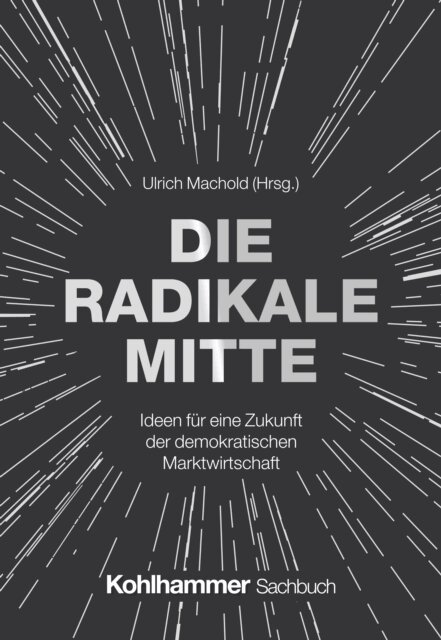
Das Land ist mude, und seine Mitte ist es auch: Die Institutionen des 20. Jahrhunderts sind mit den Herausforderungen des 21. uberfordert. Sie sind ausgelegt fur das Verhandeln von Verteilungsfragen und die Verlangsamung von Neuem. Heute aber durchlauft die Gesellschaft wieder eine Phase des radikalen Wandels. Von Infrastruktur uber Geopolitik, demokratische Teilhabe oder die Umwalzungen durch technologischen Fortschritt - uberall muss gebaut, verandert, neu gedacht werden. Stattdessen wird die Asymmetrie zwischen den Herausforderungen und den angebotenen Losungen immer groer. Die staatstragenden politischen Parteien des Zentrums stehen fur immer mehr Menschen vor allem fur Stillstand. Wenn die Mitte die Demokratie verteidigen will, muss sie den Burgern deshalb das Vertrauen in ihre Fahigkeit zur Problemlosung zuruckgeben. Sie muss radikal werden - oder zumindest radikal anders, gro er, denken, in Ergebnissen statt Stellschrauben. Dieser Debattenband sammelt Ideen, wie das gelingen kann. Die Beitrage fragen nach neuer staatlicher Handlungsfahigkeit, liberalem Fortschritt, gesellschaftlichem Zusammenhalt und entwickeln Ideen fur eine die Zeit nach der ZeitenwendeMit Beitragen von Ulrich Machold, Wolf Lotter, Michael Fabricius, Dr. Alexander Gorlach, Tiaji Sio, Sven Gerst und Dr. Isabella Hermann.
E-bok
PDF, Engelska, 2003208 kr
Läs direkt efter köp
Essay from the year 2002 in the subject Economics - Monetary theory and policy, grade: 1.0 (A), Technical University of Berlin (European Center), course: European Monetary Integration, language: English, abstract: For European monetary affairs, 1992 was a watershed: In January, the European Monetary System (EMS) celebrated five years of stability; by November, it was all but falling apart. Two of its members had been driven from the system, two others had experienced steep and involuntary devaluations. The EMS was undergoing the worst crisis of its existence. When analysing these events, they inevitably lead to the issue of financial liberalisation. If the argument that the lack of control over international capital flows is at the heart of such crises is true, their costs must be weighed against the benefits of the liberalisation process. But can the use of capital controls be in any way compatible with the process of European financial integration? Does the idea not go against the entire philosophy embodied in the project of economic and monetary union (EMU)? Some authors argue that not only can capital controls be made compatible with the integration process but that they are in fact the only option available to safeguard any pegged exchange rate system against the excesses of occasionally irrational and overwhelmingly powerful financial markets. The resulting question, though merely speculative in retrospect, is thus two-fold: Could capital controls have helped to prevent the 1992-crisis of the EMS and would it therefore have been beneficial to allow for this instrument afterwards, instead of widening the fluctuation bands to 30 per cent? And, resultingly, could capital controls exist within a fixed exchange rate system like the EMS then and the EMSII in the future?I shall, as preliminaries, first briefly summarise the main arguments of the discussion on the desirability of capital controls. Subsequently, I shall discuss, whether capital controls can actually achieve what they were designed for. In the main section, I shall analyse what causes for the 1992-crisis seem probable, why the post-1992 re-constitution of the system took the form it actually did and whether capital controls could have been relevant in this context or will do so in the future.
E-bok
PDF, Engelska, 2003208 kr
Läs direkt efter köp
Seminar paper from the year 2001 in the subject Economics - Monetary theory and policy, grade: 1.2 (A), Technical University of Berlin (European Center), course: The EU as a common economy, language: English, abstract: Within the last three years, the European financial landscape has undergone a rapid transformation that continues to astonish observers and market participants alike: Corporate and public euro bond markets have emerged whose issuing activities rival those of respective US dollar markets. Europe-wide indices have been firmly established. Institutional portfolios are being traded along pan-European sectoral rather than national lines. Cross-border mergers of banks and financial institutions on an unprecedented scale are drastically changing national banking landscapes as well as international financial structures and underlying all of this is the revolutionary emergence of a genuine European equity culture. Quite naturally, not all of these developments can be attributed to the eventual arrival of European Economic and Monetary Union (EMU). Many trends have had their precursors in the continuing liberalisation and de-regulation processes of the 1990s, as manifested in the 1992 Maastricht Treaty. However, historical data makes it difficult not to account for EMU as one major factor behind many of the most recent changes. In this paper, I will therefore argue that at least some of the above changes can best be explained by the effects of EMU. In several ways, the advent of the single currency has triggered an equilibrium shift in more than one field that would otherwise not have occurred. In order to do so, I shall first put EMU into perspective by briefly sketching its position within the wider framework of the process of European capital market integration by means of liberalisation. Second, I shall illustrate whether and to what extent the intended direct effects of EMU did in fact materialise, but also how further indirect effects go beyond these and contribute to explaining some seemingly less related developments. Last, I shall evaluate how integrated European capital markets in fact are compared to national markets, using the U.S. as a benchmark, and close with a brief discussion of potential normative implications.
E-bok
PDF, Engelska, 2003251 kr
Läs direkt efter köp
Master's Thesis from the year 2002 in the subject Economics - Monetary theory and policy, grade: 1.0 (A), Technical University of Berlin (-), language: English, abstract: A rough 50 years after its foundation, the European Union (EU) is preparing for the probably most ambitious challenge of its existence, the binding-back into the West of the once centrally-planned economies of Central and Eastern Europe (CEEC). Together with political and general economic efforts, European monetary integration also gains speed with as many as twelve CEEC queuing up for entry into the EU (not including Turkey, which has not yet officially begun entry negotiations), the first of them most likely joining the Union already two years after the physical introduction of the single currency, i.e. in 2004. Many of these countries are eager to also join Monetary Union (EMU) and show their ability to be 'good Europeans' by adopting the Euro as soon as possible. Various statements by both CEEC-government officials and monetary authorities exemplify this very vividly. This implies that the enlargement of EMU is already a relevant issue. By the time it becomes acute, positions and perspectives of both applicants and current members should be clear, if unnecessary delays and political irritations are to be avoided. The body of literature on the subject is thus as large as the questions of when, how and on what terms CEEC-accession will take place are pressing, and becoming more so as time progresses. This study attempts to coherently examine the core issues related to EMU-enlargement, equally synthesising the various segmented approaches of the academic debate, and deduce normative conclusions as to what strategic outlook should seem appropriate to both CEEC and the current EMU-12: In what timeframe should accession most sensibly take place? How appropriate are the mechanics leading up to EMU, most prominently the Exchange Rate Mechanism (ERM-II) and the Maastricht criteria, and how should they be dealt with? What are the most likely problem areas and deficits that need to be confronted? Since there appears to exist a more or less stable consensus regarding the basic desirability of EMU for the CEEC, the paper will concentrate more on the run-up to full EMU, equally the road to the euro, and place special emphasis on the CEEC's attitude towards the ERM-II.
E-bok
PDF, Engelska, 2003177 kr
Läs direkt efter köp
Seminar paper from the year 2001 in the subject Politics - Topic: European Union, grade: 1 (A), London School of Economics (Government Department), course: Public Choice and Politics, language: English, abstract: I shall firstly summarise M&F's study and results in order to allow for an easier assessment of the situation. Subsequently, I shall depict the arguments against the application of power indices to an organisation such as the European Union and put them into perspective. In the third part of this essay, I shall then attempt to show that methods proposed as alternatives to power indices do not, in fact, offer any workable alternatives when analysing the EU-Council after enlargement, and conclude that power indices can provide an important approximation of a priori power distribution and do carry relevance in assessing the Council and especially in understanding the behaviour of actors when deciding on issues like the re-weighting of votes in the Nice Treaty.
Häftad, Engelska, 2008
539 kr
Skickas inom 3-6 vardagar