
V. Nandagopal – författare
Visar alla böcker från författaren V. Nandagopal. Handla med fri frakt och snabb leverans.
2 produkter
2 produkter
E-bok
Engelska, 20085 725 kr
Läs direkt efter köp
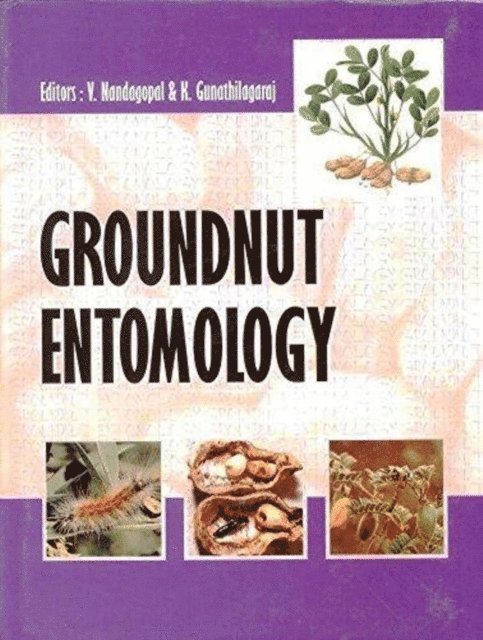
This book contains 26 chapters. There is a full chapter for each of the major insects that cause havoc in the cultivation and storage of groundnuts. The first chapter deals with the insects and non-insects of groundnut and their occurrence in different groundnut zones. The second chapter deals with the ecology of the major insects. The twelfth chapter is on storage insects, and the fifteenth is on nematodes. The sixteenth chapter is on rodents in detail. A chapter on virus vector has been allotted which is a exhaustive in nature. Botanicals, biocontrol and pheromones have been dealt separately in each chapter. The chemical control of the major insects have been dealt separately. Extensive literatures & explanations were given on IPM in Indian situation. There is a chapter on breeding for insect resistance in groundnut by active young scientists. Pesticides application technique has received a separate chapter.
E-bok
Engelska, 20154 723 kr
Läs direkt efter köp
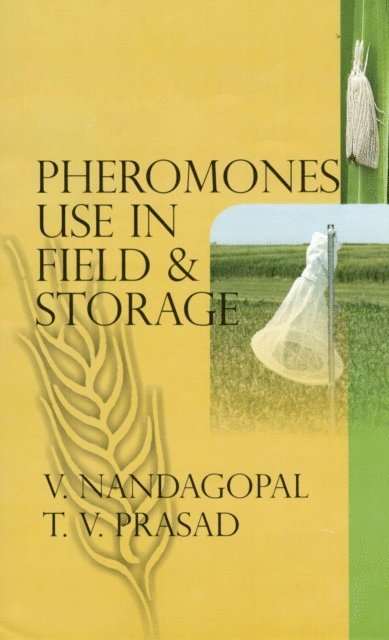
This book entitled “Pheromones Use in Field and Storage” is aimed at providing handy reference guide for the researchers, extension officials, teachers and students of Entomology who are indenting to specialize in pheromone research and technology. This book contains chapters contributed by experienced scientists in pheromone technology. It contains the work done in the field of pheromone basic research in labs and their field testing, efficiency and suitable for field use which helps the farmers to avoid synthetic pesticides to appreciable level. The first chapter deals with the work done in the field of pheromone research traced from the early period of pheromone research in India. There is a separate chapter on the instrumentation and isolation of pheromones. This book also contains chapters covering on the practical use pheromone technology for the management of insect pests of legumes, rice, groundnut, oil palm, palm, coffee, banana, sugarcane, potato, cotton, brinjal and storage. The chapters include the findings of various experiments conducted over the years at different locations. Most of the information was pooled and presented in tabular form in a comprehensive and lucid manner for easy understanding. The need for editing the book on pheromones use in field and storage was felt to cater the needs of persons who are directly or indirectly involved in the promotion and use of pheromone technology.