Valeria Tsenova – författare
Visar alla böcker från författaren Valeria Tsenova. Handla med fri frakt och snabb leverans.
8 produkter
8 produkter
E-bok
PDF, Engelska, 20141 403 kr
Läs direkt efter köp
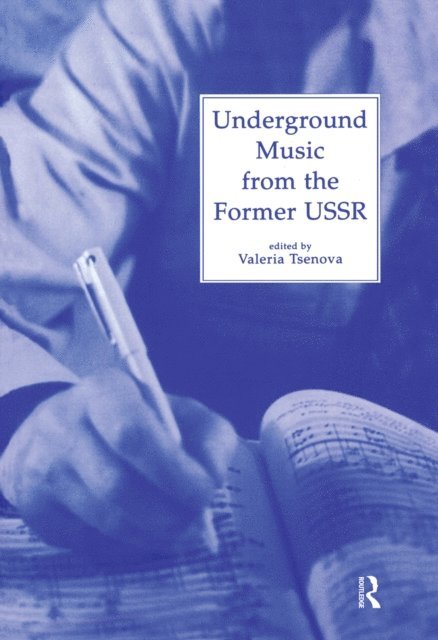
What happened to contemporary music in the Soviet Union after Stravinsky, Shostakovich and Prokofiev? This book is a valuable source of information on the composers of the generations following these three great innovators. It is a document of the hidden period of Russian music, of what happened after the denunciation of Shostakovich and Prokofiev by the Composers'' Union. It contains profiles of the most interesting and innovative composers from Russia and the former Soviet republics, written by leading musicologists. Featured composers include Andrei Volkonsky, Philip Gershkovich, Sergei Slonimsky, Boris Tishchenko, Valentin Silvestrov, Leonid Grabovsky , Nikolai Karetnikov , Alemdar Karamanov, Roman Ledenyov , Vyacheslav Artyomov , Faraj Karayev , Alexander Knaifel , Vladislav Shoot Alexander Vustin, Victor Ekimovksy , Alexander Raskatov , Sergei Pavlenko, Vladimir Tarnopolsy.
E-bok
Engelska, 20141 403 kr
Läs direkt efter köp
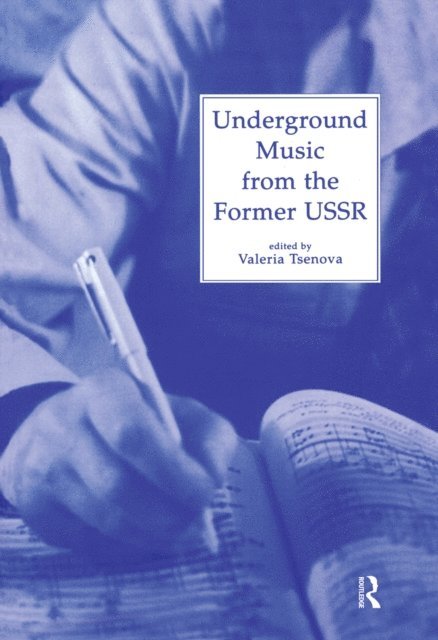
What happened to contemporary music in the Soviet Union after Stravinsky, Shostakovich and Prokofiev? This book is a valuable source of information on the composers of the generations following these three great innovators. It is a document of the hidden period of Russian music, of what happened after the denunciation of Shostakovich and Prokofiev by the Composers'' Union. It contains profiles of the most interesting and innovative composers from Russia and the former Soviet republics, written by leading musicologists. Featured composers include Andrei Volkonsky, Philip Gershkovich, Sergei Slonimsky, Boris Tishchenko, Valentin Silvestrov, Leonid Grabovsky , Nikolai Karetnikov , Alemdar Karamanov, Roman Ledenyov , Vyacheslav Artyomov , Faraj Karayev , Alexander Knaifel , Vladislav Shoot Alexander Vustin, Victor Ekimovksy , Alexander Raskatov , Sergei Pavlenko, Vladimir Tarnopolsy.
E-bok
Engelska, 20031 108 kr
Läs direkt efter köp
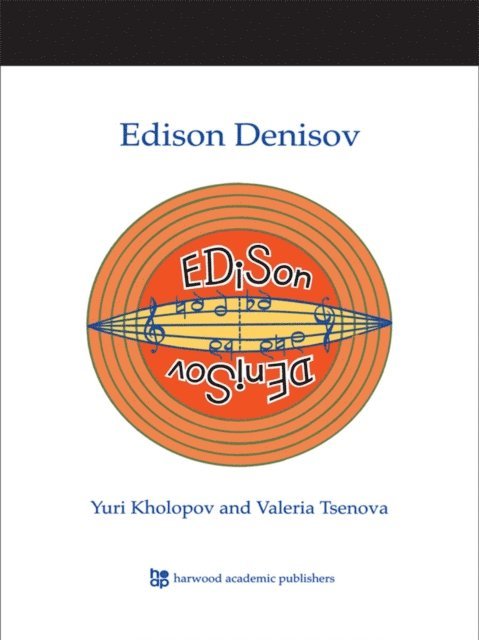
First published in 1997. This is Volume 8 in a series of a planned eleven on Contemporary Music Studies. Edison Denisov belongs to the generation of composers who came to the fore in the post-Stalinist era and were destined to change the course of Russian music. It would be hard to find a more impressive case of running against the stream in the history of Russian music. This post-war generation of composers grew up in the deadening atmosphere of totalitarianism behind the Iron Curtain, under the sway of the personality cult and the enforced precepts of so-called Socialist Realism. Their maturity in the late 1940s coincided with persecutions of the best writers, poets and theatrical figures, Party resolutions on music, and the struggle against formalism and cosmopolitanism. This generation took up the challenge and embarked on its way, proceeding from unconscious but mounting intellectual ferment to an open breach with official ideological doctrines, towards more and more daring and independent artistic concepts. The creative personality of Edison Denisov, one of the leading Russian avant-gardists, was shaped under these conditions. Starting in a Shostakovian style, Denisov took a sharp tum toward the New Music of Boulez and Nono. Denisov''s creative individuality, rooted in the past of Russian music and developed under the beneficial impact of 20th century composers like Stravinsky, Bartok and Webern, revealed itself to its best advantage in his avantgarde compositions beginning with the cantata The Sun of the Incas. In this monograph, detailed analyses are given of Denisov''s compositional techniques and his musical and literary works in an attempt to reveal the inner world of one of the foremost representatives of the Russian avant-garde.
E-bok
PDF, Engelska, 20031 108 kr
Läs direkt efter köp
First published in 1997. This is Volume 8 in a series of a planned eleven on Contemporary Music Studies. Edison Denisov belongs to the generation of composers who came to the fore in the post-Stalinist era and were destined to change the course of Russian music. It would be hard to find a more impressive case of running against the stream in the history of Russian music. This post-war generation of composers grew up in the deadening atmosphere of totalitarianism behind the Iron Curtain, under the sway of the personality cult and the enforced precepts of so-called Socialist Realism. Their maturity in the late 1940s coincided with persecutions of the best writers, poets and theatrical figures, Party resolutions on music, and the struggle against formalism and cosmopolitanism. This generation took up the challenge and embarked on its way, proceeding from unconscious but mounting intellectual ferment to an open breach with official ideological doctrines, towards more and more daring and independent artistic concepts. The creative personality of Edison Denisov, one of the leading Russian avant-gardists, was shaped under these conditions. Starting in a Shostakovian style, Denisov took a sharp tum toward the New Music of Boulez and Nono. Denisov''s creative individuality, rooted in the past of Russian music and developed under the beneficial impact of 20th century composers like Stravinsky, Bartok and Webern, revealed itself to its best advantage in his avantgarde compositions beginning with the cantata The Sun of the Incas. In this monograph, detailed analyses are given of Denisov''s compositional techniques and his musical and literary works in an attempt to reveal the inner world of one of the foremost representatives of the Russian avant-garde.
Inbunden, Engelska, 1997
3 147 kr
Skickas inom 3-6 vardagar
First published in 1997. This is Volume 8 in a series of a planned eleven on Contemporary Music Studies. Edison Denisov belongs to the generation of composers who came to the fore in the post-Stalinist era and were destined to change the course of Russian music. It would be hard to find a more impressive case of "running against the stream" in the history of Russian music. This post-war generation of composers grew up in the deadening atmosphere of totalitarianism behind the Iron Curtain, under the sway of the "personality cult" and the enforced precepts of so-called Socialist Realism. Their maturity in the late 1940s coincided with persecutions of the best writers, poets and theatrical figures, Party resolutions on music, and the struggle against "formalism" and "cosmopolitanism". This generation took up the challenge and embarked on its way, proceeding from unconscious but mounting intellectual ferment to an open breach with official ideological doctrines, towards more and more daring and independent artistic concepts. The creative personality of Edison Denisov, one of the leading Russian avant-gardists, was shaped under these conditions. Starting in a Shostakovian style, Denisov took a sharp tum toward the New Music of Boulez and Nono. Denisov's creative individuality, rooted in the past of Russian music and developed under the beneficial impact of 20th century composers like Stravinsky, Bartok and Webern, revealed itself to its best advantage in his avantgarde compositions beginning with the cantata The Sun of the Incas. In this monograph, detailed analyses are given of Denisov's compositional techniques and his musical and literary works in an attempt to reveal the inner world of one of the foremost representatives of the Russian avant-garde.
Häftad, Engelska, 1997
934 kr
Skickas inom 10-15 vardagar
First published in 1997. This is Volume 8 in a series of a planned eleven on Contemporary Music Studies. Edison Denisov belongs to the generation of composers who came to the fore in the post-Stalinist era and were destined to change the course of Russian music. It would be hard to find a more impressive case of "running against the stream" in the history of Russian music. This post-war generation of composers grew up in the deadening atmosphere of totalitarianism behind the Iron Curtain, under the sway of the "personality cult" and the enforced precepts of so-called Socialist Realism. Their maturity in the late 1940s coincided with persecutions of the best writers, poets and theatrical figures, Party resolutions on music, and the struggle against "formalism" and "cosmopolitanism". This generation took up the challenge and embarked on its way, proceeding from unconscious but mounting intellectual ferment to an open breach with official ideological doctrines, towards more and more daring and independent artistic concepts. The creative personality of Edison Denisov, one of the leading Russian avant-gardists, was shaped under these conditions. Starting in a Shostakovian style, Denisov took a sharp tum toward the New Music of Boulez and Nono. Denisov's creative individuality, rooted in the past of Russian music and developed under the beneficial impact of 20th century composers like Stravinsky, Bartok and Webern, revealed itself to its best advantage in his avantgarde compositions beginning with the cantata The Sun of the Incas. In this monograph, detailed analyses are given of Denisov's compositional techniques and his musical and literary works in an attempt to reveal the inner world of one of the foremost representatives of the Russian avant-garde.
Inbunden, Engelska, 1998
2 251 kr
Skickas inom 10-15 vardagar
What happened to contemporary music in the Soviet Union after Stravinsky, Shostakovich and Prokofiev? This book is a valuable source of information on the composers of the generations following these three great innovators. It is a document of the hidden period of Russian music, of what happened after the denunciation of Shostakovich and Prokofiev by the Composers' Union. It contains profiles of the most interesting and innovative composers from Russia and the former Soviet republics, written by leading musicologists. Featured composers include Andrei Volkonsky, Philip Gershkovich, Sergei Slonimsky, Boris Tishchenko, Valentin Silvestrov, Leonid Grabovsky , Nikolai Karetnikov , Alemdar Karamanov, Roman Ledenyov , Vyacheslav Artyomov , Faraj Karayev , Alexander Knaifel , Vladislav Shoot Alexander Vustin, Victor Ekimovksy , Alexander Raskatov , Sergei Pavlenko, Vladimir Tarnopolsy.
Häftad, Engelska, 1998
1 180 kr
Skickas inom 10-15 vardagar
What happened to contemporary music in the Soviet Union after Stravinsky, Shostakovich and Prokofiev? This book is a valuable source of information on the composers of the generations following these three great innovators. It is a document of the hidden period of Russian music, of what happened after the denunciation of Shostakovich and Prokofiev by the Composers' Union. It contains profiles of the most interesting and innovative composers from Russia and the former Soviet republics, written by leading musicologists. Featured composers include Andrei Volkonsky, Philip Gershkovich, Sergei Slonimsky, Boris Tishchenko, Valentin Silvestrov, Leonid Grabovsky , Nikolai Karetnikov , Alemdar Karamanov, Roman Ledenyov , Vyacheslav Artyomov , Faraj Karayev , Alexander Knaifel , Vladislav Shoot Alexander Vustin, Victor Ekimovksy , Alexander Raskatov , Sergei Pavlenko, Vladimir Tarnopolsy.