Velma Pollard – författare
Visar alla böcker från författaren Velma Pollard. Handla med fri frakt och snabb leverans.
5 produkter
5 produkter
E-bok
PDF, Engelska, 2000360 kr
Läs direkt efter köp
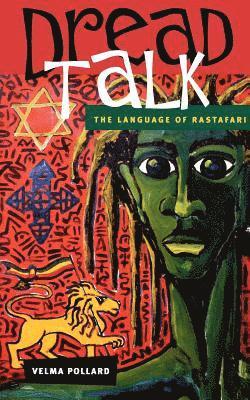
Dread Talk examines the effects of Rastafarian language on Creole in other parts of the Carribean, its influence in Jamaican poetry, and its effects on standard Jamaican English. This revised edition includes a new introduction that outlines the changes that have occurred since the book first appeared and a new chapter, "Dread Talk in the Diaspora," that discusses Rastafarian as used in the urban centers of North America and Europe. Pollard provides a wealth of examples of Rastafarian language-use and definitions, explaining how the evolution of these forms derives from the philosophical position of the Rasta speakers: "The socio-political image which the Rastaman has had of himself in a society where lightness of skin, economic status, and social privileges have traditionally gone together must be included in any consideration of Rastafarian words " for the man making the words is a man looking up from under, a man pressed down economically and socially by the establishment."
Inbunden, Engelska, 2014
634 kr
Skickas inom 5-8 vardagar
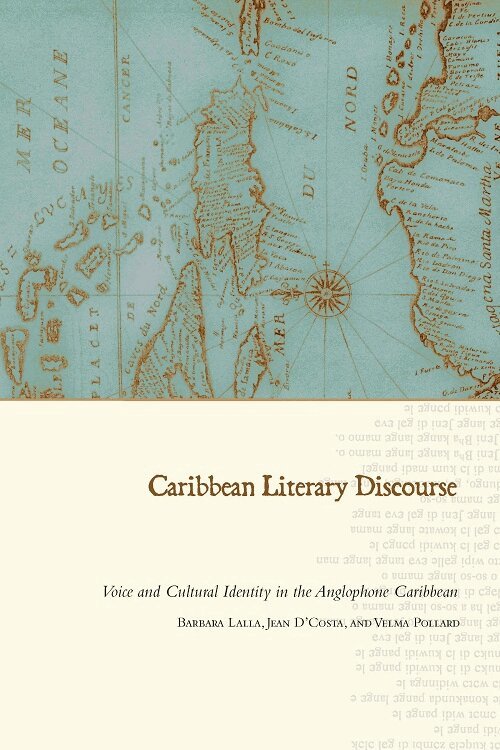
Caribbean Literary Discourse is a study of the multicultural, multilingual, and Creolised languages that characterise Caribbean discourse, especially as reflected in the language choices that preoccupy creative writers.Caribbean Literary Discourse opens the challenging world of language choices and literary experiments characteristic of the multicultural and multilingual Caribbean. In these societies, the language of the master— English in Jamaica and Barbados—overlies the Creole languages of the majority. As literary critics and as creative writers, Barbara Lalla, Jean D’Costa, and Velma Pollard engage historical, linguistic, and literary perspectives to investigate the literature bred by this complex history. They trace the rise of local languages and literatures within the English speaking Caribbean, especially as reflected in the language choices of creative writers.The study engages two problems: first, the historical reality that standard metropolitan English established by British colonialists dominates official economic, cultural, and political affairs in these former colonies, contesting the development of vernacular, Creole, and pidgin dialects even among the region’s indigenous population; and second, the fact that literary discourse developed under such conditions has received scant attention.Caribbean Literary Discourse explores the language choices that preoccupy creative writers in whose work vernacular discourse displays its multiplicity of origins, its elusive boundaries, and its most vexing issues. The authors address the degree to which language choice highlights political loyalties and tensions; the politics of identity, self-representation, and nationalism; the implications of code-switching—the ability to alternate deliberately between different languages, accents, or dialects—for identity in postcolonial society; the rich rhetorical and literary effects enabled by code-switching and the difficulties of acknowledging or teaching those ranges in traditional education systems; the longstanding interplay between oral and scribal culture; and the predominance of intertextuality in postcolonial and diasporic literature.
E-bok
Engelska, 20141 020 kr
Läs direkt efter köp
A study of the multicultural, multilingual, and Creolized languages that characterize Caribbean discourse, especially as reflected in the language choices that preoccupy creative writers Caribbean Literary Discourse opens the challenging world of language choices and literary experiments characteristic of the multicultural and multilingual Caribbean. In these societies, the language of the master— English in Jamaica and Barbados—overlies the Creole languages of the majority. As literary critics and as creative writers, Barbara Lalla, Jean D’Costa, and Velma Pollard engage historical, linguistic, and literary perspectives to investigate the literature bred by this complex history. They trace the rise of local languages and literatures within the English speaking Caribbean, especially as reflected in the language choices of creative writers. The study engages two problems: first, the historical reality that standard metropolitan English established by British colonialists dominates official economic, cultural, and political affairs in these former colonies, contesting the development of vernacular, Creole, and pidgin dialects even among the region’s indigenous population; and second, the fact that literary discourse developed under such conditions has received scant attention. Caribbean Literary Discourse explores the language choices that preoccupy creative writers in whose work vernacular discourse displays its multiplicity of origins, its elusive boundaries, and its most vexing issues. The authors address the degree to which language choice highlights political loyalties and tensions; the politics of identity, self-representation, and nationalism; the implications of code-switching—the ability to alternate deliberately between different languages, accents, or dialects—for identity in postcolonial society; the rich rhetorical and literary effects enabled by code-switching and the difficulties of acknowledging or teaching those ranges in traditional education systems; the longstanding interplay between oral and scribal culture; and the predominance of intertextuality in postcolonial and diasporic literature.
Häftad, Engelska, 2021
204 kr
Skickas inom 5-8 vardagar
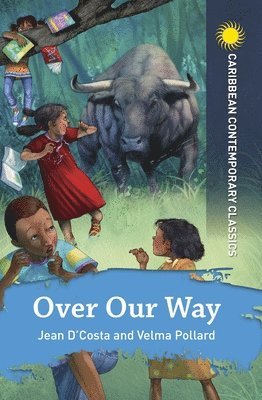
There have been many great and enduring works of literature by Caribbean authors over the last century. The Caribbean Contemporary Classics collection celebrates these deep and vibrant stories, overflowing with life and acute observations about society.Over our way lies a world of flame trees and hot beaches rimmed with hills, of raucous laughter in the market and shouts in the street, of bare feet running down dusty lanes and across burnt savannahs, splashing beside the boats of fishermen or inching up the ringed bark of coconut trees. A long way, full of laughing, weeping, blessing, cursing, explaining, quarrelling, accusing and lamenting.We cannot see the beginnings or ends of our way, but we can tell some of the stories of what happens over our way: stories which we alone can tell, stories about our friendships, our lonelinesses, our games, our crimes, our sorrows and joys, our triumphs and dreams.Suitable for readers aged 11 and above.
Häftad, Engelska, 2000
412 kr
Skickas inom 3-6 vardagar