Vestert Borger – författare
Visar alla böcker från författaren Vestert Borger. Handla med fri frakt och snabb leverans.
2 produkter
2 produkter
Inbunden, Engelska, 2020
1 578 kr
Skickas inom 7-10 vardagar
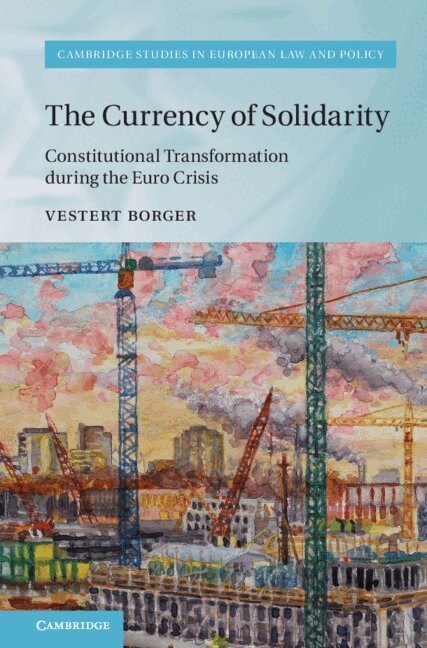
In their fight against the debt crisis, the European Union and its member states took measures that have profoundly changed the euro. It now differs fundamentally from when it was introduced by the Treaty of Maastricht. Surprisingly, this change has come about with hardly any formal amendment to the Union's 'basic constitutional charter', the Treaties. How, then, to understand it? This book argues that the constitution of the EU has transformed, which occurs when constitutions change without amendment. The transformation is characterized by a broadening of the currency union's stability conception from price stability to also financial stability. Using solidarity as a lens, the book conceptualises the unity of the member states and analyses how this was preserved during the crisis. Subsequently, it explains how that changed the currency union's set-up and why the European Court of Justice could not turn against the change in Pringle and Gauweiler.
Inbunden, Engelska, 2027
1 192 kr
Kommande
This edited volume offers a compelling constitutional and comparative analysis of the European Union’s system of government, focusing on the appointment of the President of the European Commission.By treating this selection process as a form of government formation, the book explores how institutional dynamics, political actors, and evolving constitutional practices shape executive power in the EU. Central to the analysis is the Spitzenkandidaten procedure, which exemplifies how the EU’s 'living constitution' develops not only through treaty law but also through political practice. The volume brings together leading scholars to examine the constitutional relationships between the European Commission, European Parliament, and European Council, and how these interactions influence broader governance structures. It also draws on comparative insights from national constitutional systems to illuminate the EU’s unique institutional framework, particularly regarding parliamentary involvement and the role of political parties in executive selection.Rather than offering a traditional account of EU institutional law, the book integrates history, politics, and constitutional theory to assess the sources and limits of constitutional development in the EU. It asks how the Spitzenkandidaten process contributes to the entrenchment of EU government practices and evaluates its normative implications for democratic legitimacy.This volume is essential reading for scholars of EU law, comparative constitutionalism, and European politics, offering fresh perspectives on how the EU is governed as a polity and how its system of government continues to evolve.