Viviana Baraybar Hidalgo – författare
Visar alla böcker från författaren Viviana Baraybar Hidalgo. Handla med fri frakt och snabb leverans.
4 produkter
4 produkter
Häftad, Engelska, 2024
317 kr
Skickas inom 7-10 vardagar
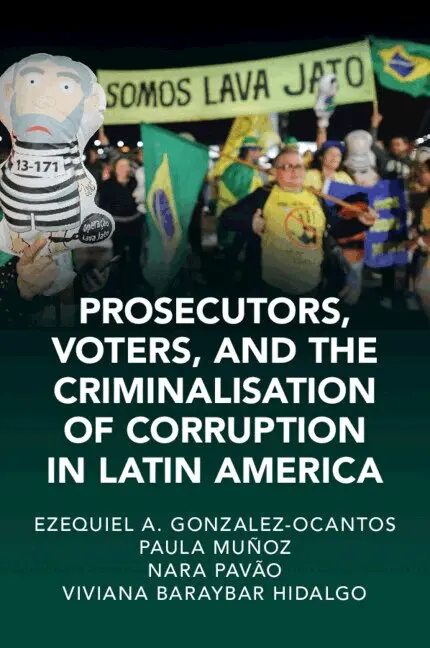
Lava Jato, a transnational bribery case that started in Brazil and spread throughout Latin America, upended elections and collapsed governments. Why did the investigation gain momentum in some countries but not others? The book traces reforms that enhanced prosecutors' capacity to combat white-collar crime and shows that Lava Jato became a full-blown anti-corruption crusade where reforms were coupled with the creation of aggressive taskforces. For some, prosecutors' unconventional methods were necessary and justified. Others saw dangerous affronts to due process and democracy. Given these controversies, how did voters react to a once-in-a-generation attempt to clean politics? Can prosecutors trigger hope, conveying a message of possible regeneration? Or does aggressive prosecution erode the tacit consensus around the merits of anti-corruption? Prosecutors, Voters and The Criminalization of Corruption in Latin America is a study of the impact of accountability through criminalization, one that dissects the drivers and dilemmas of resolute transparency efforts.
Inbunden, Engelska, 2023
1 248 kr
Skickas inom 7-10 vardagar
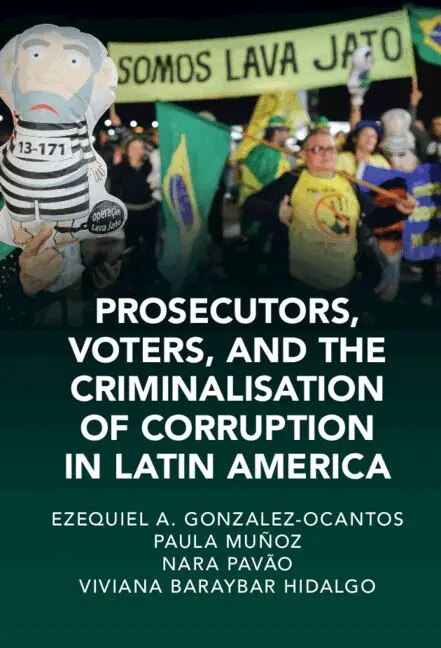
Lava Jato, a transnational bribery case that started in Brazil and spread throughout Latin America, upended elections and collapsed governments. Why did the investigation gain momentum in some countries but not others? The book traces reforms that enhanced prosecutors' capacity to combat white-collar crime and shows that Lava Jato became a full-blown anti-corruption crusade where reforms were coupled with the creation of aggressive taskforces. For some, prosecutors' unconventional methods were necessary and justified. Others saw dangerous affronts to due process and democracy. Given these controversies, how did voters react to a once-in-a-generation attempt to clean politics? Can prosecutors trigger hope, conveying a message of possible regeneration? Or does aggressive prosecution erode the tacit consensus around the merits of anti-corruption? Prosecutors, Voters and The Criminalization of Corruption in Latin America is a study of the impact of accountability through criminalization, one that dissects the drivers and dilemmas of resolute transparency efforts.
Häftad, Engelska, 2026
230 kr
Kommande
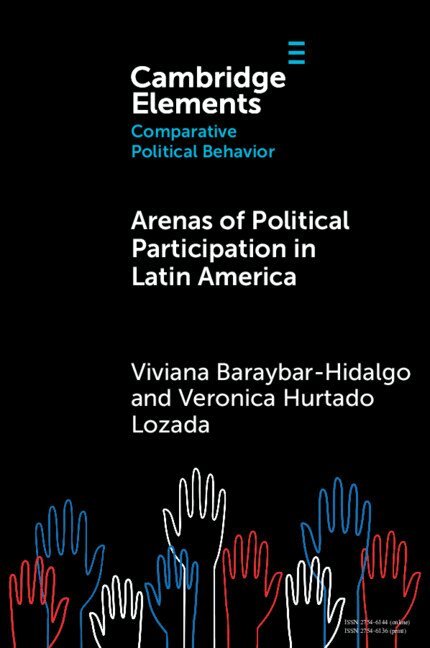
This work challenges the conventional understanding of social arenas as merely gateways to traditional political participation, arguing that they function as independent political arenas where citizens exercise political agency. Using LAPOP data from 18 Latin American countries, the authors show that participation in social arenas has distinct demographic correlates relative to electoral participation, with higher levels of engagement among women, indigenous peoples, and individuals with lower levels of formal education. They also identify an "inclusion paradox": social arenas incorporate groups that face barriers in traditional political spaces. Yet, because this inclusion comes partly from exclusion, participation in some of these social arenas correlates with lower support for democracy. Case studies from Guatemala, Peru, and Chile illustrate how participation in social arenas has led to significant political changes. Our findings contribute to political participation theory by illustrating how citizens engage politically across diverse arenas.
Inbunden, Engelska, 2026
742 kr
Kommande
This work challenges the conventional understanding of social arenas as merely gateways to traditional political participation, arguing that they function as independent political arenas where citizens exercise political agency. Using LAPOP data from 18 Latin American countries, the authors show that participation in social arenas has distinct demographic correlates relative to electoral participation, with higher levels of engagement among women, indigenous peoples, and individuals with lower levels of formal education. They also identify an "inclusion paradox": social arenas incorporate groups that face barriers in traditional political spaces. Yet, because this inclusion comes partly from exclusion, participation in some of these social arenas correlates with lower support for democracy. Case studies from Guatemala, Peru, and Chile illustrate how participation in social arenas has led to significant political changes. Our findings contribute to political participation theory by illustrating how citizens engage politically across diverse arenas.