Vivienne Xiangwei Guo – författare
Visar alla böcker från författaren Vivienne Xiangwei Guo. Handla med fri frakt och snabb leverans.
5 produkter
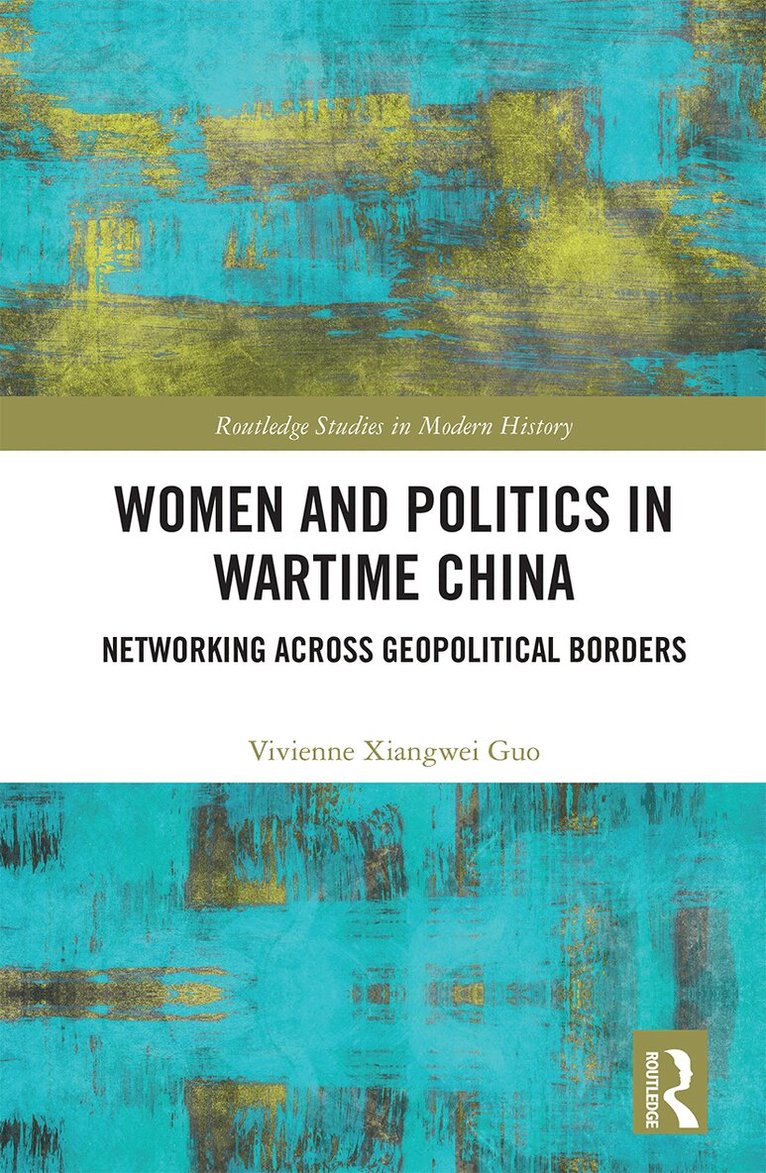
Women and Politics in Wartime China
Networking Across Geopolitical Borders
Häftad, 2020
727 kr
Lägg i varukorg
Focusing on Chinese elite women as a special socio-political group, this book places the sophisticated networks they formed in the shifting geographical, social, cultural and political spaces of wartime China, where their political engagement, knowledge-making, and network-building in support of …
Women and Politics in Wartime China
Networking Across Geopolitical Borders
Inbunden, 2018
2585 kr
Lägg i varukorg
Focusing on Chinese elite women as a special socio-political group, this book places the sophisticated networks they formed in the shifting geographical, social, cultural and political spaces of wartime China, where their political engagement, knowledge-making, and network-building in support of …
Women and Politics in Wartime China
Networking Across Geopolitical Borders
E-bok, 2018
856 kr
Lägg i varukorg
Focusing on Chinese elite women as a special socio-political group, this book places the sophisticated networks they formed in the shifting geographical, social, cultural and political spaces of wartime China, where their political engagement, knowledge-making, and network-building in support of …
Women and Politics in Wartime China
Networking Across Geopolitical Borders
E-bok, 2018
856 kr
Lägg i varukorg
Focusing on Chinese elite women as a special socio-political group, this book places the sophisticated networks they formed in the shifting geographical, social, cultural and political spaces of wartime China, where their political engagement, knowledge-making, and network-building in support of …
French Language and the Making of Modern Chinese Intellectuals
New Selves, New Worlds
Inbunden, 2026
2549 kr
Kommande
This book offers the first interdisciplinary study of how different generations of Chinese individuals learned and used the French language as an intrinsic part of their engagement with new worlds—both tangible and envisioned—and with their emerging selves.Drawing from Wittgenstein’s understanding …