
Volker Benkert – författare
Visar alla böcker från författaren Volker Benkert. Handla med fri frakt och snabb leverans.
3 produkter
3 produkter
Inbunden, Engelska, 2022
1 152 kr
Skickas inom 10-15 vardagar
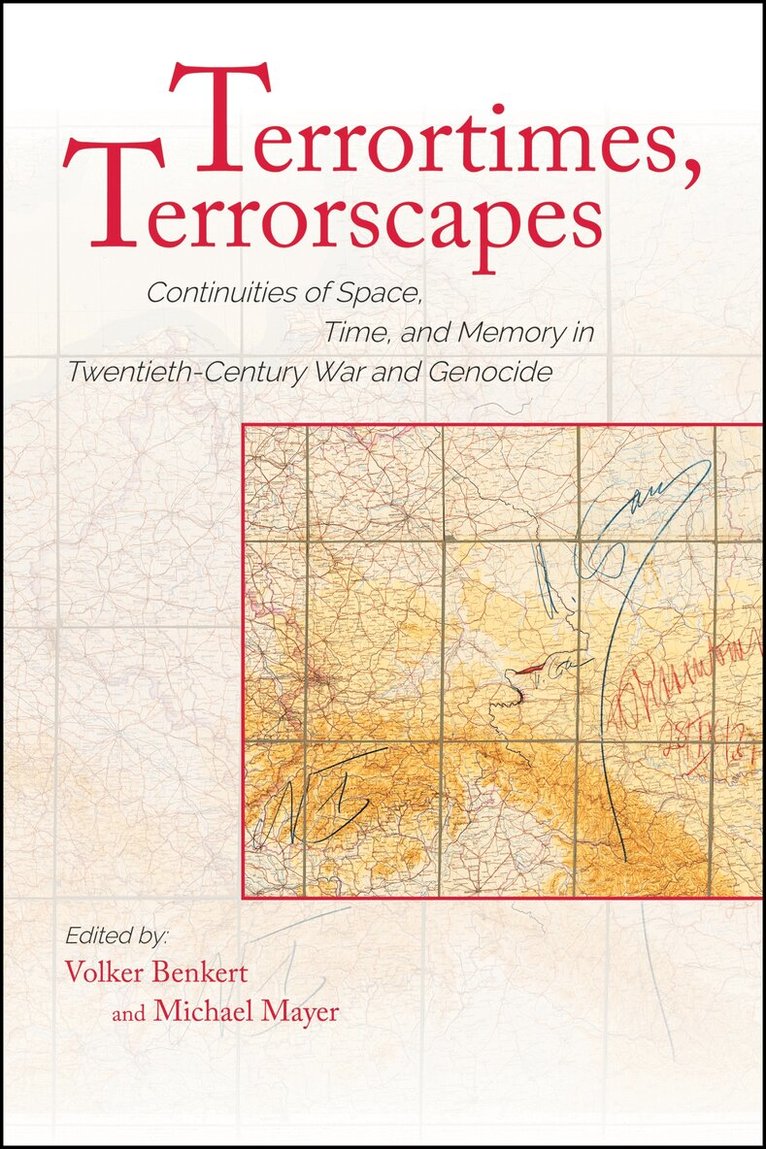
Terrortimes, Terrorscapes: Continuities of Space, Time, and Memory in Twentieth-Century War and Genocide investigates interconnections between space and violence throughout the twentieth century, and how such connections informed collective memory. The interdisciplinary volume shows how entangled notions of time and space amplified by memory narratives led to continuities of violence across different conflicts creating "terrortimes" and "terrorscapes" in their wake. The volume examines such continuities of violence with the help of an analytical framework built around different themes. Its first part, spatial and temporal continuities of violence, looks at contested spaces and ideas of national, ethnic, or religious homogeneity that are often at the heart of prolonged conflicts. The second part, on states and actors, addresses the role of states as enablers of violence, asymmetric power dynamics, and the connection between imperialism and genocide in Africa. Imagination and emotion—the focus of the third part—explores utopian visions and their limits that instigate or hinder, and the mobilization of emotion through propaganda. Finally, the fourth part shows how the recollection of the past sometimes triggers new terrortimes. Departing from an understanding of violence limited to certain areas and time frames, this volume describes continuities of violence as overlapping fabrics woven together from notions of space, time, and memory.
Häftad, Engelska, 2022
551 kr
Skickas inom 10-15 vardagar
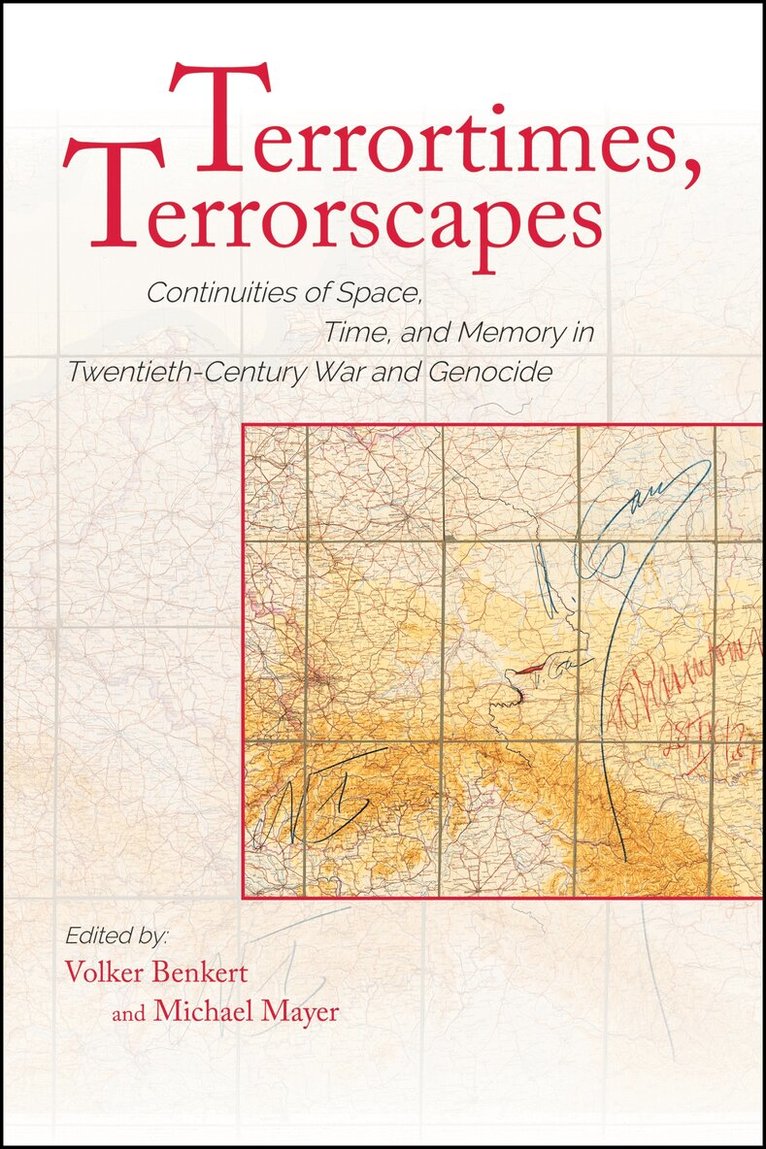
Terrortimes, Terrorscapes: Continuities of Space, Time, and Memory in Twentieth-Century War and Genocide investigates interconnections between space and violence throughout the twentieth century, and how such connections informed collective memory. The interdisciplinary volume shows how entangled notions of time and space amplified by memory narratives led to continuities of violence across different conflicts creating "terrortimes" and "terrorscapes" in their wake. The volume examines such continuities of violence with the help of an analytical framework built around different themes. Its first part, spatial and temporal continuities of violence, looks at contested spaces and ideas of national, ethnic, or religious homogeneity that are often at the heart of prolonged conflicts. The second part, on states and actors, addresses the role of states as enablers of violence, asymmetric power dynamics, and the connection between imperialism and genocide in Africa. Imagination and emotion—the focus of the third part—explores utopian visions and their limits that instigate or hinder, and the mobilization of emotion through propaganda. Finally, the fourth part shows how the recollection of the past sometimes triggers new terrortimes. Departing from an understanding of violence limited to certain areas and time frames, this volume describes continuities of violence as overlapping fabrics woven together from notions of space, time, and memory.
E-bok
PDF, Tyska, 2018884 kr
Läs direkt efter köp
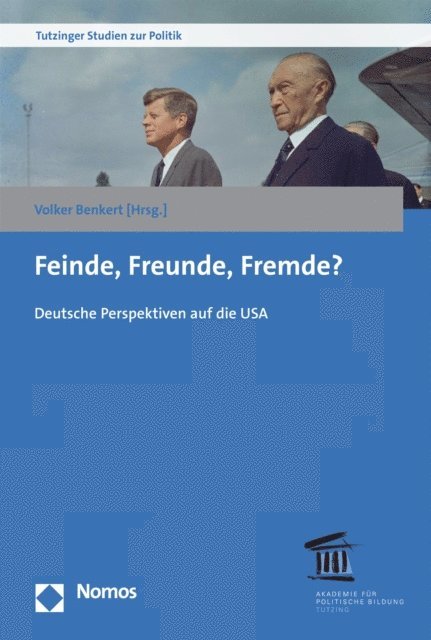
Gleichgültig war Amerika den Deutschen nie. Die USA galten als Inbegriff des "wohlwollenden Hegemons" und waren Aufhänger von zahlreichen Feindbildern. Sie wurden als kulturelle Fremdlinge bewundert oder verdammt. Aber leidenschaftslos oder statisch waren die deutschen Perspektiven kaum.Historiker, Politikwissenschaftler, Amerikanisten, Sozial- und Literaturwissenschaftler zeigen in diesem Band, dass die USA oft zugleich Freund, Feind und fremd waren. Austausch, Anpassung und Ablehnung existierten in Deutschland nicht selten nebeneinander. Die versammelten Blicke auf die USA reichen von romantischen Amerikabildern der Nachkriegszeit über Amerikanisierung und Antiamerikanismus der 1970er- und 1980er-Jahre bis hin zu den Anschlägen vom 11. September 2001 und die jüngste Vergangenheit.Mit Beiträgen vonAlex Alvarez, Volker Benkert, Franz Eder, Moritz Fink, Axel Fischer, Crister S. Garrett, Katharina Gerund, Konrad H. Jarausch, Daniel Kosthorst, Marita Krauss, Stefanie Kunze, Jan Logemann, Heide Reinhäckel, Maren Roth, Rolf Steininger und Frank Usbeck.