W. A. Wallace – författare
Visar alla böcker från författaren W. A. Wallace. Handla med fri frakt och snabb leverans.
8 produkter
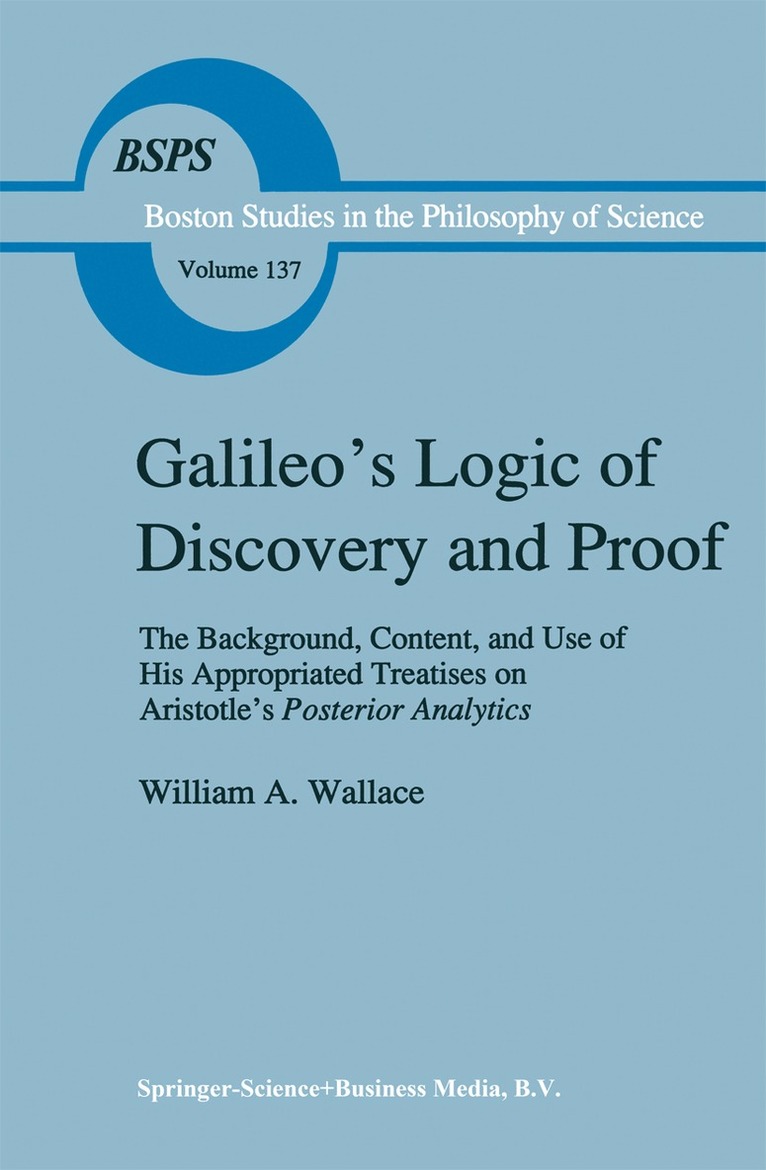
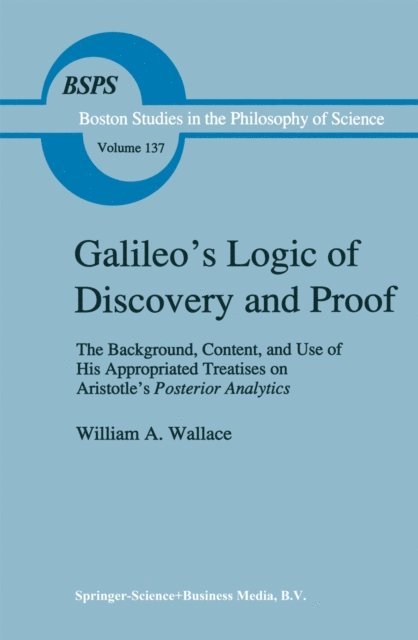
Galileo’s Logic of Discovery and Proof
The Background, Content, and Use of His Appropriated Treatises on Aristotle’s Posterior Analytics
Inbunden, 1992
2188 kr
Lägg i varukorg
This volume is presented as a companion study to my translation of Galileo's MS 27, Galileo's Logical Treatises, which contains Galileo's appropriated questions on Aristotle's Posterior Analytics - a work only recently transcribed from the Latin autograph. Its purpose is to acquaint an …
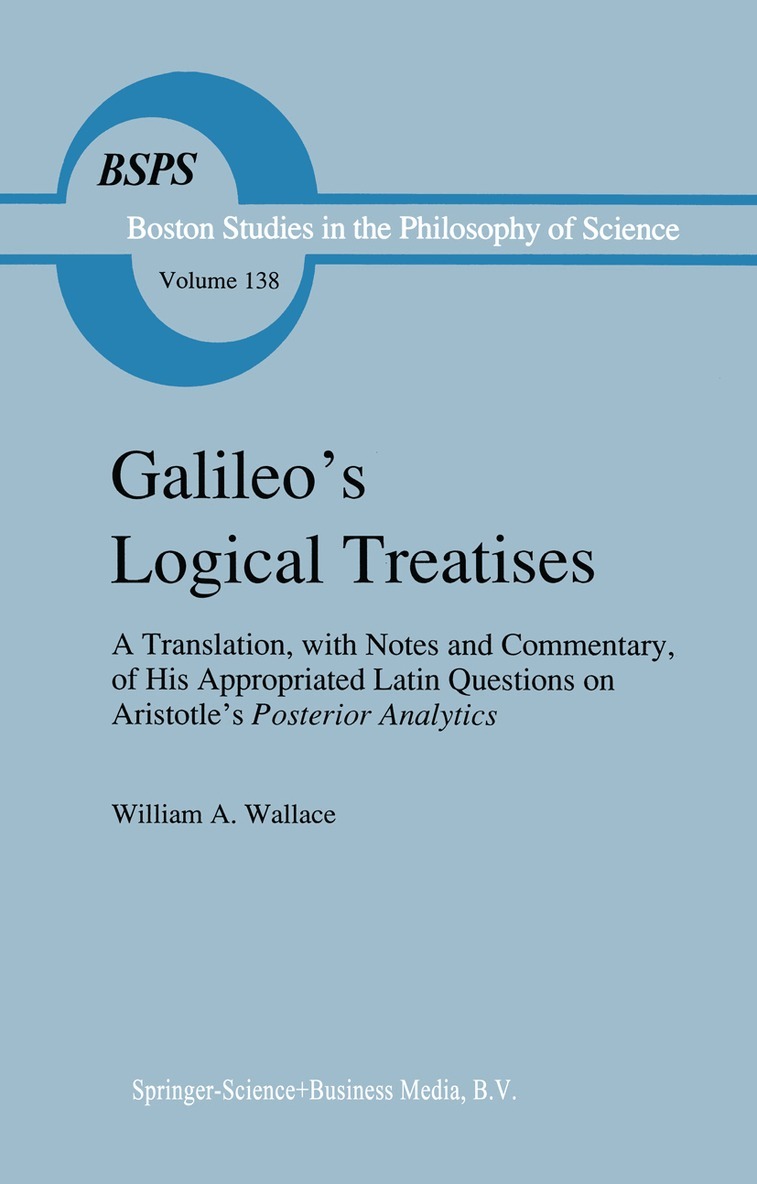
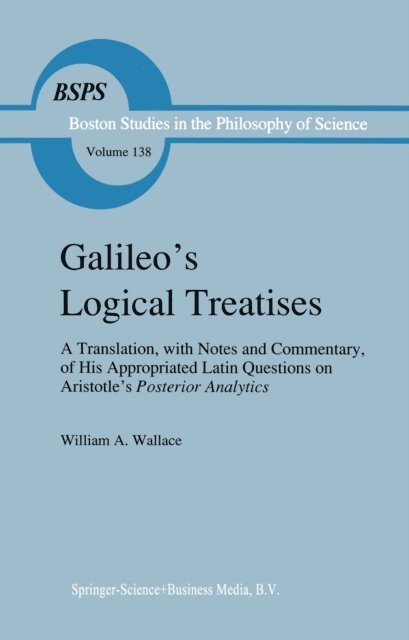
Galileo's Logical Treatises
A Translation, with Notes and Commentary, of his Appropriated Latin Questions on Aristotle's Posterior Analytics Book II
Inbunden, 1992
1643 kr
Lägg i varukorg
Hard as it is to believe, what is possibly Galileo's most important Latin manuscript was not transcribed for the National Edition of his works and so has remained hidden from scholars for centuries. In this volume William A. Wallace translates the logical treatises contained in that manuscript and …
Galileo’s Logic of Discovery and Proof
The Background, Content, and Use of His Appropriated Treatises on Aristotle’s Posterior Analytics
Häftad, 2011
2254 kr
Lägg i varukorg
This volume is presented as a companion study to my translation of Galileo's MS 27, Galileo's Logical Treatises, which contains Galileo's appropriated questions on Aristotle's Posterior Analytics - a work only recently transcribed from the Latin autograph. Its purpose is to acquaint an …
Galileo's Logical Treatises
A Translation, with Notes and Commentary, of his Appropriated Latin Questions on Aristotle's Posterior Analytics Book II
Häftad, 2010
1643 kr
Lägg i varukorg
Hard as it is to believe, what is possibly Galileo's most important Latin manuscript was not transcribed for the National Edition of his works and so has remained hidden from scholars for centuries. In this volume William A. Wallace translates the logical treatises contained in that manuscript and …
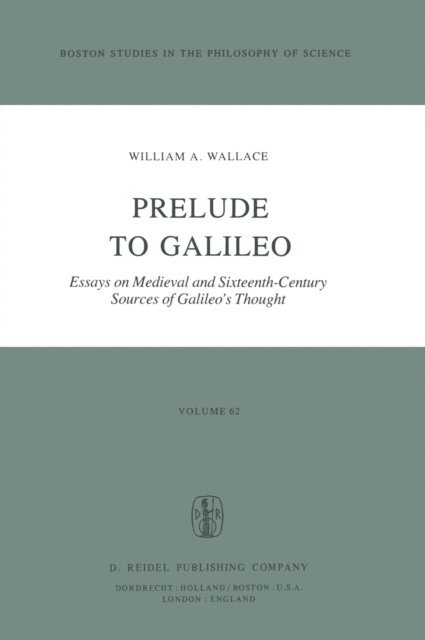
Prelude to Galileo
Essays on Medieval and Sixteenth-Century Sources of Galileo’s Thought
E-bok, 2012
2111 kr
Lägg i varukorg
Can it be true that Galilean studies will be without end, without conclusion, that each interpreter will find his own Galileo? William A. Wallace seems to have a historical grasp which will have to be matched by any further workers: he sees directly into Galileo''s primary epoch of intellectual …
Prelude to Galileo
Essays on Medieval and Sixteenth-Century Sources of Galileo’s Thought
Häftad, 2011
1639 kr
Lägg i varukorg
Can it be true that Galilean studies will be without end, without conclusion, that each interpreter will find his own Galileo? William A. Wallace seems to have a historical grasp which will have to be matched by any further workers: he sees directly into Galileo's primary epoch of intellectual …
Galileo's Logical Treatises
A Translation, with Notes and Commentary, of his Appropriated Latin Questions on Aristotle''s Posterior Analytics Book II
E-bok, 2012
2065 kr
Lägg i varukorg
Hard as it is to believe, what is possibly Galileo''s most important Latin manuscript was not transcribed for the National Edition of his works and so has remained hidden from scholars for centuries. In this volume William A. Wallace translates the logical treatises contained in that manuscript and …
Galileo's Logic of Discovery and Proof
The Background, Content, and Use of His Appropriated Treatises on Aristotle’s Posterior Analytics
E-bok, 2012
3013 kr
Lägg i varukorg
This volume is presented as a companion study to my translation of Galileo''s MS 27, Galileo''s Logical Treatises, which contains Galileo''s appropriated questions on Aristotle''s Posterior Analytics - a work only recently transcribed from the Latin autograph. Its purpose is to acquaint an …