Warren D. Allmon – författare
Visar alla böcker från författaren Warren D. Allmon. Handla med fri frakt och snabb leverans.
8 produkter
8 produkter
Inbunden, Engelska, 2008
848 kr
Skickas inom 5-8 vardagar
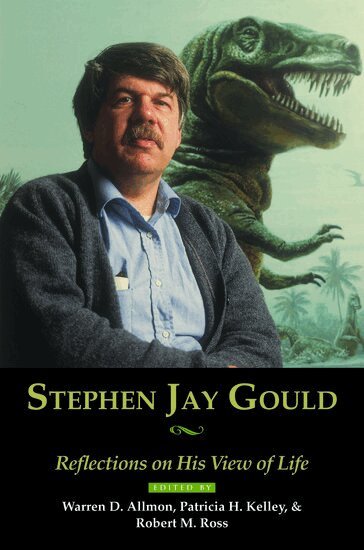
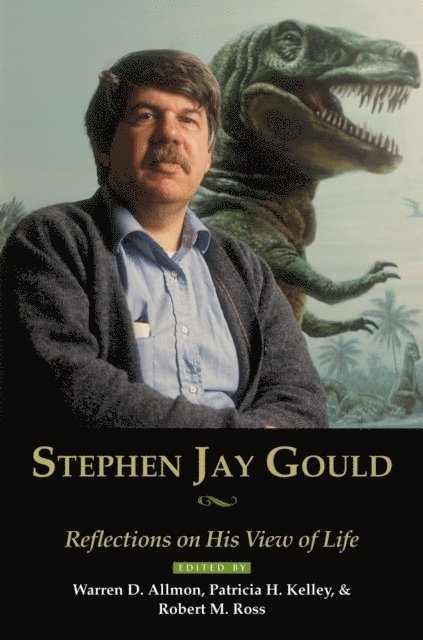
Considered by many during his lifetime as the most well-known scientist in the world, Stephen Jay Gould left an enormous and influential body of work. A Harvard professor of paleontology, evolutionary biology, and the history of science, Gould provided major insights into our understanding of the history of life. He helped to reinvigorate paleontology, launch macroevolution on a new course, and provide a context in which the biological developmental stages of an organism's embryonic growth could be integrated into an understanding of evolution. This book is a set of reflections on the many areas of Gould's intellectual life by the people who knew and understood him best: former students and prominent close collaborators. Mostly a critical assessment of his legacy, the chapters are not technical contributions but rather offer a combination of intellectual bibliography, personal memoir, and reflection on Gould's diverse scientific achievements. The work includes the most complete bibliography of his writings to date and offers a multi-dimensional view of Gould's life-work not to be found in any other volume.
E-bok
Engelska, 2008704 kr
Läs direkt efter köp
Considered by many during his lifetime as the most well-known scientist in the world, Stephen Jay Gould left an enormous and influential body of work. A Harvard professor of paleontology, evolutionary biology, and the history of science, Gould provided major insights into our understanding of the history of life. He helped to reinvigorate paleontology, launch macroevolution on a new course, and provide a context in which the biological developmental stages of an organism''s embryonic growth could be integrated into an understanding of evolution. This book is a set of reflections on the many areas of Gould''s intellectual life by the people who knew and understood him best: former students and prominent close collaborators. Mostly a critical assessment of his legacy, the chapters are not technical contributions but rather offer a combination of intellectual bibliography, personal memoir, and reflection on Gould''s diverse scientific achievements. The work includes the most complete bibliography of his writings to date and offers a multi-dimensional view of Gould''s life-work not to be found in any other volume.
E-bok
PDF, Engelska, 2008704 kr
Läs direkt efter köp
Considered by many during his lifetime as the most well-known scientist in the world, Stephen Jay Gould left an enormous and influential body of work. A Harvard professor of paleontology, evolutionary biology, and the history of science, Gould provided major insights into our understanding of the history of life. He helped to reinvigorate paleontology, launch macroevolution on a new course, and provide a context in which the biological developmental stages of an organism''s embryonic growth could be integrated into an understanding of evolution. This book is a set of reflections on the many areas of Gould''s intellectual life by the people who knew and understood him best: former students and prominent close collaborators. Mostly a critical assessment of his legacy, the chapters are not technical contributions but rather offer a combination of intellectual bibliography, personal memoir, and reflection on Gould''s diverse scientific achievements. The work includes the most complete bibliography of his writings to date and offers a multi-dimensional view of Gould''s life-work not to be found in any other volume.
Inbunden, Engelska, 2016
594 kr
Skickas inom 5-8 vardagar
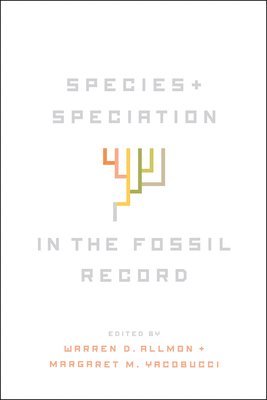
Although the species is one of the fundamental units of biological classification, there is remarkably little consensus among biologists about what defines a species, even within distinct sub-disciplines. The literature of paleobiology, in particular, is littered with qualifiers and cautions about applying the term to the fossil record or equating such species with those recognized among living organisms. In Species and Speciation in the Fossil Record, experts in the field examine how they conceive of species of fossil animals and consider the implications these different approaches have for thinking about species in the context of macroevolution. After outlining views of the Modern Synthesis of evolutionary disciplines and detailing the development within paleobiology of quantitative methods for documenting and analyzing variation within fossil assemblages, contributors explore the challenges of recognizing and defining species from fossil specimens and offer potential solutions.Addressing both the tempo and mode of speciation over time, they show how with careful interpretation and a clear species concept, fossil species may be sufficiently robust for meaningful paleobiological analyses. Indeed, they demonstrate that the species concept, if more refined, could unearth a wealth of information about the interplay between species origins and extinctions, between local and global climate change, and greatly deepen our understanding of the evolution of life.
E-bok
Engelska, 20161 243 kr
Läs direkt efter köp
Although the species is one of the fundamental units of biological classification, there is remarkably little consensus among biologists about what defines a species, even within distinct sub-disciplines. The literature of paleobiology, in particular, is littered with qualifiers and cautions about applying the term to the fossil record or equating such species with those recognized among living organisms. In Species and Speciation in the Fossil Record, experts in the field examine how they conceive of species of fossil animals and consider the implications these different approaches have for thinking about species in the context of macroevolution. After outlining views of the Modern Synthesis of evolutionary disciplines and detailing the development within paleobiology of quantitative methods for documenting and analyzing variation within fossil assemblages, contributors explore the challenges of recognizing and defining species from fossil specimens—and offer potential solutions. Addressing both the tempo and mode of speciation over time, they show how with careful interpretation and a clear species concept, fossil species may be sufficiently robust for meaningful paleobiological analyses. Indeed, they demonstrate that the species concept, if more refined, could unearth a wealth of information about the interplay between species origins and extinctions, between local and global climate change, and greatly deepen our understanding of the evolution of life.
Häftad, Engelska, 2009
349 kr
Skickas inom 5-8 vardagar
According to the idea of intelligent design, nature's complexity is the result of deliberate planning by a supernatural creative force. To date, most scientific arguments against this form of creationism have been made by evolutionary biologists. In this volume, a team of earth scientists reveals that the flaws of intelligent design are not limited to the biological sciences. Indeed, the geological sciences offer some of the best refutations of intelligent design arguments. "For the Rock Record" is dedicated to the proposition that the idea of intelligent design should be of serious concern to everyone. Editors Jill S. Schneiderman and Warren D. Allmon have gathered leading figures from the geological community with a wide range of viewpoints that go to the heart of the debate over what is and is not science. The purveyors of intelligent design theories and its kindred philosophies threaten the scientific literacy that our society needs by confusing faith and the practice of science. This collection offers a much-needed response.
E-bok
PDF, Engelska, 2009406 kr
Läs direkt efter köp
According to the idea of intelligent design, nature''s complexity is the result of deliberate planning by a supernatural creative force. To date, most scientific arguments against this form of creationism have been made by evolutionary biologists. In this volume, a team of earth scientists reveals that the flaws of intelligent design are not limited to the biological sciences. Indeed, the geological sciences offer some of the best refutations of intelligent design arguements. For the Rock Record is dedicated to the proposition that the idea of intelligent design should be of serious concern to everyone. Editors Jill S. Schneiderman and Warren D. Allmon have gathered leading figures from the geological community with a wide range of viewpoints that go to the heart of the debate over what is and is not science. The purveyors of intelligent design theories and its kindred philosophies threaten the scientific literacy that our society needs by confusing faith and the practice of science. This collection offers a much-needed response.
E-bok
Engelska, 2010112 kr
Läs direkt efter köp
This volume contains the unpublished writings of the late Joe Allmon, edited by his son, Warren. Joe Allmon grew up poor in Depression-era Mississippi, and became a Baptist minister like his father. But he suffered a crisis of faith as a young man, and switched careers to become a human resources executive, applying many of the counseling skills he had developed in the ministry. His life in corporate America, however, was unusual. As the writings collected here eloquently demonstrate, he was always in the process of becoming something else and expanding whatever mold he was in. Joe Allmon was a Baptist minister who became a Unitarian. He was a white southerner who became dedicated to equality of opportunity regardless of race. He was a corporate executive who unpretentiously quoted Shakespeare and the Bible, wrote poetry, and could read Greek and Hebrew. He was a Mississippian who had deep admiration for northeastern culture and Ivy-league education. He was a Republican devotee of laissez-faire who wound up proudly voting for liberal Democrats. His life was in a way dedicated constantly to struggle, to be smarter, more educated, more cultured, never poor again, and to leave the world a slightly better place. Although he spent almost 20 very influential years living in New York, Joe was rooted in the South. His strongest memories were always of Mississippi. He was shaped by the regions complex history and sometimes contradictory qualities: poverty, beauty, cruelty, grace, religion, gentility, ignorance, tradition, conservatism, and the struggle for a better life. His life spanned and contributed to a remarkable social and cultural transformation of this region.The writings in this volume are divided into three sections. First is a selection of the scores of sermons he delivered, from his time as a divinity student at Theological Seminary to his service as a Naval chaplain. The second includes speeches Joe gave from the 1950s to the 1980s. Most of these were given as part of his job as a human resources executive, but this included not just personnel matters (such as compensation, recruiting, and training), but also serving as a general spokesperson for the company to various public audiences. Toward the end of his career, Joe was not only invited to talk as a representative of the corporation, but also as a respected commentator on business-related topics in his own right. A number of the speeches are also connected to his not-for-profit involvements, including his association for 50+ years with Unitarian-Universalism. At the end of the volume is a short section that includes a short fragment of a novel, and the small number of poems and pieces of prose.In their emphasis on individual merit and effort combined with equal opportunity and an intellectual approach to human resources, the business speeches are valuable for their own sake. What holds them together with the rest is that they all focus on a limited set of themes -- the worth of the individual (regardless of race or background), the value of work, and the power of the mind. Joe Allmon strongly believed in these three things, and he applied them to almost everything he did from his paying job to his volunteer work to his family life. The worth of the individual. For Joe, every person was inherently important and worthy of respect and being listened to, no matter what their background or point of view. He loved to talk to people, and he loved to listen. He loved to hear peoples stories, where they were coming from, why they thought what they did. He loved conversation, and the learning that he said always resulted. He thought that everyone had something interesting to say, and that you could always learn something from talking to someone, no matter who they were.The value of work. Like many of his generation, which grew up in the Great Depression, Joe knew the importance of hard work. Although his family was not among the poorest of the poor, th