
Warren Graeme Warren – författare
Visar alla böcker från författaren . Handla med fri frakt och snabb leverans.
5 produkter
5 produkter
E-bok
Engelska, 2017329 kr
Läs direkt efter köp
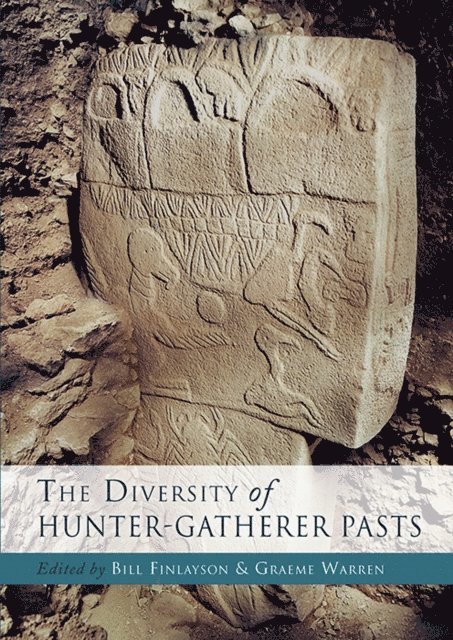
This thought provoking collection of new research papers explores the extent of variation amongst hunting and gathering peoples past and present and the considerable analytical challenges presented by this diversity. This problem is especially important in archaeology, where increasing empirical evidence illustrates ways of life that are not easily encompassed within the range of variation recognized in the contemporary world of surviving hunter-gatherers. Put simply, how do past hunter-gatherers fit into our understandings of hunter-gatherers? Furthermore, given the inevitable archaeological reliance on analogy, it is important to ask whether conceptions of hunter-gatherers based on contemporary societies restrict our comprehension of past diversity and of how this changes over the long term. Discussion of hunter-gatherers shows them to be varied and flexible, but modeling of contemporary hunter-gatherers has not only reduced them into essential categories, but has also portrayed them as static and without history. It is often said that the study of hunter-gatherers can provide insight into past forms of social organization and behavior; unfortunately too often it has limited our understandings of these societies. In contrast, contributors here explore past hunter-gather diversity over time and space to provide critical perspectives on general models of ‘hunter-gatherers’ and attempt to provide new perspectives on hunter-gatherer societies from the greater diversity present in the past.
E-bok
PDF, Engelska, 2017329 kr
Läs direkt efter köp
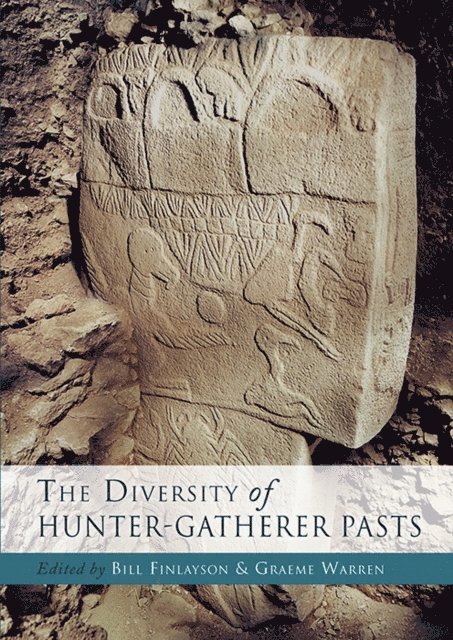
This thought provoking collection of new research papers explores the extent of variation amongst hunting and gathering peoples past and present and the considerable analytical challenges presented by this diversity. This problem is especially important in archaeology, where increasing empirical evidence illustrates ways of life that are not easily encompassed within the range of variation recognized in the contemporary world of surviving hunter-gatherers. Put simply, how do past hunter-gatherers fit into our understandings of hunter-gatherers? Furthermore, given the inevitable archaeological reliance on analogy, it is important to ask whether conceptions of hunter-gatherers based on contemporary societies restrict our comprehension of past diversity and of how this changes over the long term. Discussion of hunter-gatherers shows them to be varied and flexible, but modeling of contemporary hunter-gatherers has not only reduced them into essential categories, but has also portrayed them as static and without history. It is often said that the study of hunter-gatherers can provide insight into past forms of social organization and behavior; unfortunately too often it has limited our understandings of these societies. In contrast, contributors here explore past hunter-gather diversity over time and space to provide critical perspectives on general models of ‘hunter-gatherers’ and attempt to provide new perspectives on hunter-gatherer societies from the greater diversity present in the past.
E-bok
Engelska, 2022172 kr
Läs direkt efter köp
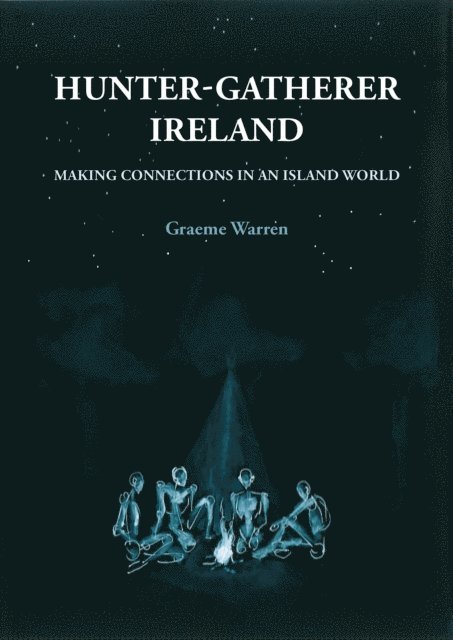
Explores the Irish Mesolithic - the period after the end of the last Ice Age when Ireland was home to hunter-gatherer communities, mostly from about 10,000-6,000 years ago. At this time, Ireland was an island world, with striking similarities and differences to its European neighbours - not least in terms of the terrestrial ecology created by its island status. To understand the communities of hunter-gatherers who lived there, it is essential that we consider the connections established between people and the other beings and materials with which they shared the world and through which they grew into it. Understanding the Mesolithic means paying attention to the animals, plants, spirits and things with which hunting and gathering groups formed kinship relationships and in collaboration with which they experienced life.The book closes with a reflection on hunting and gathering in Ireland today. The overriding aim of the book is to provide a point of entry into the lives of the Irish Mesolithic, to show the different ways in which people have lived on this island, and to show how we might narrate those lives.
E-bok
PDF, Engelska, 2022172 kr
Läs direkt efter köp
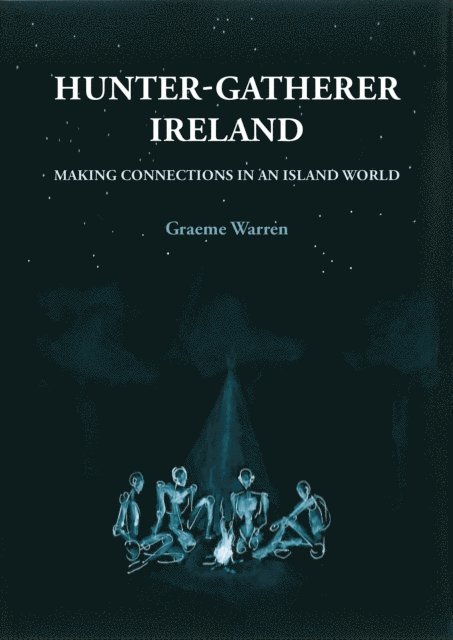
Explores the Irish Mesolithic - the period after the end of the last Ice Age when Ireland was home to hunter-gatherer communities, mostly from about 10,000-6,000 years ago. At this time, Ireland was an island world, with striking similarities and differences to its European neighbours - not least in terms of the terrestrial ecology created by its island status. To understand the communities of hunter-gatherers who lived there, it is essential that we consider the connections established between people and the other beings and materials with which they shared the world and through which they grew into it. Understanding the Mesolithic means paying attention to the animals, plants, spirits and things with which hunting and gathering groups formed kinship relationships and in collaboration with which they experienced life.The book closes with a reflection on hunting and gathering in Ireland today. The overriding aim of the book is to provide a point of entry into the lives of the Irish Mesolithic, to show the different ways in which people have lived on this island, and to show how we might narrate those lives.
E-bok
Engelska, 2010268 kr
Läs direkt efter köp
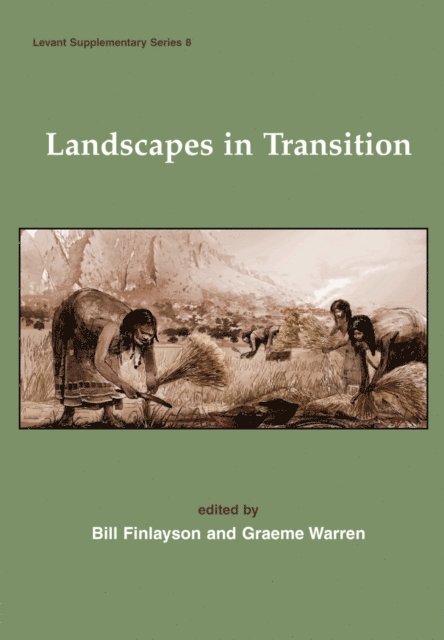
This volume presents a collection of papers focusing on archaeological approaches to landscape in the context of the adoption of agriculture in Southwest Asia and Northwest Europe. Case studies are presented from these contrasting regions, one where the transition to farming is indigenous, and the other where the transformation is initiated externally. This allows us to consider to what extent hunter-gatherer and farmer landscapes may be different, or the degree to which apparent differences have been constructed by our expectations and traditions of interpretation. While the concept ''landscape'' enjoys considerable popularity in archaeological interpretation, it is somewhat ill-defined and inconsistently used. Some have suggested that this fluidity allows landscape to be a ''usefully ambiguous concept'' but at times there is a danger that this very ambiguity affords imprecision in our narratives. This is particularly important where differing traditions of archaeological interpretation meet, as, for example, in the transition from hunting and gathering to farming. The transition has been understood as a major division in archaeological practice and attitudes to ''landscape'' across the transition reflect this dichotomy. The results of these debates are illuminating, and raise questions beyond the immediate geographical scope of the volume. The contrast between the two regions provides valuable comparisons between traditions of archaeological theory and interpretation and the bodies of evidence. Bill Finlayson is the Director of the Council for British Research in the Levant, Graeme Warren is a College Lecturer in the School of Archaeology, UCD, Ireland.