W.E. Krumbein – författare
Visar alla böcker från författaren W.E. Krumbein. Handla med fri frakt och snabb leverans.
5 produkter
5 produkter
Inbunden, Engelska, 2003
2 161 kr
Skickas inom 10-15 vardagar
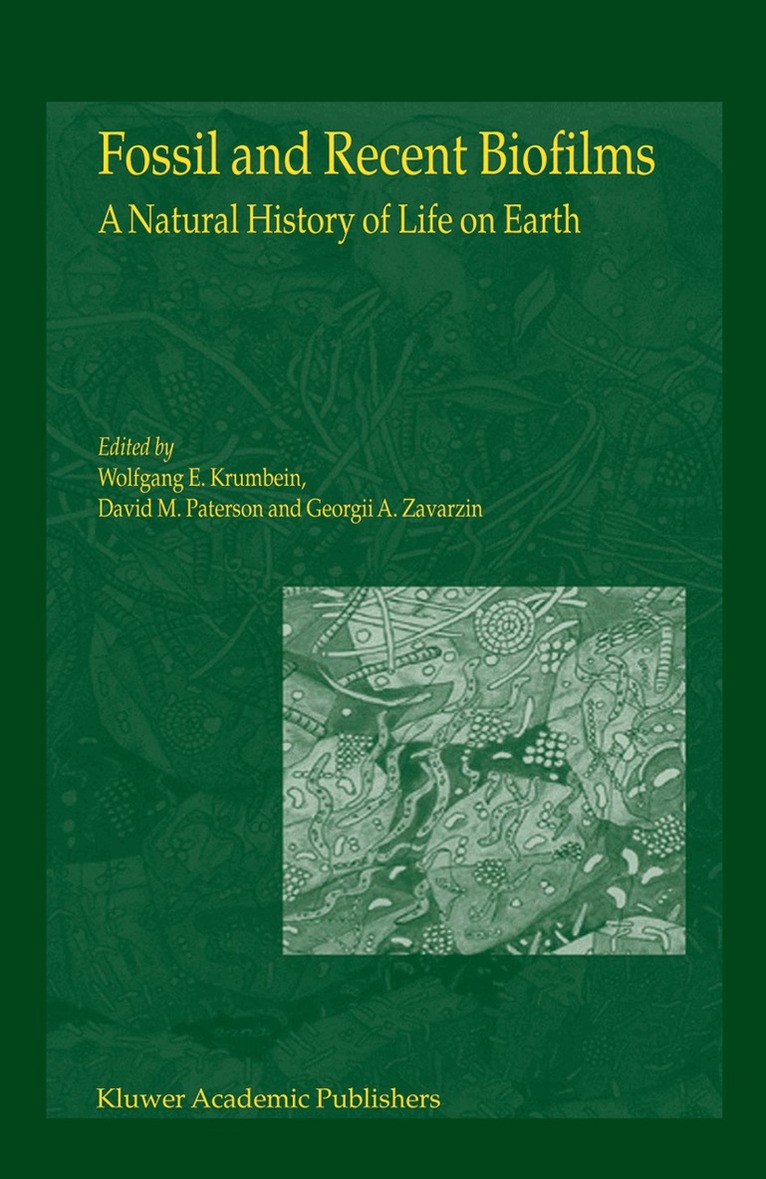
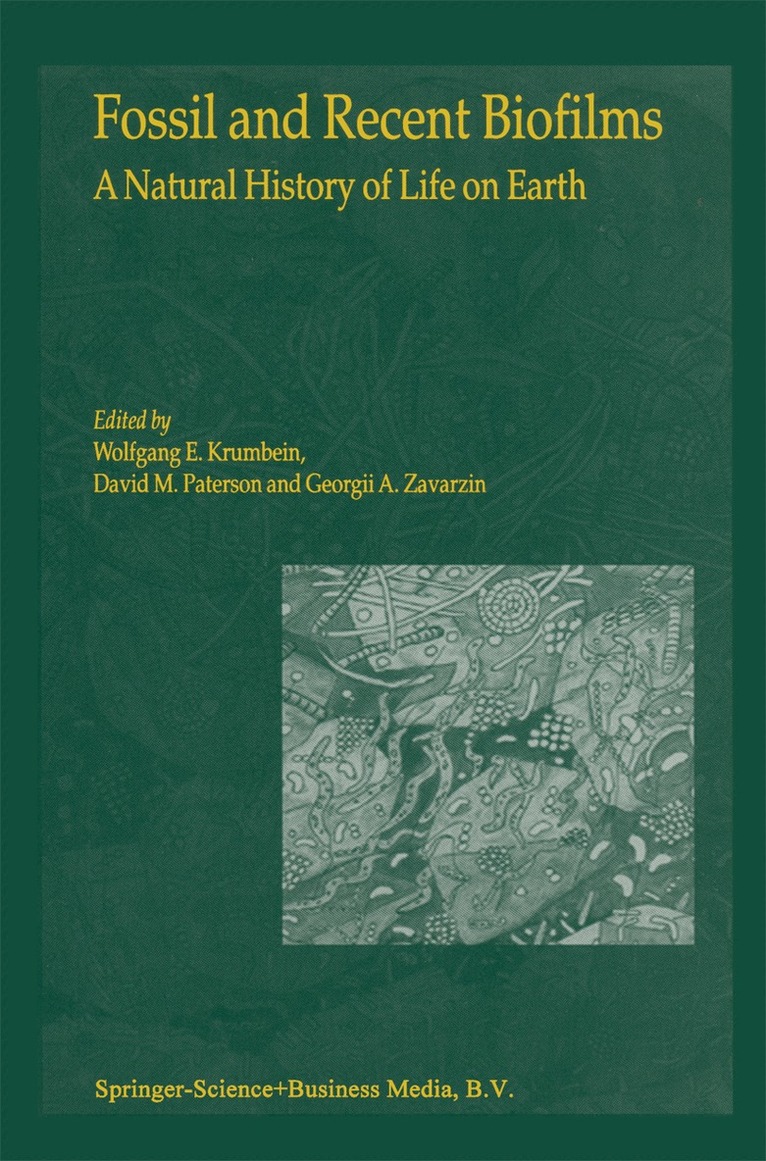
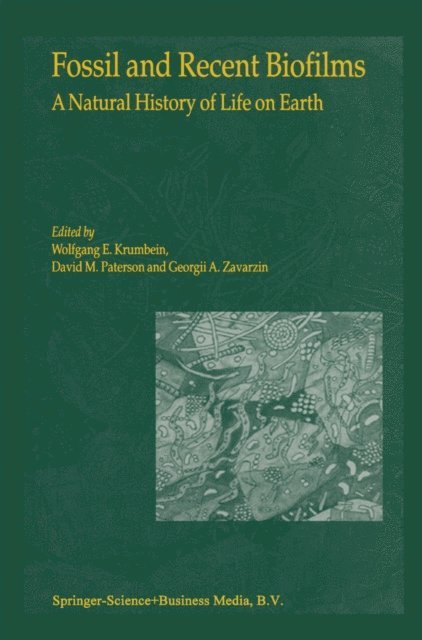
This textbook on biofilms combines knowledge on sub-aquatic and sub-aerial biofilms and their products (stromatolites, oolites, ore, petroleum and gas deposits). It describes how formation and degradation of minerals and rocks is achieved through biofilm formation on and in sediments, soils and rocks. Methods of study, examples of Precambrian biofilms of an early Earth as well as the most recent examples of desert rock biofilms are treated in this integrative book on biofilms, microbial mats and stromatolites.
E-bok
PDF, Engelska, 20121 416 kr
Läs direkt efter köp
Häftad, Engelska, 2011
1 084 kr
Skickas inom 10-15 vardagar
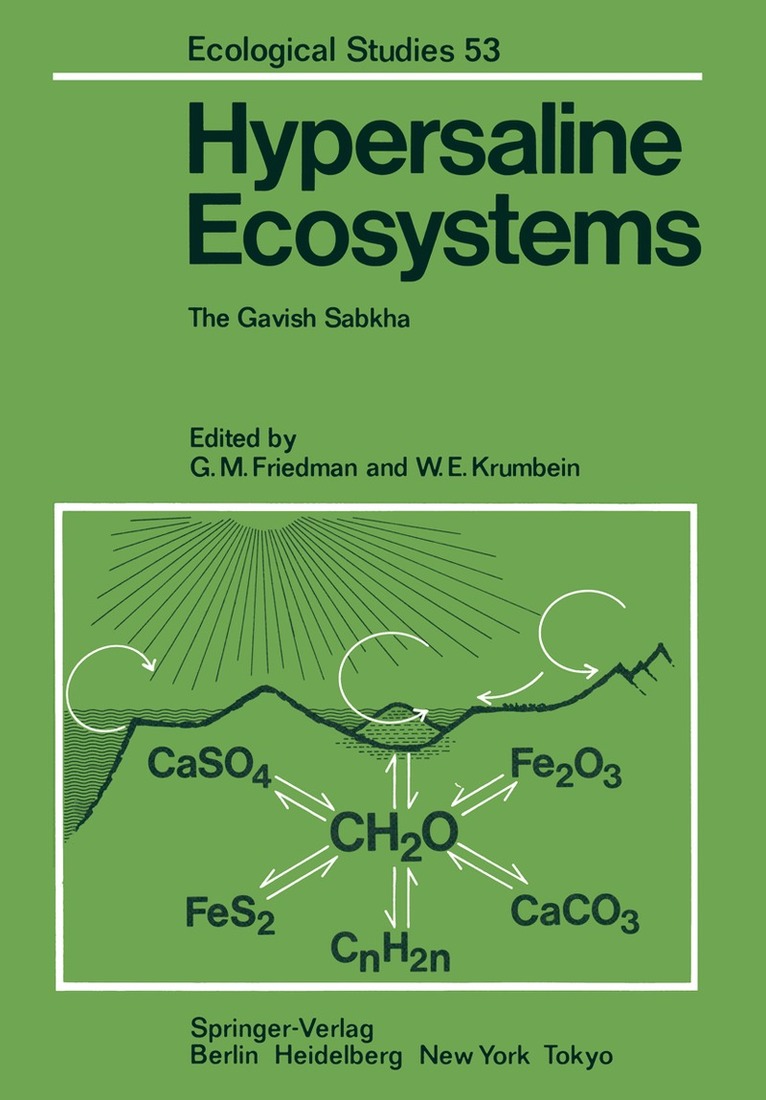
WOLFGANG E. KRUMBEIN In this section we deal with special aspects of the Gavish Sabkha, and in two contributions with the very similar environments of the Ras Muhammad Pool (Chap. 10) and the Solar Lake (Chap. 15). Comparisons are made, however, in the individual contributions to other evaporative systems. Much ofthe work was stimulated by our late friend Eli Gavish during his pro- ductive years of sedimentological studies along the shores of the Gulf of Elat. An- other stimulus was initiated by the agreement that the Solar Lake and the Gavish Sabkha were selected as model cases for a Project of the International Geological Correlation Program. Its subject is Early Organic Evolution and Mineral and En- ergy Resources. It is presently chaired by one of the chapter authors (M. Schid- lowski). A subproject, chaired by S. Golubic and W. E. Krumbein is entitled Fossil stromatolitic microbial ecosystems and their modern analog. Another sub- project chaired by G. Eglinton deals with the possibilities of finding marker mol- ecules in ancient oil-producing sedimentary environments by comparison with nonpolluted modern systems.Also, this group had chosen the Solar Lake and the Gavish Sabkha as case study systems. Organic geochemistry, metal deposit for- mation in the biosedimentary environment and the comparison of recent and an- cient productivity and sulfate reduction systems thus were the main purposes of the specialized studies undertaken in the Gavish Sabkha and the Solar Lake.
Häftad, Engelska, 2010
2 161 kr
Skickas inom 10-15 vardagar
MICROBIAL BIOFILMS: PROTECTIVE NICHES IN ANCIENT AND MODERN GEOMICROBIOLOGY J. W. Costerton and Paul Stoodley Center for Biofilm Engineering Montana State University As this book is published based on discussions of a conference that was held in 2001, it may be useful to provide an update on the most recent revelations about biofilms, so that this excellent exposition of the contribution of microbial biofilms to geological processes may be placed in a modem context. The importance of the contribution of microbial biofilms to global processes is only now being appreciated as it is revealed that all terrestrial surfaces are teeming with microbial life in the form of biofilm communities. These communities live on soil particles, in rock fissures, marine and river sediments and at the very extremes of terrestrial habitats from inside Antarctic ice to the walls of deep sea hydrothermal vents. The contribution of these biofilm communities generally went unrecognized because it was the water that was where microbiologists looked for life, not the surfaces, although, evidence of the early association of microbes with surfaces was in fact present in the fossil record (Rasmussen, 2000; Reysenbach, and Cady, 2001). It is also revealing that biofilm formation is found in prokaryotes from the most deeply rooted branches of the phylogenetic tree in both the Archaea and Bacteria kingdoms, the Korarchaeota and Aquificales respectively (Jahnke et al. 2001; Reysenbach et al. 2000).
E-bok
PDF, Engelska, 20132 840 kr
Läs direkt efter köp
MICROBIAL BIOFILMS: PROTECTIVE NICHES IN ANCIENT AND MODERN GEOMICROBIOLOGY J. W. Costerton and Paul Stoodley Center for Biofilm Engineering Montana State University As this book is published based on discussions of a conference that was held in 2001, it may be useful to provide an update on the most recent revelations about biofilms, so that this excellent exposition of the contribution of microbial biofilms to geological processes may be placed in a modem context. The importance of the contribution of microbial biofilms to global processes is only now being appreciated as it is revealed that all terrestrial surfaces are teeming with microbial life in the form of biofilm communities. These communities live on soil particles, in rock fissures, marine and river sediments and at the very extremes of terrestrial habitats from inside Antarctic ice to the walls of deep sea hydrothermal vents. The contribution of these biofilm communities generally went unrecognized because it was the water that was where microbiologists looked for life, not the surfaces, although, evidence of the early association of microbes with surfaces was in fact present in the fossil record (Rasmussen, 2000; Reysenbach, and Cady, 2001). It is also revealing that biofilm formation is found in prokaryotes from the most deeply rooted branches of the phylogenetic tree in both the Archaea and Bacteria kingdoms, the Korarchaeota and Aquificales respectively (Jahnke et al. 2001; Reysenbach et al. 2000).