Weihong Bao - Böcker
Visar alla böcker från författaren Weihong Bao. Handla med fri frakt och snabb leverans.
3 produkter
3 produkter
Del 9 - Cinema Cultures in Contact
Background Matters
Set and Design, Mind and Environment
Inbunden, Engelska, 2027
1 012 kr
Kommande
A free ebook version of this title is available through Luminos, University of California Press's Open Access publishing program. Visit www.luminosoa.org to learn more. This wide-ranging intellectual and media history traces China's emergence as a modern state in which boundaries blur between art and design, education and psychological conditioning. Tracking the parallel development of set design and social engineering from the 1920s to the 1960s, Background Matters examines the concept of huanjing (environment), a neologism introduced at the turn of the twentieth century that evoked heated intellectual debate and inspired frenzied aesthetic experimentation. Weihong Bao explores how the question of the mind consolidates the idea and art of environment by advancing a new theoretical notion of set design: as both an aesthetic organization across film, theater, radio, and television and as social experimentation in worldmaking in distinct geopolitical and transnational contexts. Inventive and breathless in scope, this book radically rethinks environment not as an external object "out there" but as the nexus of mind, medium, and society.
Del 9 - Cinema Cultures in Contact
Background Matters
Set and Design, Mind and Environment
Häftad, Engelska, 2027
384 kr
Kommande
A free ebook version of this title is available through Luminos, University of California Press's Open Access publishing program. Visit www.luminosoa.org to learn more. This wide-ranging intellectual and media history traces China's emergence as a modern state in which boundaries blur between art and design, education and psychological conditioning. Tracking the parallel development of set design and social engineering from the 1920s to the 1960s, Background Matters examines the concept of huanjing (environment), a neologism introduced at the turn of the twentieth century that evoked heated intellectual debate and inspired frenzied aesthetic experimentation. Weihong Bao explores how the question of the mind consolidates the idea and art of environment by advancing a new theoretical notion of set design: as both an aesthetic organization across film, theater, radio, and television and as social experimentation in worldmaking in distinct geopolitical and transnational contexts. Inventive and breathless in scope, this book radically rethinks environment not as an external object "out there" but as the nexus of mind, medium, and society.
330 kr
Skickas inom 7-10 vardagar
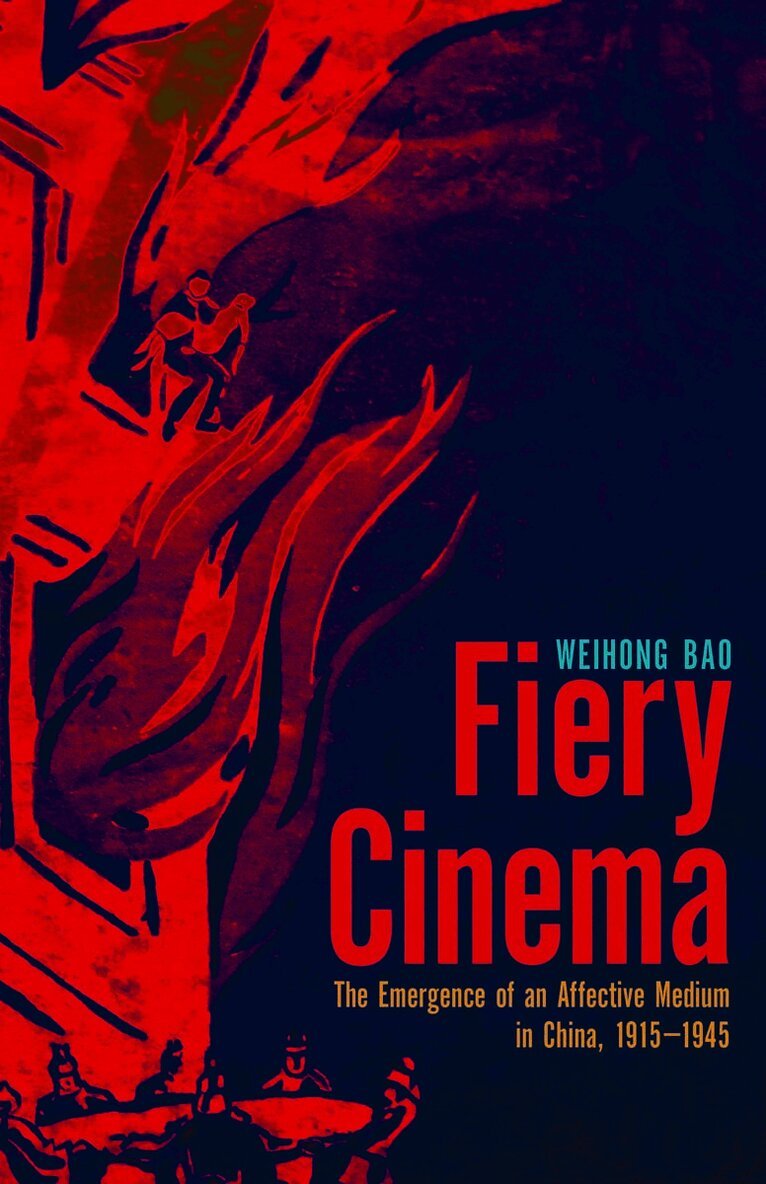
What was cinema in modern China? It was, this book tells us, a dynamic entity, not strictly tied to one media technology, one mode of operation, or one system of aesthetic code. It was, in Weihong Bao’s term, an affective medium, a distinct notion of the medium as mediating environment with the power to stir passions, frame perception, and mold experience. In Fiery Cinema, Bao traces the permutations of this affective medium from the early through the mid-twentieth century, exploring its role in aesthetics, politics, and social institutions.Mapping the changing identity of cinema in China in relation to Republican-era print media, theatrical performance, radio broadcasting, television, and architecture, Bao has created an archaeology of Chinese media culture. Within this context, she grounds the question of spectatorial affect and media technology in China’s experience of mechanized warfare, colonial modernity, and the shaping of the public into consumers, national citizens, and a revolutionary collective subject. Carrying on a close conversation with transnational media theory and history, she teases out the tension and affinity between vernacular, political modernist, and propagandistic articulations of mass culture in China’s varied participation in modernity.Fiery Cinema advances a radical rethinking of affect and medium as a key insight into the relationship of cinema to the public sphere and the making of the masses. By centering media politics in her inquiry of the forgotten future of cinema, Bao makes a major intervention into the theory and history of media.