
W.G. Lycan – författare
Visar alla böcker från författaren W.G. Lycan. Handla med fri frakt och snabb leverans.
3 produkter
3 produkter
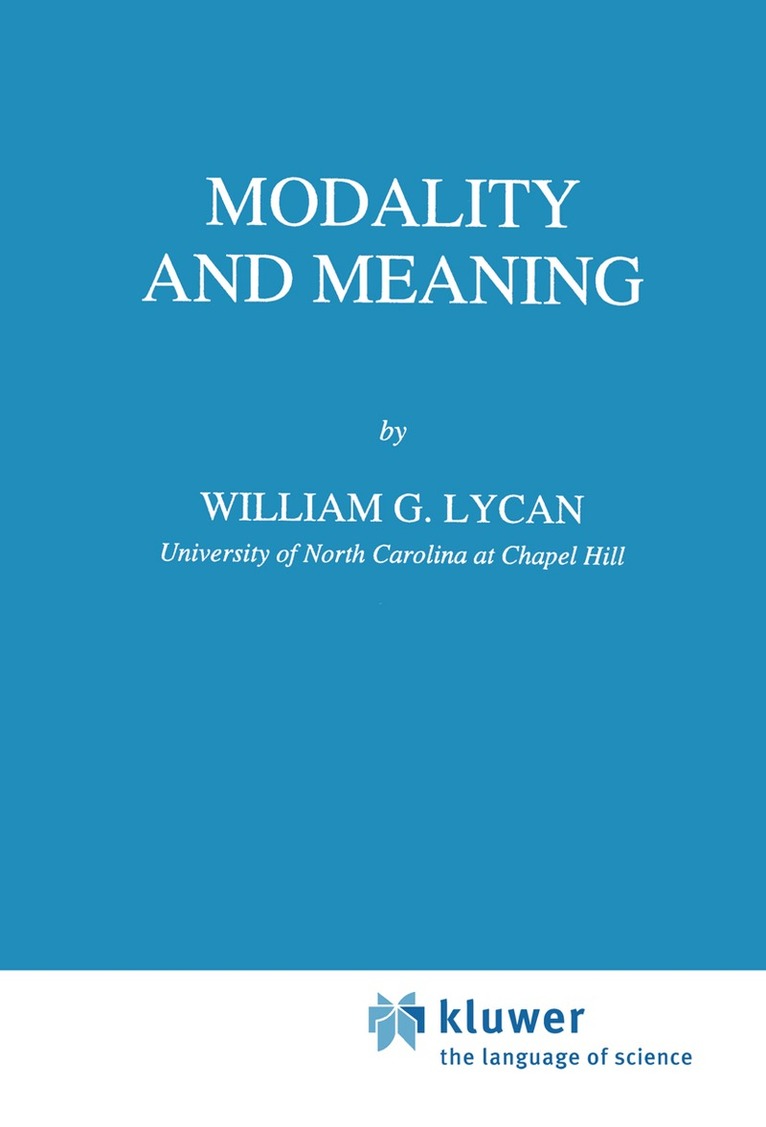
Inbunden, Engelska, 1994
1 619 kr
Skickas inom 10-15 vardagar
Part I of this book presents a theory of modal metaphysics in the possible-worlds tradition. "Worlds" themselves are understood as structured sets of properties; this "Ersatzist" view is defended against its most vigorous competitors, Meinongianism and David Lewis' theory of existent concrete worlds. Related issues of essentialism and linguistic reference are explored. Part II takes up the question of lexical meaning in the context of possible-world semantics. There are sceptical analyses of analyticity and the notion of a logical constant; and an "infinite polysemy" thesis is defended. The book will be of particular interest to metaphysicians, possible-world semanticists, philosophers of language and linguists concerned with lexical semantics.
Del 53 - Studies in Linguistics and Philosophy
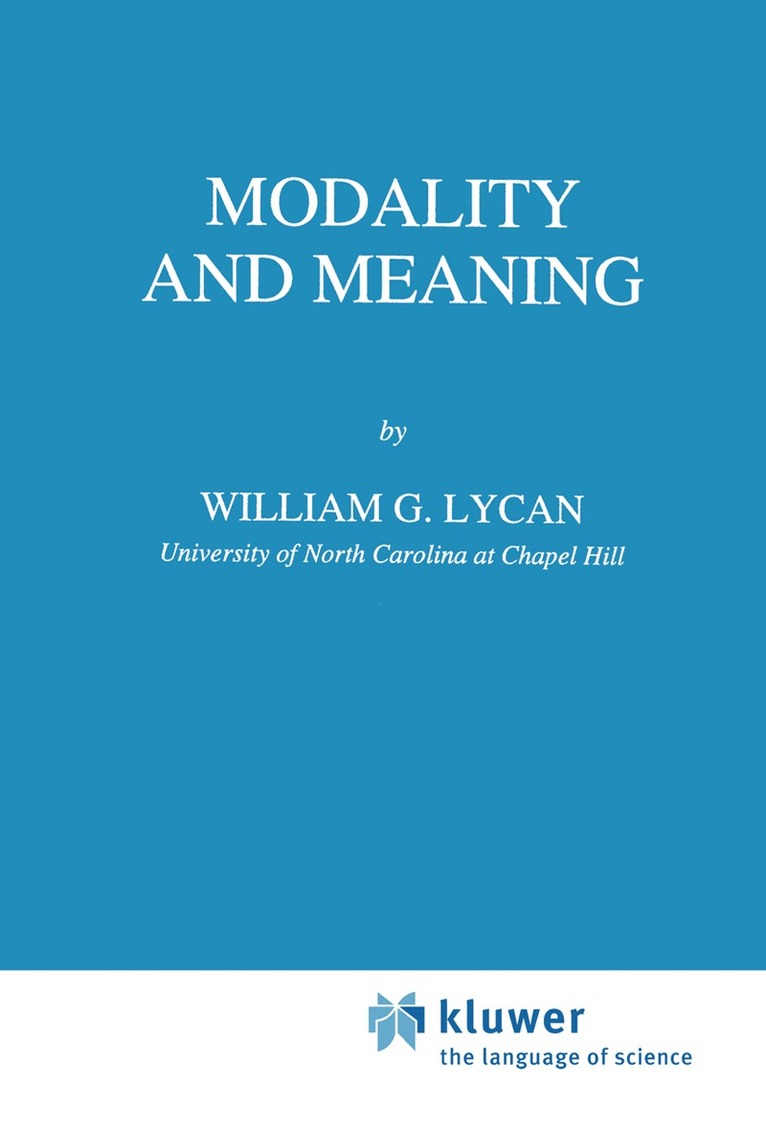
Modality and Meaning
Häftad, Engelska, 1994
1 619 kr
Skickas inom 10-15 vardagar
Part I of this book presents a theory of modal metaphysics in the possible-worlds tradition. `Worlds' themselves are understood as structured sets of properties; this `Ersatzist' view is defended against its most vigorous competitors, Meinongianism and David Lewis' theory of existent concrete worlds. Related issues of essentialism and linguistic reference are explored. Part II takes up the question of lexical meaning in the context of possible-world semantics. There are skeptical analyses of analyticity and the notion of a logical constant; and an `infinite polysemy' thesis is defended. The book will be of particular interest to metaphysicians, possible-world semanticists, philosophers of language, and linguists concerned with lexical semantics.
E-bok
PDF, Engelska, 20121 977 kr
Läs direkt efter köp
Part I of this book presents a theory of modal metaphysics in the possible-worlds tradition. `Worlds'' themselves are understood as structured sets of properties; this `Ersatzist'' view is defended against its most vigorous competitors, Meinongianism and David Lewis'' theory of existent concrete worlds. Related issues of essentialism and linguistic reference are explored. Part II takes up the question of lexical meaning in the context of possible-world semantics. There are skeptical analyses of analyticity and the notion of a logical constant; and an `infinite polysemy'' thesis is defended. The book will be of particular interest to metaphysicians, possible-world semanticists, philosophers of language, and linguists concerned with lexical semantics.