Willemijn Verkoren – författare
695 kr
Skickas inom 10-15 vardagar
2 252 kr
Skickas inom 10-15 vardagar
795 kr
Läs direkt efter köp
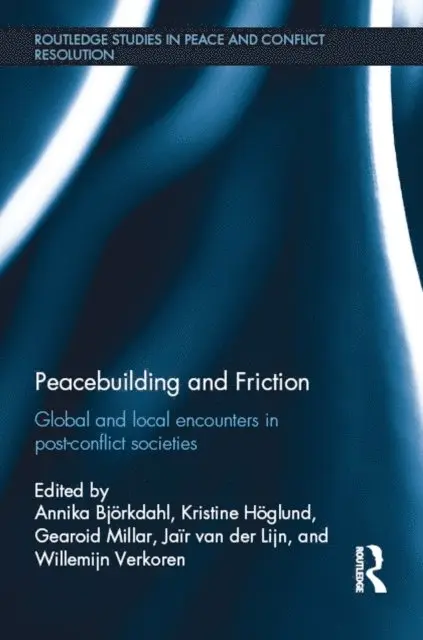
This book aims to understand the processes and outcomes that arise from frictional encounters in peacebuilding, when global and local forces meet.
Building a sustainable peace after violent conflict is a process that entails competing ideas, political contestation and transformation of power relations. This volume develops the concept of ‘friction’ to better analyse the interplay between global ideas, actors, and practices, and their local counterparts. The chapters examine efforts undertaken to promote sustainable peace in a variety of locations, such as Cambodia, Sri Lanka, Afghanistan, and Sierra Leone. These case analyses provide a nuanced understanding not simply of local processes, or of the hybrid or mixed agencies, ideas, and processes that are generated, but of the complex interactions that unfold between all of these elements in the context of peacebuilding intervention. The analyses demonstrate how the ambivalent relationship between global and local actors leads to unintended and sometimes counterproductive results of peacebuilding interventions. The approach of this book, with its focus on friction as a conceptual tool, advances the peacebuilding research agenda and adds to two ongoing debates in the peacebuilding field; the debate on hybridity, and the debate on local agency and local ownership. In analysing frictional encounters this volume prepares the ground for a better understanding of the mixed impact peace initiatives have on post-conflict societies.
This book will be of much interest to students of peacebuilding, conflict resolution, security studies, and international relations in general.
795 kr
Läs direkt efter köp
This book aims to understand the processes and outcomes that arise from frictional encounters in peacebuilding, when global and local forces meet.
Building a sustainable peace after violent conflict is a process that entails competing ideas, political contestation and transformation of power relations. This volume develops the concept of ‘friction’ to better analyse the interplay between global ideas, actors, and practices, and their local counterparts. The chapters examine efforts undertaken to promote sustainable peace in a variety of locations, such as Cambodia, Sri Lanka, Afghanistan, and Sierra Leone. These case analyses provide a nuanced understanding not simply of local processes, or of the hybrid or mixed agencies, ideas, and processes that are generated, but of the complex interactions that unfold between all of these elements in the context of peacebuilding intervention. The analyses demonstrate how the ambivalent relationship between global and local actors leads to unintended and sometimes counterproductive results of peacebuilding interventions. The approach of this book, with its focus on friction as a conceptual tool, advances the peacebuilding research agenda and adds to two ongoing debates in the peacebuilding field; the debate on hybridity, and the debate on local agency and local ownership. In analysing frictional encounters this volume prepares the ground for a better understanding of the mixed impact peace initiatives have on post-conflict societies.
This book will be of much interest to students of peacebuilding, conflict resolution, security studies, and international relations in general.
454 kr
Skickas inom 5-8 vardagar
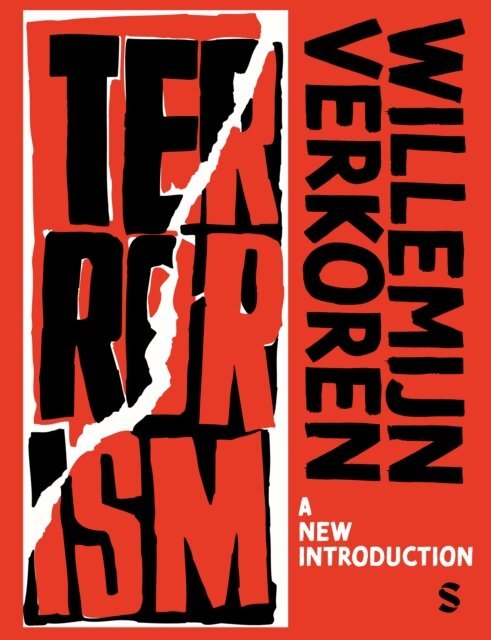
This textbook explains why people engage in terrorism and how to improve counterterrorism policy. Featuring global case studies throughout, it provides an accessible and engaging evaluation of knowledge on the history and strategies of terrorism and counterterrorism.
When we see terrorism purely as a security problem which requires a universal, forceful response, we fail to understand terrorism in its political context and to address its underlying causes. This new text assesses terrorism as part of political conflict, opening up a full assessment of what causes terrorism and how we might better respond in policy terms, applicable to terrorism in all forms, including far-right, jihadist, and state violence.
Vast efforts and resources have been devoted to fighting terrorism. However, these have so far not reduced the problem. Counterterrorism policy has legitimized the curtailment of civil rights, stigmatized some citizens, and yielded a cycle of violence. Finding more effective ways to address terrorist violence is therefore a priority. This new textbook demonstrates how reimagining policy through the lens of conflict transformation can lead to new and more successful responses. Through a series of innovative features, it is essential reading for all undergraduate and postgraduate students of terrorism. The book:
Shows how existing counterterrorism measures exceptionalize the terrorist threat which legitimizes far-reaching measures that deploy widespread violence, curtail civil rights, stigmatize Muslims, and criminalize dissent as ‘radical’ and dangerous.Draws on political violence perspectives to assess terrorism not as an exception, but as part of wider conflict dynamics, with examples from Colombia to the Sahel region.Offers approaches to tackle the drivers of terrorism, to avoid the risk of suppressing terrorism in one place only for it to resurface elsewhere, as we saw after the military campaign against Islamic State in Iraq and Syria (ISIS).Accounts for the current increase in far-right terrorism, and presents a new approach grounded in the latest literature.Is packed with case studies, including the decades-long violent escalation between Israel and armed Palestinian groups, to show how terrorism is part of a cycle of violence between state and non-state actors, and cannot be resolved by force alone.Spans both critical and mainstream terrorism studies as the first textbook to do justice to the full breadth and diversity of research on terrorism.Is the first textbook to draw on conflict transformation and peacebuilding theory and practice to develop novel approaches to counterterrorism.Willemijn Verkoren is Associate Professor Conflict Studies and International Relations at Radboud University, the Netherlands.
1 272 kr
Skickas inom 5-8 vardagar
This textbook explains why people engage in terrorism and how to improve counterterrorism policy. Featuring global case studies throughout, it provides an accessible and engaging evaluation of knowledge on the history and strategies of terrorism and counterterrorism.
When we see terrorism purely as a security problem which requires a universal, forceful response, we fail to understand terrorism in its political context and to address its underlying causes. This new text assesses terrorism as part of political conflict, opening up a full assessment of what causes terrorism and how we might better respond in policy terms, applicable to terrorism in all forms, including far-right, jihadist, and state violence.
Vast efforts and resources have been devoted to fighting terrorism. However, these have so far not reduced the problem. Counterterrorism policy has legitimized the curtailment of civil rights, stigmatized some citizens, and yielded a cycle of violence. Finding more effective ways to address terrorist violence is therefore a priority. This new textbook demonstrates how reimagining policy through the lens of conflict transformation can lead to new and more successful responses. Through a series of innovative features, it is essential reading for all undergraduate and postgraduate students of terrorism. The book:
Shows how existing counterterrorism measures exceptionalize the terrorist threat which legitimizes far-reaching measures that deploy widespread violence, curtail civil rights, stigmatize Muslims, and criminalize dissent as ‘radical’ and dangerous.Draws on political violence perspectives to assess terrorism not as an exception, but as part of wider conflict dynamics, with examples from Colombia to the Sahel region.Offers approaches to tackle the drivers of terrorism, to avoid the risk of suppressing terrorism in one place only for it to resurface elsewhere, as we saw after the military campaign against Islamic State in Iraq and Syria (ISIS).Accounts for the current increase in far-right terrorism, and presents a new approach grounded in the latest literature.Is packed with case studies, including the decades-long violent escalation between Israel and armed Palestinian groups, to show how terrorism is part of a cycle of violence between state and non-state actors, and cannot be resolved by force alone.Spans both critical and mainstream terrorism studies as the first textbook to do justice to the full breadth and diversity of research on terrorism.Is the first textbook to draw on conflict transformation and peacebuilding theory and practice to develop novel approaches to counterterrorism.Willemijn Verkoren is Associate Professor Conflict Studies and International Relations at Radboud University, the Netherlands.