William A. White – författare
Visar alla böcker från författaren William A. White. Handla med fri frakt och snabb leverans.
17 produkter
17 produkter
Inbunden, Engelska, 2019
317 kr
Skickas inom 5-8 vardagar
Häftad, Engelska, 2019
99 kr
Skickas inom 5-8 vardagar
Inbunden, Engelska, 2022
400 kr
Skickas inom 5-8 vardagar
Häftad, Engelska, 2022
290 kr
Skickas inom 5-8 vardagar
Inbunden, Engelska, 2022
386 kr
Skickas inom 5-8 vardagar
Häftad, Engelska, 2022
276 kr
Skickas inom 5-8 vardagar
Inbunden, Engelska, 2026
345 kr
Skickas inom 5-8 vardagar
Häftad, Engelska, 2026
247 kr
Skickas inom 5-8 vardagar
Inbunden, Engelska, 2026
359 kr
Skickas inom 5-8 vardagar
Häftad, Engelska, 2026
207 kr
Skickas inom 5-8 vardagar
Inbunden, Engelska, 2026
442 kr
Skickas inom 5-8 vardagar
Häftad, Engelska, 2026
271 kr
Skickas inom 5-8 vardagar
Häftad, Engelska, 2010
186 kr
Skickas inom 3-6 vardagar
Häftad, Engelska, 2010
292 kr
Skickas inom 3-6 vardagar
Häftad, Engelska, 2011
255 kr
Skickas inom 3-6 vardagar
445 kr
Skickas inom 3-6 vardagar
Inbunden, Engelska, 2023
861 kr
Skickas inom 10-15 vardagar
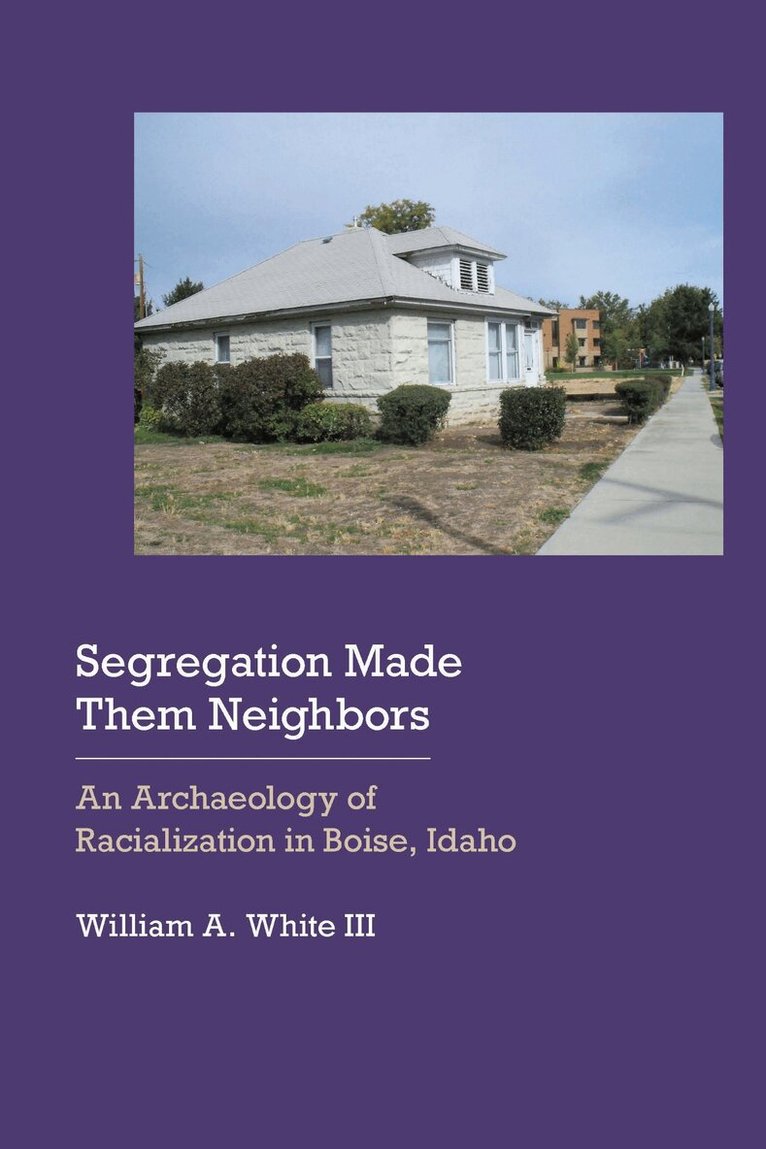
Segregation Made Them Neighbors investigates the relationship between whiteness and nonwhiteness through the lenses of landscapes and material culture. William A. White III uses data collected from a public archaeology and digital humanities project conducted in the River Street neighborhood in Boise, Idaho, to investigate the mechanisms used to divide local populations into racial categories. The River Street Neighborhood was a multiracial, multiethnic enclave in Boise that was inhabited by African American, European American, and Basque residents. Building on theoretical concepts from whiteness studies and critical race theory, this volume also explores the ways Boise’s residents crafted segregated landscapes between the 1890s and 1960s to establish white and nonwhite geographies.White describes how housing, urban infrastructure, ethnicity, race, and employment served to delineate the River Street neighborhood into a nonwhite space, an activity that resulted in larger repercussions for other Boiseans. Using material culture excavated from the neighborhood, White describes how residents used mass-produced products to assert their humanity and subvert racial memes.By describing the effects of racial discrimination, real-estate redlining, and urban renewal on the preservation of historic properties in the River Street neighborhood, Segregation Made Them Neighbors illustrates the symbiotic mechanisms that also prevent equity and representation through historic preservation in other cities in the American West.