William Aiton – författare
Visar alla böcker från författaren William Aiton. Handla med fri frakt och snabb leverans.
16 produkter
Inquiry Into the Origin, Pedigree, & History of the Family, or Clan, of Aitons in Scotland
Collected From Various Sources of Information; 1830
Inbunden, 2021
334 kr
Lägg i varukorg
Inquiry Into the Origin, Pedigree, & History of the Family, or Clan, of Aitons in Scotland
Collected From Various Sources of Information; 1830
Häftad, 2021
187 kr
Lägg i varukorg
Inquiry Into The Origin, Pedigree, & History Of The Family, Or Clan, Of Aitons In Scotland
Inbunden, 2022
356 kr
Lägg i varukorg
Inquiry Into The Origin, Pedigree, & History Of The Family, Or Clan, Of Aitons In Scotland
Häftad, 2022
191 kr
Lägg i varukorg
History of the Rencounter at Drumclog, and Battle at Bothwell Bridge, in the Month of June, 1679, and Reflections On Political Subjects
Inbunden, 2022
356 kr
Lägg i varukorg
Hortus Kewensis
Or a Catalogue of the Plants Cultivted in the Royal Botanic Garden at Kew
Av William Aiton, Printed For Georgh Nicol
Inbunden, 2022
470 kr
Lägg i varukorg
Hortus Kewensis
Or a Catalogue of the Plants Cultivted in the Royal Botanic Garden at Kew
Av William Aiton, Printed For Georgh Nicol
Häftad, 2022
367 kr
Lägg i varukorg
Hortus Kewensis; Or, a Catalogue of the Plants Cultivated in the Royal Botanic Garden at Kew; Volume 3
Inbunden, 2023
455 kr
Lägg i varukorg
Hortus Kewensis
Or, a Catalogue of the Plants Cultivated in the Royal Botanic Garden at Kew
Av William Aiton, Printed for George Nicol
Inbunden, 2023
499 kr
Lägg i varukorg
Hortus Kewensis
Or, a Catalogue of the Plants Cultivated in the Royal Botanic Garden at Kew
Av William Aiton, Printed for George Nicol
Häftad, 2023
374 kr
Lägg i varukorg
Hortus Kewensis; Or, a Catalogue of the Plants Cultivated in the Royal Botanic Garden at Kew; Volume 3
Häftad, 2023
316 kr
Lägg i varukorg
Dissertations on Malaria, Contagion and Cholera
Explaining the Principles Which Regulate Endemic, Epidemic, and Contagious Diseases, with a View to their Prevention
Häftad, 2013
557 kr
Lägg i varukorg
When this book was first published in 1832, England was caught in a cholera pandemic that had already claimed hundreds of thousands of lives across Europe. It was commonly held that 'bad air' spread the disease, but theories and remedies varied: one doctor advised the Nottinghamshire public to …
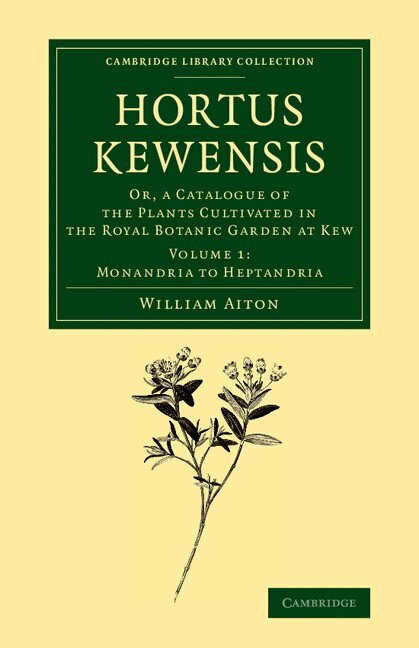
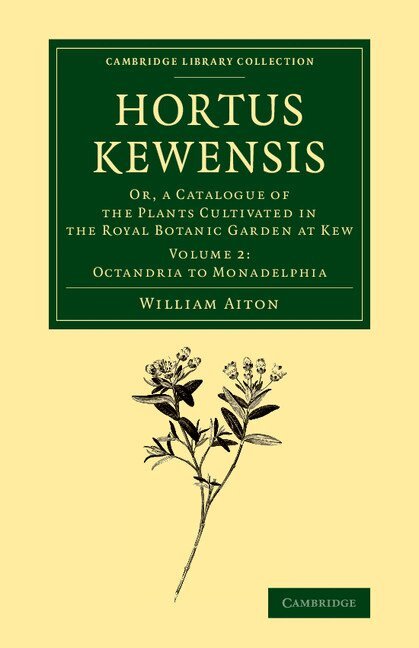
Hortus Kewensis
Or, a Catalogue of the Plants Cultivated in the Royal Botanic Garden at Kew
Häftad, 2014
732 kr
Lägg i varukorg
Trained as a gardener in his native Scotland, William Aiton (1731-93) had worked in the Chelsea Physic Garden prior to coming to Kew in 1759. He met Joseph Banks in 1764, and the pair worked together to develop the scientific and horticultural status of the gardens. Aiton had become superintendent …
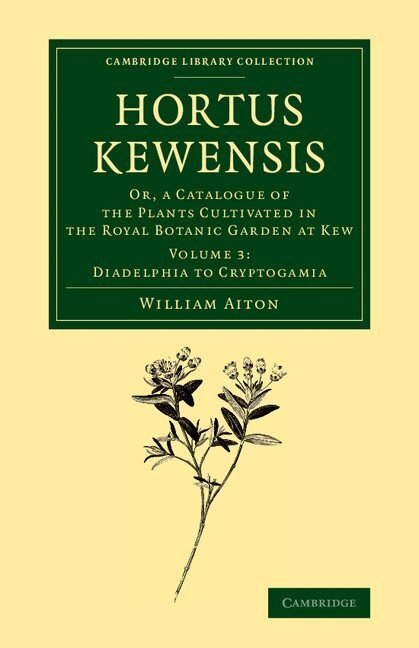
Hortus Kewensis
Or, a Catalogue of the Plants Cultivated in the Royal Botanic Garden at Kew
Häftad, 2014
748 kr
Lägg i varukorg
Trained as a gardener in his native Scotland, William Aiton (1731-93) had worked in the Chelsea Physic Garden prior to coming to Kew in 1759. He met Joseph Banks in 1764, and the pair worked together to develop the scientific and horticultural status of the gardens. Aiton had become superintendent …
Hortus Kewensis
Or, a Catalogue of the Plants Cultivated in the Royal Botanic Garden at Kew
Häftad, 2014
684 kr
Lägg i varukorg
Trained as a gardener in his native Scotland, William Aiton (1731-93) had worked in the Chelsea Physic Garden prior to coming to Kew in 1759. He met Joseph Banks in 1764, and the pair worked together to develop the scientific and horticultural status of the gardens. Aiton had become superintendent …