William Arveson – författare
Visar alla böcker från författaren William Arveson. Handla med fri frakt och snabb leverans.
5 produkter
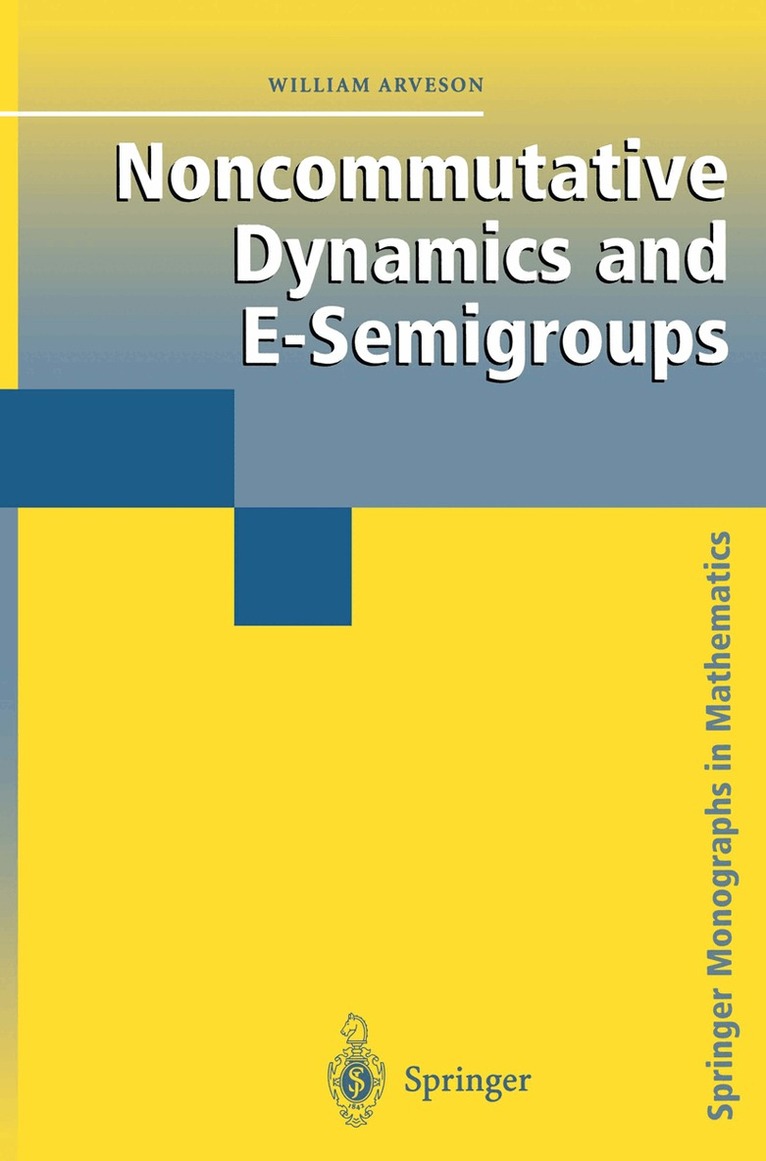
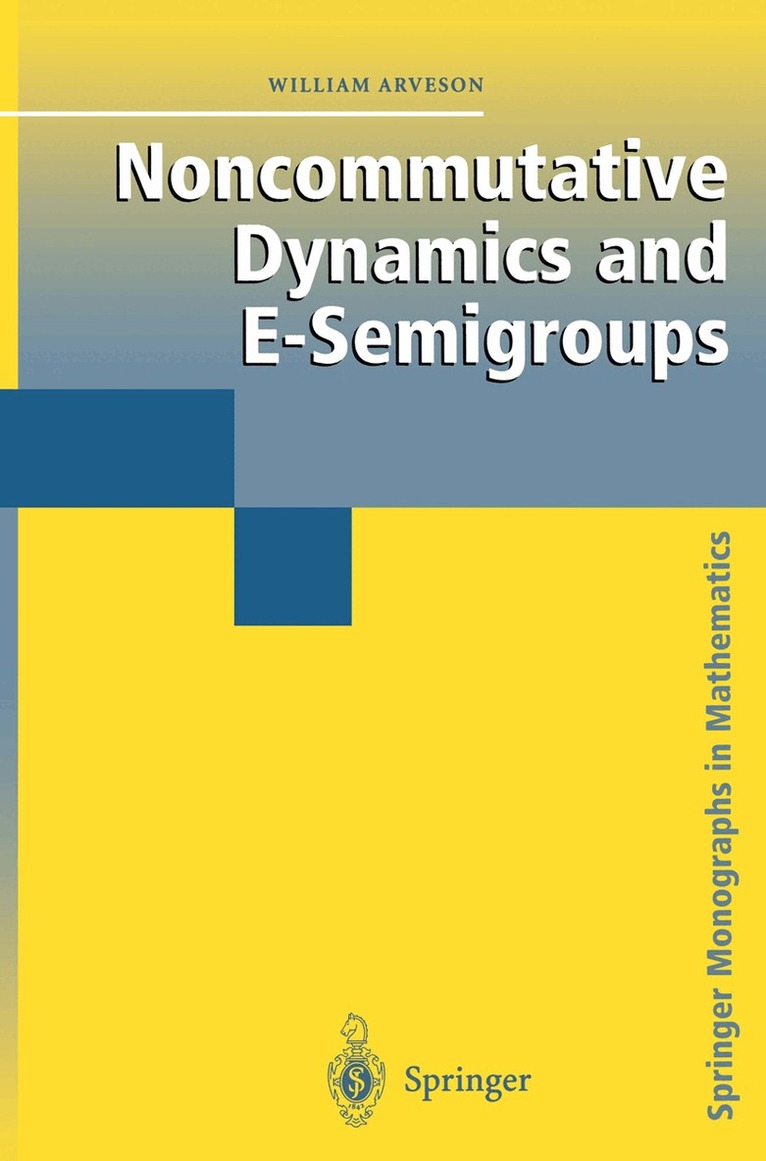
Noncommutative Dynamics and E-Semigroups
Inbunden, 2003
1093 kr
Lägg i varukorg
These days, the term Noncommutative Dynamics has several interpretations. It is used in this book to refer to a set of phenomena associated with the dynamical evo lution of quantum systems of the simplest kind that involve rigorous mathematical structures associated with infinitely many degrees of …
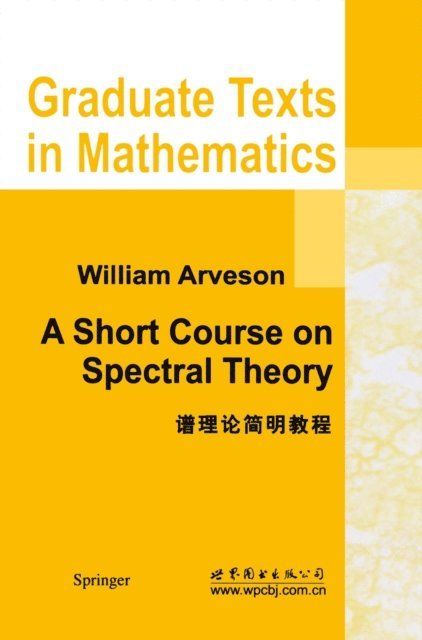
Short Course on Spectral Theory
E-bok, 2006
2290 kr
Lägg i varukorg
This book presents the basic tools of modern analysis within the context of what might be called the fundamental problem of operator theory: to calculate spectra of specific operators on infinite-dimensional spaces, especially operators on Hilbert spaces. The tools are diverse, and they provide the …
Noncommutative Dynamics and E-Semigroups
E-bok, 2012
1427 kr
Lägg i varukorg
These days, the term Noncommutative Dynamics has several interpretations. It is used in this book to refer to a set of phenomena associated with the dynamical evo lution of quantum systems of the simplest kind that involve rigorous mathematical structures associated with infinitely many degrees of …
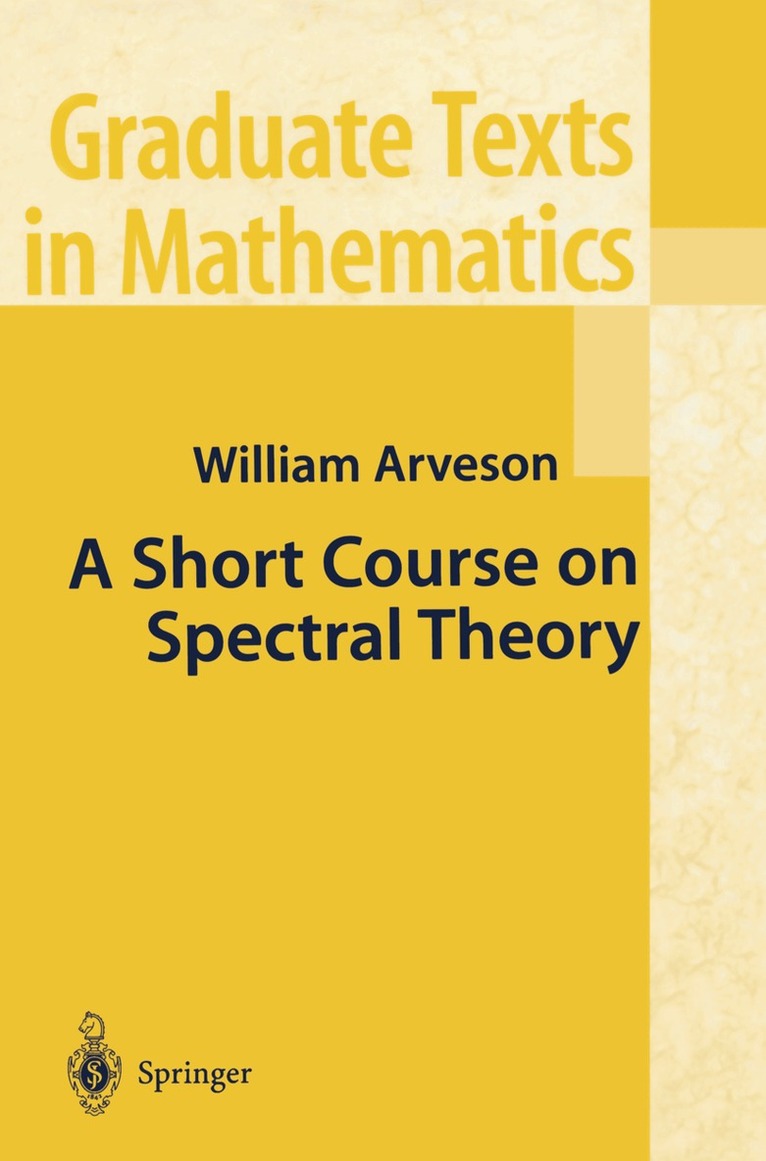
Short Course on Spectral Theory
Inbunden, 2001
1745 kr
Lägg i varukorg
This book presents the basic tools of modern analysis within the context of what might be called the fundamental problem of operator theory: to calculate spectra of specific operators on infinite-dimensional spaces, especially operators on Hilbert spaces. The tools are diverse, and they provide the …
Noncommutative Dynamics and E-Semigroups
Häftad, 2011
1093 kr
Lägg i varukorg
These days, the term Noncommutative Dynamics has several interpretations. It is used in this book to refer to a set of phenomena associated with the dynamical evo lution of quantum systems of the simplest kind that involve rigorous mathematical structures associated with infinitely many degrees of …