William B. Rouse – författare
412 kr
Läs direkt efter köp
412 kr
Läs direkt efter köp
1 137 kr
Läs direkt efter köp
1 137 kr
Läs direkt efter köp
1 228 kr
Läs direkt efter köp
1 228 kr
Läs direkt efter köp
1 419 kr
Skickas inom 5-8 vardagar
608 kr
Skickas inom 7-10 vardagar
1 445 kr
Skickas inom 5-8 vardagar
500 kr
Skickas inom 5-8 vardagar
400 kr
Läs direkt efter köp
400 kr
Läs direkt efter köp
1 661 kr
Läs direkt efter köp
3 531 kr
Skickas inom 5-8 vardagar
People and Organizations
Explorations of Human-Centered Design
1 489 kr
Skickas inom 5-8 vardagar
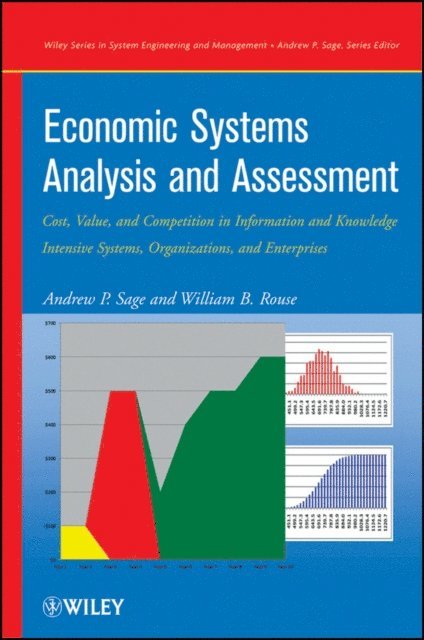
Economic Systems Analysis and Assessment
Intensive Systems, Organizations,and Enterprises
1 786 kr
Skickas inom 5-8 vardagar
1 661 kr
Läs direkt efter köp
Economics of Human Systems Integration
Valuation of Investments in People�s Training and Education, Safety and Health, and Work Productivity
1 571 kr
Skickas inom 11-20 vardagar
1 787 kr
Läs direkt efter köp
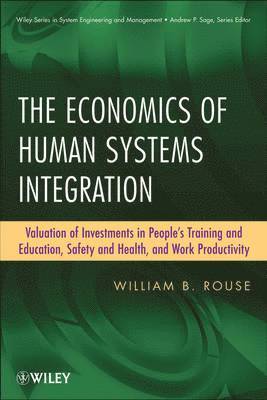
Human Systems Integration (HSI) is a new and fundamental integrating discipline designed to help move business and engineering cultures toward more human-centered systems. Integrating consideration of human abilities, limitations, and preferences into engineering systems yields important cost and performance benefits that otherwise would not have been accomplished. In order for this new discipline to be effective, however, a cultural change—starting with organizational leadership—is often necessary.
The Economics of Human Systems Integration explains the difficulties underlying valuation of investments in people''s training and education, safety and health, and work productivity. It provides an overview of how the field of economics addresses these difficulties, focusing on human issues associated with design, development, production, operations, maintenance, and sustainment of complex systems.
The set of thought leaders recruited as contributors to this volume collectively provides a compelling set of data and principles for assessing the economic value of investing in people, not just in general but in specific investment situations. The early chapters provide the contexts for HSI and investment analysis, illustrating the enormous difference context makes in how issues are best framed and analyzed. A host of practical methods and tools for investment valuation are then presented. Provided are:
A variety of real-world applications of economic analysis ranging from military acquisition and automotive investment to healthcare and high-tech investments in general, in both the U.S. and abroad
A range of economics-based methods and tools for cost analysis, cost-benefit analysis, and investment analysis, as well as sources of data for performing such analyses
Differing perspectives on economic decision-making, including a range of private sector points of view, as well as government and regulatory perspectives
In addition, five real-world case studies illustrate how such valuations have been done and their major impacts on investment decisions. HSI professionals, systems engineers, and finance professionals who address investment analysis will appreciate the wide range of methods and real-life applications; senior undergraduates and masters-level graduate students will find this to be an excellent textbook that provides theory and supports practice.
Essential Challenges of Strategic Management
1 857 kr
Skickas inom 3-6 vardagar
Design for Success
A Human-Centered Approach to Designing Successful Products and Systems
2 516 kr
Skickas inom 5-8 vardagar
Strategies for Innovation
Creating Successful Products, Systems, and Organizations
2 283 kr
Skickas inom 5-8 vardagar
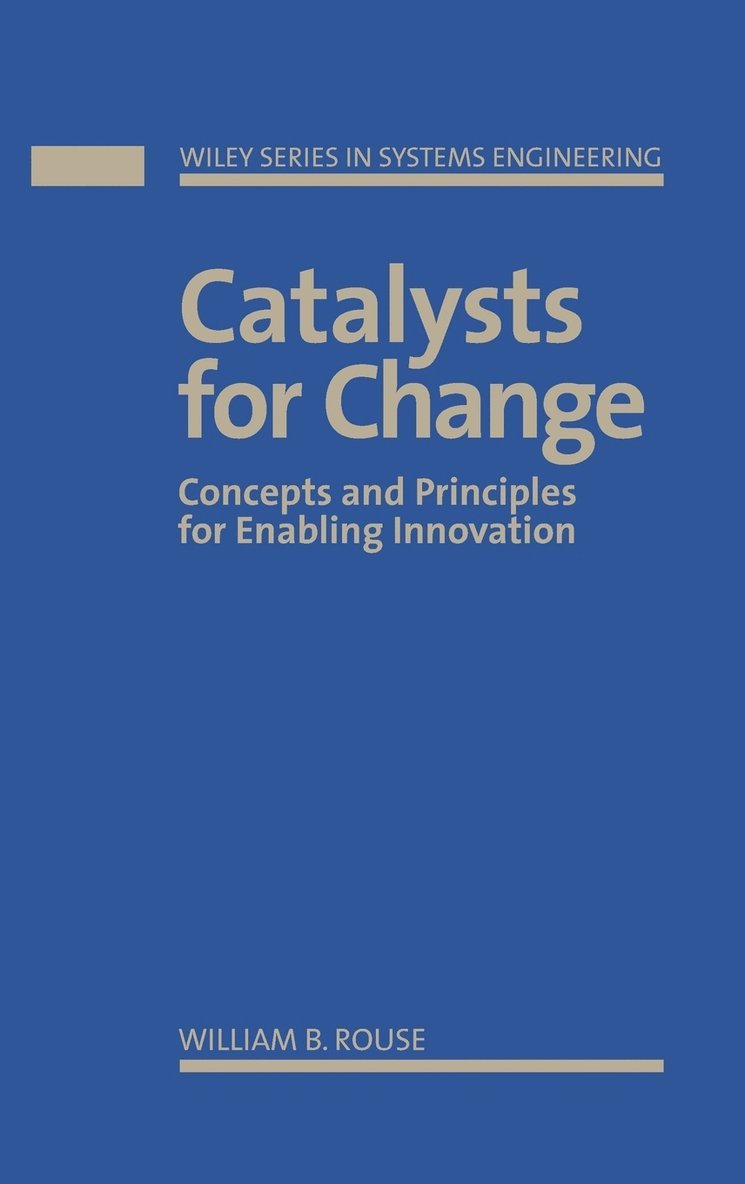
Catalysts for Change
Concepts and Principles for Enabling Innovation
2 280 kr
Skickas inom 5-8 vardagar
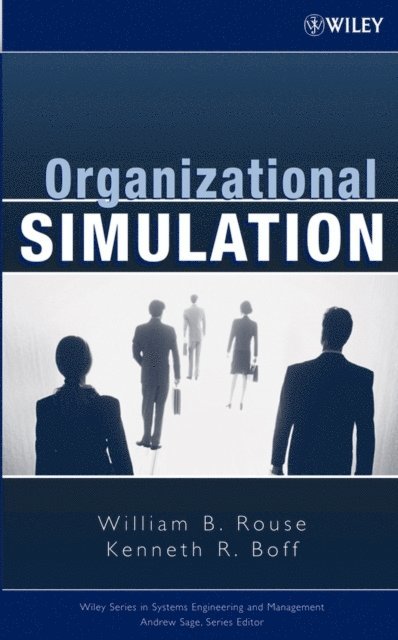
Organizational Simulation
1 885 kr
Skickas inom 5-8 vardagar
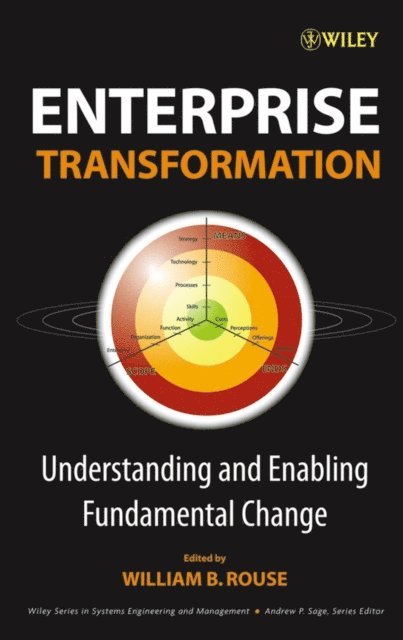
Enterprise Transformation
Understanding and Enabling Fundamental Change
1 504 kr
Skickas inom 11-20 vardagar
2 104 kr
Läs direkt efter köp
514 kr
Skickas inom 5-8 vardagar
589 kr
Läs direkt efter köp
This book comprises a set of stories about being an engineer for many decades and the lessons the author learned from research and practice. These lessons focus on people and organizations, often enabled by technology. The settings range from airplanes, power plants, and communication networks to ecosystems that enable education, healthcare, and transportation. All of these settings are laced with behavioral and social phenomena that need to be understood and influenced.
The author’s work in these domains has often led to the question: "Well, why does it work like that?" He invariably sought to understand the bigger picture to find the sources of requirements, constraints, norms, and values. He wanted to understand what could be changed, albeit often with much effort to overcome resistance.
He found that higher levels of an ecosystem often provide the resources and dictate the constraints imposed on lower levels. These prescriptions are not just commands. They also reflect values and cultural norms. Thus, the answers to the question were not just technical and economic. Often, the answers reflected eons of social and political priorities. The endeavors related in the book frequently involved addressing emerging realities rather than just the status quo. This book is an ongoing discovery of these bigger pictures.
The stories and the lessons related in this book provide useful perspectives on change. The understanding of people and organizations that emerges from these lessons can help to enable transformative change. Fundamental change is an intensely human-centric endeavor, not just for the people and organizations aspiring to change, but also for the people helping them. You will meet many of these people in this book as the stories unfold.
The genesis of this book originated in a decision made early in the author’s career. He had developed a habit of asking at the end of each day, "What did I really accomplish today?" This was sometimes frustrating as he was not sure the day had yielded any significant accomplishments. One day it dawned on him that this was the wrong question – He needed to ask, "What did I learn today?" It is always possible to learn, most recently about public health and climate change.
In planning this book, the author first thought in terms of accomplishments such as projects conducted, systems built, and articles and books published. He could not imagine this being interesting to readers. Then, it struck him – It is much more interesting to report on what he learned about people and organizations, including how he helped them accomplish their goals. This is a book of stories about how these lessons emerged.
589 kr
Läs direkt efter köp
This book comprises a set of stories about being an engineer for many decades and the lessons the author learned from research and practice. These lessons focus on people and organizations, often enabled by technology. The settings range from airplanes, power plants, and communication networks to ecosystems that enable education, healthcare, and transportation. All of these settings are laced with behavioral and social phenomena that need to be understood and influenced.
The author’s work in these domains has often led to the question: "Well, why does it work like that?" He invariably sought to understand the bigger picture to find the sources of requirements, constraints, norms, and values. He wanted to understand what could be changed, albeit often with much effort to overcome resistance.
He found that higher levels of an ecosystem often provide the resources and dictate the constraints imposed on lower levels. These prescriptions are not just commands. They also reflect values and cultural norms. Thus, the answers to the question were not just technical and economic. Often, the answers reflected eons of social and political priorities. The endeavors related in the book frequently involved addressing emerging realities rather than just the status quo. This book is an ongoing discovery of these bigger pictures.
The stories and the lessons related in this book provide useful perspectives on change. The understanding of people and organizations that emerges from these lessons can help to enable transformative change. Fundamental change is an intensely human-centric endeavor, not just for the people and organizations aspiring to change, but also for the people helping them. You will meet many of these people in this book as the stories unfold.
The genesis of this book originated in a decision made early in the author’s career. He had developed a habit of asking at the end of each day, "What did I really accomplish today?" This was sometimes frustrating as he was not sure the day had yielded any significant accomplishments. One day it dawned on him that this was the wrong question – He needed to ask, "What did I learn today?" It is always possible to learn, most recently about public health and climate change.
In planning this book, the author first thought in terms of accomplishments such as projects conducted, systems built, and articles and books published. He could not imagine this being interesting to readers. Then, it struck him – It is much more interesting to report on what he learned about people and organizations, including how he helped them accomplish their goals. This is a book of stories about how these lessons emerged.
589 kr
Läs direkt efter köp
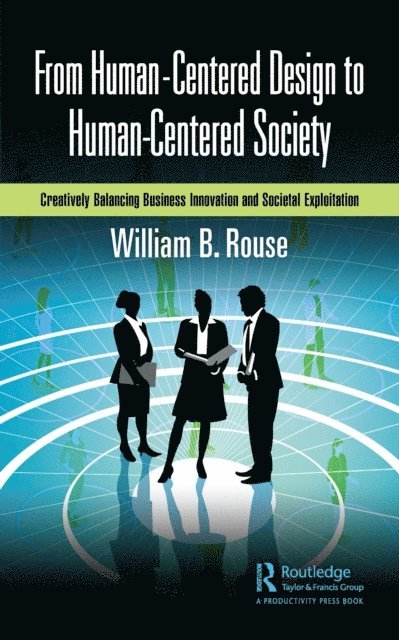
A human-centered society creatively balances investments in sources of innovation, while also governing in a manner that eventually limits exploitation by originators once innovations have proven their value in the marketplace, broadly defined to include both private and public constituencies. The desired balance requires society to invest in constituencies to be able to create innovations that provide current and future collective benefits, while also assuring society provides laws, courts, police, and military to protect individual rights to life, liberty, and the pursuit of happiness.
The balance addresses collectivism vs. individualism. Collectivism emphasizes the importance of the community. Individualism, in contrast, is focused on the rights and concerns of each person. Unity and selflessness or altruism are valued traits in collectivist cultures; independence and personal identity are central in individualistic cultures. Collectivists can become so focused on collective benefits that they ignore sources and opportunities for innovation. Individualists can tend to invest themselves, almost irrationally, in ideas and visions, many of which will fail, but some will transform society. Collectivists need to let individualists exploit their successful ideas. Individualists need to eventually accept the need to provide collective benefits.
This book addresses the inherent tension underlying the pursuit of this balance. It has played a central role in society at least since the Industrial Revolution (1760–1840). Thus, the story of this tension, how it regularly emerges, and how it is repeatedly resolved, for better or worse, is almost a couple of centuries old. Creating a human-centered society can be enabled by creatively enabling this balance. Explicitly recognizing the need for this balance is a key success factor.
This book draws upon extensive experiences within the domains of transportation and defense, computing and communications, the Internet and social media, health and wellness, and energy and climate. Balancing innovation and exploitation takes varying forms in these different domains. Nevertheless, the underlying patterns and practices are sufficiently similar to enable important generalizations.