William Carpenter – författare
Visar alla böcker från författaren William Carpenter. Handla med fri frakt och snabb leverans.
42 produkter
Wooden Nickel
Häftad, 2003
244 kr
Lägg i varukorg
The Wooden Nickel is a boat. Its owner, Lucky Lunt, is an endangered species: a third-generation lobsterman who works the same Maine waters as his father and grandfather. But the world is changing faster than Lucky can fathom - even his heart is failing him - and soon he is embroiled in a turf war …
Digital Fabrication and the Design Build Studio
Av William Carpenter, Arief Setiawan m. fl.
Inbunden, 2023
2578 kr
Lägg i varukorg
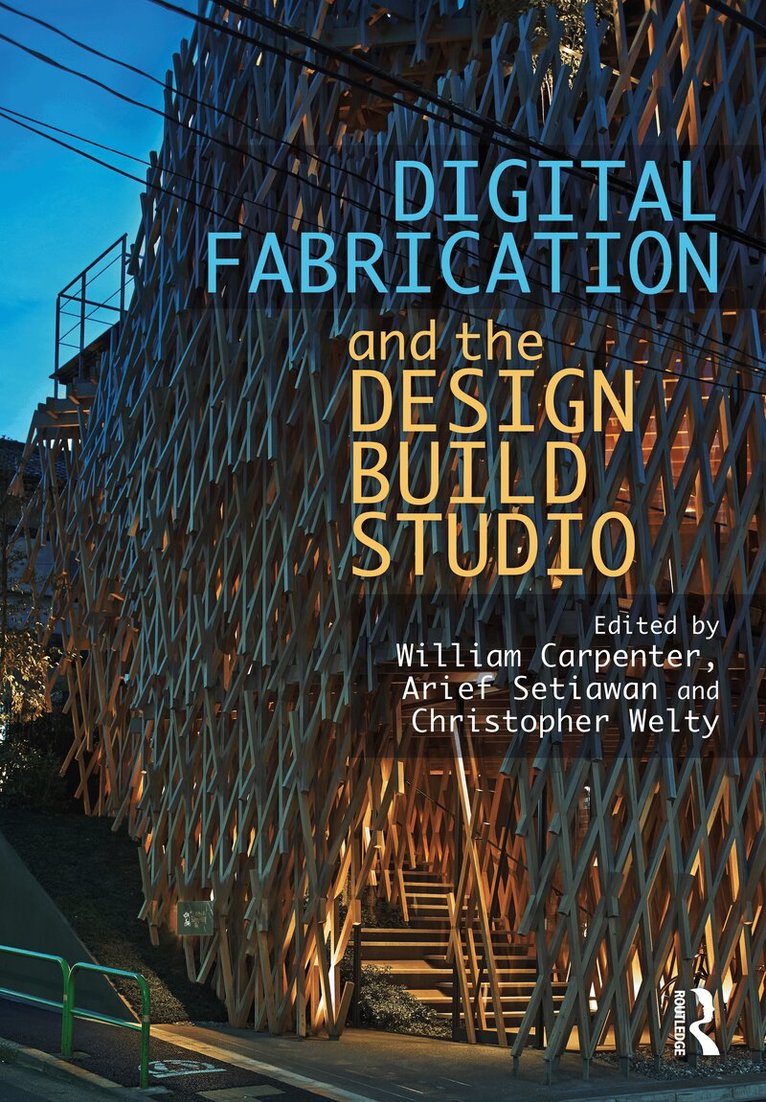
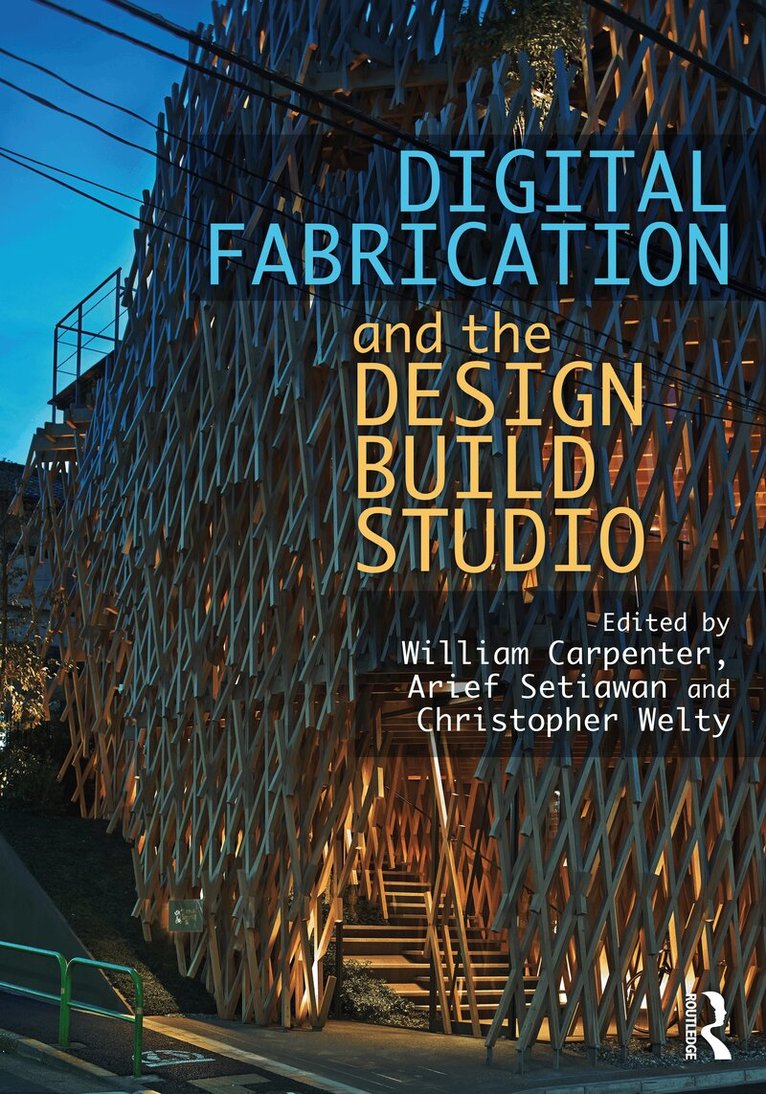
This book explores the connection between digital fabrication and the design build studio in both academic and professional studios.The book presents 17 essays and cases studies from well-known scholars and practitioners, including Kengo Kuma, Joseph Choma, Dan Rockhill, Keith Zawistowski, and …
Digital Fabrication and the Design Build Studio
Av William Carpenter, Arief Setiawan m. fl.
Häftad, 2023
650 kr
Lägg i varukorg
This book explores the connection between digital fabrication and the design build studio in both academic and professional studios.The book presents 17 essays and cases studies from well-known scholars and practitioners, including Kengo Kuma, Joseph Choma, Dan Rockhill, Keith Zawistowski, and …
Digital Fabrication and the Design Build Studio
Av Christopher Welty, Arief Setiawan m. fl.
E-bok, 2023
767 kr
Lägg i varukorg
This book explores the connection between digital fabrication and the design build studio in both academic and professional studios. The book presents 17 essays and cases studies from well-known scholars and practitioners, including Kengo Kuma, Joseph Choma, Dan Rockhill, Keith Zawistowski, and …
Digital Fabrication and the Design Build Studio
Av Christopher Welty, Arief Setiawan m. fl.
E-bok, 2023
767 kr
Lägg i varukorg
This book explores the connection between digital fabrication and the design build studio in both academic and professional studios. The book presents 17 essays and cases studies from well-known scholars and practitioners, including Kengo Kuma, Joseph Choma, Dan Rockhill, Keith Zawistowski, and …
Corporation Of London, As It Is, And As It Should Be, With An Appendix, Comprising A List Of All The Officers Of The Corporation
Inbunden, 2023
367 kr
Lägg i varukorg
Political Text Book
Comprising a View of the Origin and Objects of Government, and an Examinati
Inbunden, 2009
494 kr
Lägg i varukorg
Chancery Reform: The Equity Jurisdiction of the Court of Chancery: A Lecture.
Häftad
203 kr
Lägg i varukorg
One Hundred Proofs That the Earth Is Not a Globe
Dedicated to R. A. Proctor, Esq.
E-bok, 2021
120 kr
Lägg i varukorg
William Carpenter, a printer and author, was born in England and later moved to Baltimore where he continued to advocate for the flat-Earth theory. While this is not Williams first publication on the topic, it is certainly impressive as to the amount of information that William was able to provide …
Is the Newtonian Astronomy True?
E-bok, 2020
84 kr
Lägg i varukorg
“Is the Newtonian Theory True?” comprises a series of letters written by the author to various editors of scientific periodicals attempting to refute “Newtonian Theory” and other contemporary scientific ideas. Newtonian Theory refers to Newton''s ideas of the laws of motion and universal …
One Hundred Proofs that the Earth is Not a Globe
E-bok, 2020
87 kr
Lägg i varukorg
First published in 1895, this volume contains a series of arguments against the idea that the world is round. The belief that the Earth is flat and not a globe existed in many ancient civilisations, but we now know that this is not true. However, even today there are those who believe in a flat …
100 Proofs That Earth Is Not A Globe
New Large Print Edition including "Experiments proving the Earth to be a Plane" by Parallax
Av Parallax, William Carpenter
E-bok, 2023
49 kr
Lägg i varukorg
"This can only be described as an extraordinary book .... His arguments are certainly plausible and ingenious, and even the reader who does not agree with him will find a singular interest and fascination in analyzing the ''one hundred proofs.''... The proofs are set forth in brief, forcible, …