Häftad, Engelska, 2008
438 kr
Skickas inom 10-15 vardagar
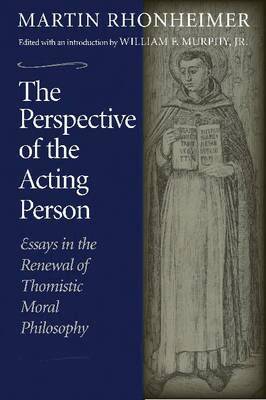
The Perspective Of The Acting Person introduces readers to one of the most important and provocative thinkers in contemporary moral philosophy. In this collection of essays Martin Rhonheimer examines the central themes of natural law, moral action, and virtue emphasized by John Paul II's 1993 encyclical ""Veritatis Splendor"". Rhonheimer's work follows the general direction taken by the encyclical through an almost unprecedented rigor of philosophical argumentation and level of engagement with both European and American scholarship.Rhonheimer argues extensively, from the texts of Aquinas, against aspects of more traditional interpretations of the Angelic Doctor. He maintains that their deficiencies helped precipitate both the postconciliar crisis in moral theology and the rise of revisionist approaches. He addresses not only the central topics of natural law and moral action but also the resonableness of Christian morality, the relation between nature and reason, and that between metaphysics and ethics. All are considered from the distinctively moral perspective of the agent. Rhonheimer also responds to critics of both ""Veritatis Splendor"" and his own work and critiques works by revisionist moral theologians.The collection focuses on Rhonheimer's fundamental ethical theory, establishing the theoretical bases for his more applied works in areas such as sexual ethics, political philosophy, social ethics, and medical ethics. A detailed introduction by William F. Murphy, Jr., sketches Rhonheimer's intellectual biography and the development of his thought, and summarizes key content from the essays. Finally, a detailed bibliography of Rhonheimer's work is included, which further enhances the volume's value to moral philosophers and theologians.