William F. Porter - Böcker
Visar alla böcker från författaren William F. Porter. Handla med fri frakt och snabb leverans.
2 produkter
2 produkter
319 kr
Skickas inom 7-10 vardagar
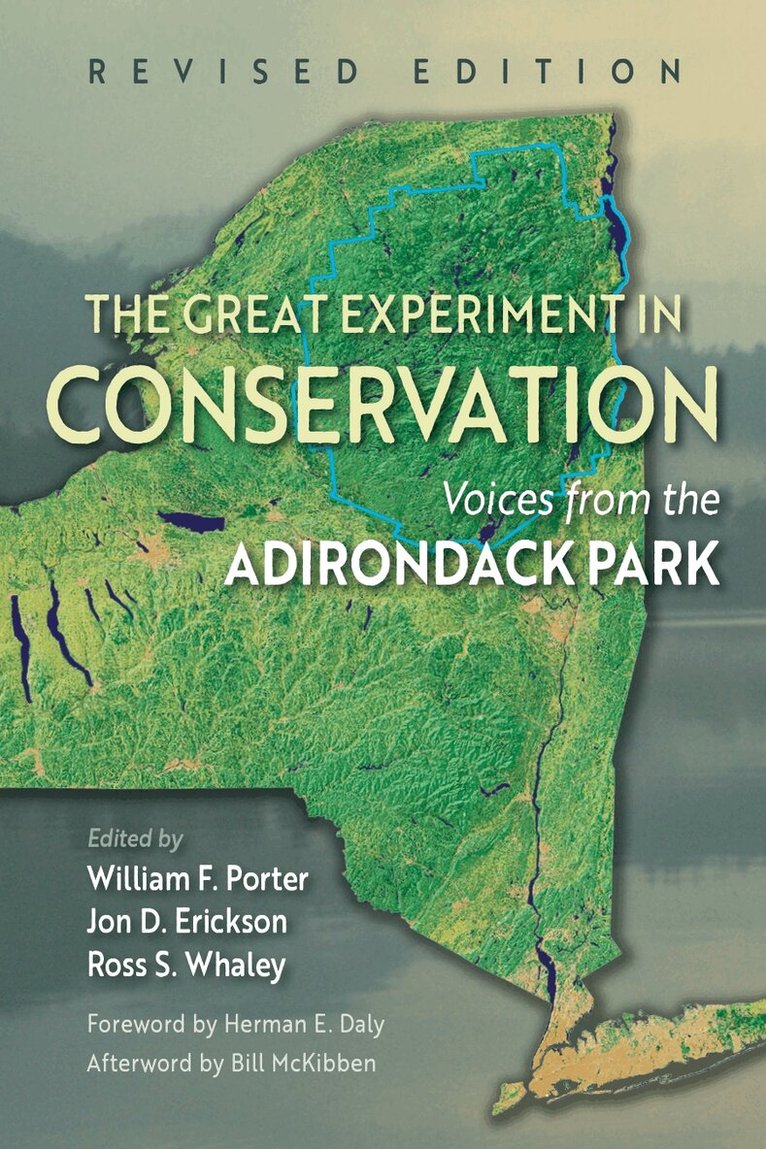
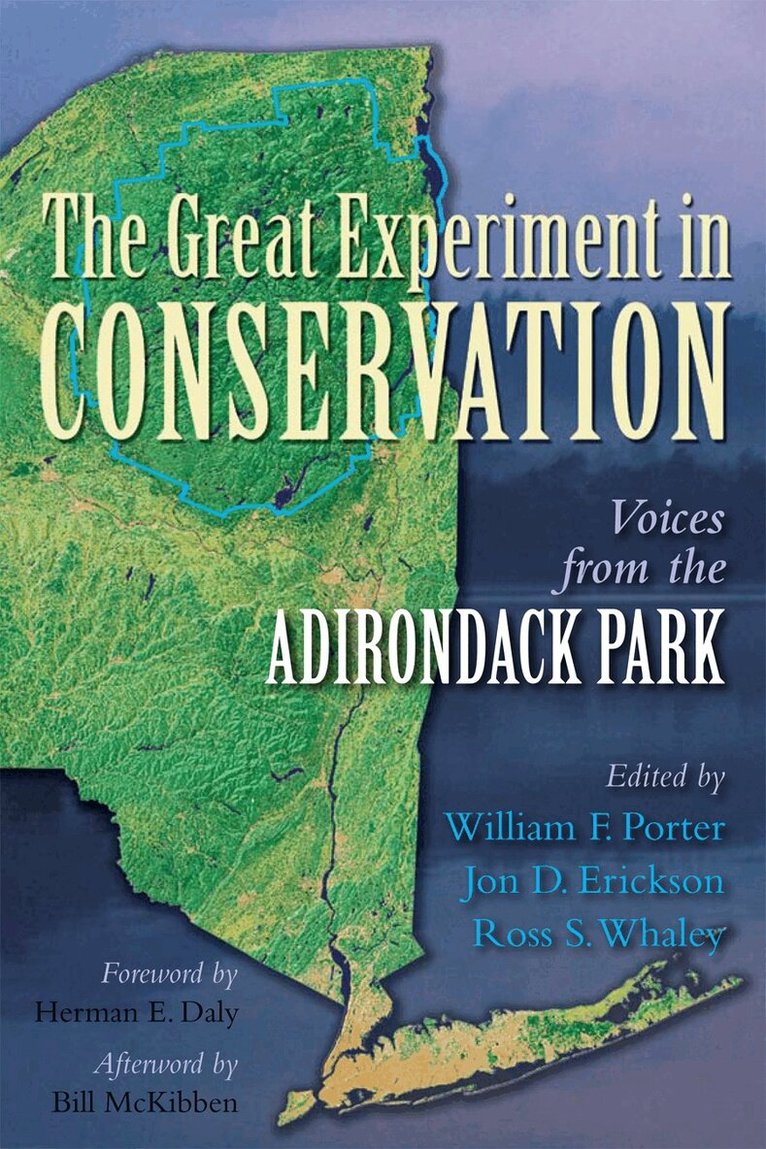
The Adirondack region of New York State is, in many respects, America’s cauldron of conservation. It was there, more than a century ago, that wanton exploitation of forests first aroused concern about human impact on the environment. It was there that Americans first began to set aside lands proclaimed as "forever wild." The establishment of the Adirondack Park created an immense landscape of 6 million acres composed of a mixture of public and private lands in nearly equal proportion. This unprecedented blend of human communities within wild lands makes the Adirondack Park perhaps one of the greatest case studies in conservation and development in U.S. history. Representing a remarkable achievement in environmental scholarship and drawn from decades of research, The Great Experiment in Conservation captures the wisdom born of the last thirty years of the park’s evolution. The editors bring together leading scholars, activists, and practitioners—those who know the Park’s origin and the realities of living in a protected area—to narrate this history. Organized into three sections, contributors explore the ecological, cultural, and economic aspects of the region, drawing lessons from successes and failures as they struggle to find the right balance of private interests and public controls. With keen insight and deep passion, the authors reveal the Adirondack Park’s rich natural and cultural history in shaping conservation policy, providing vital contributions to the future study of land preservation. Contributors include: Herman Daly, Bill McKibben, Barbara McMartin, Philip G. Terrie, Amy Vedder, and Bill Weber.
824 kr
Skickas inom 7-10 vardagar
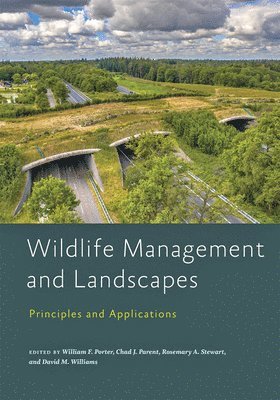
Wildlife management specialists and landscape ecologists offer a new perspective on the important intersection of these fields in the twenty-first century.It's been clear for decades that landscape-level patterns and processes, along with the tenets and tools of landscape ecology, are vitally important in understanding wildlife-habitat relationships and sustaining wildlife populations. Today, significant shifts in the spatial scale of extractive, agricultural, ranching, and urban land uses are upon us, making it more important than ever before to connect wildlife management and landscape ecology. Landscape ecologists must understand the constraints that wildlife managers face and be able to use that knowledge to translate their work into more practical applications. Wildlife managers, for their part, can benefit greatly from becoming comfortable with the vocabulary, conceptual processes, and perspectives of landscape ecologists.In Wildlife Management and Landscapes, the foremost landscape ecology experts and wildlife management specialists come together to discuss the emerging role of landscape concepts in habitat management. Their contributions• make the case that a landscape perspective is necessary to address management questions• translate concepts in landscape ecology to wildlife management• explain why studying some important habitat-wildlife relationships is still inherently difficult• explore the dynamic and heterogeneous structure of natural systems• reveal why factors such as soil, hydrology, fire, grazing, and timber harvest lead to uncertainty in management decisions• explain matching scale between population processes and management• discuss limitations to management across jurisdictional boundaries and balancing objectives of private landowners and management agencies• offer practical ideas for improving communication between professionals• outline the impediments that limit a full union of landscape ecology and wildlife managementUsing concrete examples of modern conservation challenges that range from oil and gas development to agriculture and urbanization, the volume posits that shifts in conservation funding from a hunter constituent base to other sources will bring a dramatic change in the way we manage wildlife. Explicating the foundational similarity of wildlife management and landscape ecology, Wildlife and Landscapes builds crucial bridges between theoretical and practical applications.Contributors: Jocelyn L. Aycrigg, Guillaume Bastille-Rousseau, Jon P. Beckmann, Joseph R. Bennett, William M. Block, Todd R. Bogenschutz, Teresa C. Cohn, John W. Connelly, Courtney J. Conway, Bridgett E. Costanzo, David D. Diamond, Karl A. Didier, Lee F. Elliott, Michael E. Estey, Lenore Fahrig, Cameron J. Fiss, Jacqueline L. Frair, Elsa M. Haubold, Fidel Hernández, Jodi A. Hilty, Joseph D. Holbrook, Cynthia A. Jacobson, Kevin M. Johnson, Jeffrey K. Keller, Jeffery L. Larkin, Kimberly A. Lisgo, Casey A. Lott, Amanda E. Martin, James A. Martin, Darin J. McNeil, Michael L. Morrison, Betsy E. Neely, Neal D. Niemuth, Chad J. Parent, Humberto L. Perotto-Baldivieso, Ronald D. Pritchert, Fiona K. A. Schmiegelow, Amanda L. Sesser, Gregory J. Soulliere, Leona K. Svancara, Stephen C. Torbit, Joseph A. Veech, Kerri T. Vierling, Greg Wathen, David M. Williams, Mark J. Witecha, John M. Yeiser