William Felstiner – författare
Visar alla böcker från författaren William Felstiner. Handla med fri frakt och snabb leverans.
3 produkter
3 produkter
Häftad, Engelska, 2005
1 158 kr
Skickas inom 10-15 vardagar
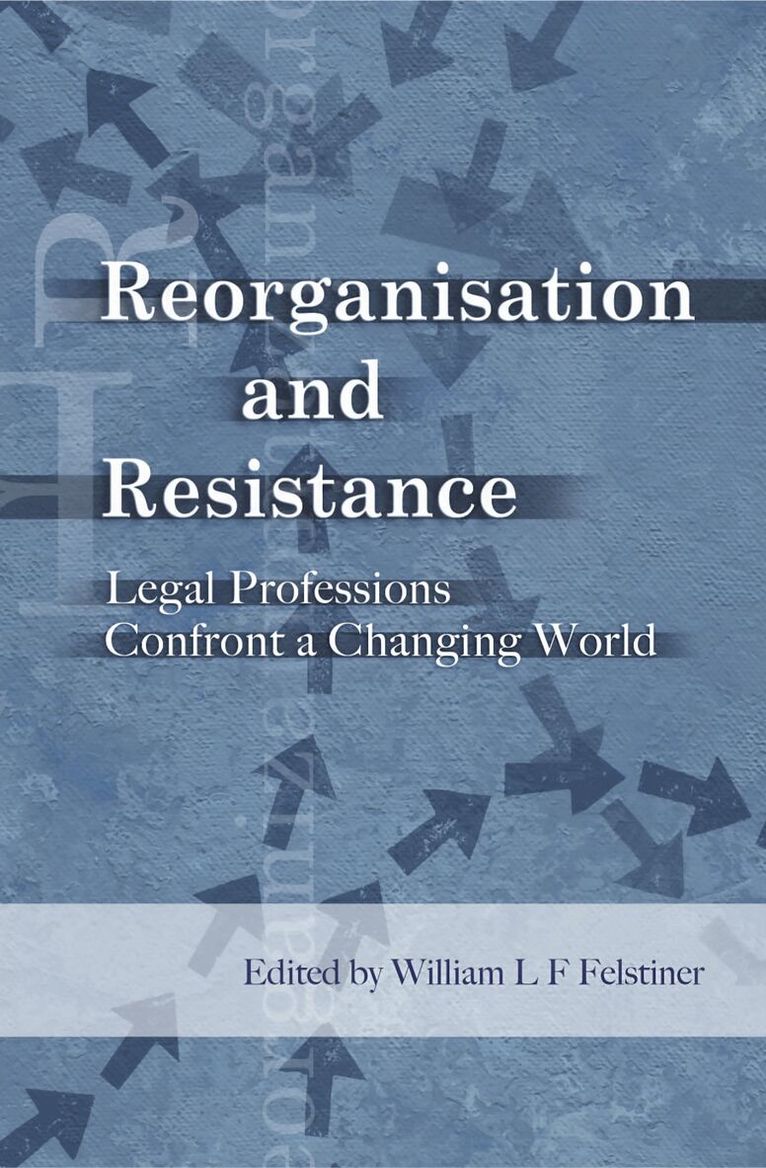
'Reorganization and Resistance' analyses the ways in which the legal professions of nine countries (England,France, the Netherlands, Germany, Canada, the US, Mexico, Australia and Korea) and one continent (South America) have confronted the internal and external political, economic and social upheavals of the past twenty years. It documents how change and resistance are inextricably tied together in an oppositional tension where the greater weight shifts gradually from one to the other, even shifts backwards at times, but in the long view runs in the direction of change. The most obvious instance almost everywhere is the struggle of women in legal professions where improvement is undeniable even as resistance is varied and stiff. The book charts the way demographic shifts have changed the work of lawyers, the way that the revenue from law practice has been re-distributed, and the extent to which barriers based on race, class, religion and gender have shrunk or shifted. It describes how some professions have been forced by government or co-regulation with government to reorganize.It also documents how others have not kept pace with transformations in the economy and changes and challenges to legal education take center stage while demographic shifts and institutional reorganization are of much less importance.
E-bok
PDF, Engelska, 20051 253 kr
Läs direkt efter köp
''Reorganization and Resistance'' analyses the ways in which the legal professions of nine countries (England,France, the Netherlands, Germany, Canada, the US, Mexico, Australia and Korea) and one continent (South America) have confronted the internal and external political, economic and social upheavals of the past twenty years. It documents how change and resistance are inextricably tied together in an oppositional tension where the greater weight shifts gradually from one to the other, even shifts backwards at times, but in the long view runs in the direction of change. The most obvious instance almost everywhere is the struggle of women in legal professions where improvement is undeniable even as resistance is varied and stiff. The book charts the way demographic shifts have changed the work of lawyers, the way that the revenue from law practice has been re-distributed, and the extent to which barriers based on race, class, religion and gender have shrunk or shifted. It describes how some professions have been forced by government or co-regulation with government to reorganize. It also documents how others have not kept pace with transformations in the economy and changes and challenges to legal education take center stage while demographic shifts and institutional reorganization are of much less importance.
E-bok
PDF, Engelska, 2001387 kr
Läs direkt efter köp
International business transactions are heavily influenced by culture,practice and rule. The pursuit of business relationships within nation-states can be subject to differences in the generation of norms and the processing of disputes, but these conflicts are magnified many times over in cross-border transactions where nation-state control and support is weak or absent. This book seeks different explanations of the ways in which business people and their legal advisers try to minimise the effect of these magnified difficulties. At the outset the editors suggest four sources through which the international business community might be considered to have supplemented nation-state conflict prevention and dispute resolution institutions-an international legal order; the development of a private normative order based on common business practices (denominated the lex mercatoria); through the efforts and work product of internationalised law firms, and by means of extensive, thick personal relationships often referred to by their Chinese term guanxi. Since most explanations are dominated by North American and European legal scholarship and practice, a second concern of this book is to open up the discussion to competing explanatory frameworks. Specifically, it develops the notion that global legal convergence may not be the immediate, inevitable result of increased global economic interaction. Rather, less formal mechanisms for achieving normative understanding and predictability in business dealings may also flourish.