William J. Burns – författare
Visar alla böcker från författaren William J. Burns. Handla med fri frakt och snabb leverans.
13 produkter
Back Channel
A Memoir of American Diplomacy and the Case for Its Renewal
E-bok, 2019
208 kr
Lägg i varukorg
From America’s “secret diplomatic weapon” ( The Atlantic )—a man who served five presidents and ten secretaries of state—comes an impassioned argument for the enduring value of diplomacy in an increasingly volatile world. Over the course of more than three decades as an American diplomat, William …
Back Channel
A Memoir of American Diplomacy and the Case for Its Renewal
Häftad, 2020
5,0 utav 5 stjärnor. Totalt antal röster: (1)
312 kr
Lägg i varukorg
“A masterful diplomatic memoir” ( The Washington Post ) from CIA director and career ambassador William J. Burns, from his service under five presidents to his personal encounters with Vladimir Putin and other world leaders—an impassioned argument for the enduring value of diplomacy in an …
Revelations Or Reality - A Prophecy Story
Av John W. Burns II, William J. Burns
Häftad
253 kr
Lägg i varukorg
Back Channel
American Diplomacy in a Disordered World
Häftad, 2021
251 kr
Lägg i varukorg
Over the course of more than three decades as an American diplomat, William J. Burns played a central role in the most consequential diplomatic episodes of his time—from the bloodless end of the Cold War to the collapse of relations with Putin’s Russia, from post–9/11 tumult in the Middle East to …
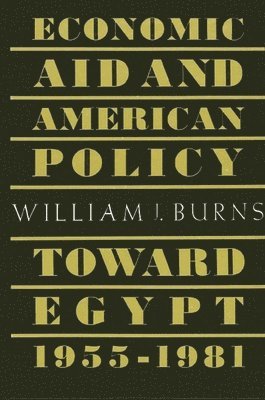
Economic Aid and American Policy toward Egypt, 1955-1981
Inbunden, 1985
1144 kr
Tillfälligt slut
Gamal Abdel Nasser's 1955 decision to barter Egyptian cotton for Soviet bloc weaponry thrust Egypt onto center stage in the Cold War in the Middle East. What Egypt needed most, and what the United States was uniquely equipped to provide, was economic aid. For the Egyptian government—eager to take …
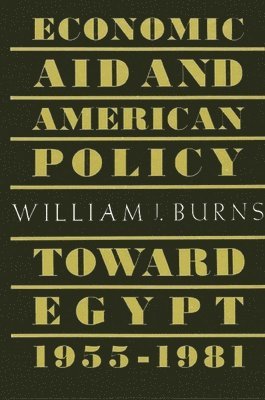
Economic Aid and American Policy toward Egypt, 1955-1981
Häftad, 1985
405 kr
Tillfälligt slut
Gamal Abdel Nasser's 1955 decision to barter Egyptian cotton for Soviet bloc weaponry thrust Egypt onto center stage in the Cold War in the Middle East. What Egypt needed most, and what the United States was uniquely equipped to provide, was economic aid. For the Egyptian government—eager to take …