William J. Rothwell – författare
1 171 kr
Skickas inom 5-8 vardagar
411 kr
Läs direkt efter köp
811 kr
Läs direkt efter köp
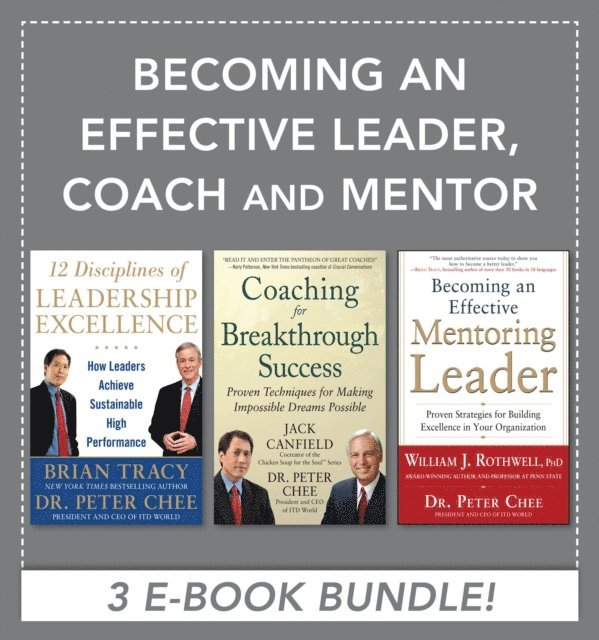
3 E-Books in One
12 Disciplines of Leadership Excellence
Master the 12 disciplines of powerful leadership and lead your organization to greatness
Leadership experts Brian Tracy and Dr. Peter Chee assert that great leaders are made, not born. Everyone has the ability to shape himself or herself into the kind of person who enables and uplifts others to reach their highest potential--and in 12 Disciplines of Leadership Excellence, they reveal exactly how to achieve it.
It all starts with discipline. In this groundbreaking book, the authors break down great leadership into 12 disciplines, including:
Clarity . . . about who you are, where you are going, and how to get thereControl . . . build and bolster your sense of personal responsibility and self-masteryCharacter . . . dedicate yourself to passionately build trust with honesty and integrityCompetence . . . commit to constant never-ending improvement and learningCaring . . . because when you care, your people care in building great working relationshipsCourage . . . moving out of your comfort zone to embrace change and make tough decisionsCoaching for Breakthrough Success
A powerful new coaching method from Chicken Soup for the Soul co-creator Jack Canfield!
Combining time-tested principles of exemplary coaches with the latest disruptive techniques used by the world’s top performing leaders, Coaching for Breakthrough Success is a playbook that shows you how to nurture—in yourself and others—the three essential requirements of coaching excellence:
1. HEART: The Coaching Principles (TCP) unveils the secret to life impacting values, beliefs, and philosophies that permeate all aspects of great coaching.2. MIND: The Situational Coaching Model (SCM) unleashes the genius of a coach to apply the right combination of crucial paradigms in any given coaching challenge.3. ENERGY: The Achievers Coaching Techniques (ACT) equips you with proven methods that enable you to deliver breakthrough results in coaching.
Coaching for Breakthrough Success is packed with stirring personal stories, life changing case studies, crucial coaching conversations, exemplary coaching questions, and ready-to use tools that equip you to achieve professional mastery in coaching.
Becoming an Effective Mentoring Leader
Turn mentoring into PROFITS
Becoming an Effective Mentoring Leader breaks down the essentials of mentoring, and shows you how to take advantage of this valuable new workplace dynamic. You’ll learn:
The smartest way to incorporate mentoring into your day-to-day leadership roleThe fastest way to equip, inspire, and motivate your staffThe differences between mentoring, coaching, and teachingHow you as a leader can rate the mentors in your office – and assess the progress of menteesUsing case studies, tools, and impactful learning concepts, the authors show you how to use mentoring’s “core skills” to create a winning approach tailored to your own style, be it the “reflective mentor,” the “storytelling mentor,” or “the example-based mentor.”
1 169 kr
Läs direkt efter köp
530 kr
Skickas inom 10-15 vardagar
1 752 kr
Skickas inom 10-15 vardagar
720 kr
Skickas inom 10-15 vardagar
2 132 kr
Skickas inom 10-15 vardagar
691 kr
Skickas inom 10-15 vardagar
2 027 kr
Skickas inom 5-8 vardagar
607 kr
Skickas inom 5-8 vardagar
764 kr
Skickas inom 10-15 vardagar
660 kr
Skickas inom 3-6 vardagar
624 kr
Läs direkt efter köp
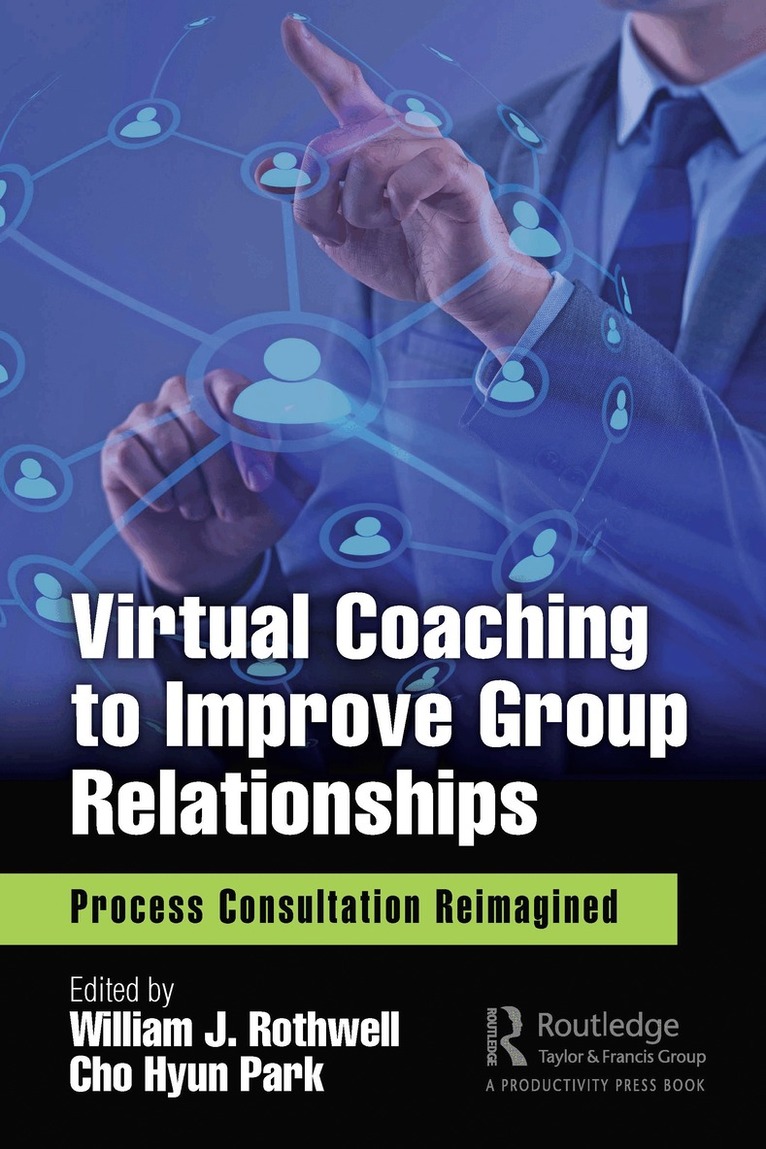
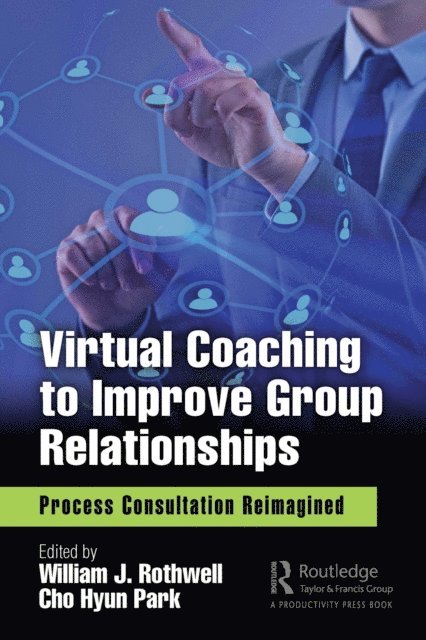
Process consultation, invented by Edgar Schein, is both a skill and an organization development change effort. As a skill, process consultation means the ability to observe and provide feedback about small group dynamics to a work group about how well group members interact and how to improve that interaction. Just as facilitators devote their time to (in one word) asking, process consultants devote their time to (in one word) watching—at an expert level. As a change effort, process consultation is a concerted effort to help members of a group work together more effectively. For that reason, the word "process" in this context should be interpreted to mean "interpersonal interaction in small groups."
Historically, process consultation has focused attention on face-to-face groups and their group dynamics. But times are changing. More work is done online or in blended (online and onsite) groups than face-to-face alone. A 2017 survey of over 25,000 workers in 12 countries revealed that 62% of global workers are now working flexibly—with some residential work and some virtual work. The same survey found that workers believe that flexible work arrangements make them more productive and that 48% of survey respondents reported that their virtual interactions include representatives of other cultures. It is true that, for workers who can discipline themselves and manage distractions at home, virtual work can be more productive when commuting time is eliminated and workplace distractions are minimized. Virtual work has the advantage of reducing the need for childcare, slashing work wardrobe costs, and cutting unproductive, stressful commuting time.
Despite how modes of working together have changed over the years—ranging from face-to-face to some degree of virtual (video conference, audio conference, print-only collaboration, and many blended combinations)—and the growing need for finding ways to help people work together more effectively, there has been no practical guideline of process consultation in a virtual or mixed work setting since Schein’s process consultation initially focused on group dynamics in face-to-face settings. Therefore, this book aims to provide practical approaches to process consultation, helping group members discover more effective ways of working together in blended virtual/residential and cross-cultural settings.
Essentially, this book provides a practical, how-to guide for virtual coaching, using step-by-step procedural approaches, cases, and helpful platforms/technologies and tools. It also provides information about how to use technology to support the process of improving virtual or mixed group relationship.
602 kr
Läs direkt efter köp
Process consultation, invented by Edgar Schein, is both a skill and an organization development change effort. As a skill, process consultation means the ability to observe and provide feedback about small group dynamics to a work group about how well group members interact and how to improve that interaction. Just as facilitators devote their time to (in one word) asking, process consultants devote their time to (in one word) watching—at an expert level. As a change effort, process consultation is a concerted effort to help members of a group work together more effectively. For that reason, the word "process" in this context should be interpreted to mean "interpersonal interaction in small groups."
Historically, process consultation has focused attention on face-to-face groups and their group dynamics. But times are changing. More work is done online or in blended (online and onsite) groups than face-to-face alone. A 2017 survey of over 25,000 workers in 12 countries revealed that 62% of global workers are now working flexibly—with some residential work and some virtual work. The same survey found that workers believe that flexible work arrangements make them more productive and that 48% of survey respondents reported that their virtual interactions include representatives of other cultures. It is true that, for workers who can discipline themselves and manage distractions at home, virtual work can be more productive when commuting time is eliminated and workplace distractions are minimized. Virtual work has the advantage of reducing the need for childcare, slashing work wardrobe costs, and cutting unproductive, stressful commuting time.
Despite how modes of working together have changed over the years—ranging from face-to-face to some degree of virtual (video conference, audio conference, print-only collaboration, and many blended combinations)—and the growing need for finding ways to help people work together more effectively, there has been no practical guideline of process consultation in a virtual or mixed work setting since Schein’s process consultation initially focused on group dynamics in face-to-face settings. Therefore, this book aims to provide practical approaches to process consultation, helping group members discover more effective ways of working together in blended virtual/residential and cross-cultural settings.
Essentially, this book provides a practical, how-to guide for virtual coaching, using step-by-step procedural approaches, cases, and helpful platforms/technologies and tools. It also provides information about how to use technology to support the process of improving virtual or mixed group relationship.
779 kr
Läs direkt efter köp
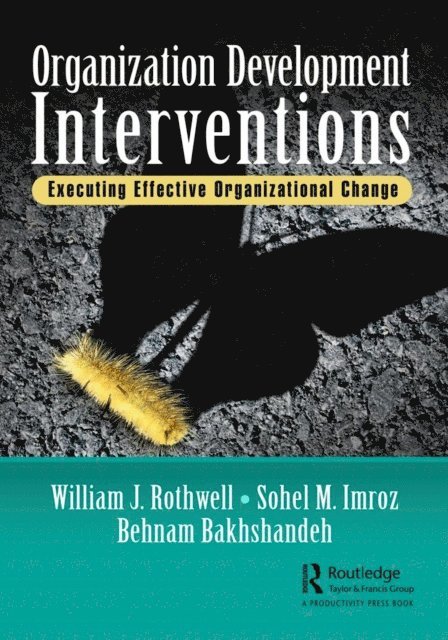
To effectively adapt and thrive in today’s business world, organizations need to implement effective organizational development (OD) interventions to improve performance and effectiveness at the individual, group, and organizational levels. OD interventions involve people, trust, support, shared power, conflict resolution, and stakeholders’ participation, just to name a few. OD interventions usually have broader scope and can affect the whole organization. OD practitioners or change agents must have a solid understanding of different OD interventions to select the most appropriate one to fulfill the client’s needs. There is limited precise information or research about how to design OD interventions or how they can be expected to interact with organizational conditions to achieve specific results.
This book offers OD practitioners and change agents a step-by-step approach to implementing OD interventions and includes example cases, practical tools, and guidelines for different OD interventions. It is noteworthy that roughly 65% of organizational change projects fail. One reason for the failure is that the changes are not effectively implemented, and this book focuses on how to successfully implement organizational changes.
Designed for use by OD practitioners, management, and human resources professionals, this book provides readers with OD basic principles, practices, and skills by featuring illustrative case studies and useful tools. This book shows how OD professionals can actually get work done and what the step-by-step OD effort should be. This book looks at how to choose and implement a range of interventions at different levels. Unlike other books currently available on the market, this book goes beyond individual, group, and organizational levels of OD interventions, and addresses broader OD intervention efforts at industry and community levels, too. Essentially, this book provides a practical guide for OD interventions. Each chapter provides practical information about general OD interventions, supplies best practice examples and case studies, summarizes the results of best practices, provides at least one case scenario, and offers at least one relevant tool for practitioners.
779 kr
Läs direkt efter köp
To effectively adapt and thrive in today’s business world, organizations need to implement effective organizational development (OD) interventions to improve performance and effectiveness at the individual, group, and organizational levels. OD interventions involve people, trust, support, shared power, conflict resolution, and stakeholders’ participation, just to name a few. OD interventions usually have broader scope and can affect the whole organization. OD practitioners or change agents must have a solid understanding of different OD interventions to select the most appropriate one to fulfill the client’s needs. There is limited precise information or research about how to design OD interventions or how they can be expected to interact with organizational conditions to achieve specific results.
This book offers OD practitioners and change agents a step-by-step approach to implementing OD interventions and includes example cases, practical tools, and guidelines for different OD interventions. It is noteworthy that roughly 65% of organizational change projects fail. One reason for the failure is that the changes are not effectively implemented, and this book focuses on how to successfully implement organizational changes.
Designed for use by OD practitioners, management, and human resources professionals, this book provides readers with OD basic principles, practices, and skills by featuring illustrative case studies and useful tools. This book shows how OD professionals can actually get work done and what the step-by-step OD effort should be. This book looks at how to choose and implement a range of interventions at different levels. Unlike other books currently available on the market, this book goes beyond individual, group, and organizational levels of OD interventions, and addresses broader OD intervention efforts at industry and community levels, too. Essentially, this book provides a practical guide for OD interventions. Each chapter provides practical information about general OD interventions, supplies best practice examples and case studies, summarizes the results of best practices, provides at least one case scenario, and offers at least one relevant tool for practitioners.
693 kr
Läs direkt efter köp
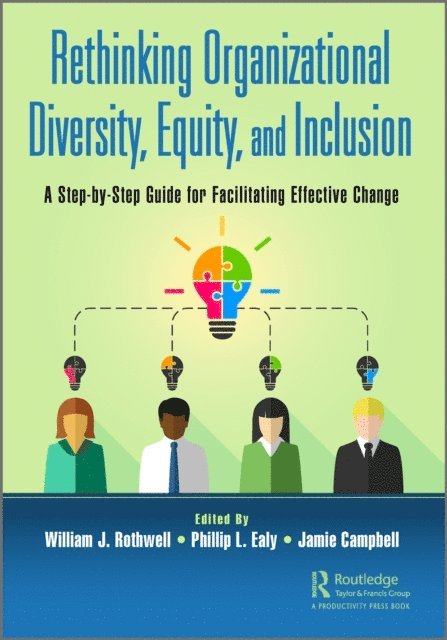
Research has shown that having a diverse organization only improves and enhances businesses. Forbes and Time report that diversity is an $8 Billion a year investment. However, poorly implementing diversity programs have damaging effects on the organization and the very individuals these programs attempt to help. Poorly implemented programs can cause peers and subordinates to question decisions and lose faith in leadership. In addition, it can cause even the most confident individuals to doubt their own skillset and qualifications. Many organizations have turned to training to solve this complex issue.
Yet still, other organizations have created and filled diversity and inclusion positions to tackle the issue. The effects of these poorly implemented programs are highlighted during strenuous times such as the latest COVID-19 pandemic. Marginalized people are more marginalized, and resources and support do not reach everyone. Tasks such as providing technical support, conducting large group meetings, or distributing work obligations without seeing employees on a daily basis becomes more challenging.
Complex problems cannot be solved with simple solutions. Using organization development (OD) to develop a comprehensive change initiative can help. This book outlines how properly conducting an OD change initiative can effectively increase an organization’s diversity and inclusion -- it is grounded in research-based literature on diversity and OD principles.
Many organizational leaders realize the key importance of diversity, equity, inclusion and multiculturalism in modern organizations. It is only through such efforts can organizations thrive in a networked world where much work is done virtually—and often across borders.
But a common scenario is that leaders, recognizing the need for a diversity program, will pick someone from the organization to launch it. Perhaps the person identified for this challenge is in the HR department but has had no experience in launching diversity efforts—or even in managing large-scale, long-term, organization wide change efforts. But these are the challenges to be faced.
This book quickly identifies some reasons why diversity programs fail and how to avoid those failures. The majority of the book highlights how to use OD to improve organization culture and processes to not only increase diversity and inclusion but develop overall organization talent and prevent personal preferences and biases from hindering the selection of the best talent for positions.
693 kr
Läs direkt efter köp
Research has shown that having a diverse organization only improves and enhances businesses. Forbes and Time report that diversity is an $8 Billion a year investment. However, poorly implementing diversity programs have damaging effects on the organization and the very individuals these programs attempt to help. Poorly implemented programs can cause peers and subordinates to question decisions and lose faith in leadership. In addition, it can cause even the most confident individuals to doubt their own skillset and qualifications. Many organizations have turned to training to solve this complex issue.
Yet still, other organizations have created and filled diversity and inclusion positions to tackle the issue. The effects of these poorly implemented programs are highlighted during strenuous times such as the latest COVID-19 pandemic. Marginalized people are more marginalized, and resources and support do not reach everyone. Tasks such as providing technical support, conducting large group meetings, or distributing work obligations without seeing employees on a daily basis becomes more challenging.
Complex problems cannot be solved with simple solutions. Using organization development (OD) to develop a comprehensive change initiative can help. This book outlines how properly conducting an OD change initiative can effectively increase an organization’s diversity and inclusion -- it is grounded in research-based literature on diversity and OD principles.
Many organizational leaders realize the key importance of diversity, equity, inclusion and multiculturalism in modern organizations. It is only through such efforts can organizations thrive in a networked world where much work is done virtually—and often across borders.
But a common scenario is that leaders, recognizing the need for a diversity program, will pick someone from the organization to launch it. Perhaps the person identified for this challenge is in the HR department but has had no experience in launching diversity efforts—or even in managing large-scale, long-term, organization wide change efforts. But these are the challenges to be faced.
This book quickly identifies some reasons why diversity programs fail and how to avoid those failures. The majority of the book highlights how to use OD to improve organization culture and processes to not only increase diversity and inclusion but develop overall organization talent and prevent personal preferences and biases from hindering the selection of the best talent for positions.
814 kr
Läs direkt efter köp
Coaching is a necessary skill for managers. It is important as a fundamental part of an organization''s talent efforts—including talent acquisition, development and retention strategies. For a coaching program to succeed in an organization, it should be recognized as a useful approach throughout the organization and become part of the fabric of the corporate culture. Performance Coaching for Managers provides an important tool for organizations to use to train their managers on coaching.
This book differs significantly from other books in the coaching market. Many books on coaching cast coaches as facilitators who question their clients (the coachees), helping them to articulate their own problems, formulate their own solutions, develop their own action plans to solve problems, and measure the success of efforts to implement those plans. That is called a nondirective approach.
But this book adopts a directive approach by casting the coach as a manager who diagnoses the problems with worker job performance and offers specific advice on how to solve those problems. While there is nothing wrong with a nondirective approach, it does not always work well in job performance reviews in which the manager must inform the worker about gaps between what is needed (the desired) and what is performed (the actual). The significant difference between what is currently available in the market and what is offered in this book is the authors'' collective experience of over 70 combined years of hands-on research and delivery experiences in the Human Resources Development field.
According to the Harvard Business Review (2015), workers generally expect their immediate supervisors to give them honest feedback on how well they do their jobs—and specific advice on what to do if they are not performing in alignment with organizational expectations. When workers do not receive advice—but instead are questioned about their own views—they regard their managers as either incompetent or disingenuous.
Effective managers should be able to offer direction to their employees. After all, managers are responsible for ensuring that their organizational units deliver the results needed by the organization. If they fail to do that, the organization does not achieve its strategic goals. This book gives managers direction in how to offer directive coaching to their workers.
814 kr
Läs direkt efter köp
Coaching is a necessary skill for managers. It is important as a fundamental part of an organization''s talent efforts—including talent acquisition, development and retention strategies. For a coaching program to succeed in an organization, it should be recognized as a useful approach throughout the organization and become part of the fabric of the corporate culture. Performance Coaching for Managers provides an important tool for organizations to use to train their managers on coaching.
This book differs significantly from other books in the coaching market. Many books on coaching cast coaches as facilitators who question their clients (the coachees), helping them to articulate their own problems, formulate their own solutions, develop their own action plans to solve problems, and measure the success of efforts to implement those plans. That is called a nondirective approach.
But this book adopts a directive approach by casting the coach as a manager who diagnoses the problems with worker job performance and offers specific advice on how to solve those problems. While there is nothing wrong with a nondirective approach, it does not always work well in job performance reviews in which the manager must inform the worker about gaps between what is needed (the desired) and what is performed (the actual). The significant difference between what is currently available in the market and what is offered in this book is the authors'' collective experience of over 70 combined years of hands-on research and delivery experiences in the Human Resources Development field.
According to the Harvard Business Review (2015), workers generally expect their immediate supervisors to give them honest feedback on how well they do their jobs—and specific advice on what to do if they are not performing in alignment with organizational expectations. When workers do not receive advice—but instead are questioned about their own views—they regard their managers as either incompetent or disingenuous.
Effective managers should be able to offer direction to their employees. After all, managers are responsible for ensuring that their organizational units deliver the results needed by the organization. If they fail to do that, the organization does not achieve its strategic goals. This book gives managers direction in how to offer directive coaching to their workers.
675 kr
Läs direkt efter köp
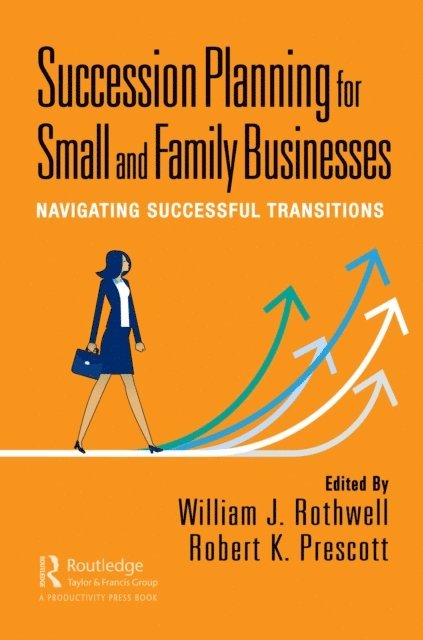
Who will lead your organization into the future? Have you created the systems to properly implement required succession transitions? Have you put the financial tools in place to fund the transition? Do you want a plan that connects with your personal and company core values? When do you include timely planning related to strategy and talent issues? What are the appropriate communication strategies for sharing your plan? What legal issues need consideration related to the strategy, financial, and people aspects of succession?
So, what is preventing you from starting this effort tomorrow? Small and family businesses are the bedrock of all businesses. More people are employed by small and family-owned businesses than by all multinational companies combined. Yet the research on small and family businesses is bleak: fewer than one-third of small business owners in the United States can afford to retire. Only 40% of small businesses have a workable disaster plan in case of the sudden death or disability of the owner, and only 42% of small businesses in the United States have a succession plan. Fewer than 11% of family-owned businesses make it to the third generation beyond the founder. Lack of succession planning is the second most common reason for small business failure.
Many organizations often wonder where to start and what to do. Succession Planning for Small and Family Businesses: Navigating Successful Transitions presents a comprehensive approach to guiding such efforts.
Small and family-owned businesses rarely employ first-rate, well-qualified talent in human resources. More typically, business owners must be jacks-of-all-trades and serve as their own accountants, lawyers, business consultants, marketing experts, and HR wizards. Unfortunately, that does not always work well when business owners embark on planning for retirement or business exits. To help business owners avert problems, this book advises on some of the management, tax and financial, legal, and psychological issues that should be considered when planning retirement or other exits from the business. This comprehensive approach is unique when compared to the books, articles, and other literature that currently exist on the market. This book takes on a bold and integrated approach. Relevant research combined with the rich experiences of the authors connects this thorough, evidence-based approach to action-based approaches for the reader.
675 kr
Läs direkt efter köp
Who will lead your organization into the future? Have you created the systems to properly implement required succession transitions? Have you put the financial tools in place to fund the transition? Do you want a plan that connects with your personal and company core values? When do you include timely planning related to strategy and talent issues? What are the appropriate communication strategies for sharing your plan? What legal issues need consideration related to the strategy, financial, and people aspects of succession?
So, what is preventing you from starting this effort tomorrow? Small and family businesses are the bedrock of all businesses. More people are employed by small and family-owned businesses than by all multinational companies combined. Yet the research on small and family businesses is bleak: fewer than one-third of small business owners in the United States can afford to retire. Only 40% of small businesses have a workable disaster plan in case of the sudden death or disability of the owner, and only 42% of small businesses in the United States have a succession plan. Fewer than 11% of family-owned businesses make it to the third generation beyond the founder. Lack of succession planning is the second most common reason for small business failure.
Many organizations often wonder where to start and what to do. Succession Planning for Small and Family Businesses: Navigating Successful Transitions presents a comprehensive approach to guiding such efforts.
Small and family-owned businesses rarely employ first-rate, well-qualified talent in human resources. More typically, business owners must be jacks-of-all-trades and serve as their own accountants, lawyers, business consultants, marketing experts, and HR wizards. Unfortunately, that does not always work well when business owners embark on planning for retirement or business exits. To help business owners avert problems, this book advises on some of the management, tax and financial, legal, and psychological issues that should be considered when planning retirement or other exits from the business. This comprehensive approach is unique when compared to the books, articles, and other literature that currently exist on the market. This book takes on a bold and integrated approach. Relevant research combined with the rich experiences of the authors connects this thorough, evidence-based approach to action-based approaches for the reader.
779 kr
Läs direkt efter köp
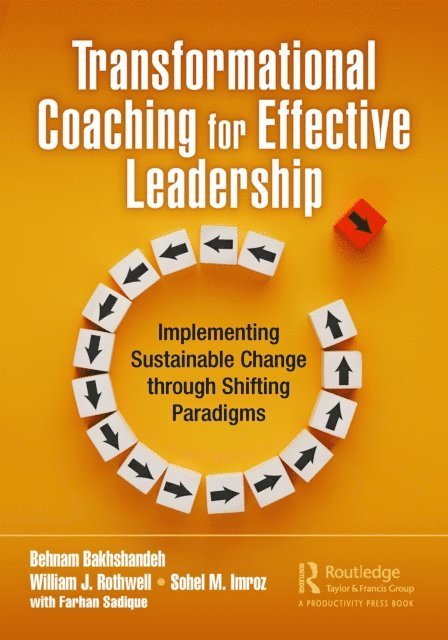
The purpose of this book is to introduce the concept of transformational coaching and to educate professional business coaches or mangers-as-coaches in their organizations on the influential and relevant elements of Transformational Coaching for Effective Leadership designed for coaching individuals, teams, and businesses or applying such elements in any level of organization development intervention, either toward individuals, teams, groups, departments, or the organization itself.
Given the power and long-lasting influence of transformational coaching, it also could be beneficial to professionals in the fields of human resource development (HRD), workplace learning and performance (WLP), human performance enhancement (HPE), and, overall, in the domain of workforce education and development (WFED).
This book will start by reviewing the background and presence of transformational coaching in businesses and organizations, along with the general concepts, perceptions, and understanding of coaching. _ is book will examine the uses of transformational coaching in management and leadership development, human resource development for talent development and retention, and for developing managerial coaching skills and competencies. Additionally, this book will review the presence and use of transformational coaching concepts, theories, and practices, including transformational learning for human resources (HR) and HRD professionals to influence a workforce’s attitude, behavior, and productivity.
Features
Builds individuals’ self-awareness, self-realization, and self-confidence
Offers personal and professional development
Teaches the concept of transformational learning and its use in transformational coaching
Teaches rituals, skills, and strategies for individuals and teams to increase their productivity
Offers an approach to building healthy and strong relationships with oneself and others
Includes change management strategies for redirecting poor job performance
Helps readers implement effective transformational coaching practices by offering many tools, such as forms, checklists, and worksheets
779 kr
Läs direkt efter köp
The purpose of this book is to introduce the concept of transformational coaching and to educate professional business coaches or mangers-as-coaches in their organizations on the influential and relevant elements of Transformational Coaching for Effective Leadership designed for coaching individuals, teams, and businesses or applying such elements in any level of organization development intervention, either toward individuals, teams, groups, departments, or the organization itself.
Given the power and long-lasting influence of transformational coaching, it also could be beneficial to professionals in the fields of human resource development (HRD), workplace learning and performance (WLP), human performance enhancement (HPE), and, overall, in the domain of workforce education and development (WFED).
This book will start by reviewing the background and presence of transformational coaching in businesses and organizations, along with the general concepts, perceptions, and understanding of coaching. _ is book will examine the uses of transformational coaching in management and leadership development, human resource development for talent development and retention, and for developing managerial coaching skills and competencies. Additionally, this book will review the presence and use of transformational coaching concepts, theories, and practices, including transformational learning for human resources (HR) and HRD professionals to influence a workforce’s attitude, behavior, and productivity.
Features
Builds individuals’ self-awareness, self-realization, and self-confidence
Offers personal and professional development
Teaches the concept of transformational learning and its use in transformational coaching
Teaches rituals, skills, and strategies for individuals and teams to increase their productivity
Offers an approach to building healthy and strong relationships with oneself and others
Includes change management strategies for redirecting poor job performance
Helps readers implement effective transformational coaching practices by offering many tools, such as forms, checklists, and worksheets
606 kr
Läs direkt efter köp
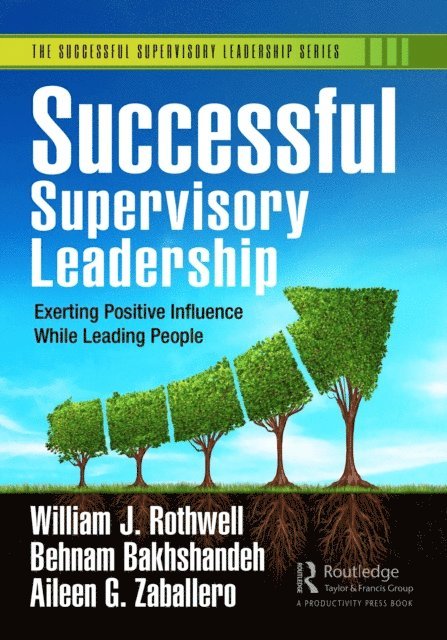
Why Study Supervision?
This book presents two compelling reasons to study supervision and supervisory leadership:
Influential Position: Supervisors exert considerable influence on organizational settings. Supervisors have been schooled, developed, and trained for their responsibilities. They can function more effectively than if they learn through informal, sometimes haphazard means. It thus pays to learn about supervision because supervisors can influence how efficiently and effectively their organization functions.
Career Path: Many career paths lead to supervision. Supervisors are everywhere. Supervisors are teachers, doctors, accountants, lawyers, plumbers, and electricians. If you aspire to advance within your occupation, you may find that one career path leads to supervision. Preparing for supervisory responsibilities can prepare you for advancement. You may thus have a personal stake – your own future – in learning about what supervisors do and how they do it.
In addition, this book:
Provides strategies for building solid relationships with team members.
Uses positivity as a foundational practice to lead and encourage other employees.
Provides guidelines on how to hold employees accountable and set high expectations.
Presents strategies to engage, coach, and develop employees by creating a positive
environment to influence attitudes and behaviors.
Offers various approaches for managing time and increasing productivity.
606 kr
Läs direkt efter köp
Why Study Supervision?
This book presents two compelling reasons to study supervision and supervisory leadership:
Influential Position: Supervisors exert considerable influence on organizational settings. Supervisors have been schooled, developed, and trained for their responsibilities. They can function more effectively than if they learn through informal, sometimes haphazard means. It thus pays to learn about supervision because supervisors can influence how efficiently and effectively their organization functions.
Career Path: Many career paths lead to supervision. Supervisors are everywhere. Supervisors are teachers, doctors, accountants, lawyers, plumbers, and electricians. If you aspire to advance within your occupation, you may find that one career path leads to supervision. Preparing for supervisory responsibilities can prepare you for advancement. You may thus have a personal stake – your own future – in learning about what supervisors do and how they do it.
In addition, this book:
Provides strategies for building solid relationships with team members.
Uses positivity as a foundational practice to lead and encourage other employees.
Provides guidelines on how to hold employees accountable and set high expectations.
Presents strategies to engage, coach, and develop employees by creating a positive
environment to influence attitudes and behaviors.
Offers various approaches for managing time and increasing productivity.
686 kr
Läs direkt efter köp
In a knowledge-based society, people should not simply collect knowledge but should utilize and apply it to solve a problem. Action learning makes organizational members learn while solving real problems in the workplace. However, traditional action learning might not be effective for rapidly changing environments, because it is typically a process that requires substantial time. Therefore, this book provides a guideline on how to apply action learning quickly in workplaces—especially in virtual settings.
Action learning allows the organization to develop people while, at the same time, getting work done. It is an alternative to classroom-based and online learning programs. In addition, it can also be an alternative to the instructional systems design (ISD) model or the successive approximation model (SAM) as a means of developing planned instruction if used for that purpose. Action learning can be an effective tool for Web 2.0 learning. Many organizations are now using self-directed teams and other team formats for work. It makes sense to revisit planned on-the-job training and learning with an emphasis on teams. Action learning is a process involving a small group with facilitators and action-learning process managers, so it is one of the best options for team-based problem-solving.
This book provides real action learning cases. There are needs that have emerged in these post-pandemic times. There is a need to explain how action learning can be applied to various settings, issues, and challenges. Since COVID-19 occurred, many people must work in virtual or hybrid settings. This book gives trainers—who could be HR managers, operating managers, or learning and development professionals—guidelines that can be used in virtual settings to meet the new needs.
Essentially, this book is written for team facilitators, supervisors, managers, or team members who wish to plan action-oriented, problem-based, and work-related learning experiences in real time. Because many action-learning books are written for an academic audience, it is not easy to put action learning into practice. Therefore, the goal of this book is to provide guidelines on how action learning starts, what basic principles should be considered, and what tools and techniques are needed for rapid action learning. The book is intended to be a primer on how to facilitate a planned learning project in a team or workgroup.
686 kr
Läs direkt efter köp
In a knowledge-based society, people should not simply collect knowledge but should utilize and apply it to solve a problem. Action learning makes organizational members learn while solving real problems in the workplace. However, traditional action learning might not be effective for rapidly changing environments, because it is typically a process that requires substantial time. Therefore, this book provides a guideline on how to apply action learning quickly in workplaces—especially in virtual settings.
Action learning allows the organization to develop people while, at the same time, getting work done. It is an alternative to classroom-based and online learning programs. In addition, it can also be an alternative to the instructional systems design (ISD) model or the successive approximation model (SAM) as a means of developing planned instruction if used for that purpose. Action learning can be an effective tool for Web 2.0 learning. Many organizations are now using self-directed teams and other team formats for work. It makes sense to revisit planned on-the-job training and learning with an emphasis on teams. Action learning is a process involving a small group with facilitators and action-learning process managers, so it is one of the best options for team-based problem-solving.
This book provides real action learning cases. There are needs that have emerged in these post-pandemic times. There is a need to explain how action learning can be applied to various settings, issues, and challenges. Since COVID-19 occurred, many people must work in virtual or hybrid settings. This book gives trainers—who could be HR managers, operating managers, or learning and development professionals—guidelines that can be used in virtual settings to meet the new needs.
Essentially, this book is written for team facilitators, supervisors, managers, or team members who wish to plan action-oriented, problem-based, and work-related learning experiences in real time. Because many action-learning books are written for an academic audience, it is not easy to put action learning into practice. Therefore, the goal of this book is to provide guidelines on how action learning starts, what basic principles should be considered, and what tools and techniques are needed for rapid action learning. The book is intended to be a primer on how to facilitate a planned learning project in a team or workgroup.
849 kr
Läs direkt efter köp
Building an Organizational Coaching Culture is a comprehensive collection of expert pieces examining the models, methods and approaches to establish a sustainable coaching culture in organizations.
The different perspectives highlight how coaching skills can be used to positively influence workforces in the areas of critical thinking, communication, creativity and collaboration, and how they can have a direct impact on performance and productivity.
Contributors from a range of professional contexts include theoretical grounding and application to practice across topics including talent management, implementing coaching programs, developing leadership qualities, using positive psychology, self-evaluations, and standards and ethics.
This is a great resource for both students and professionals wanting to engage more with coaching cultures.
Foreword by: Dr. Foojan Zeine, PsyD